













































Hypochlorous Acid for Skin: The Science Behind HOCl and the Future of Barrier-Friendly Skin Care


Why Hypochlorous Acid for Skin Is Having Its Moment in Skin Care
Every few years, the skin care industry becomes fascinated with an ingredient that seems to appear everywhere at once. Some trends fade quickly because they are built more on novelty than biology. Hypochlorous acid, commonly abbreviated as HOCl, is different.
HOCl is not a trendy acid in the traditional skin care sense. It is not an exfoliating acid like glycolic acid, lactic acid or salicylic acid. It does not peel the skin, resurface the skin or force turnover. Instead, hypochlorous acid is a molecule our own immune system naturally produces as part of the body’s first-line response to microbes, injury and inflammation.
That distinction matters.
In the body, HOCl is generated by white blood cells, especially neutrophils, through the myeloperoxidase pathway. When the immune system detects a microbial threat, neutrophils can produce HOCl as part of a rapid antimicrobial response. This is one of the reasons HOCl has attracted interest in wound care, dermatology, ophthalmology, oral health and now modern skin care.
For Aliquote Skin, this is perfect timing. The upcoming launch of two HOCl-based products, an HOCl spray and an HOCl hydrogel, allows us to approach this molecule with the nuance it deserves. A spray and a hydrogel can share the same foundational active, but serve different purposes in a well-designed skin care routine. The spray can be positioned as a lightweight, daily, barrier-friendly mist for skin that feels reactive, stressed, flushed, blemish-prone or post-workout. The hydrogel can offer a longer-lasting, more comforting format for moments when skin needs extended contact, such as after professional treatments or during visible episodes of barrier stress.
The goal of this article is to explain what hypochlorous acid is, why the skin care world is paying attention, how HOCl differs from traditional “actives,” and how an HOCl spray and hydrogel can work together in a modern skin longevity routine.
Hypochlorous acid, or HOCl, is a barrier-friendly skin care ingredient inspired by the body’s innate immune response. In topical cosmetic skin care, HOCl can help support skin comfort, surface freshness and a calmer-looking skin environment. This Aliquote Skin infographic explains the difference between an HOCl spray and an HOCl hydrogel, and highlights the key markers of a high-quality HOCl product, including correct pH, purity, stability, protective packaging and skin-appropriate use.

HOCl explained: this educational infographic compares hypochlorous acid spray and hydrogel for skin, including their ideal uses and the top 10 qualities of a high-quality HOCl formula.
What Is Hypochlorous Acid?
Hypochlorous acid is a simple molecule made of hydrogen, oxygen and chlorine. Chemically, it is written as HOCl. Biologically, it is much more interesting than its simplicity suggests.
HOCl is naturally produced by certain immune cells when the body needs to respond quickly to microbes or tissue stress. In neutrophils, the enzyme myeloperoxidase helps generate HOCl from hydrogen peroxide and chloride ions. This process is part of innate immunity, the rapid, non-specific immune defense system that acts before the slower, highly targeted adaptive immune system becomes involved.
This is one of the reasons HOCl has such a compelling story in skin care. It is not foreign to human biology. The body already uses it as part of a highly coordinated defense-and-repair system.
However, it is important to separate physiology from product claims. The fact that the body makes HOCl does not automatically mean every topical HOCl product performs the same way, at the same concentration, with the same stability or for the same purpose. Formulation quality matters. Concentration matters. pH matters. Packaging matters. Stability matters. Intended use matters.
A well-formulated cosmetic HOCl product should be designed to support the appearance and comfort of the skin, not to replace medical treatment for infection, wounds, dermatitis or other diagnosed conditions.
Why pH Matters So Much for HOCl
One of the most important scientific details about hypochlorous acid is that it exists in balance with other chlorine-containing species in water. Depending on pH, chlorine in water may exist more as hypochlorous acid, hypochlorite or other forms.
This matters because HOCl and hypochlorite are not the same thing.
Hypochlorite is the form most people associate with bleach. It is typically alkaline and can be irritating or damaging at inappropriate concentrations or pH levels. Hypochlorous acid, by contrast, predominates in a more acidic range and is generally considered more compatible with skin when formulated appropriately.
The Handbook of HOCl emphasizes that HOCl predominates in a specific acidic pH range, with practical stability and performance depending on controlled manufacturing and formulation. This is one of the reasons modern HOCl products are more sophisticated than simply “chlorine water.” The value is in producing a stable, skin-appropriate HOCl solution with the right pH, purity and active concentration.
For skin care, the consumer takeaway is simple: not all HOCl products are created equal. A product intended for skin should be specifically formulated for topical cosmetic use, manufactured under appropriate quality standards, and packaged to preserve stability.
HOCl and the Skin Barrier
The skin barrier is not just a wall. It is an intelligent, living interface between the body and the outside world. It includes the stratum corneum, lipids, natural moisturizing factors, immune signaling molecules, resident microbes and sensory nerve endings. When the barrier is strong, the skin tends to feel calm, resilient and hydrated. When the barrier is stressed, the skin may look red, feel tight, sting easily, flush more often or become more reactive to products that were previously tolerated.
This is where HOCl becomes interesting.
HOCl does not work like a heavy occlusive, a lipid replacement or a ceramide complex. It does not directly “rebuild” the barrier in the way that a moisturizer can. Instead, its value lies in its ability to support a cleaner, calmer-feeling skin environment without relying on alcohol, fragrance, essential oils or aggressive antimicrobial ingredients that can be problematic for sensitive skin.
This makes HOCl especially relevant for people whose skin feels reactive, sweaty, mask-irritated, post-gym, blemish-prone or easily flushed. It may also be useful in professional skin care settings where the goal is to support the appearance of calm, comfortable skin after procedures that temporarily stress the barrier.
HOCl, Blemish-Prone Skin and the Microbial Environment
Blemish-prone skin is not simply “dirty skin.” Acne and congestion involve multiple factors, including follicular plugging, sebum composition, hormonal influence, Cutibacterium acnes activity, inflammation and barrier disruption. That is why no HOCl mist should be positioned as a complete acne treatment.
However, HOCl may be a useful supportive tool for blemish-prone skin because it can help reduce the appearance of stress associated with microbial imbalance and surface irritation. Its broad antimicrobial properties have been studied in multiple contexts, including wound care, ocular hygiene and antisepsis. For cosmetic skin care, the goal is not to sterilize the face. The skin microbiome should not be treated as an enemy. The goal is to support a healthier-looking surface environment while respecting the barrier.
This distinction is essential.
A well-designed HOCl spray can be used after cleansing, after workouts, after sweating, after mask-wearing or throughout the day when skin feels hot, flushed or uncomfortable. It can be especially appealing for people who cannot tolerate stronger blemish-support ingredients every day, such as benzoyl peroxide, exfoliating acids or retinoids.
In that sense, HOCl is not a replacement for a complete acne strategy. It is a barrier-friendly support product that can fit beautifully within one.
HOCl and the Appearance of Redness
Many people discover hypochlorous acid because they are searching for something that feels soothing when skin looks visibly red, flushed or irritated. HOCl has been studied for anti-inflammatory and antipruritic effects, including in a mouse model of atopic dermatitis. While animal research cannot be translated directly into cosmetic claims for humans, it does support the broader scientific interest in HOCl as a molecule involved in inflammatory signaling and skin comfort.
In practical skin care terms, HOCl may be useful for skin that appears temporarily red or stressed from environmental exposure, sweat, heat, friction, shaving, mask-wearing or professional treatments. It is not a cure for rosacea, eczema, dermatitis, perioral dermatitis or acne. Those are medical conditions that require appropriate diagnosis and care. But as part of a thoughtful routine, HOCl may help skin feel calmer and more comfortable.
For Aliquote Skin, this is where the difference between a spray and a hydrogel becomes strategically important.
The spray is ideal for quick, weightless use. It can be misted over clean skin, used after exercise, kept in a treatment room or recommended as a daily support step for clients who want a fresh, non-sticky, minimalist product.
The hydrogel offers longer contact. Because it does not evaporate as quickly as a mist, it can provide a more cushioning format for skin that needs a sustained, comforting layer. This makes the hydrogel especially relevant for post-treatment care, visible barrier stress and areas prone to recurring sensitivity.
Why a Spray and a Hydrogel Are Not the Same Product
Launching an HOCl spray and an HOCl hydrogel at the same time is not redundant. It is intelligent product architecture.
The spray is about immediacy. It is light, easy, refreshing and highly compatible with daily routines. It can be used after cleansing, after sweating, before moisturizer or throughout the day. It is especially useful when the skin needs a quick reset without adding weight.
The hydrogel is about residence time. In skin care, contact time can influence the user experience of an ingredient. A mist is elegant and fast, but it can evaporate quickly. A hydrogel can remain on the skin longer, giving the formula more time to sit comfortably on the surface. This makes it better suited to moments when the skin needs more than a mist, but less than a heavy balm.
A simple way to differentiate them:
HOCl Spray: daily mist, redness-prone appearance, blemish-prone routines, post-workout, mask irritation, skin that feels hot or stressed, oily or combination skin, quick refresh.
HOCl Hydrogel: post-treatment comfort (MIcroneedling, RF Microneedling, Erbium laser, CO2 laser), localized visible redness, barrier-stressed zones, perioral-looking irritation support, fungal infection, perioral dermatitis, cold sores, post-shaving, post-waxing, dry or reactive patches, longer-lasting surface comfort.
Together, they create a complete HOCl system. The spray is the skin’s quick-response mist. The hydrogel is the skin’s longer-contact recovery layer.
HOCl After Professional Skin Treatments
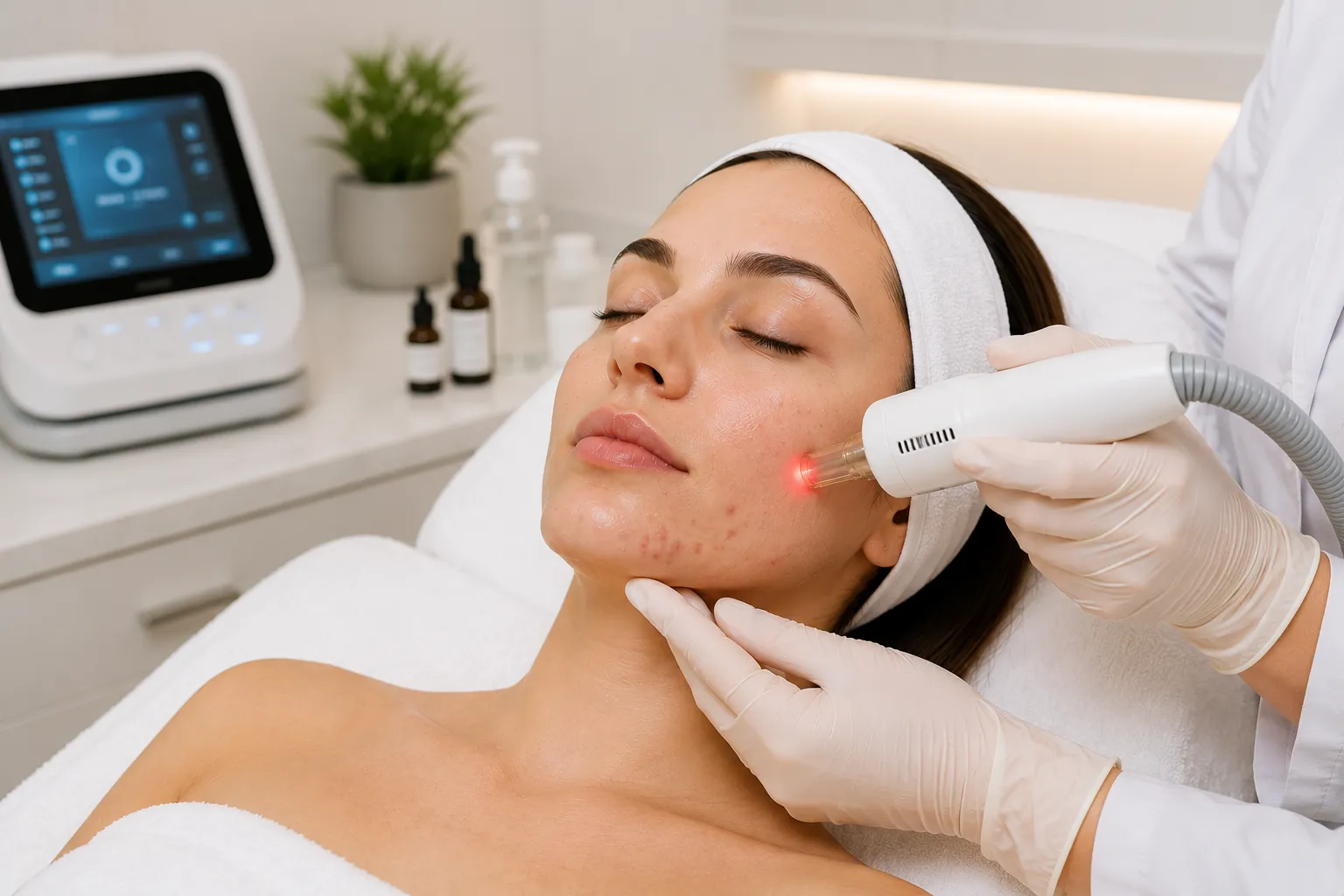
Professional treatments such as microneedling, radiofrequency microneedling, erbium resurfacing, laser treatments, peels and other advanced procedures create controlled stress in the skin. That controlled stress is often the point: it stimulates renewal pathways and visible improvement over time. But in the immediate post-treatment window, the barrier may be temporarily more vulnerable.
Post-treatment skin care should be boring in the best possible way. It should be gentle, supportive, fragrance-free where possible, and compatible with the skin’s natural healing processes. This is not the moment for aggressive actives, high-strength exfoliants, unnecessary essential oils or overly complex routines.
HOCl fits beautifully into this philosophy. In wound care and dermatologic literature, stabilized HOCl has been discussed for its antimicrobial and wound-support properties, including its role in creating a favorable environment for healing. In cosmetic practice, this does not mean making drug claims or promising wound healing from a retail product. It means recognizing that HOCl has a strong scientific rationale as part of a post-procedure support routine when the product is appropriately formulated and used according to professional guidance.
For an HOCl spray, post-treatment use may involve misting the skin to keep it feeling fresh and comfortable. For an HOCl hydrogel, the value may be even greater because the gel format can provide a more sustained, soothing layer over treated skin.
For clinics, this opens an important opportunity: HOCl can be positioned as part of a modern post-treatment protocol focused on barrier respect, visible calm and optimal skin comfort.
HOCl and Skin Longevity
Skin longevity is not just about collagen. It is about the long-term resilience of the skin as a living organ. That includes barrier strength, inflammation control, microbial balance, pigment stability, oxidative stress management, repair capacity and the ability to recover after controlled clinical interventions.
HOCl belongs in the conversation because it sits at the intersection of several of these themes.
First, it is related to innate immune function. The body uses HOCl as part of its rapid defense system. Second, it has been studied for antimicrobial activity, which is relevant to skin surface balance and post-procedure environments. Third, it has been studied in relation to inflammation and wound care, making it relevant to the broader discussion of skin recovery. Fourth, it can be formulated in simple, elegant products that do not require the consumer to tolerate irritation in order to see value.
That last point is important. The future of skin care is not about doing more to the skin. It is about doing the right things at the right time, in the right sequence, with respect for the skin’s biology.
HOCl is not a glamorous ingredient in the old marketing sense. It does not promise instant resurfacing, dramatic peeling or overnight transformation. Its sophistication is quieter. It supports the conditions that allow skin to look and feel more balanced.
Who May Benefit From an HOCl Spray?
An HOCl spray may be a beautiful addition for people who experience:
Skin that looks temporarily red or flushed
Skin that feels hot, tight or reactive
Blemish-prone skin that cannot tolerate too many harsh actives
Post-workout sweat and surface discomfort
Mask-related irritation
Post-shaving or post-waxing sensitivity
Oily or combination skin that dislikes heavy calming creams
A desire for a minimalist, fragrance-free support mist
A post-treatment routine recommended by a professional
For daily use, the spray can typically be applied after cleansing and before serums or moisturizer. It can also be used throughout the day as a refreshing mist, depending on the formula directions.
Who May Benefit From an HOCl Hydrogel?
An HOCl hydrogel may be especially useful for people who need longer-lasting surface comfort. This may include:
Skin that feels more persistently reactive
Localized areas that look visibly stressed
Post-treatment skin after professional procedures
Areas affected by friction, shaving or mask contact
Dry, tight or compromised-feeling patches
Skin that needs a calming step without a heavy balm
Clients who want a post-procedure product that feels clean, modern and breathable
The hydrogel format creates a different sensory experience than a spray. It can feel more substantial, more targeted and more comforting. This makes it ideal for professional protocols and for clients who want something they can apply intentionally to specific zones.
How to Use HOCl in a Skin Care Routine
HOCl is generally easy to integrate because it is not an exfoliating acid, retinoid, vitamin C or pigment inhibitor. It can often sit comfortably beside many routines.
A simple routine could look like this:
- Morning: cleanse, antioxidant serum, moisturizer, sunscreen, HOCl spray.
- Post-workout: cleanse or rinse, HOCl spray, lightweight moisturizer if needed.
- Evening: cleanse, HOCl spray, corrective serum if tolerated, moisturizer.
- Post-treatment: follow the clinic’s protocol, which may include HOCl spray and/or HOCl hydrogel as directed.
The hydrogel can be used after the spray when more comfort is needed, or on targeted areas rather than the whole face.
One practical note: HOCl is reactive by nature. It is wise to let the product dry before layering complex active serums, unless the formula directions say otherwise. This keeps the routine elegant and avoids unnecessary interaction with other ingredients.
What HOCl Is Not
Because HOCl is gaining popularity, it is important to avoid overclaiming.
HOCl is not a substitute for antibiotics when antibiotics are medically required.
HOCl is not a prescription acne treatment.
HOCl is not a cure for eczema, rosacea, dermatitis or perioral dermatitis.
HOCl is not the same thing as bleach.
HOCl is not an exfoliating acid.
HOCl is not a replacement for sunscreen, barrier creams, retinoids or pigment-control ingredients.
Its role is supportive. It helps create a skin environment that feels cleaner, calmer and more comfortable, especially when the barrier is under stress.
That is exactly why it is so valuable.
What to Look for in an HOCl Skin Care Product
When choosing an HOCl product for skin, look for:
- A formula intended specifically for topical skin use
- Appropriate pH and concentration
- Stability testing or reliable manufacturing
- Minimalist formulation
- No added fragrance or sensitizing essential oils
- Packaging that protects the formula
- Clear usage directions
- A brand that avoids exaggerated medical claims
For professional use, consistency and stability are especially important. Clinics need products that perform reliably, feel elegant on the skin and fit within safe, repeatable protocols.
Why Aliquote Skin Is Launching Both Formats
The launch of an HOCl spray and an HOCl hydrogel reflects a more complete understanding of how people actually use skin care.
Sometimes skin needs a mist. Sometimes it needs a more comforting layer. Sometimes a client needs something simple after a workout. Sometimes a patient needs a thoughtful post-treatment product after a clinical procedure. Sometimes oily skin wants lightness. Sometimes reactive skin wants contact time.
The HOCl spray and hydrogel allow the same core science to be delivered through two different experiences.
The spray is the daily reset.
The hydrogel is the targeted recovery veil.
Together, they support the Aliquote Skin philosophy: intelligent, science-led skin care that respects the barrier, supports visible calm and helps the skin function more beautifully over time.
Final Thoughts: The Future of HOCl in Skin Care
Hypochlorous acid represents a refreshing shift in the skin care conversation. It is not about irritation as proof of efficacy. It is not about stripping the skin into submission. It is not about adding another aggressive active to an already overwhelmed routine.
It is about working with the skin’s biology.
The best skin care ingredients are not always the loudest. Sometimes they are the ones that help create the right environment for the skin to recover, rebalance and look more resilient. HOCl belongs in that category.
As research continues to expand across wound care, dermatology, inflammation, microbial balance and post-procedure support, hypochlorous acid is likely to become an increasingly important tool in both professional and home care routines.
For Aliquote Skin, launching an HOCl spray and hydrogel is more than a product launch. It is a timely opportunity to educate clients, support clinics and elevate the standard of barrier-friendly skin care.
About the Author
Marie Bertrand is a microbiologist, skin care expert, educator and founder of SkinScience Clinic in Calgary, Canada, and Aliquote Skin. With more than two decades of experience in advanced skin analysis, corrective skin care, professional treatments and ingredient education, Marie is known for translating complex skin science into practical, customized protocols. Her work focuses on skin longevity, barrier health, inflammation control, pigmentation, acne, aging and post-treatment recovery.
Through SkinScience and Aliquote Skin, Marie advocates for evidence-informed, highly personalized skin care that respects the skin as a living ecosystem. Her approach combines clinical experience, microbiology, cosmetic chemistry and a deep commitment to helping clients understand the “why” behind every product and treatment recommendation.
Scientific References and Direct Links
- Williams J, Rasmussen E, Robins L, Terry D, Varela C. The Handbook of HOCl: A User’s Guide to Hypochlorous Acid and Its Everyday Applications. Briotech, 2021.
https://briotechusa.com/pages/the-handbook-of-hocl - Klebanoff SJ. Myeloperoxidase-halide-hydrogen peroxide antibacterial system. Journal of Bacteriology. 1968.
https://pubmed.ncbi.nlm.nih.gov/4970226/ - Nauseef WM. Myeloperoxidase in human neutrophil host defense. Cellular Microbiology. 2014.
https://pmc.ncbi.nlm.nih.gov/articles/PMC4301731/ - Albrich JM, McCarthy CA, Hurst JK. Biological reactivity of hypochlorous acid. Proceedings of the National Academy of Sciences. 1981.
https://pmc.ncbi.nlm.nih.gov/articles/PMC319021/ - Wang L, Bassiri M, Najafi R, et al. Hypochlorous acid as a potential wound care agent: Part I. Stabilized hypochlorous acid, a component of the inorganic armamentarium of innate immunity. Journal of Burns and Wounds. 2007.
https://pubmed.ncbi.nlm.nih.gov/17492050/
https://pmc.ncbi.nlm.nih.gov/articles/PMC1853323/ - Robson MC, Payne WG, Ko F, et al. Hypochlorous acid as a potential wound care agent: Part II. Stabilized hypochlorous acid, its role in decreasing tissue bacterial bioburden and overcoming the inhibition of infection on wound healing. Journal of Burns and Wounds. 2007.
https://pmc.ncbi.nlm.nih.gov/articles/PMC1853324/ - Gold MH, Andriessen A, Bhatia AC, et al. Topical stabilized hypochlorous acid: The future gold standard for wound care and scar management in dermatologic and plastic surgery procedures. Journal of Cosmetic Dermatology. 2020.
https://pubmed.ncbi.nlm.nih.gov/31904191/
https://doi.org/10.1111/jocd.13280 - Fukuyama T, Martel BC, Linder KE, Ehling S, Ganchingco JR, Bäumer W. Hypochlorous acid is antipruritic and anti-inflammatory in a mouse model of atopic dermatitis. Clinical & Experimental Allergy. 2018.
https://pubmed.ncbi.nlm.nih.gov/29028288/
https://doi.org/10.1111/cea.13045 - Day A, Alkhalil A, Carney BC, Hoffman HN, Moffatt LT, Shupp JW. Disruption of biofilms and neutralization of bacteria using hypochlorous acid solution: An in vivo and in vitro evaluation. Advances in Skin & Wound Care.2017.
https://pubmed.ncbi.nlm.nih.gov/29140803/ - Stroman DW, Mintun K, Epstein AB, Brimer CM, Patel CR. Reduction in bacterial load using hypochlorous acid hygiene solution on ocular skin. Clinical Ophthalmology. 2017.
https://pubmed.ncbi.nlm.nih.gov/28458509/
https://pmc.ncbi.nlm.nih.gov/articles/PMC5402722/ - Block MS, Rowan BG. Hypochlorous acid: A review. Journal of Oral and Maxillofacial Surgery. 2020.
https://pubmed.ncbi.nlm.nih.gov/32653307/
https://pmc.ncbi.nlm.nih.gov/articles/PMC7315945/ - Haralović V, et al. Hypochlorous acid: Clinical insights and experience in dermatology and wound care. Dermatology research review article. 2025.
https://pubmed.ncbi.nlm.nih.gov/41462936/
https://pmc.ncbi.nlm.nih.gov/articles/PMC12730738/
Medical and Cosmetic Disclaimer
This article is for educational purposes only and does not replace medical advice, diagnosis or treatment. Cosmetic HOCl products are intended to support the appearance and comfort of the skin. They are not intended to diagnose, treat, cure or prevent disease. Anyone with persistent redness, suspected infection, dermatitis, rosacea, acne, perioral dermatitis, impaired wound healing or a medical skin condition should seek guidance from a qualified healthcare professional.The post Hypochlorous Acid for Skin: The Science Behind HOCl and the Future of Barrier-Friendly Skin Care appeared first on SkinScience.
What's Your Reaction?
 Like
0
Like
0
 Dislike
0
Dislike
0
 Agree
0
Agree
0
 Disagree
0
Disagree
0
 Excellent
0
Excellent
0
 Useful
0
Useful
0
 Great
0
Great
0