























































Do Cranberries and Pumpkin Seeds Help an Enlarged Prostate?
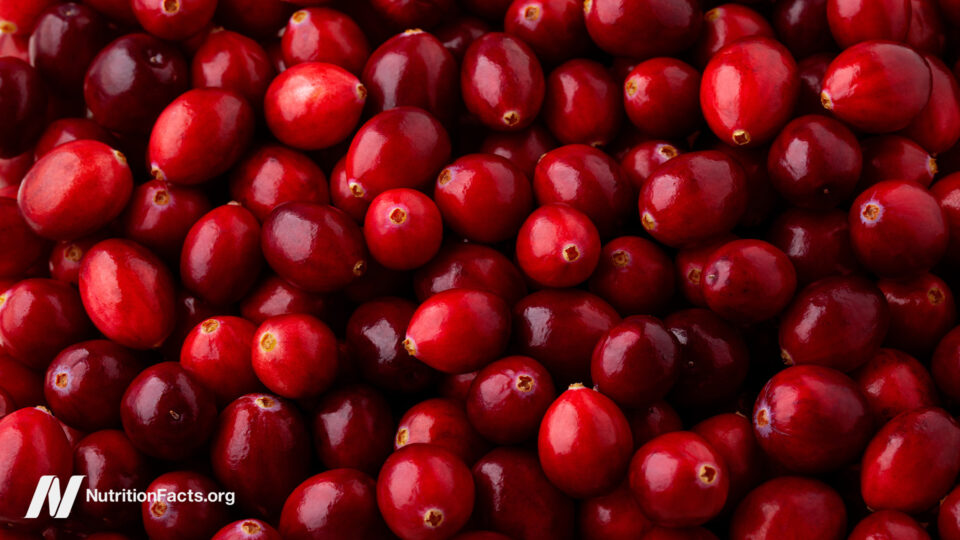


Cranberries and pumpkin seeds are put to the test for benign prostatic hypertrophy.
More than 50% of men in their 50s and at least 70% of men over age 60 suffer from benign prostatic hypertrophy, or BPH, otherwise known as enlarged prostate. This can result in burdensome lower urinary tract symptoms, such as having to get up frequently at night to pee. While current medical treatments are clinically effective, side effects and low compliance rates compromise their efficacy. Symptoms include sexual dysfunction, high-grade prostate cancer, and depression. No wonder there’s poor compliance. And when medication treatment fails, surgical procedures—such as transurethral resection of the prostate—are considered. There has got to be a better way.
Population studies suggest that low intake of animal protein and high intake of fruits and vegetables may be protective, but this is not just about cutting down on any animal protein. Eggs and poultry seem to be the worst, along with refined grains, but no association was found for red meat or dairy. Population studies aside, are there any foods that have been put to the test? In fact, there have been more than 30 randomized controlled trials on the herb saw palmetto. And it’s been found to be…totally useless.
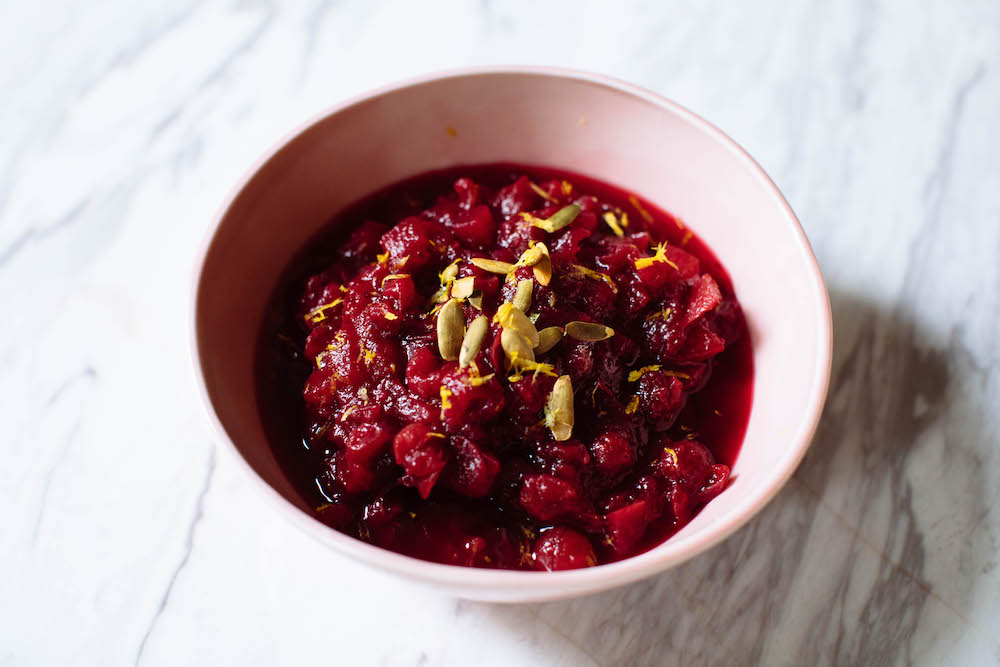
Evidently, cranberries were used by Native Americans to treat urinary ailments. Were they effective? You don’t know until you put them to the test. Study participants consuming about a teaspoon a day (around 3 g) of powdered whole cranberries—not those sugary, oily “craisins”—experienced significant improvements in BPH symptoms, quality of life, and all urination parameters.
So, we know a teaspoon works, but what about a third of a teaspoon or a sixth of a teaspoon? They also helped, as you can see below and at 2:05 in my video Natural Dietary Treatments for Enlarged Prostate BPH. (The results from the one teaspoon of powdered cranberries in the previous study are represented by the bottom green line.)
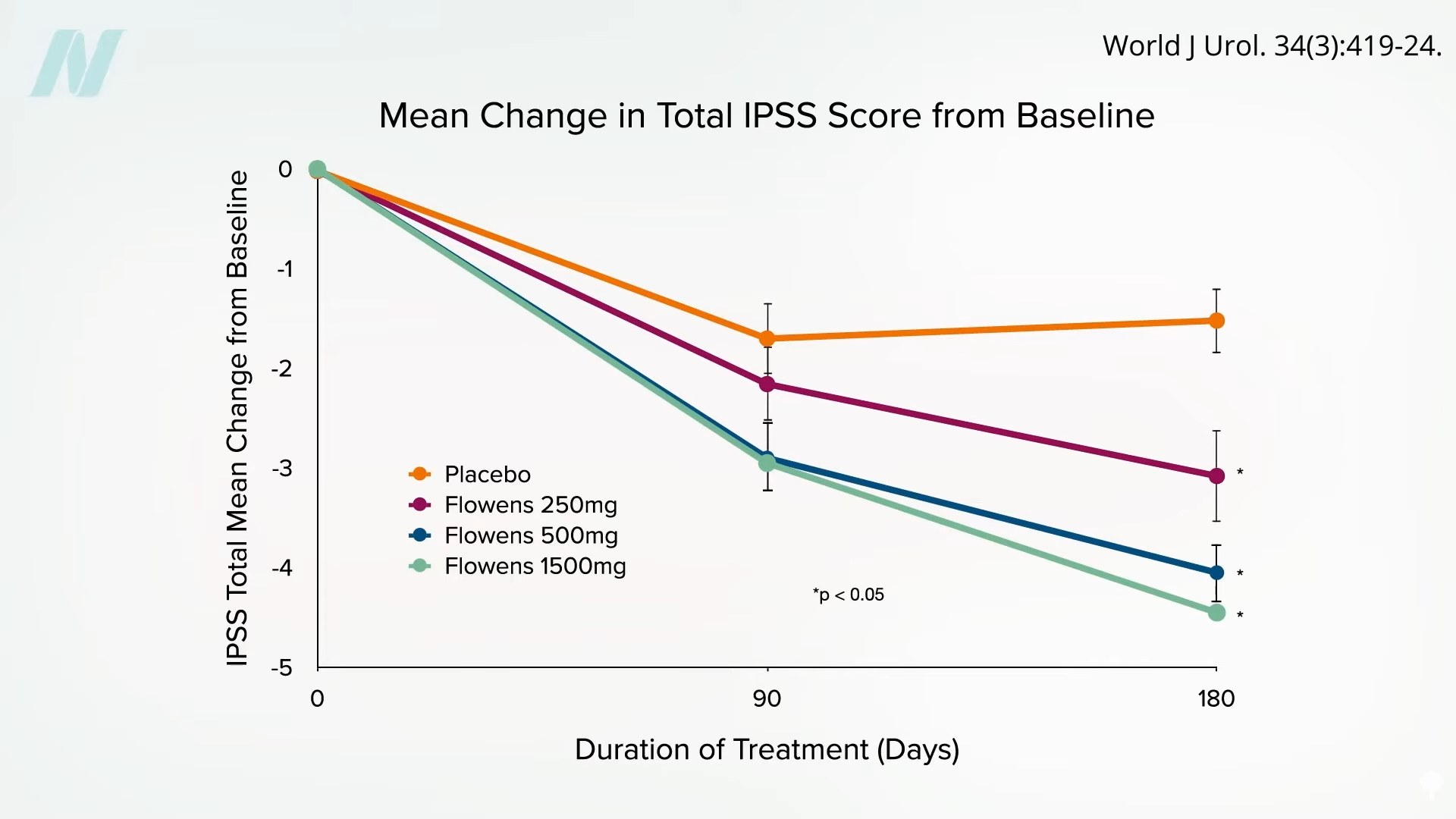
Now, this study (with the graph) used a supplement, because it was funded by the supplement company, but the supplement is just straight cranberry powder. So, you might as well buy it in bulk for much cheaper and just add it to a smoothie or something.
What about a tastier option, like drinking purple grape juice? No benefit whatsoever.
Previously, I’ve talked about the use of flaxseeds, which may have a therapeutic efficacy comparable to that of commonly used drugs—and only good side effects. So, what about other seeds? Pumpkin seeds have evidently been used for centuries in folk medicine as a remedy for prostate disorders, and in a petri dish, they can cut the growth of BPH prostate cells in half, as you can see below and at 2:48 in my video.
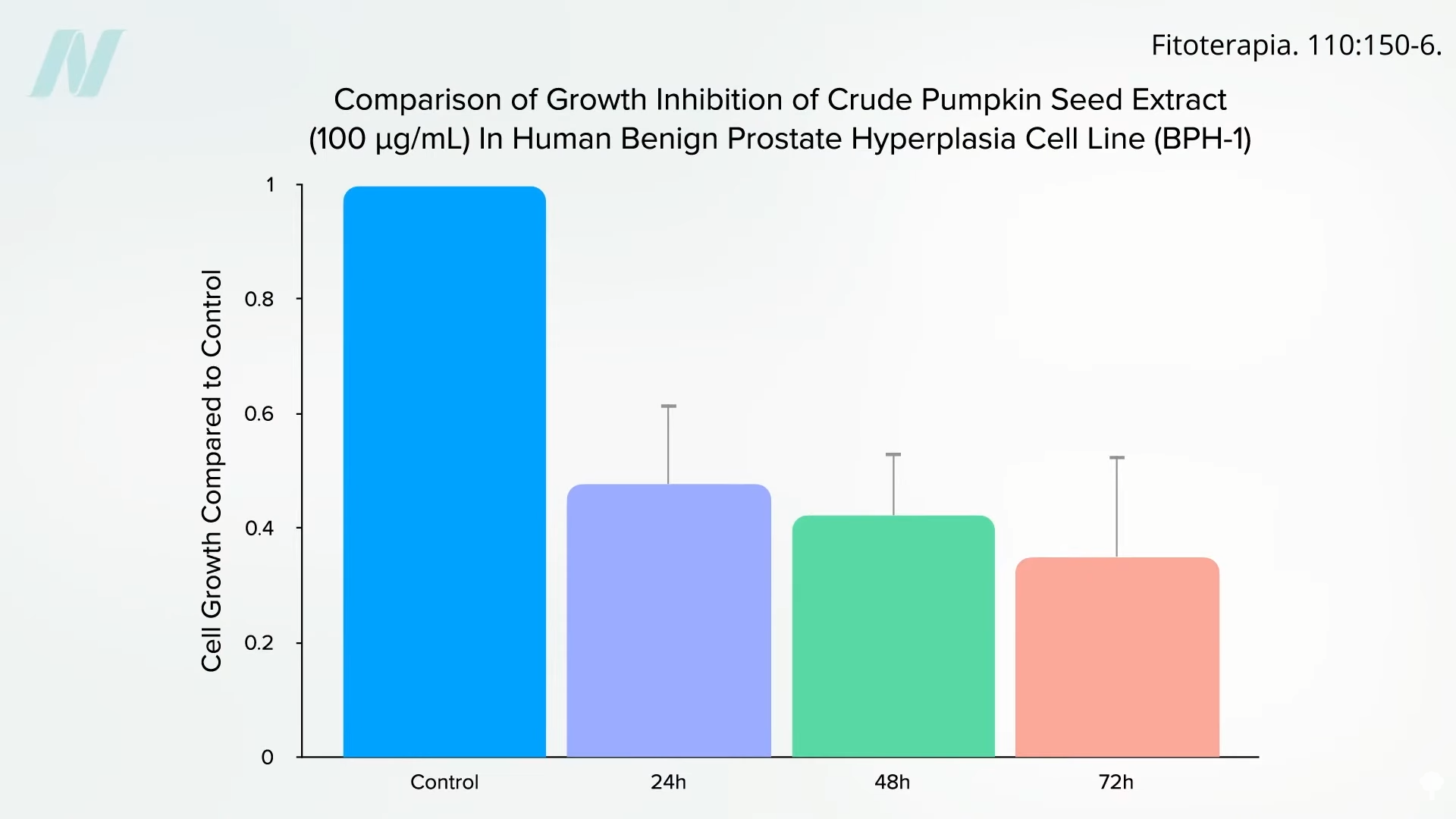
Scientists have also injected pumpkin seed extracts into rabbits, but what about people?
Pumpkin seed oil appears to help with prostate issues. When pitted head-to-head against the drug Prazosin, it seemed to work as well as the pill. The same thing happened when it went head-to-head against the drug Terazosin. But what the study didn’t have was a placebo group. It would have been nice to see how well the pumpkin seed oil supplement did against placebo. Or better yet—whole pumpkin seeds. In fact, there is such a study! More than a thousand men were randomized to take either pumpkin seed extract, a placebo, or just about a tablespoon a day (about 7.5 g) of plain pumpkin seeds.
The study was funded by the drug company that made the supplement, but the supplement flopped; it was no better than placebo. The pumpkin seeds themselves, however, did work. The supplement appeared to reduce symptoms, but not better than placebo. However, just the plain old seeds did. So, it wasn’t just some compound extracted from the oil. In fact, we’ve since learned that even an oil-free extract seemed to work. The bottom line, the researchers concluded, is that pumpkin seeds could be recommended for patients with mild-to-moderate BPH symptoms. This conclusion was echoed by the European equivalent of the U.S. Food and Drug Administration: Pumpkin seeds can be used to relieve lower urinary tract symptoms related to an enlarged prostate after more serious conditions have been ruled out by a medical doctor.
Doctor’s Note
The flaxseed video I mentioned is Flaxseeds vs. Prostate Cancer.
What about cranberries and prostate cancer? See Cranberries vs. Cancer.
Can Cranberry Juice Treat Bladder Infections? Watch the video to find out.
What's Your Reaction?
 Like
0
Like
0
 Dislike
0
Dislike
0
 Agree
0
Agree
0
 Disagree
0
Disagree
0
 Excellent
0
Excellent
0
 Useful
0
Useful
0
 Great
0
Great
0