

































eBeam treatment of ground poultry meat: different effects in chicken and turkey
Electron beam treatment, or eBeam, can reduce microbial contamination without the use of heat. Its effects on poultry meat, however, are not always the same: chicken and turkey may respond differently, and the dose applied can influence some product characteristics.
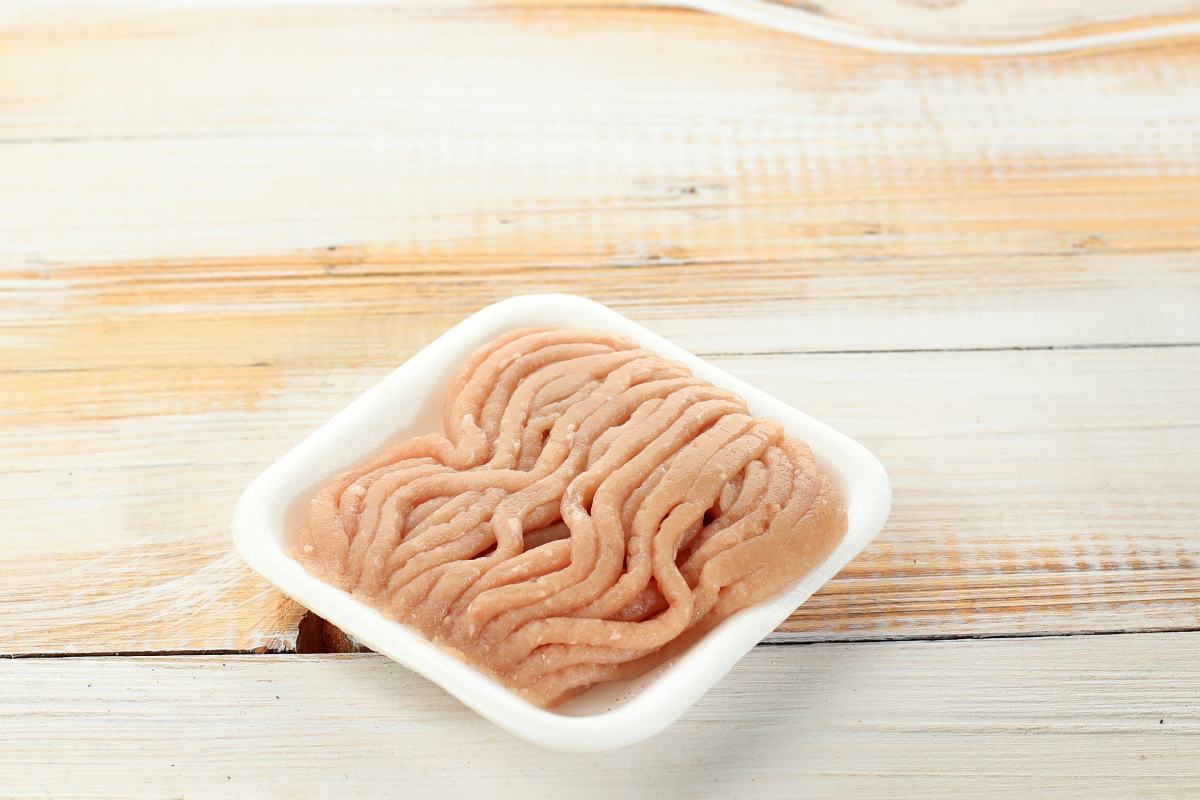
A study published in Poultry Science evaluated eBeam doses of 3 and 4 kGy in ground chicken and turkey purchased from a local grocery store. The products were treated in their original modified-atmosphere packages and compared with untreated controls.
The work follows an earlier study by the same research group, in which treatment at 3 kGy reduced experimentally inoculated Salmonella and Campylobacter by 99.99% in commercial packages of ground poultry meat. The new study did not repeat the microbiological tests. Instead, the researchers examined pH, cooking loss, colour, texture and sensory characteristics.
In ground chicken, pH did not change significantly at either 3 or 4 kGy. Both doses reduced cooking loss without altering the instrumental texture of the cooked patties. Redness decreased in the raw meat, while lightness and yellowness remained largely unchanged.
Turkey responded differently. The treatment had no significant effect on cooking loss or on the colour of the raw meat. After cooking, however, redness was higher at 4 kGy than at 3 kGy, while the control did not differ significantly from either treatment. At 4 kGy, the researchers also recorded a reduction in pH and changes in almost all the instrumental texture parameters, with the exception of adhesiveness. At 3 kGy, texture values remained similar to those of the control.
Sensory analysis was carried out by seven trained panellists, who evaluated aroma, flavour, basic tastes, texture and after-feel attributes. No significant differences were found among the turkey samples. Most attributes also remained unchanged in chicken, although an aroma off-note was more pronounced in samples treated at 3 and 4 kGy than in the control.
The researchers suggest that this off-note may be linked to oxidation induced by irradiation. Packaging could also play a part, although the study did not directly compare different packaging materials or atmospheres. Future work proposed by the authors includes examining vacuum packaging, the use of antioxidants and other possible adjustments to the process.
Overall, the 3 kGy dose produced fewer changes in meat quality than 4 kGy, particularly in turkey. The findings show that eBeam treatment needs to be optimised according to the type of meat, dose and product characteristics. According to the authors, its industrial application will also depend on economic feasibility and consumer acceptance, supported by appropriate labelling, education and communication.
Source: Kalapala T. et al. (2026), “Impact of Electron Beam (eBeam) Treatment on Meat Quality and Sensory Attributes of Ground Chicken and Turkey”, Poultry Science, 105, 107037. https://doi.org/10.1016/j.psj.2026.107037
Apa Reaksi Anda?
 Suka
0
Suka
0
 Kurang Suka
0
Kurang Suka
0
 Setuju
0
Setuju
0
 Tidak Setuju
0
Tidak Setuju
0
 Bagus
0
Bagus
0
 Berguna
0
Berguna
0
 Hebat
0
Hebat
0