
























Coccidiosis in poultry: An ongoing challenge — What role can phytogenics play?

Coccidiosis remains a persistent challenge for poultry production, affecting intestinal health, performance and farm economics despite advances in anticoccidial programmes and vaccination. As producers seek more sustainable and strategic approaches to disease management, phytogenics are attracting increasing interest as complementary tools. This article explores how olive-derived bioactives may support intestinal integrity and modulate inflammatory responses, potentially enhancing current prevention strategies and contributing to a more balanced, multimodal approach to coccidiosis control.

Poultry Product Manager
LUCTA
Coccidiosis is a disease that is almost as old as poultry farming itself, and it remains a major challenge for the poultry industry.
Based on data provided by different industry stakeholders—including veterinarians, producers, and animal health experts—and using various extrapolation models, the economic impact of coccidiosis in recent years has been estimated at an average cost of approximately €0.18 per chicken produced (Re-calculating the cost of coccidiosis in chickens. Damer P. Blake et al., Veterinary Research, 2020).
Clearly, this is a difficult disease to control, as coccidiosis is intrinsically associated with poultry production and, in practice, cannot be completely eradicated. In certain production categories, such as laying hens, the widespread shift towards cage-free systems increases birds’ exposure to the parasite and, consequently, the risk of disease development. This creates an even greater need for effective preventive and therapeutic strategies.
EIMERIA SPP.: A COMPLEX PATHOGEN
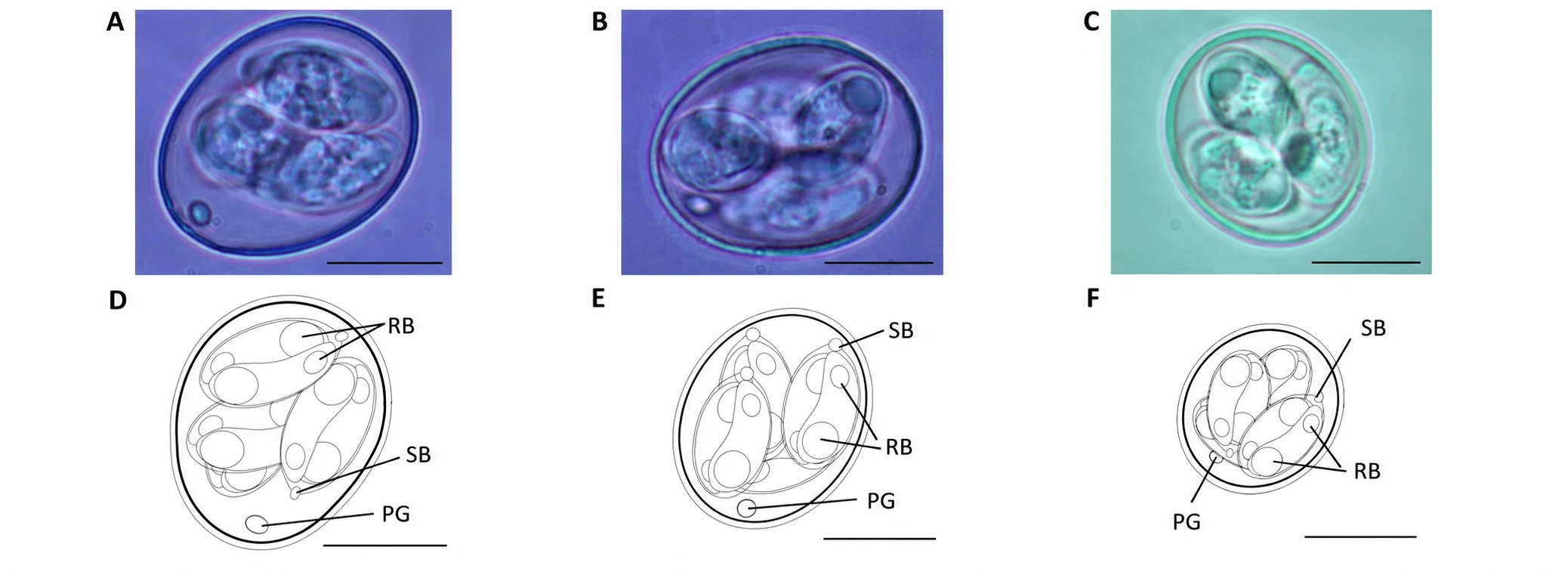
Parasites of the genus Eimeria are responsible for an infection that causes severe intestinal damage in poultry. The parasite uses enterocytes as a site to replicate, triggering an inflammatory response and, ultimately, disruption and rupture of the affected enterocytes.
It is also important to understand that the greater the parasite replication, the greater the number of new oocysts released into the litter. Moderate temperature and humidity conditions promote oocyst sporulation, transforming them into a highly infective stage.
Depending on the Eimeria species involved, replication of the different developmental stages of the parasite occurs in different sections of the intestine, resulting in varying degrees of intestinal damage and either acute or chronic disease.
Species such as Eimeria tenella can cause clinical disease by replicating in the caeca, resulting in severe haemorrhagic lesions and significant mortality. Other species, such as Eimeria acervulina, primarily replicate in the duodenum. They are less likely to cause high mortality within the flock, but can have a significant negative impact on zootechnical performance and, importantly, compromise bird welfare and the quality of the final product.
Seven major species are currently recognised as affecting Gallus gallus: E. maxima, E. acervulina, E. tenella, E. necatrix, E. brunetti, E. mitis and E. praecox. At present, however, the existence and classification of additional species remain under discussion (Damer Blake, Eimeria of chickens: the changing face of an old foe, Avian Pathology, 2025).
From an immunological perspective, there is no meaningful cross-protective immunity between the different Eimeria species. Therefore, effective control requires either the use of broad-spectrum anticoccidial programmes or the selection of vaccines containing the relevant species present in the target flocks.

WHAT IS THE MOST APPROPRIATE STRATEGY FOR CONTROLLING COCCIDIOSIS?
Without doubt, one of the most important decisions when addressing a disease such as coccidiosis is the selection of an appropriate preventive strategy.
Today, relying on a standard programme and addressing disease challenges primarily through therapeutic antibiotic treatment is not the most appropriate approach. A severe coccidiosis challenge can compromise zootechnical performance before a therapeutic intervention has time to take effect. Moreover, the use of conventional anticoccidial treatments is increasingly undesirable in a production context where the use of antimicrobial compounds is being reduced as much as possible.
Since the 1950s, when the use of feed-administered anticoccidials became widespread, the poultry industry has had a tool that has generally been considered effective. However, their prolonged use has also contributed to the development of resistance to certain compounds. This has led to the implementation of rotation programmes between flocks, and in some cases even within the same production cycle, to reduce the risk of resistance developing against specific molecules.
Effective control requires consideration not only of the most appropriate product according to the Eimeria species present, but also of the bird’s immune response to the parasite.
When designing an anticoccidial programme, it is important to understand the specific role of each product. Synthetic or chemical anticoccidials may act as coccidiocidal agents, meaning that they can substantially reduce the number of viable oocysts. This significantly decreases oocyst shedding and, consequently, the bird’s exposure to the parasite. However, reduced exposure can also limit stimulation of the bird’s specific immune response.
If the product subsequently loses efficacy or its use is interrupted, birds may have insufficient immunity and may therefore be more susceptible to severe coccidiosis.
This concept led to the development of shuttle programmes, based on the use of compounds with different modes of action during different phases of the feeding programme. A strongly coccidiocidal product may be useful during the early stages to minimise parasite replication. Once the most critical replication phase has passed, an ionophore can maintain parasite replication at low levels while allowing sufficient exposure for the bird to develop active immunity.
All of this should be supported by an intelligent rotation strategy designed to minimise the development of resistance to the compounds being used.
THE EMERGENCE OF VACCINES
During the 1990s, live vaccines against coccidiosis began to be marketed on a significant scale. Vaccination represents a highly targeted approach to disease control because it is based on the development of active immunity against the specific Eimeria species included in the vaccine. For this reason, selecting a vaccine containing the relevant species is critical.
Vaccines available on the market differ in their degree of attenuation. Some are based on essentially wild-type oocysts administered at a controlled dose, whereas more recent products use modified oocysts, including strains attenuated through precocious development, with substantially reduced pathogenicity and replication capacity.
The emergence of vaccines could have represented a definitive turning point in the control of coccidiosis. However, vaccination has not completely replaced anticoccidial programmes in the poultry industry.
Vaccines provide targeted protection through activation of specific immunity against the parasite. However, the development of this immunity requires parasite replication necessary to stimulate an effective immune response.
Anticoccidials, in contrast, act directly against the parasite, and some compounds also have anti-inflammatory properties and may provide additional activity against processes associated with necrotic enteritis, which can occur in conjunction with coccidiosis.
The major contribution of vaccines has undoubtedly been the availability of a safe, targeted and highly effective tool for establishing medium-term protection. Combining anticoccidial and vaccination strategies within an alternating programme has proven to be a valuable approach to disease control. It may also help reduce the development of anticoccidial resistance, since the oocyst strains used in vaccines are generally highly sensitive to currently used anticoccidial molecules.
There are also specific production systems where vaccination becomes particularly relevant. In some systems, continuous use of anticoccidials is impractical because of the length of the production cycle, as is the case with laying hens. In other systems, producers deliberately avoid anticoccidials as part of their production concept, including certified poultry, slow-growing birds and organic production systems.
Vaccines have therefore introduced the level of precision and sophistication required for a comprehensive strategic approach to coccidiosis control.
HOW CAN THIS PREVENTIVE STRATEGY BE FURTHER ENHANCED? THE ROLE OF PHYTOGENICS
This is where phytogenics may play an important role, complementing the other components of the control programme and, in certain circumstances, potentially becoming a key piece of the complex puzzle of coccidiosis management.
One interesting area of research is the use of olive-derived bioactives.
Spain is the world’s largest olive oil producer, with approximately 1.5 million tonnes produced annually (data from International Olive Council 2024), generating significant quantities of by-products such as olive pomace and olive leaves.
One way of valorising these by-products from the olive industry is through their incorporation into animal nutrition. In recent years, increasing attention has been paid to the purification and characterisation of bioactive compounds—including polyphenols, flavonoids and triterpenes—from botanical sources such as olive by-products. These compounds have demonstrated anti-inflammatory activity and, through their mode of action, may support the recovery of intestinal histological structures following a challenge.
Inflammation is, in principle, a defensive response to an insult such as coccidiosis. In the context of poultry production and intestinal health, cytokines such as IL-8 and TGF-β4 are particularly interesting because they provide insights into two different dimensions of the inflammatory response: immune cell activation/recruitment (pro-inflammatory activity) and mucosal regulation/repair (anti-inflammatory activity).
As in most biological processes, balance is key.
In a comparative study using control diets, the inclusion into the diet of olive-derived bioactives resulted in a significant reduction in the relative expression of IL-8, together with an increase in TGF-β4 expression in the ileum mucosa of broiler chickens, demonstrating the anti-inflammatory effect of these compounds (Graphic 1-2).

This particular mode of action is highly relevant in the context of vaccination, as it may help to compensate for the absence of the anti-inflammatory activity provided by some ionophores. On the other hand, in challenge models designed to induce enteritis, such as mixed coccidial-bacterial infections, olive bioactives have also demonstrated activity in minimising intestinal lesions associated with the infection.
In broilers challenged under a bacterial enteritis model, different dietary treatments were compared:
• a group supplemented with olive bioactives (CCOB),
• a group supplemented with salinomycin (CCS),
• a non-challenged, non-supplemented control group (NC), and
• a challenged, non-supplemented control group (CC).
 Both CCOB and CCS numerically reduced intestinal lesion scores following the challenge compared with CC by 35% and 43%, respectively (P > 0.05) (Graphic 3).
This reduction in intestinal lesions was also reflected in improved average daily gain (ADG) and feed conversion ratio (FCR) following the challenge (Graphic 4-5).
 CONCLUSION
• Diets supplemented with olive-derived bioactives represent an interesting supportive tool within current coccidiosis prevention strategies.
• Phytogenics may contribute to a multimodal approach, complementing anticoccidial programmes and vaccination by supporting intestinal integrity and modulating the inflammatory response.
• The future of coccidiosis management may therefore lie not in a single solution, but in the intelligent combination of vaccination, anticoccidial strategies, flock immunity and functional phytogenic support.
References:
1. Re-calculating the cost of coccidiosis in chickens. Damer P. Blake et al., Veterinary Research, 2020
2. Eimeria of chickens: the changing face of an old foe. Damer P. Blake, Avian Pathology, 2025
3. Effects of a bioactive olive pomace extract from Olea europaea on growth performance, gut function and intestinal microbiota in broiler chickens. J. Herrero-Encinas, M. Blanch, J.J. Pastor, A. Mereu, I.R. Ipharraguerre and D. Menoyo. Poultry Science, July 2019
4. Effects of olive bioactives on performance and intestinal health in enteric-challenged broilers. Marta Blanch, Brecht Maertens, Alberto Viñado. ICPIH Istanbul 2026
About Jesús Rubio
Jesús Rubio studied Veterinary Medicine at the University of Zaragoza, graduating in 1993. After gaining experience with several companies in poultry genetics and poultry production, he spent more than 20 years in the veterinary pharmaceutical industry. In September 2024, he joined LUCTA as Poultry Product Manager and Business Development Manager within the Feed Additives Division.
Coccidiosis in poultry: An ongoing challenge — What role can phytogenics play? yazısı ilk önce Feed & Additive Magazine üzerinde ortaya çıktı.
Apa Reaksi Anda?
 Suka
0
Suka
0
 Kurang Suka
0
Kurang Suka
0
 Setuju
0
Setuju
0
 Tidak Setuju
0
Tidak Setuju
0
 Bagus
0
Bagus
0
 Berguna
0
Berguna
0
 Hebat
0
Hebat
0