

























How to Prepare a Fish Pond Before Stocking
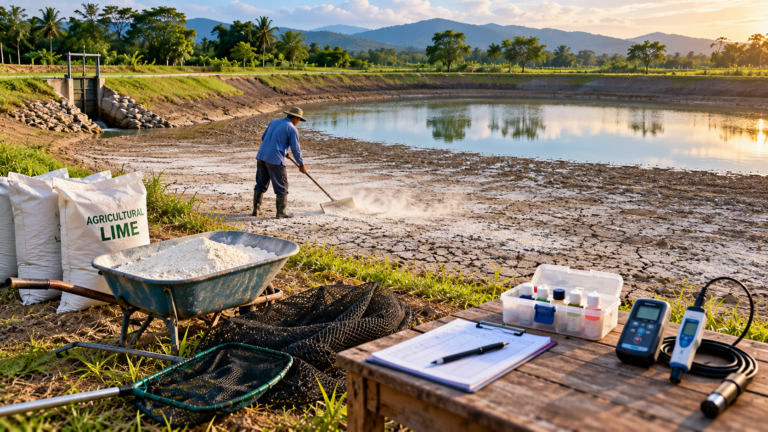
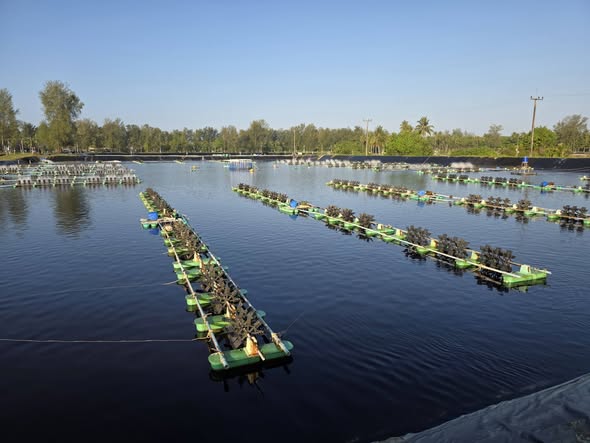
Preparing a pond before stocking is one of the most important steps in starting a productive fish-growing cycle. Fish introduced into a pond with poor water quality, excessive organic matter, unwanted fish, damaged banks, or unsuitable soil conditions may face stress before feeding even begins. Good preparation gives farmers a chance to correct those problems while the pond is still empty or lightly filled, when repairs are usually easier and less disruptive.
Pond preparation should match the production goal, fish species, and condition of the pond. A new pond may mainly require structural inspection, water testing, and planned fertilization, while an older pond may need draining, sediment management, removal of unwanted fish, or liming. The goal is not to make every pond identical, but to create stable conditions before valuable fingerlings are introduced.
Inspect the Pond and Remove Existing Problems
Start with the physical condition of the pond. Banks, levees, drains, pipes, spillways, and water-control structures should be checked for leaks, erosion, blockages, or other damage before stocking. Mississippi State University Extension advises completing pond construction and stabilizing exposed surfaces before stocking and notes that delaying filling until near stocking time can help reduce contamination by unwanted fish and prevent muddy water.
Previously used ponds may also contain accumulated sludge, uneaten feed, dead vegetation, or other organic material. Excessive organic matter increases the amount of oxygen used during decomposition and may contribute nutrients back into the water. Where practical, draining and drying the pond provides an opportunity to remove excessive deposits, repair the bottom, and correct low spots that hold unwanted fish.
Unwanted fish are especially important in ponds being restocked. Mississippi State Extension explains that the easiest way to renovate an unbalanced pond is to drain and completely dry it before restocking. If water remains in depressions, surviving fish can repopulate the pond and interfere with the intended stocking plan.
Prepare the Pond Bottom and Use Lime Only When Needed
The pond bottom influences water chemistry, nutrient availability, and the accumulation of organic material. A dry pond bottom also gives farmers a chance to inspect sediment depth, remove excessive debris, repair drains, and improve areas that have become difficult to manage. The objective is a stable bottom that supports water-quality management rather than becoming a constant source of organic loading.
Liming can help where pond soils and water have low alkalinity, but it should not be applied automatically. Mississippi State University Extension recommends agricultural limestone when total alkalinity is below 20 parts per million. Liming raises alkalinity, reduces extreme pH fluctuations, and can improve the effectiveness of fertilization in acidic ponds.
The amount of lime should be based on water or soil testing rather than guesswork. University of Florida IFAS notes that limestone is best applied directly to the pond bottom before filling when possible, because it can be distributed evenly over the soil. The same guidance notes that common application rates may range from 1 to 2 tons per surface acre, but laboratory soil recommendations provide a more accurate rate for a specific pond.
Fertilize Only When It Fits the Production Plan
Fertilization can encourage phytoplankton growth, which supports the natural food web in ponds where fish depend partly on natural productivity. Mississippi State University Extension reports that proper pond fertilization can increase the total weight of fish produced by as much as three times. That benefit is one reason fertilization has long been used in some recreational and production ponds.
More fertilizer is not always better. Excess nutrients can produce overly dense phytoplankton blooms, increase nighttime oxygen demand, and create conditions for fish kills if the bloom collapses. Mississippi State specifically cautions that many ponds should not be fertilized, including muddy ponds, weed-infested ponds, ponds with undesirable fish populations, and ponds where harvest is too low to justify higher fish production.
Water clarity provides a practical way to judge bloom density. University of Florida IFAS recommends a visibility of roughly 12 to 18 inches in many fertilized freshwater ponds. Visibility below 12 inches can indicate excessive fertilization, while water clearer than about 18 inches may indicate that a bloom has not developed adequately for systems where fertilization is part of the management plan.
Check Water Quality and Stock From Reliable Sources
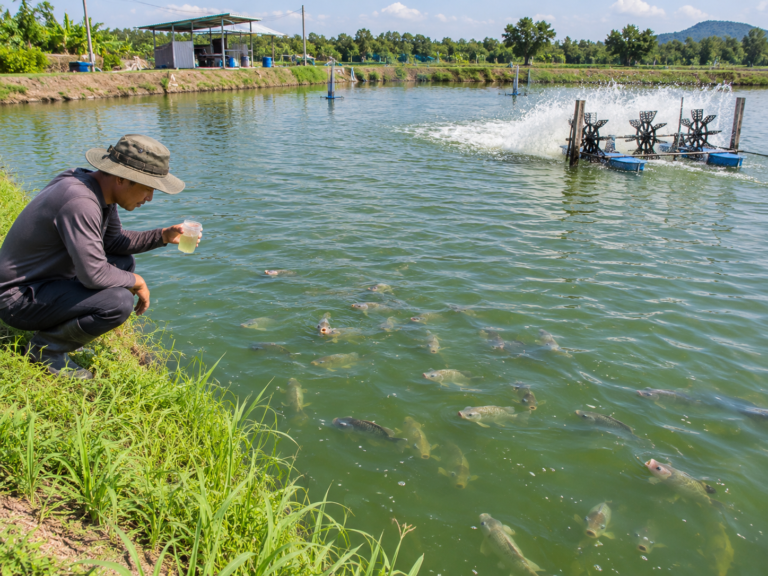
Before fish are introduced, the pond should have stable water conditions appropriate for the species being stocked. Temperature, dissolved oxygen, pH, alkalinity, and water clarity are among the basic measurements that can reveal whether a pond is ready. Problems identified at this stage are easier to correct than after newly stocked fish are already under stress.
Stocking should also be planned carefully. Mississippi State University Extension recommends stocking fish only from reliable hatcheries because moving fish from other water bodies can introduce unwanted species, parasites, or diseases. The correct species, stocking density, and timing depend on the production goal and pond size.
Temperature differences during stocking also matter. University of Florida IFAS advises that transport water and pond water temperatures should be equalized gradually before fish are released, because sudden temperature changes can shock newly transported fish. Fish that enter a stable pond under low-stress conditions have a better chance of beginning the production cycle successfully.
Pond preparation is ultimately about preventing avoidable problems before they become expensive ones. Inspecting structures, removing unwanted fish and excessive debris, using lime and fertilizer only when testing supports them, checking water quality, and stocking healthy fish from reliable suppliers all help establish a stronger starting point. A few careful steps before stocking can make feeding, water-quality management, growth, and disease prevention easier throughout the rest of the production cycle.
Join the EAT Community at https://www.eatcommunity.com/ to learn from experienced farmers and explore practical strategies for regenerative farming.

The post How to Prepare a Fish Pond Before Stocking first appeared on WorldWide Aquaculture.
Apa Reaksi Anda?
 Suka
0
 Kurang Suka
0
 Setuju
0
 Tidak Setuju
0
 Bagus
0
 Berguna
0
 Hebat
0