


































Is Your Veterinary X-Ray System Ready for 2027?
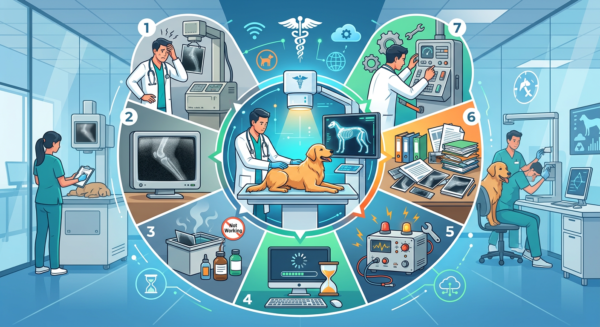
7 Signs It’s Time to Upgrade
If your veterinary practice has been using the same X-ray system for several years, you may have reached a familiar point: The equipment still works, but you’re starting to wonder how much longer it makes sense to keep it.
Maybe your CR reader is getting slower. Maybe your staff are working around an older system because it takes too long to get an image. Maybe your portable X-ray unit has seen better days. Or maybe your practice has simply grown, and the equipment that worked five or ten years ago no longer fits the way you work today.
You don’t necessarily need to replace an X-ray system just because it’s getting older. But there are some clear signs that an upgrade could improve your practice’s workflow, efficiency and diagnostic capabilities.
Here are seven things worth considering as you plan for 2027.
1. You’re Still Using CR
Computed radiography (CR) was a major improvement over traditional film, and many veterinary practices still have CR systems that produce perfectly usable diagnostic images.
But CR still requires a cassette and a separate reader. That adds steps to the process every time you take an X-ray.
With direct digital radiography (DR), the detector captures the image electronically and sends it directly to the workstation. There’s no cassette to carry to a reader and no waiting for a plate to be processed.
For a busy practice, those small differences add up.
Modern wireless DR systems can also be moved between rooms or used with portable X-ray equipment, giving practices considerably more flexibility than traditional CR.
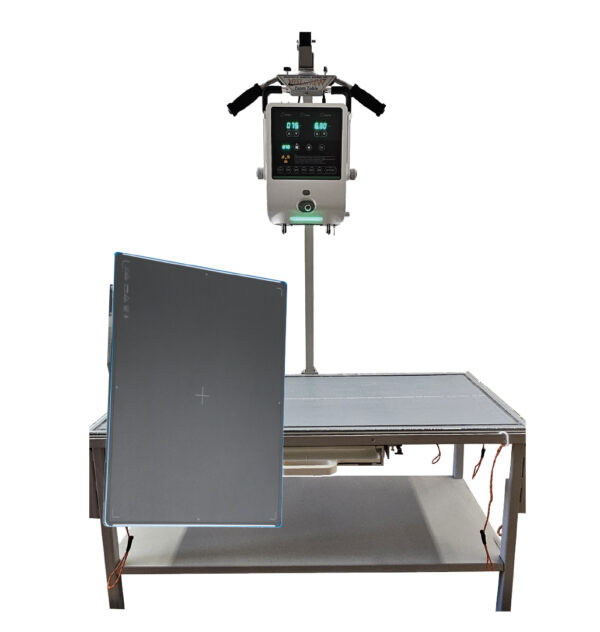
And upgrading doesn’t necessarily mean replacing your entire X-ray room. Depending on your existing equipment, a DR detector can allow you to keep your current X-ray generator and table while making the transition from CR to DR.
2. Your Staff Are Spending Too Much Time Getting Images
Veterinary teams are busy. Anything that adds unnecessary steps to a routine radiograph can affect the entire day’s workflow.
Think about what happens during a typical exam. The patient has to be positioned, the exposure made, the cassette handled, the image processed, and then the image reviewed. If the image isn’t what you need, the process starts again.
Digital radiography can significantly streamline that process.
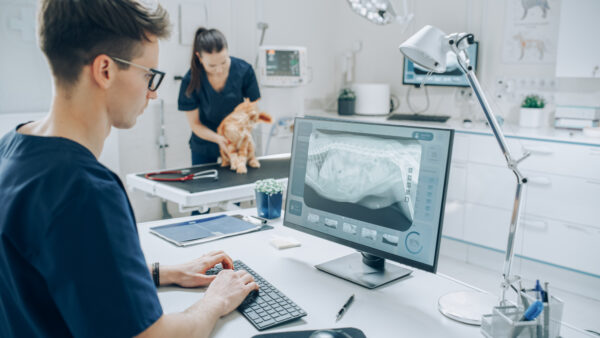
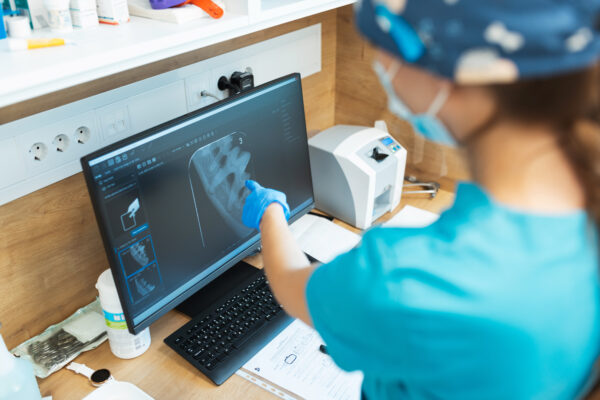
With a modern DR system, images can be available within seconds, allowing the veterinarian or technician to evaluate them almost immediately. If another view is needed, you can make that decision right away rather than waiting for the image-processing cycle to finish.
That’s not just about convenience. Faster image acquisition can mean less time spent handling patients and less time between the initial exposure and the veterinarian’s evaluation.
3. Your Equipment Limits Where You Can Take X-Rays
A veterinary X-ray system shouldn’t necessarily tie you to one room.
This is especially important in equine, mixed-animal and mobile veterinary practices, but portability can be useful in companion-animal practices as well.
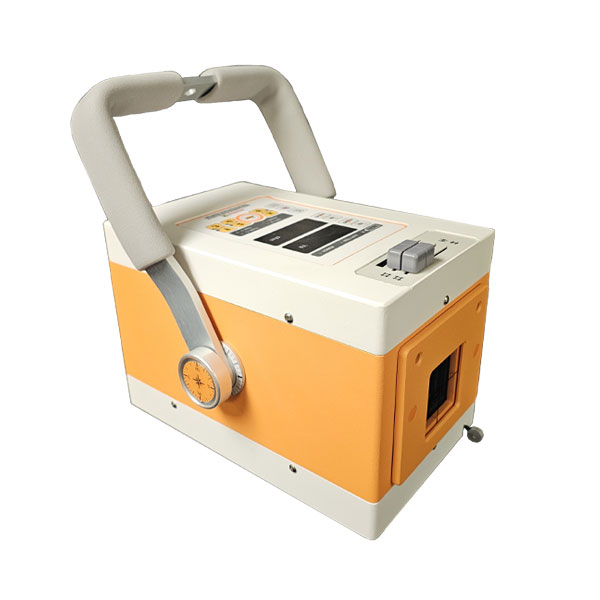
A wireless DR detector paired with a portable X-ray generator can allow imaging to take place where the patient is—whether that’s in an exam room, treatment area, barn, surgical suite or field setting.
Today’s portable systems are also significantly more practical than many older portable units. Compact generators and lightweight wireless detectors can provide a level of mobility that wasn’t realistic with older equipment.
For practices that regularly work outside the traditional X-ray room, portability may be one of the biggest reasons to consider an upgrade.
4. You’re Seeing More Repeat Exposures
Every veterinary technician knows that sometimes you simply have to repeat an exposure. Patients move. Positioning isn’t perfect. Anatomy doesn’t cooperate.
But if your team is regularly repeating images because of equipment limitations, positioning issues or inconsistent image quality, it’s worth taking a closer look at the system itself.
Modern DR detectors incorporate advanced image-processing technology and automatic exposure detection designed to make image acquisition more consistent.
For example, newer DR Wizard systems use advanced image-processing algorithms and automatic exposure detection to help produce sharp, detailed images while supporting lower-dose imaging.
The goal isn’t to eliminate every repeat exposure. That’s unrealistic in veterinary medicine.
The goal is to make sure your equipment isn’t contributing to the problem.
5. Your X-Ray System Is Becoming Difficult to Service
This is one that can be easy to overlook.
An X-ray system can continue working for years, but that doesn’t necessarily mean it’s going to be easy—or economical—to keep it working.
Parts become harder to find. Manufacturers discontinue older models. Technicians who understand older equipment become harder to locate. And downtime becomes more expensive when your practice depends on that equipment every day.
Before investing in new imaging equipment, it’s worth asking not only, “What does it cost?” but also, “Who is going to support it after I buy it?”
That question is particularly important with digital imaging, where you’re dealing with more than just the X-ray generator. There’s the detector, acquisition software, computers, networking and DICOM/PACS connectivity to consider as well.
A lower purchase price doesn’t necessarily equal a lower cost of ownership if service and support are difficult to obtain.
6. Your Practice Has Changed Since You Bought Your Current System
Your equipment may not be the problem. Your practice may simply be different.
Maybe you’ve added another veterinarian. Maybe you’re seeing more patients. Maybe you’ve expanded into equine or mixed-animal medicine. Maybe you’re doing more orthopedic work. Maybe you’ve added another location.
Equipment that was perfectly adequate when you bought it may not be adequate for the practice you have today.
That’s why an X-ray upgrade should start with a discussion about how you use imaging, rather than simply looking at specifications.
Do you primarily image dogs and cats? Do you need a detector that can handle larger patients? Do you need portability? Are you imaging horses? Do you need wireless capability? Do you need DICOM compatibility or integration with your existing workflow?
The right system depends on the answers.
7. You’re Spending More Time Thinking About Your X-Ray Equipment
This may be the simplest sign of all.
If you or your technicians are regularly thinking about your X-ray equipment—Why is this taking so long? Why did that image come out this way? Why is the detector so difficult to move? What happens if this reader quits?—it’s probably time to at least investigate your options.
That doesn’t automatically mean you need to buy a new system tomorrow.
Start by evaluating what you have.
Find out what your current equipment is worth as a trade-in. Determine what it would cost to repair or maintain. Look at what a new system would actually cost. And most importantly, compare what your current system allows your team to do with what a modern DR system could add to your practice.
You may find that upgrading makes sense sooner than you expected.
Upgrading Doesn’t Always Mean Starting Over
One of the biggest misconceptions about upgrading veterinary X-ray equipment is that a practice has to replace everything.
That’s not necessarily the case.
Many modern DR systems are designed to work with existing X-ray generators and tables, allowing practices to upgrade the imaging portion of their system without replacing equipment that is still performing well.
For example, the DR Wizard EZ is designed as an affordable way to move from traditional film or CR to DR while fitting into standard bucky tray cabinets.
For practices looking for a more advanced wireless solution, the DR Wizard 2.0 family offers wireless detectors in multiple sizes, including 14″ x 17″ and 17″ x 17″ configurations.
And for equine practitioners, smaller, lightweight wireless detector options can provide the flexibility needed for imaging in the field.
The important thing is to look at the entire system—and determine which parts you actually need to replace.
The Best Time to Evaluate Your Equipment Is Before You Need To
The worst time to start shopping for an X-ray system is after your existing system has failed and you’re suddenly trying to find a replacement.
Instead, use the end of the year as an opportunity to evaluate your imaging equipment.
Is it reliable? Is it fast enough? Does it fit the way your team works? Is it still supported? Are you happy with the images you’re getting? And is it giving your practice the flexibility it needs?
If the answer to several of those questions is “no,” it may be time to start looking at what’s available.
Diagnostic Imaging Systems has been helping veterinary practices with X-ray equipment, digital radiography and imaging service since 1983. Our team works with companion-animal, equine and mixed-animal practices to find imaging solutions based on how the equipment will actually be used—not simply on a list of specifications.
Thinking about upgrading your veterinary X-ray system for 2027?
Talk with the team at Diagnostic Imaging Systems about your current equipment, what you’d like to improve, and what options make sense for your practice. We can help you determine whether it’s time to repair, upgrade or replace your current system—and in many cases, your existing equipment may have trade-in value toward a new digital system.
The post Is Your Veterinary X-Ray System Ready for 2027? first appeared on Vet X-ray.
Apa Reaksi Anda?
 Suka
0
Suka
0
 Kurang Suka
0
Kurang Suka
0
 Setuju
0
Setuju
0
 Tidak Setuju
0
Tidak Setuju
0
 Bagus
0
Bagus
0
 Berguna
0
Berguna
0
 Hebat
0
Hebat
0