




































%20and%20Batch%20Production%20Records%20(BPR).png)














Bar-supported zirconia bridges on implants and Zirkonzahn multi unit abutments
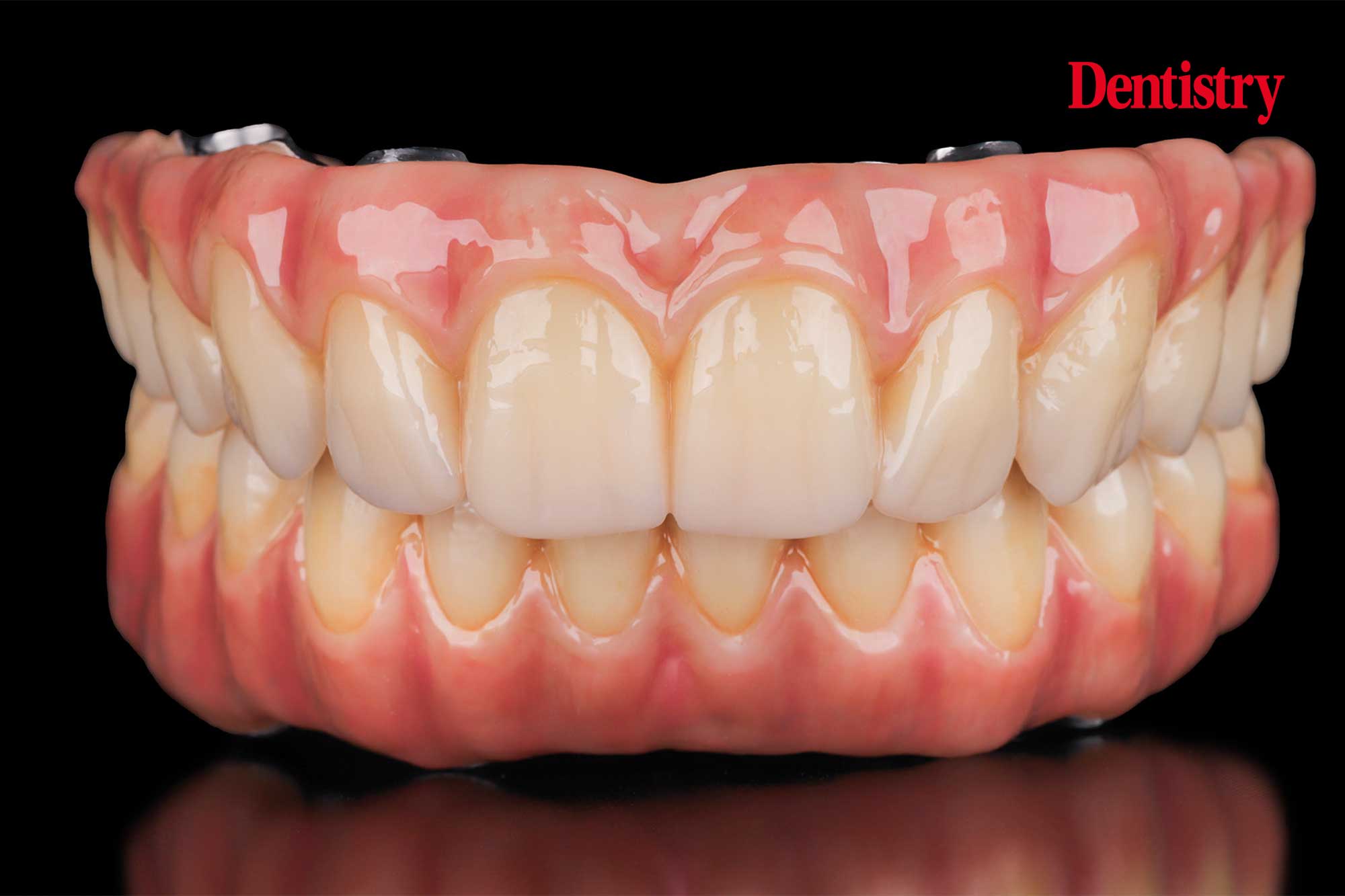
Roberto Sleiter and Vittorio Procopio present a case of bar-supported zirconia bridges on implants and Zirkonzahn multi unit abutments to explain how Prettau 2 Dispersive and Titanit 5 provide a perfect balance of stability and aesthetics.
An older patient with advanced generalised periodontitis, severely compromised dentition and distal edentulous areas in both jaws presented to the dental practice with the request for complete functional and aesthetic restoration within a reduced treatment time (Figures 1a and 1b).
The treatment included the following steps:
Firstly, extraction of all teeth in the upper and lower jaw, and immediate implantation following the all-on-four concept.
Then, parallelisation of implant positions with Zirkonzahn Multi Unit Abutments (Figures 2, 3, 4). Zirkonzahn Multi Unit Abutments are characterised by a 17° or 30° angle to compensate for any implant inclinations and with two different anti‑rotation connection types which allow intermediate positions.
Like all Zirkonzahn implant prosthetic components, the Multi Unit Abutments are available for more than 140 implant systems and are fully integrated into Zirkonzahn Software and workflow via corresponding libraries.
Exocad and 3Shape users may also download and implement the components for free in their design software through a dedicated portal.
Directly after implantation, a definitive impression and bite registration is taken.
This is followed by fabrication and insertion of fixed temporary bridges made from Prime Multistratum resin on the day of surgery (immediate implantation and immediate loading).
The next step is CAD/CAM-supported manufacturing of titanium bars in Titanit 5 as well as of two full arches in Prettau 2 Dispersive zirconia and subsequent sintering of the zirconia structures (Figures 5 and 6).
After this comes bonding of zirconia secondary structures onto the titanium bars and layering the zirconia structures with Fresco Ceramics.
– Individualisation of tooth shape and surface texture as well as characterisation with ICE Stains 3D by Enrico Steger to fulfil the patient’s aesthetic demands (Figures 7-9).
The final step is placement of the restorations on the implants using Zirkonzahn Multi Unit Abutments.
For more information about Zirkonzahn’s workflow and implant prosthetics components, visit www.zirkonzahn.com or contact Carmen Ausserhofer, T: +39 0474 066 662, carmen.ausserhofer@zirkonzahn.com.
This article is sponsored by Zirkonzahn.
Apa Reaksi Anda?
 Suka
0
Suka
0
 Kurang Suka
0
Kurang Suka
0
 Setuju
0
Setuju
0
 Tidak Setuju
0
Tidak Setuju
0
 Bagus
0
Bagus
0
 Berguna
0
Berguna
0
 Hebat
0
Hebat
0