


































































Maryland backs upper payment limits as other states have second thoughts on PDABs
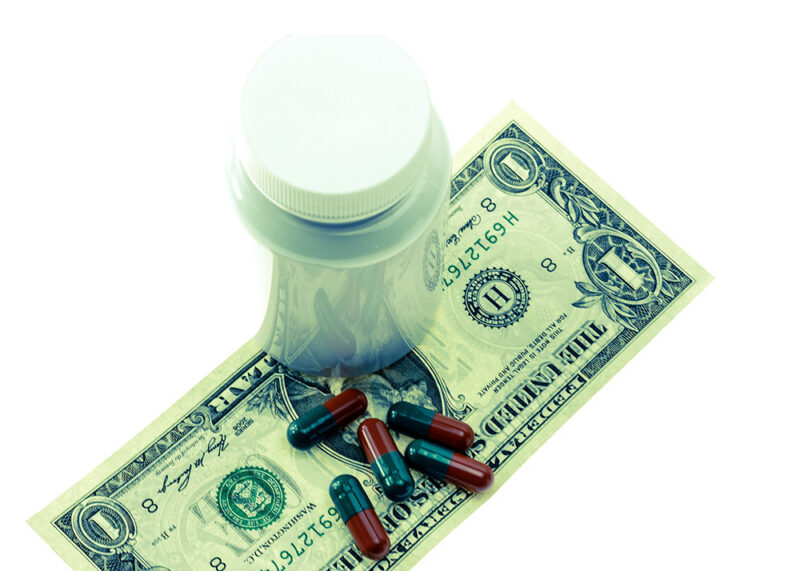
The recent decision by Maryland’s Prescription Drug Affordability Board (PDAB) to set upper payment limits (UPLs) on two prescription drugs is not expected to impact what patients pay for their medicine.
The limits, approved Nov. 16, only apply to what state and local government purchasers pay for the drugs, not the amount patients are charged at the pharmacy counter, according to the Baltimore Sun.
Set to go into effect Jan. 1, the limits would make Maryland one of the first states to enforce UPLs. The other state being Colorado, which established a UPL in 2025, which is temporarily being blocked by the courts. Maryland stands out for leaning into its PDAB at a time when other states are finding PDABs unworkable and are closing them or choosing against implementing them.
As their name suggests, Prescription Drug Affordability Boards (PDABs) are supposed to target affordability, but the question has become: Affordability for who?
Patients are not seeing reductions in out-of-pocket costs due to PDABs. State governments, which often spend millions on these boards, have yet to realize savings. Meanwhile, the price controls attempted by PDABs can limit access to drugs for patients and have a dampening effect on investment and innovation.
“PDABs target the wrong problem,” explains the Biotechnology Innovation Organization (BIO) in a new infographic. “PDABs limit what insurers and other institutions pay for a medicine. But a lower payment limit does not necessarily translate to lower out-of-pocket costs for patients.”
The wrong lever
Nine states have passed legislation establishing PDABs. While the rules vary, the basic concept is that a PDAB can review the price of individual drugs and set limits on the amount paid for that drug by state institutions or private insurers. The approach has not achieved the desired results.
“The lever that they’re pulling has a single effect: It reduces the amount of money that insurance companies and their PBMs pay for prescription drugs. But they are not legally required to pass those savings on to consumers,” according to Brian Warren, BIO VP for State Government Affairs. “This can allow PBMs and insurers to be more profitable without improving affordability for patients.”
Furthermore, UPL caps established for drugs through a PDAB can reduce access to that drug, research in The American Journal of Managed Care shows.
“Given existing incentives in coverage decisions, payers may remove UPL drugs from formularies, shift them to higher cost-sharing tiers, or impose stricter utilization management,” and pharmacies may choose to stop stocking drugs if they might lose money by selling them, the research says.
Maryland moves forward as others wind down
As states rethink PDABs, many are closing them or choosing not to implement them:
- New Hampshire voted to close its PDAB last year for being costly and ineffective.
- Ohio defunded its PDAB last year after years of inactivity.
- Vermont decided against a PDAB after a state study found it unworkable.
- Virginia’s governor vetoed efforts to pass PDAB legislation.
- Colorado’s first attempt at setting a UPL was blocked by a federal judge.
- Illinois legislation to lower drug prices was struck down in court, and related PDAB legislation failed in the legislature.
“PDABs are difficult to implement” and require significant resources, says BIO’s infographic. “PDABs across six states have cost more than $28 million to establish and operate.”
Nonetheless, Maryland is moving ahead with PDAB price controls.
As the Maryland Tech Council noted when the state’s PDAB recommended the first UPL in April, price controls can harm innovation, something a state that relies on a robust biotech industry should avoid.
“While tech incubators, centers of innovation, universities and elected officials are working hard to increase the state’s competitiveness, Maryland’s unelected PDAB is putting Maryland’s future as a life sciences leader at risk,” says a statement from the Maryland Tech Council, a BIO affiliate.
“Policies that may alter reimbursement structures or limit market viability can have a chilling effect on investment particularly for early-stage and mid-sized firms that drive much of Maryland’s innovation economy,” says the statement, noting that barriers to innovation also deter America’s efforts to compete globally for biotech leadership.
The post Maryland backs upper payment limits as other states have second thoughts on PDABs appeared first on Bio.News.
Apa Reaksi Anda?
 Suka
0
 Kurang Suka
0
 Setuju
0
 Tidak Setuju
0
 Bagus
0
 Berguna
0
 Hebat
0






