




















































%20and%20Batch%20Production%20Records%20(BPR).png)
















BIO 2026: As capital returns, focus on quality over quantity
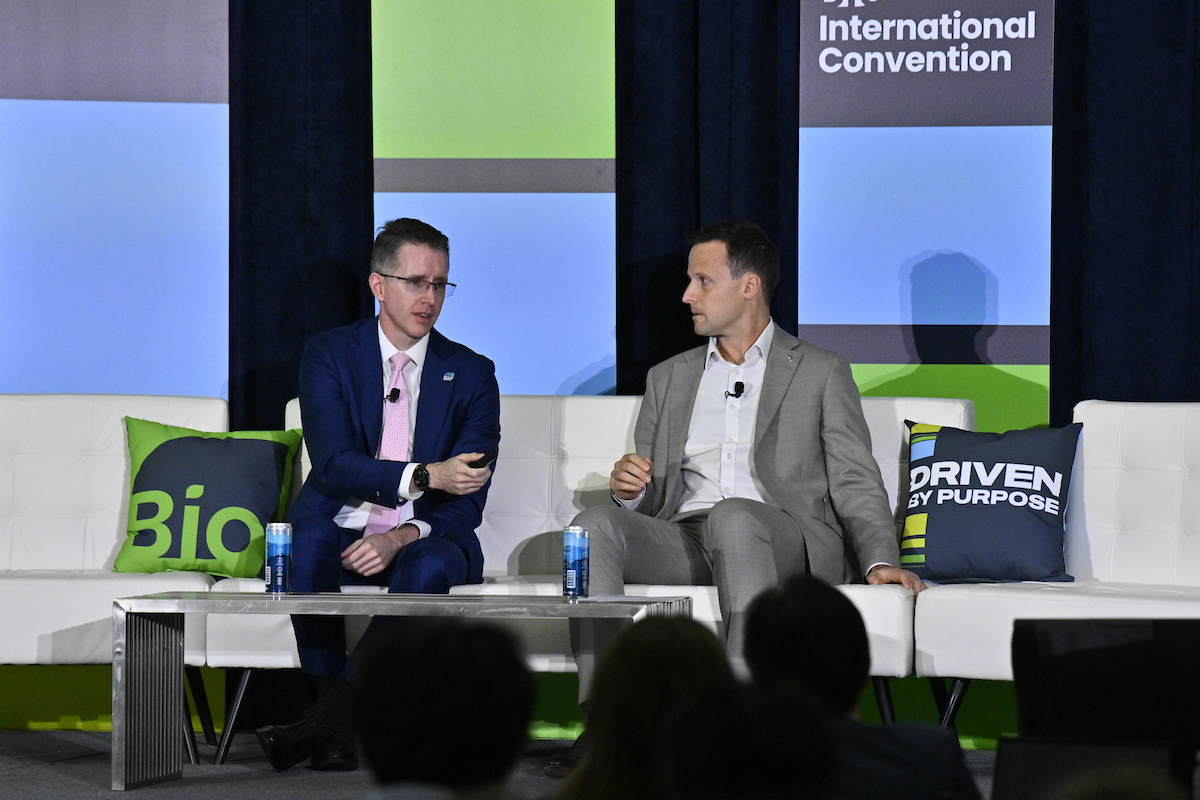
“Last year was a very business-as-usual year,” said Daniel Chancellor, VP of Thought Leadership at Norstella, “and has been followed by a year that was totally anything but.”
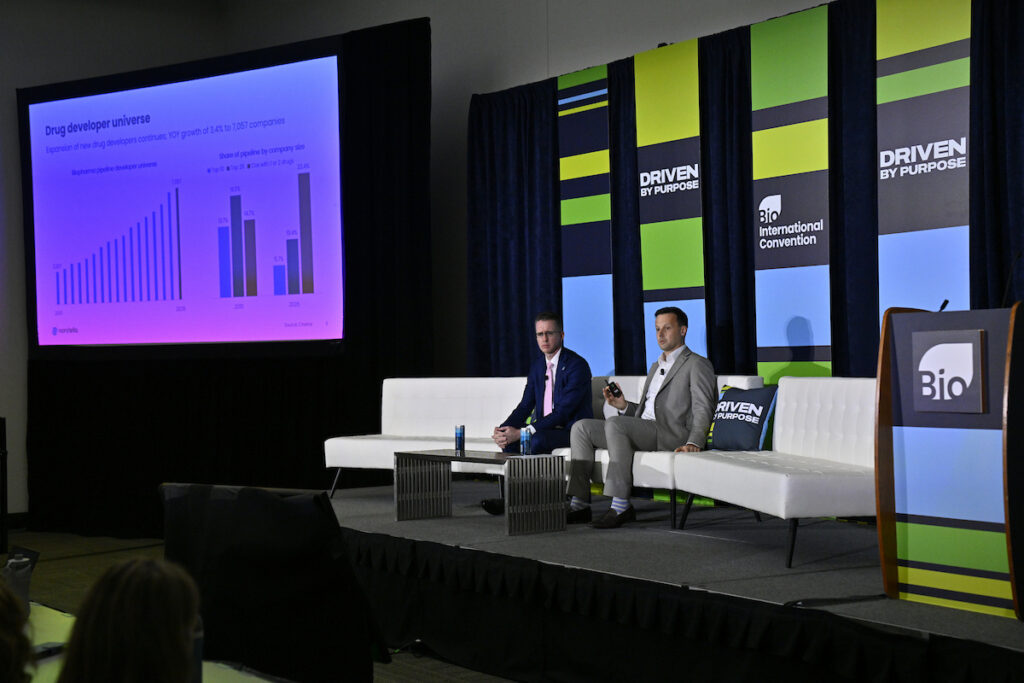
His comments came during the presentation of a new report, The State of Emerging Biotech: Investment, Deals, and Pipelines Report, produced by the Biotechnology Innovation Organization (BIO) and Norstella and released at the 2026 BIO International Convention on June 23.
Despite the changes, the industry has produced 58 novel approved therapeutics, tracking with the long-term average of 60 per year.
While last year’s report found the biotech industry acting bearishly during the post-2021 slump, it is no longer in recovery mode. Investors are concentrating resources on later-stage, clinically validated assets over preclinical drugs. Capital has returned, dealmaking is strong, and pipelines are maturing. With more R&D funding directed toward fewer drugs, the industry is prioritizing efficiency above all else.
How efficiency is reshaping the biopharma pipeline
That trend is reshaping the entire industry – in the U.S. and worldwide.
“The pipeline contracted last year, and it wasn’t just a small contraction,” said Chancellor. “It was a meaningful 4 percent decline in the number of drugs that the industry as a whole is developing. This includes U.S. companies, Chinese companies, European countries, everywhere globally, and also preclinical stage assets.”
The global biopharma R&D pipeline hit 22,940 for new drugs under development in 2026. This number reflects a 3.9% decline in the pipeline – the first time in 15 years – despite a 45% year-over-year increase in R&D funding.
But this isn’t necessarily bad news.
Biopharma companies are playing a short game to play a long game, shifting support to drugs beyond the preclinical phase. Preclinical programs fell 14%, while Phase II and Phase III programs grew roughly 9%.
Accordingly, biopharma companies killed off more new drugs than ever before, introducing killer tests earlier in the pipeline to weed out drugs not showing promise.
They are also spending more time on each drug. The median timeline from Phase I testing to FDA approval is now 9.3 years, which has increased by one month over the past five years.
In return, they are being rewarded with higher success rates in late-stage trials among their more developed drugs, which are receiving more funding.
“More of the later-stage companies are very successful in progressing, because there’s been a lot of focus – from both large pharma and from the investors – on later-stage products to refill the pipelines of the larger companies,” said Chad Wessel, Senior Director, Emerging Companies Special Initiatives at BIO.
While early-stage companies are not necessarily out of the game, they have to be smart.
“Early-stage companies need to be nimble and flexible,” he said.
Drug programs maintain established trends
Despite shifting priorities in the pipeline, trends in the types of drugs prioritized are relatively stable. Oncology drugs, for example, now account for 47% of drugs in development, a 3% increase from 2024.
For comparison, neurological drugs occupy a remote second place at 10% of drugs in development.
A substantial minority of drugs produced for oncology and neurology address rare diseases. Since 70% of drugs for both disease categories are produced by emerging biotechs, this may reflect these smaller companies attempting to find a niche within the industry to differentiate themselves from their many competitors.
VC is driving emerging biotechs
Emerging biotechs remain the industry’s innovation engine. New companies account for 41 of 58 FDA novel drug approvals in 2025, roughly 71% of all FDA approvals. They’re now developing 72% of the U.S. clinical pipeline, up from 55% a year ago.
While venture capital sees this trend, they are favoring those with demonstrated potential.
In 2025, venture capital investment reached its highest point since the COVID pandemic at $23 billion, a 23% increase over the previous year. During that same period, clinical-stage funding increased by 55%, while preclinical funding declined by 17%.
Notably, from a 2023 lull of 42 rounds, U.S. $100M+ financings have climbed two years running – to 57 in 2024 and 65 in 2025, a 55% recovery. A record 22 Series A mega-rounds in 2025 show the rebound is led at the earliest stage, as reported by BIO.
The number of VC deals with companies in clinical-stage rounds jumped 37%, the second year in a row this figure exceeded deals with companies in pre-clinical rounds.
What does this mean? Capital is available, but investors increasingly want human clinical data before writing large checks.
The impact of layoffs
The emphasis on efficiency also extends to workforce practices. Layoff announcements in the first three quarters of 2025 were among the highest in the post-pandemic era at 65, 61, and 60, respectively, before falling sharply to 37 in Q4. Employees at small-to-mid companies were equally likely to be laid off as their counterparts in large companies.
But conversations at the 2026 BIO Convention have proven hopeful, as many early-stage companies are starting to ramp up hiring in an eager venture market.
“There is a lot of traction in the landscape for small emerging companies,” concluded Wessel. “So long as they have good science and they’re able to progress.”
The post BIO 2026: As capital returns, focus on quality over quantity appeared first on Bio.News.
Apa Reaksi Anda?
 Suka
0
Suka
0
 Kurang Suka
0
Kurang Suka
0
 Setuju
0
Setuju
0
 Tidak Setuju
0
Tidak Setuju
0
 Bagus
0
Bagus
0
 Berguna
0
Berguna
0
 Hebat
0
Hebat
0