















































%20and%20Batch%20Production%20Records%20(BPR).png)












Bispecific Antibody Purification’s Complexity Problem and How to Fix It
Sponsored content brought to you by

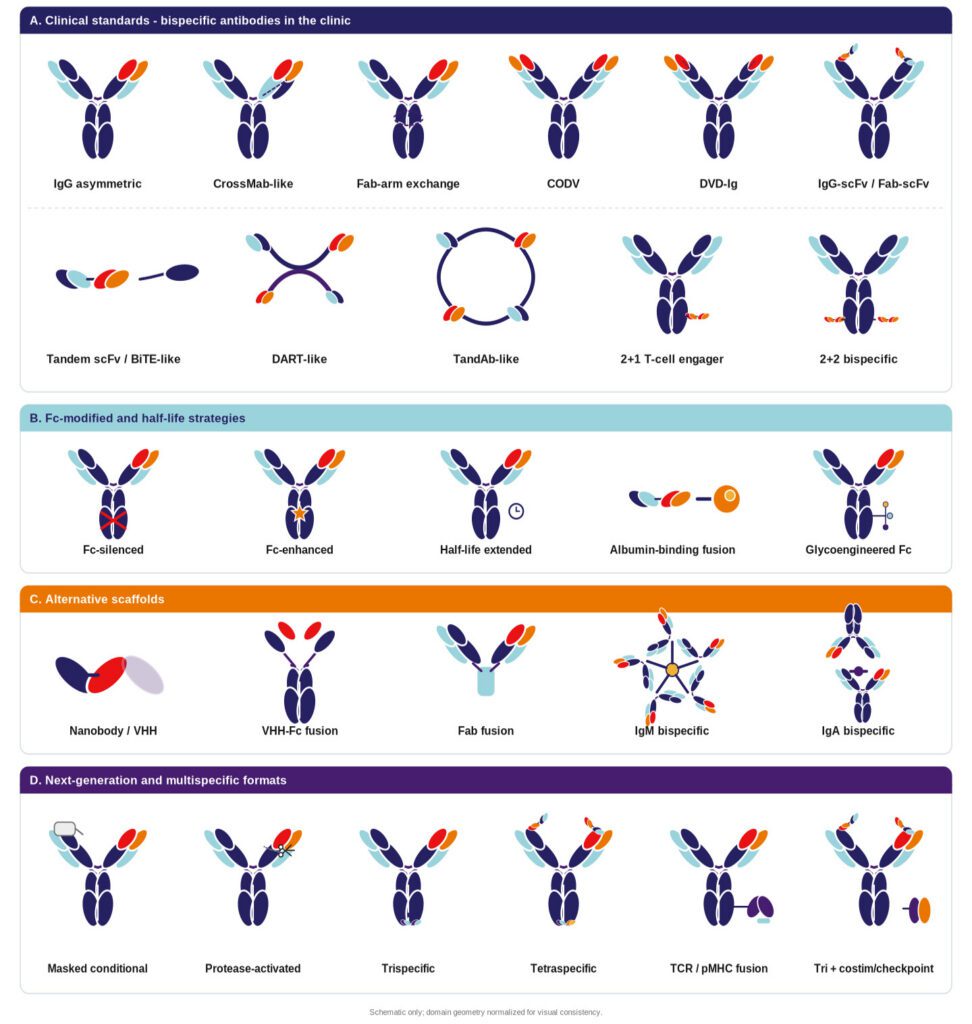
Much has been written about how bispecific antibodies have expanded the biologics landscape by making it possible to engage multiple targets simultaneously and unlock new mechanisms of action. But their structural complexity introduces significant workflow challenges for downstream purification that are often more pronounced than those associated with traditional monoclonal antibodies.
To move bispecific therapies into the clinic faster, developers need robust purification processes that can achieve high purity and yield. This is where approaches that leverage analytical insights with flexible process design become increasingly important. In a recent webinar, Joshua Orchard, a field applications staff scientist at Thermo Fisher Scientific, used a series of case studies to outline the key purification challenges of bispecific antibodies and how analytical insights can guide the selection and optimization of affinity and non-affinity chromatography steps.
A central theme of the webinar is that the purification should be guided by the analytics. The diversity in format, size, domain architecture, and binding configurations of bispecifics create something of a moving target, where no single platform can be universally applied. Being successful requires “listening to what the analytics are telling us” and “what directions we need to go” in terms of what technologies to use, Orchard said. “We’ve got all of these bispecific antibodies that have so many different challenges [and] so many unique situations” and so “we have to make smart decisions.”
Case study one: light chain–driven separation
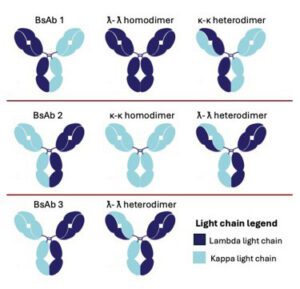
The first case study involved bispecifics that contained both kappa and lambda light chains. Initial experiments focused on screening several resins to identify those with a high dynamic binding capacity for different bispecifics. Within the kappa-targeting resins, the CaptureSelectTM KappaXP Affinity Resin and a protein L affinity resin demonstrated the strongest performance of those tested with binding capacities exceeding 40 mg/mL.
Subsequent pH-gradient elution experiments (from pH 6 to pH 2.5) revealed a clear separation between the target bispecifics and homodimer impurities, with the highest resolution coming from the CaptureSelect KappaXP resin.
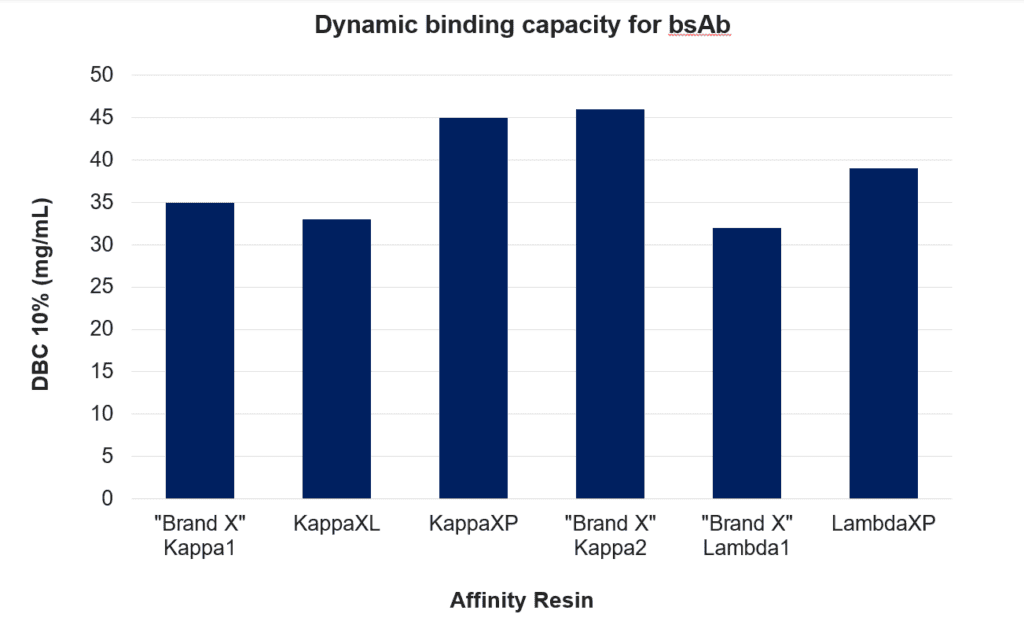
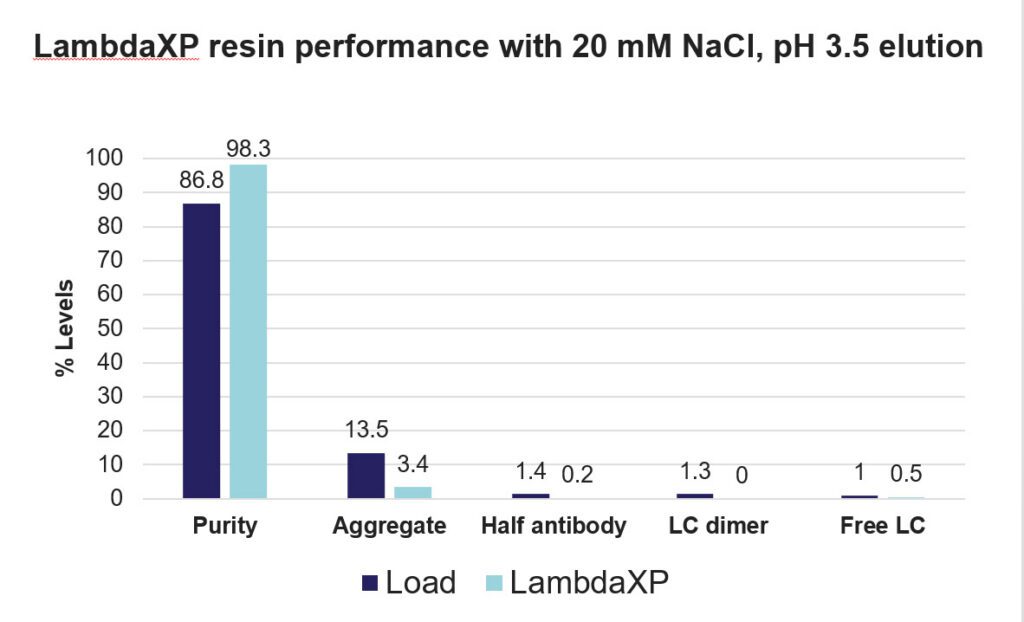
Despite these gains, there are trade-offs. Specifically, better separation often came at the cost of reduced yield, and the higher elution modifier concentrations required to achieve separation may be challenging to scale-up.
Case study two: aggregate reduction at capture
Improving process efficiency is at the heart of this next case study. Specifically, reducing the burden on downstream polishing by addressing high aggregate levels earlier in the workflow. The starting point was a bispecific antibody with elevated aggregate content (~17–23%) that was not effectively removed during traditional protein A capture. For the study, the scientists evaluated another Fc-targeting resin that binds a different epitope than protein A, CaptureSelectTM FcXP Affinity Resin.
According to the results, the MabSelect SuReTM LX protein A resin had a typical elution profile and the resulting pool contained ~91.3% monomer and ~8.4% aggregate. In contrast, the CaptureSelect FcXP resin produced a distinct elution profile with about 99.7% monomer and only about 0.2% aggregate.
The scientists then extended the approach to a more challenging bispecific with 23% aggregate. Using the alternative Fc-binding resin, scientists obtained a clearer separation with reduced aggregate content of less than 5% in the elution pool, monomer purity of up to 99% in optimal fractions, and overall recovery of above 80%.
Case study three: leveraging CH1 selectivity for complex mixtures
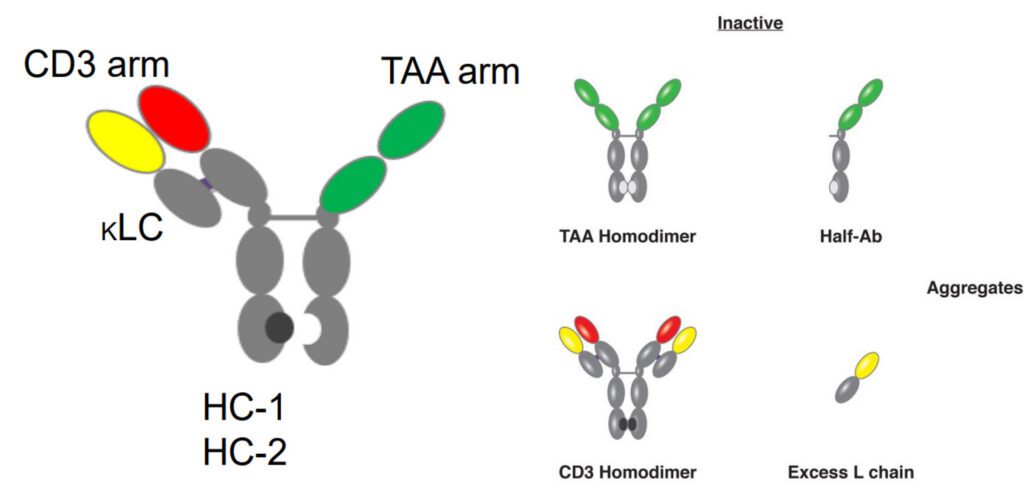
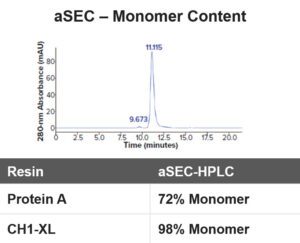
These characteristics made CH1 affinity chromatography a logical alternative. That is because CH1 resins selectively bind antibodies containing the CH1 domain but do not bind free light chains making it possible to exclude the three types of impurity during capture, with only minor residual impurities.
Case study four: charge-based separation of complex variants
A particularly challenging case study focused on a bispecific with an Fc domain fused to single-chain variable fragments, leading to the formation of multiple variants including disulfide-linked diabodies. This example shifts the focus away from affinity chromatography toward the application of ion exchange resins for the removal of product-related impurities.
According to the data, initial weak cation exchange HPLC analysis revealed separation between monomer charge variants and the diabody species suggesting that charge-based methods might be an effective preparative tool. As a first step, scientists evaluated separation across increasing pH conditions. The clearest separation was achieved at pH 8.1 which resulted in about 98% monomer purity and effective variant removal. Then the team evaluated the performance of the POROSTM 50 HS Strong Cation Exchange Resin against a smaller particle size resin. Though the initial chromatogram showed a slightly lower resolution of the species, the analytical data revealed a better performance. Starting from a load with about 89% purity and 12.5% diabody content, the resin reduced the diabody to below detectable levels in the elution and achieved ~74% yield, compared to 68% from thealternative resin in the study.
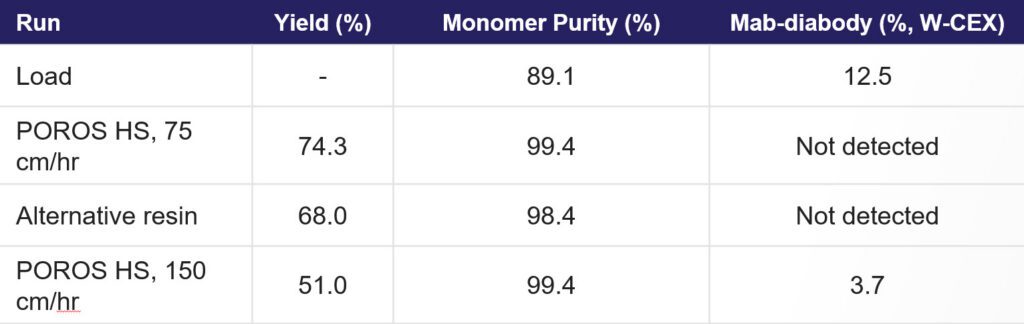
Furthermore, the data showed that increasing the flow rate improved process efficiency with some tradeoffs including reduced yield and partial reappearance of the diabody species. It suggests that further gradient optimization could improve the resin performance.
Case study five: exploiting pI differences
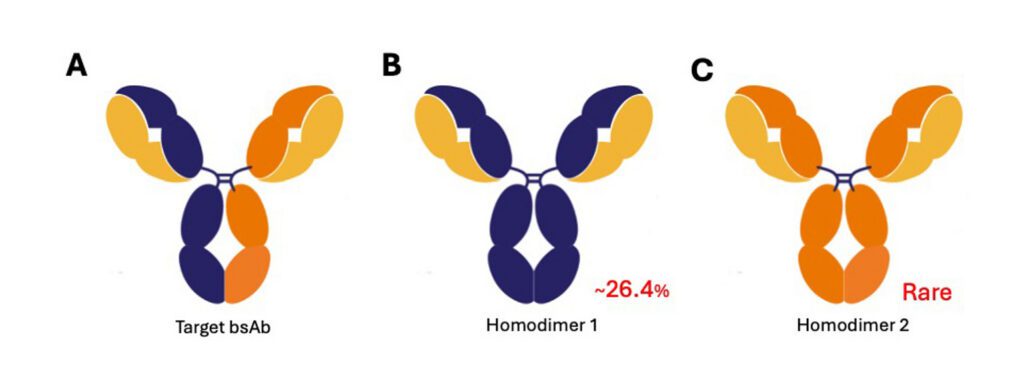
Initial screening across multiple resins identified the POROSTM 50 HQ Anion Exchange Resin as offering superior separation potential of the resins screened in this study. By optimizing the pH, conductivity, and loading conditions, this approach achieved greater that 90% heterodimer yield and about 99% removal of the homodimer impurity. An additional benefit of the approach was a three-fold reduction in aggregate levels.
Case study six: reversing the strategy based on charge profile
This case study builds on the previous example with a variation in impurity behavior. It involves an asymmetric IgG captured using protein A followed by a polishing step to reduce product-related impurities that accounted for about 30% of the product pool. Importantly, these impurities had a higher isoelectric point (pI) than the intact bispecific unlike the previous case where the target molecule had a higher pI.
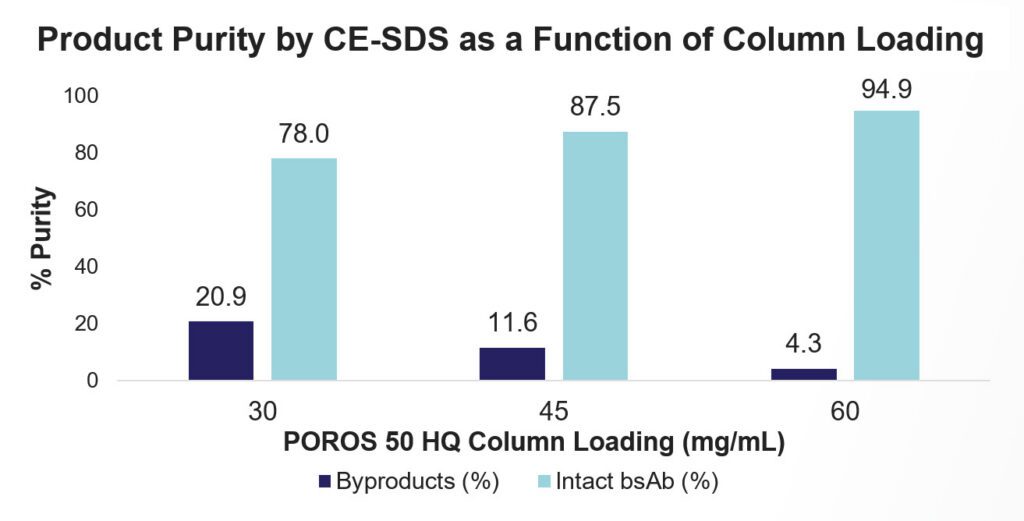
There was a trade-off as step yield decreased when loading increased, with overall recovery ranging from about 53% to 63% pointing to some possible opportunities for optimization particularly balancing impurity clearance with yield.
Case study seven: resolving light chain mispairing using charge-based separation
Charge-based separation can also address light chain mispairing as this next case study demonstrated. Correctly paired bispecifics display distinct, positively charged surface patches, while mispaired species disrupt this charge distribution. The differences in surface changes point to the possibility of using cation exchange chromatography.
Initial experiments identified a range of pH 5.5–6.5 and 200–350 mM sodium acetate as the optimal condition for achieving selective separation. Under these conditions, the wash step effectively removed mispaired species while the elution step selectively recovered the bispecific. The process increased product purity from ~60% to ~95%.
Resolving aggregate challenges across modalities
Aggregates remain one of the most persistent challenges for bispecifics developers. While they can be difficult to manage, there are a range of chromatography options that can be helpful for addressing them. “Traditional cation exchange chromatography works very well” and “our POROS XS Strong Cation Exchange Resin has a high dynamic binding capacity, which should help alleviate some of [the] more moderate aggregate issues.” For slightly more severe cases, hydrophobic interaction chromatography can be effective. Resins such as POROSTM Benzyl Ultra Hydrophobic Interaction Chromatography Resin operate in flowthrough mode and can be easily coupled to upstream anion exchange.
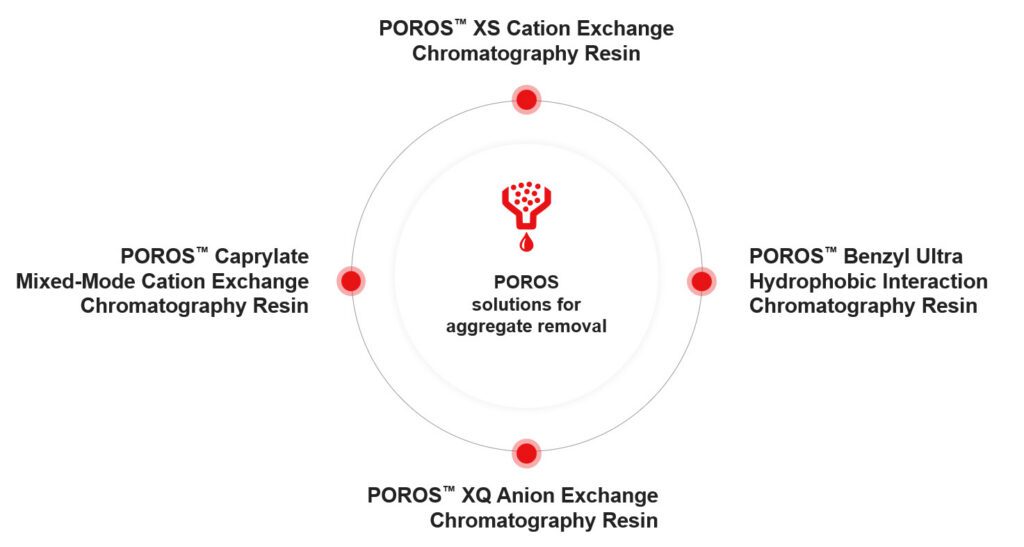 Caprylate Mixed-Mode Cation Exchange Resin, demonstrates aggregate reductions of up to 20%. However, it typically requires more extensive process development.
Also, cation exchange chromatography can contribute to aggregate reduction. Internal studies comparing multiple resins showed that aggregate levels could be reduced from ~7% to below 2% under optimized conditions for a model IgG (pI ~8) following protein A capture.
Conclusion
Bispecific antibodies present a wide range of structural and physicochemical challenges, that makes applying standardized platform approaches significantly more challenging. For the most optimal results, manufacturers need customized purification strategies that account for the structural diversity of these therapeutics. Affinity-based approaches, including CaptureSelect affinity resins, provide valuable options when protein A binding is altered or absent.
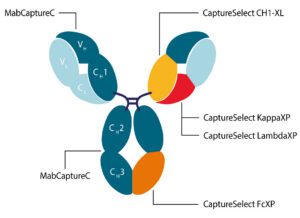 resins targeting other antibody subdomains. [Thermo Fisher Scientific]
Bispecific antibodies are gaining momentum, and the demands on downstream purification will continue to grow. The case studies presented here illustrate how analytical insight forms the foundation of effective process development. Ultimately, effective purification depends on selecting appropriate tools based on analytical insights and systematically exploring process conditions to build workflows that balance purity, yield, and scalability.
The post Bispecific Antibody Purification’s Complexity Problem and How to Fix It appeared first on GEN - Genetic Engineering and Biotechnology News.
Apa Reaksi Anda?
 Suka
0
Suka
0
 Kurang Suka
0
Kurang Suka
0
 Setuju
0
Setuju
0
 Tidak Setuju
0
Tidak Setuju
0
 Bagus
0
Bagus
0
 Berguna
0
Berguna
0
 Hebat
0
Hebat
0