
























































GDC English-language proposals could add £300 to ORE applicants’ costs
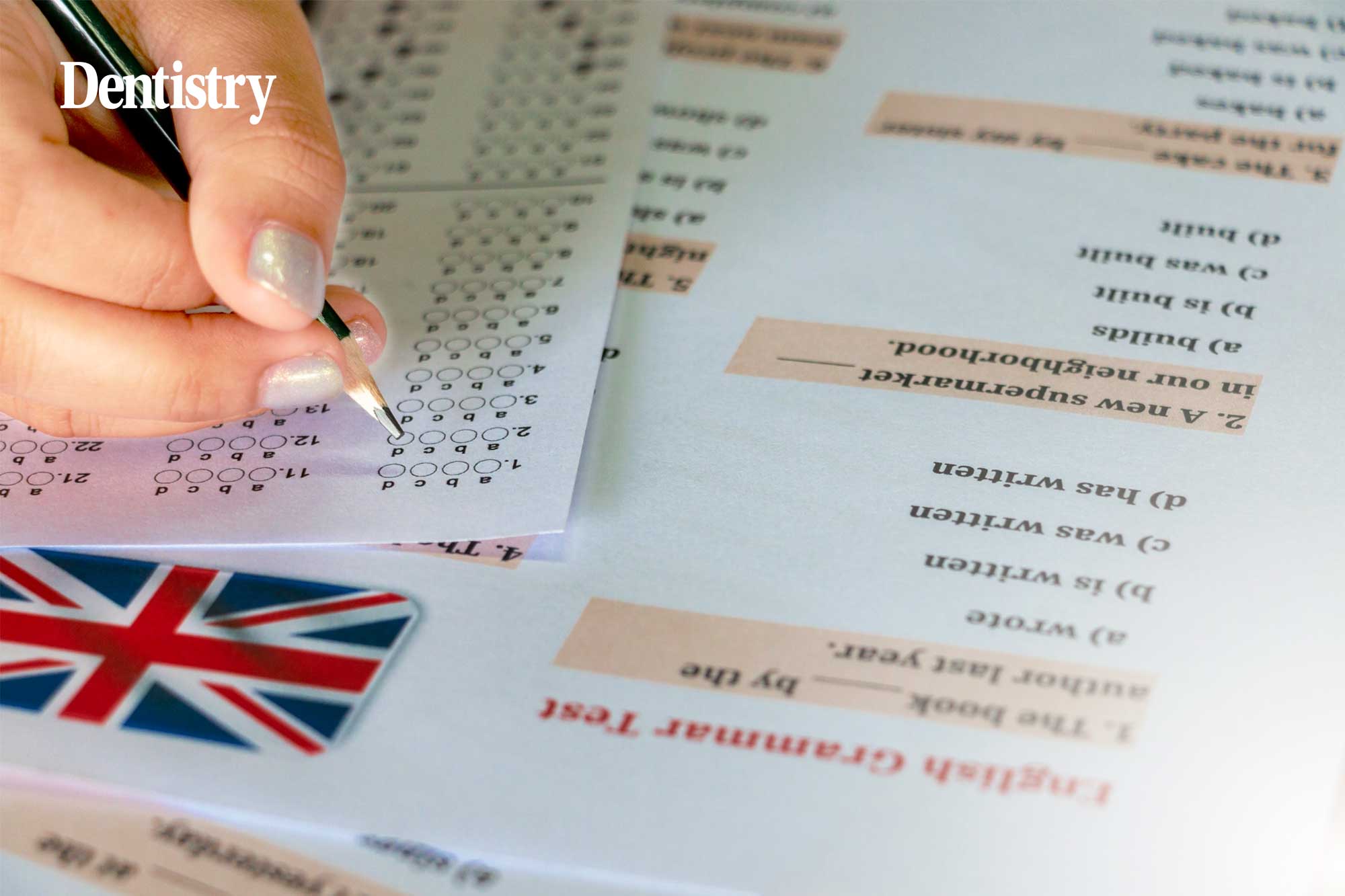
Overseas-qualified dentists could face English-language test costs of £200-£300 under General Dental Council (GDC) proposals to restrict the evidence accepted for registration.
GDC modelling suggested approximately 90% of dentist applicants currently using a qualification taught and examined in English would lose access to that evidence route.
The proposals would limit qualification and clinical-experience evidence to countries on the UK government’s English-speaking list, while widening the choice of recognised language tests.
Applicants who could no longer use the qualification-based route would need another accepted form of evidence to demonstrate their English-language competence.
Additional costs after ORE fee increase
The papers presented to the GDC’s council on 30 October reported a five-year average of 480 dentist applications annually using qualification-based English-language evidence.
Applicants who consequently needed a language test could face costs of roughly £200-£300, depending on the provider and country, the council papers said.
That proposed cost would follow the 65% increase in the Overseas Registration Examination (ORE) Part 2 fee announced earlier this year. The fee rose by £2,732, from £4,235 to £6,967.
Dentistry also reported booking difficulties and plans for a new ORE candidate portal.
At its September council meeting, the GDC reported an ORE waiting list of more than 8,000.
Which applicants could be affected?
India, Pakistan, Egypt, Sudan and Nigeria were the five leading countries represented on the ORE waiting list, GDC chief executive Tom Whiting told June’s LDC conference. He said the number from India was substantially higher than from the other countries.
None of those five countries appears on the government list referenced in the proposed English-language guidance. A dental qualification obtained in one of these countries would therefore no longer qualify for the proposed qualification-based evidence route simply because it was taught and examined in English.
Recent clinical experience in a listed country could provide an alternative where it met the GDC’s criteria. The draft also retained a route for other evidence meeting the regulator’s requirements.
The proposal concerns where qualifications or clinical experience were obtained, rather than nationality.
The government list referenced in the draft guidance is shown below:
Which language tests are proposed?
The GDC identified five tests it proposed accepting:
- Occupational English Test (OET) Dentistry, including paper, computer and OET@Home formats
- International English Language Testing System (IELTS) Academic, including IELTS One Skill Retake and IELTS Online
- Cambridge C1 Advanced, digital format only
- Test of English as a Foreign Language (TOEFL) iBT, including the at-home format
- Pearson Test of English (PTE) Academic.
These are proposed options, rather than confirmation that all are currently accepted.
In a blog published on 4 November, GDC chair Dr Helen Phillips said the existing guidance was more than 10 years old and ‘does not reflect the wider options that are now available, or meet applicants’ needs’.
She said the regulator had listened to calls to modernise its requirements while maintaining the standards patients expected.
Expired evidence and transition arrangements
The draft also addressed candidates whose English-language evidence expired while waiting to complete the ORE. In those circumstances, a Part 2 pass would provide sufficient evidence of English-language competence, provided they applied for registration within two years of passing.
The consultation documents set out a response period from 9 November to 18 December 2026, with final guidance due to return to council for approval in March 2027.
The GDC also proposed transitional arrangements for applicants who had already begun preparing applications.
Read our guide to the Overseas Registration Examination for background on the registration process.
Create a free account for unlimited access — plus the Dentistry Bulletin delivered to your inbox.
Apa Reaksi Anda?
 Suka
0
 Kurang Suka
0
 Setuju
0
 Tidak Setuju
0
 Bagus
0
 Berguna
0
 Hebat
0