































































CGT Manufacturing Success in Asia Requires Standardization and Flexibility

Growing recognition of cell and gene therapy (CGT) capabilities and opportunities in Asia sometimes obscure the fragmented reality of manufacturing there. This is partially reflected in which technologies initially excelled in each country.
For example, Japan, long a leader in induced pluripotent stem cell (iPSC) technology, this year became home to the first regulatory approvals for iPSC therapies.1 China is the global leader in CAR T therapy trials.2 Korea’s expertise with mesenchymal stem cells (MSCs) has made it a home for regenerative medicine, and other cell therapy modalities have been approved there as well.3
What works in one country cannot be easily replicated elsewhere by simply adding manufacturing capacity across a border. Developers seeking to bring a therapy to multiple countries in Asia may encounter different regulations, import requirements, reimbursement environments, manufacturing capabilities, and availability of raw materials. A manufacturing strategy designed for one country may not transfer directly to another.
Making CGT manufacturing work across Asia will require a balance between two things that can sometimes appear to be in tension: standardization and flexibility. The core manufacturing process should become increasingly standardized and connected, while certain elements need to remain adaptable to local requirements.
One region, many markets
Manufacturing complexity, supply-chain constraints, cost pressures, and the need for reproducibility are global issues in CGT manufacturing. However, developers used to the U.S. or European marketplaces and working with the FDA or the EU’s centralized marketing authorization framework for advanced therapy medicinal products (ATMPs), have had trouble establishing similar footprints across Asia.
A developer seeking to access multiple Asian markets cannot necessarily establish one manufacturing site and assume that it will serve the entire region. Local manufacturing may be required, and the manufacturing process may need to accommodate country-specific requirements. That could reflect such differences as raw material standards, qualification requirements or local availability, which may require certain media, reagents, or other process inputs to be reassessed when transferring a process between markets such as Japan and China.

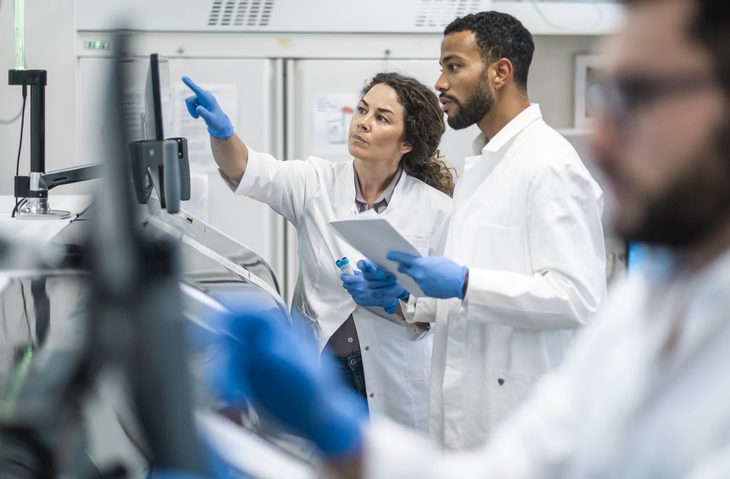
A photo of a lab team in Vietnam. [Terumo Blood and Cell Technologies]
Manufacturing economics can also vary significantly across the region; India, for example, has developed lower-cost CGT manufacturing models. This becomes particularly complicated for processes such as CAR T manufacturing, which can involve more than 13 individual steps and numerous media, reagents, and other inputs. Material that is appropriate for one market may not necessarily be available or acceptable in another.
This drives the fundamental manufacturing question: how can developers establish a process that is sufficiently standardized to transfer between sites while retaining enough flexibility to accommodate local realities? The answer may vary from one manufacturer to another, but is best addressed early in therapeutic development, rather than trying to retrofit an established.
Standardize the core, localize the variables
This is not to suggest developing an entirely different manufacture process from one country to another, which would only drive-up costs and the burden of technology transfer. Instead, developers should consider which elements of a process need to remain consistent and which can accommodate controlled variation.
As the CGT field matures, we understand “the process is the product” is only partially true: not every element of manufacturing is critical to outcomes.
In Asia, the core manufacturing workflow and critical equipment can provide a common foundation across sites. Other components, including certain media, activators, and reagents, may need to be adapted according to local production, supply, and regulatory requirements. This creates a modular approach: standardize what is essential to process consistency, while allowing flexibility where local differences make it necessary. The appropriate balance can also change as a therapy moves through development.
During R&D, flexibility is often more important. Developers may need to experiment with different process conditions and materials, and manual operations can provide useful flexibility while a process is still being established. As a therapy progresses toward clinical development, the priorities begin to shift.
Integration matters more than individual steps
A useful way to navigate the competing pressures of cost efficiency and speed-to-milestones is to look beyond individual process steps and instead consider manufacturing in functional groups. For example, a CAR T manufacturing process can be divided functionally into four broad modules: collection, isolation, cell engineering and expansion, and fill-finish.
Within each module, there can still be multiple individual steps performed on different devices or platforms, which means repeated cell transfers and manual interventions. Individual pieces of equipment may perform their intended functions very well, but problems arise between those systems: cells may need to be transferred from one device to another. Operators may need to intervene manually. Process information may need to move between separate software systems.
The characteristics of an intermediate cell product need to be maintained and understood as it moves through the workflow. Many interfaces can introduce complexity and variability even when the individual manufacturing steps themselves are well controlled.
This is where modularity becomes beneficial. By integrating multiple steps within each module, workflows can reduce the number of interfaces needed, thereby maintaining flexibility where required but simplifying and standardizing wherever possible.
Consider, for example, the cell engineering/expansion within a CAR T workflow, which may include activation, viral transduction, and expansion. Transferring between these particular steps is often done manually and in open systems, leading to inefficiencies and inconsistencies. A more streamlined approach is to integrate these steps within a single, closed system, reducing the need for repeated transfers and manual intervention.
Where appropriate, the system can also support serum-free culture conditions. By using defined commercial media and reagents and following established process protocols, this simplified module can be more readily replicated across manufacturing sites and countries, supporting more consistent and GMP-compliant manufacturing.4 Useful integration requires more than physically connecting equipment. Data transfer between systems must be seamless, and handling should be minimized.
Automation should be strategic, not intrinsic
Automation will be an important and necessary part of manufacturing across borders in Asia, but not automation for its own sake. The goal is not to automate more steps, but to automate the right steps at the right time, keeping future scale and market expansion in mind.
Especially in Asia, manufacturing strategies need to work across markets with different economic conditions. Where manufacturing costs are already under significant pressure, automating every step may not produce the right economic outcome. More useful is determining where automation provides the greatest benefit in terms of consistency, labor requirements, process control, and cost.
The same principle applies across development stages. A highly automated process may be appropriate for a mature clinical or commercial process, but an R&D process needs greater flexibility as innovative methods are developed that can be widely applicable.
Decisions of where to automate should prioritize steps with high manual dependency, variability, or future bottleneck risk. Automation should be planned with the future manufacturing model in mind, including target markets, multi-site manufacturing, and technology transfer needs.
As more manufacturing data become available, AI and other digital technologies beyond automation could eventually help manufacturers predict how a particular starting material is likely to behave under the varying conditions necessitated by manufacturing in different locations.
The technology has to mature in step with an appropriately trained workforce. Asia has a strong scientific talent base, but a significant gap remains in specialized expertise for producing cell-based medicines under GMP conditions.
Manufacturing requires people who can execute highly controlled, repeatable processes, understand quality requirements, and operate increasingly sophisticated production systems. This is why several Asian markets are investing in GMP-focused training programs and workshops. These initiatives can help bridge the gap between academic expertise and the practical requirements of cell therapy manufacturing.
A regional ecosystem model
Expanding access to CGTs across Asia depends on approaching manufacturing to fit an ecosystem rather than a collection of isolated environments. Doing so starts from manufacturing models that reflect the reality of separate national markets rather than assuming that one centralized site can serve the entire region.
Developers can start from a standardized core of not just platforms but processes themselves. Critical steps and equipment should be designed for reproducibility and technology transfer under a variety of circumstances.
Conversely, materials and other inputs should be adaptable where local regulatory, supply, or economic conditions require it. Modularity can help reconcile the divergence of standardization and flexibility, so long as modules work together physically and digitally, minimizing unnecessary transfers and manual interventions.
The last piece is the technology itself. Automation should be applied where it meaningfully improves consistency, efficiency, or scalability. Consistent data capture and traceability will become increasingly important as manufacturing becomes more automated and predictive.

Jerry Huang, PhD, Terumo Blood and Cell Technologies
Asia’s diversity is not going away. While the region would benefit from alignment in certain sectors, it does not necessarily need to. The manufacturing challenge is to build systems that can accommodate that diversity without allowing every local variation to necessitate a completely new process.
Jerry Huang, PhD, is market development and marketing manager at Terumo Blood and Cell Technologies.
References
- World’s first two iPSC therapies in Japan. Nat Biotechnol 44, 498 (2026). https://doi.org/10.1038/s41587-026-03105-4
- Gale RP. Chimeric antigen receptor-T-cell therapy: China leading the way. Blood Sci. 2022 Jul 20;4(3):176. doi: 10.1097/BS9.0000000000000118. PMID: 36518600; PMCID: PMC9742101.
- Curocell’s RIMQARTO Inj. Wins Full Regulatory Approval, Poised to Enter CAR T Market with 67% Complete Response Rate [Internet]. Business Wire. 2026. Available from: https://www.businesswire.com/news/home/20260429207749/en/Curocells-RIMQARTO-Inj.-Wins-Full-Regulatory-Approval-Poised-to-Enter-CAR-T-Market-with-67-Complete-Response-Rate
- Wang Q, et al. A 3-in-1 integrated automated platform for rapid CAR T cell manufacturing: activation, transduction, and expansion in a hollow-fiber system. Cytotherapy, 2025; 27, 1001-1012
The post CGT Manufacturing Success in Asia Requires Standardization and Flexibility appeared first on GEN - Genetic Engineering and Biotechnology News.
Apa Reaksi Anda?
 Suka
0
 Kurang Suka
0
 Setuju
0
 Tidak Setuju
0
 Bagus
0
 Berguna
0
 Hebat
0