





































































Inflammatory Process Identified as Link Between Pulmonary Hypertension and Cognitive Decline
A study by University of Pittsburgh and UPMC researcher-clinicians has uncovered why many pulmonary hypertension (PH) patients report symptoms of cognitive decline.
The team carried out a multimodal investigation involving brain MRI studies, blood-based molecular profiling, and functional studies in mouse models, and linked specific brain abnormalities in pulmonary hypertension to the same inflammatory processes that drive the disease in the lungs and heart. The findings suggest that cognitive decline may be present in other vascular and inflammatory conditions beyond pulmonary hypertension. The results also point to neural targets that may be relevant for future diagnostic, prognostic, and therapeutic approaches.
“Patients often assume memory issues or trouble concentrating are unrelated to their pulmonary hypertension,” said research lead Stephen Chan, MD, PhD, Vitalant Chair in Vascular Medicine and director of the Vascular Medicine Institute and Center for Pulmonary Vascular Biology and Medicine at the Pitt School of Medicine and UPMC. “Our findings suggest those symptoms are a central part of the disease process and deserve attention.”
Chan is senior author of the researchers’ published paper in Journal of Clinical Investigation, titled “Cerebellar and frontal lobe alterations in pulmonary hypertension implicate an inflammatory lung vascular/brain axis.”
Millions of people are affected by pulmonary hypertension, which causes high blood pressure in the blood vessels of the lungs. Common symptoms include shortness of breath, chest pain, and feeling lightheaded. More recently scientists have linked pulmonary hypertension with cognitive issues such as impaired executive function and memory problems. “Cognitive impairment is increasingly recognized in pulmonary hypertension (PH), a disease traditionally viewed as limited to the heart and lungs,” the authors wrote. “Given that inflammation is shared by PH and neurodegenerative diseases, we investigated its role in driving brain and cognitive deficits in PH.”
Recent research by Chan identified a genetic variant in a gene called NCOA7, which produces a protein of the same name. In a quarter of pulmonary hypertension patients, this variant drives inflammatory responses and worsens the odds of survival. Chan hypothesized that the same variant might be connected to brain inflammation that leads to cognitive impairment in people with pulmonary hypertension.
To test that theory, Chan and colleagues used brain MRI scans and blood tests to look for brain changes that were unique to pulmonary hypertension. They first compared the brain scans of people with pulmonary hypertension against those without, using data from a large public health database and a smaller group of UPMC patients to test and confirm their hypothesis.
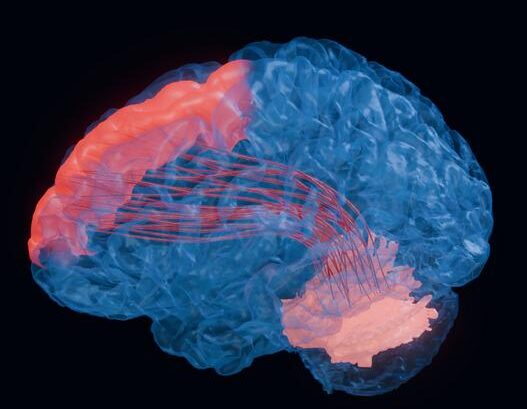
Patients with pulmonary hypertension in both test groups had a consistent and substantial loss of brain tissue and weakened communication between two brain regions involved in memory, attention and planning—the cerebellum, at the base of the brain, and the frontal lobe, just behind the forehead. Notably, the same brain changes were absent in people with other heart, lung, and psychiatric conditions. “Using structural and functional MRI data from UK Biobank (N = 248 PH) and a prospective validation cohort, we identified reduced cerebellar white matter volume, thinner frontal gyri, and weakened cerebellar-frontal connectivity in patients with PH but not in other heart or lung diseases,” the team reported. These changes were accompanied by worsened executive function and processing speed.”
The brain differences could not be explained by low blood oxygen, poor heart function, or the medications used to treat the disease—evidence that the changes are specific to pulmonary hypertension, rather than a side effect of the disease’s effects on the heart and lungs.
By analyzing genetic data from both groups of patients and conducting additional laboratory studies, the team found that the NCOA7 variant already linked to blood vessel inflammation in pulmonary hypertension is also connected to inflammation in the cerebellum of these patients.
Examining cerebellum tissue from patients and mice with pulmonary hypertension, they saw signs that brain immune cells—microglia—had become overactive, and evidence that neurons were changing in response. Mice that both developed the disease and lacked the NCOA7 gene had more severe cerebellar damage than mice with pulmonary hypertension alone, establishing that the gene plays a causal role in regulating brain inflammation in this disease. “Postmortem analysis and PH mouse models showed cerebellar microglial activation and structural deficits worsened by NCOA7 deficiency,” the investigators wrote in summary. “Collectively, these findings support PH-associated cerebellar–frontal brain deficiencies linked to chronic neuroinflammation and NCOA7 dysfunction.”
Chan suspects that this mechanism is active in other diseases beyond pulmonary hypertension. “I believe that NCOA7 deficiency may underlie a spectrum of inflammatory conditions—including those that may contribute to dementia and aging,” Chan said. “If so, these findings could introduce new diagnostic and therapeutic avenues for preserving brain function in a much broader group of people.” The authors added: “From a translational perspective, the association of inflammatory plasma biomarkers with structural and functional brain alterations may inform new diagnostic and prognostic strategies … Our findings also open avenues for testing whether PH-associated neuroinflammatory changes are therapeutically reversible.”
Current guidelines for managing pulmonary hypertension do not include cognitive screening, and no biological marker exists to predict or track how much the disease affects the brain. This study points to a potential marker and identifies inflammation as a potential therapeutic target for preserving brain function and quality of life.
“This changes the way we look at a disease like pulmonary hypertension,” said Chan. “In medicine, we typically treat the symptoms of one organ system; but the reality is that our bodies are very complex, and disease processes may be affecting multiple parts of the body in a variety of ways.”
The post Inflammatory Process Identified as Link Between Pulmonary Hypertension and Cognitive Decline appeared first on GEN - Genetic Engineering and Biotechnology News.
Apa Reaksi Anda?
 Suka
0
 Kurang Suka
0
 Setuju
0
 Tidak Setuju
0
 Bagus
0
 Berguna
0
 Hebat
0