



























































AMR Awareness Week: C. diff patient finds her voice in advocacy
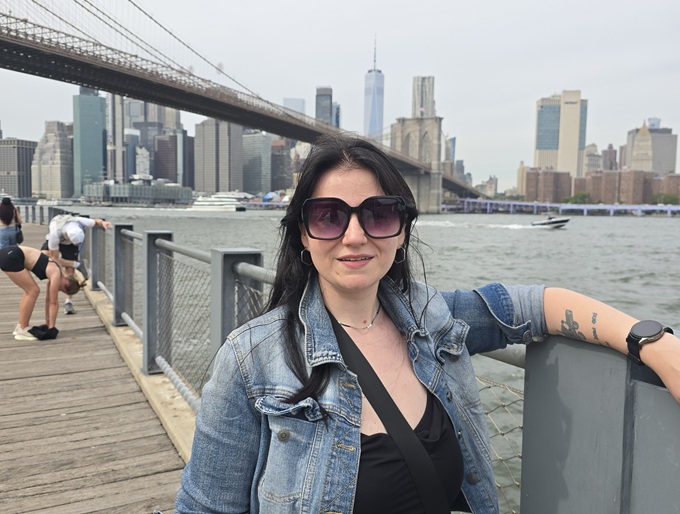
“My whole childhood, I got lots and lots of infections: ear infections, eye infections, skin infections, UTIs, lung infections—anything opportunistic, I was getting it. So I was always on antibiotics,” says Minnie Hatch, a patient advocate from Ogden, Utah.
Eventually, her prolonged antibiotic use led to another, lesser-known infection: Clostridioides difficile (C. diff). Her story shows not only the challenges some patients face with C. diff, but also the work that still needs to happen when treating these patients.
November 18–24 is Antimicrobial Awareness Week, an annual global campaign aimed at increasing understanding of antimicrobial resistance (AMR) and promoting best practices across human, animal, plant, and environmental health. Additionally, November is C. diff Awareness Month, and as such, Bio.News is sitting down with Hatch to discuss her experiences as a patient and an advocate, and understand more about this misunderstood infection.
Understanding C. diff
“I first started getting sick when I was 19 years old,” Hatch says. “I’m 32 now, and my C. diff went undetected for a really long time, at least a year, because I was so young, and my symptoms were so broad.”
C. diff is a germ that causes diarrhea and inflammation of the colon and while it is more common in senior populations, it can affect anyone. It’s estimated to cause more than 400,000 infections in the United States each year and can be life-threatening.
This year, the Centers for Disease Control and Prevention’s (CDC) recent Antimicrobial Resistance Threats Report, designated C. diff at a threat level of “serious,” indicating that the CDC considers it to pose a significant health hazard to the public, requiring aggressive tracking, prevention, and public health action.
C. diff causes more than 11,000 estimated deaths in hospitalized patients, and more than $6.4 billion in healthcare costs overall every year, the CDC reports. However, rates of C. diff have declined 21% overall from 2018–2020 and remained stable from 2020–2023, per CDC reporting.
“This is due in part to improvements in C. diff diagnosis and the success of efforts to prevent infections. U.S. progress against this threat shows that a comprehensive public health response—grounded in targeted infection prevention, antibiotic stewardship, diagnostic excellence, and increased treatment options—works,” the CDC writes.
An ongoing struggle with C. diff
Hatch herself has seen these numbers play out firsthand, but, as Hatch explains, numbers aren’t the whole story; the patient experience is also incredibly important.
After months of gastrointestinal issues, the lightbulb finally went on in Hatch’s gastroenterologist’s mind. “He said, Oh, I didn’t see the forest through the trees. I think you have C. diff” Hatch explains.
And indeed, when they sent out a stool sample, it tested positive. Hatch’s doctor was confident that after treatment, she wouldn’t have to deal with C. diff again. “But that is not what happened for me. It just got worse,” she says.
Hatch dealt with years of C. diff and she tried a number of treatment options.
“During COVID, I got C. diff again, and this time they weren’t able to treat me,” she remembers. “I wasn’t responding to the antibiotics. I dropped down to 94 pounds, and my doctors told me to put my will together. They said, There’s nothing we can do. We are waiting for you to go septic. Luckily, I had found the Peggy Lillis Foundation (PLF).”
The Peggy Lillis Foundation
Hatch had started working with PLF in 2017 shortly after the birth of her son. When the nurses saw that she’d had a previous C. diff diagnosis, they put Hatch into quarantine.
“It put the nurses around me into a panic. They thought I was going to get all the babies sick,” says Hatch. “My son needed NICU care, and they refused to put him in the NICU. The nurses wouldn’t touch me. Ultimately, I ended up asking to be discharged as soon as I could, so I could take my son somewhere that would provide care.”
Hatch knew her experience wasn’t right, so when she got home she started researching, and found PLF.
PLF was founded by Christian and Liam Lillis after the death of their mother in 2010 from C. diff. When Hatch reached out, they immediately offered to help, and just three weeks after the birth of her son, Hatch and her husband were headed to New York City to participate in a training on advocacy.
During her COVID-era C. diff, as doctors were telling her to get her affairs in order, Hatch was able to tap into her advocacy skills and network to save her life and find a treatment that worked.
Finding her voice as a patient advocate
Ultimately, the cause of Hatch’s repeated infections was discovered to be an autoimmune disorder called “specific antibody deficiency,” which causes Hatch’s body to not create antibodies, leaving the door open for opportunistic infections. So by all accounts, Hatch will potentially have to navigate C. diff in the future, making her advocacy work all the more important.
“When I first started getting sick, less than one in five doctors had even heard of C. diff, and only two doctors in my state could treat it at the level I had it,” she says.
Luckily, Hatch’s voice has gotten more powerful, both for herself and others like her.
“Nobody can make me cry like a doctor can,” she says. “I find that I still have to advocate loudly. There are many times when, if I have a new doctor, I won’t go to the appointment on my own. Sometimes advocating for yourself is enough, and sometimes it’s not.”
Hatch didn’t want other people to go through what she had been through.
“I knew that the best way that I could help other people was to share my story so that doctors could hear it,” she says. “Maybe they would think, Oh, well, that’s wrong. We shouldn’t be treating people that way.”
Hatch says that more important work she is doing today is peer-to-peer support for C. diff patients and their caregivers.
“For the patients at home,” she continues, “I think the key is not to live in fear and to let yourself live your life. People come into contact with C. diff every day and are typically OK.”
The big issue, Hatch asserts, is misinformation.
“We can’t treat C. diff patients like they’re gross or contagious,” she says. “I’ve had providers refuse to touch me, refuse to work with me, didn’t want me to touch anything, and that is a rhetoric based in fear, not fact.”
If you are interested in learning more, or getting involved, visit: https://cdiff.org/
The post AMR Awareness Week: C. diff patient finds her voice in advocacy appeared first on Bio.News.
Apa Reaksi Anda?
 Suka
0
 Kurang Suka
0
 Setuju
0
 Tidak Setuju
0
 Bagus
0
 Berguna
0
 Hebat
0