





















































%20and%20Batch%20Production%20Records%20(BPR).png)















Measuring Cell Line Development Quality Within Days of Single-Cell Cloning, Not Months Later
Sponsored content brought to you by

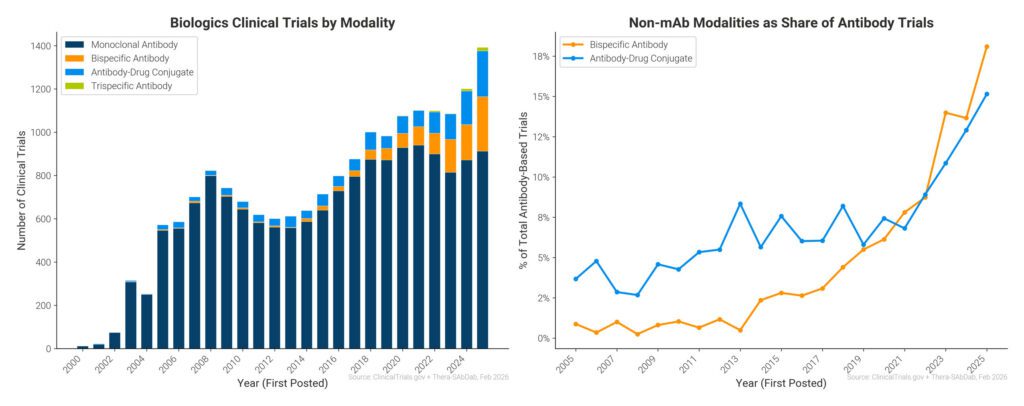
Every cell line development (CLD) campaign turns on one decision: which clone will manufacture the therapy? When monoclonal antibodies (mAbs) dominated the pipeline, clone selection often centered on titer, the amount of product produced. Bispecific antibodies, antibody-drug conjugates (ADCs), and other complex formats have changed that calculation. Titer remains important, but so does whether a clone consistently makes the intended molecule. That distinction must become visible early enough to avoid advancing weak candidates.
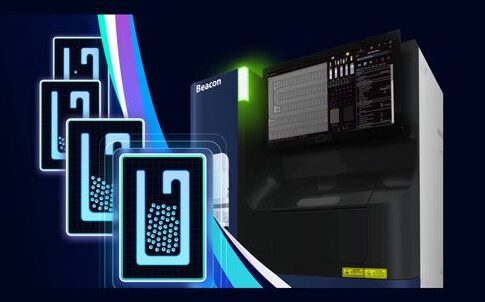
Traditional single-cell cloning methods, including limiting dilution, fluorescence-activated cell sorting (FACS), single-cell printers, and clone pickers, differ in mechanics but generally follow the same selection logic. They establish clonality, sometimes measure titer, then expand and advance clones before detailed product-quality and stability assays months later. This creates a blind spot: clones can progress before aggregation or incorrect chain pairing becomes visible. The Beacon® optofluidics platform, used by 38% of survey respondents and reported as the most widely used instrument, was built to close that gap.1 It cultures and assays live single cells in nanoliter-scale NanoPen® chambers, returning growth, specific productivity, and selected product-quality readouts within days, with early stability indicators following within weeks.
Published studies demonstrate the potential. Amgen reported that early chip-based cloning from bulk pools reduced its CLD timeline by up to eight weeks.2 A Merck KGaA team using Selective Cell Cloning on freshly transfected samples reported roughly two additional weeks of savings and higher clone specific productivity.3 In the clearest product-quality example, GSK screened a bispecific during single-cell cloning with two on-chip SpotLight assays. Clones with balanced assay signals averaged 87% heterodimer, while imbalanced signals were associated with lower heterodimer levels.4 This provided an earlier basis for prioritizing candidates before fed-batch testing. GSK’s head of cell line development separately credited improved biology, the Beacon platform, and the team’s ranking tools with reducing cell lines screened per molecule by more than 98%.5
For nearly a decade, the Beacon platform has advanced from integrated single-cell cloning to earlier productivity, product-quality, and stability measurements, with AI-assisted clone evaluation pointing toward the next step. Bringing richer evidence forward helps teams focus resources on the candidates most likely to succeed, carry fewer weak clones into later studies, and move toward the clinic with greater confidence. That is the promise of moving beyond titer.
References
1. Clarke H, et al. Biotechnol Prog. 2024:e3449. doi:10.1002/btpr.3449.
2. Diep J, et al. Biotechnol Prog. 2021;37:e3192. doi:10.1002/btpr.3192.
3. Desmurget C, et al. Biotechnol J. 2024;19:e2300488. doi:10.1002/biot.202300488.
4. Robinson M, et al. Biotechnol Prog. 2026:e88539. doi:10.1002/btpr.88539.
5. Corrigall H. Bruker Cellular Analysis webinar, 2025.
Eric Sackmann, PhD, is a director of product management at Bruker Cellular Analysis.
Bruker September 2026 sponsored content QR Code Explore More brukercellularanalysis.com/applications/cell-line-development.
The post Measuring Cell Line Development Quality Within Days of Single-Cell Cloning, Not Months Later appeared first on GEN - Genetic Engineering and Biotechnology News.
Apa Reaksi Anda?
 Suka
0
Suka
0
 Kurang Suka
0
Kurang Suka
0
 Setuju
0
Setuju
0
 Tidak Setuju
0
Tidak Setuju
0
 Bagus
0
Bagus
0
 Berguna
0
Berguna
0
 Hebat
0
Hebat
0