


















































%20and%20Batch%20Production%20Records%20(BPR).png)







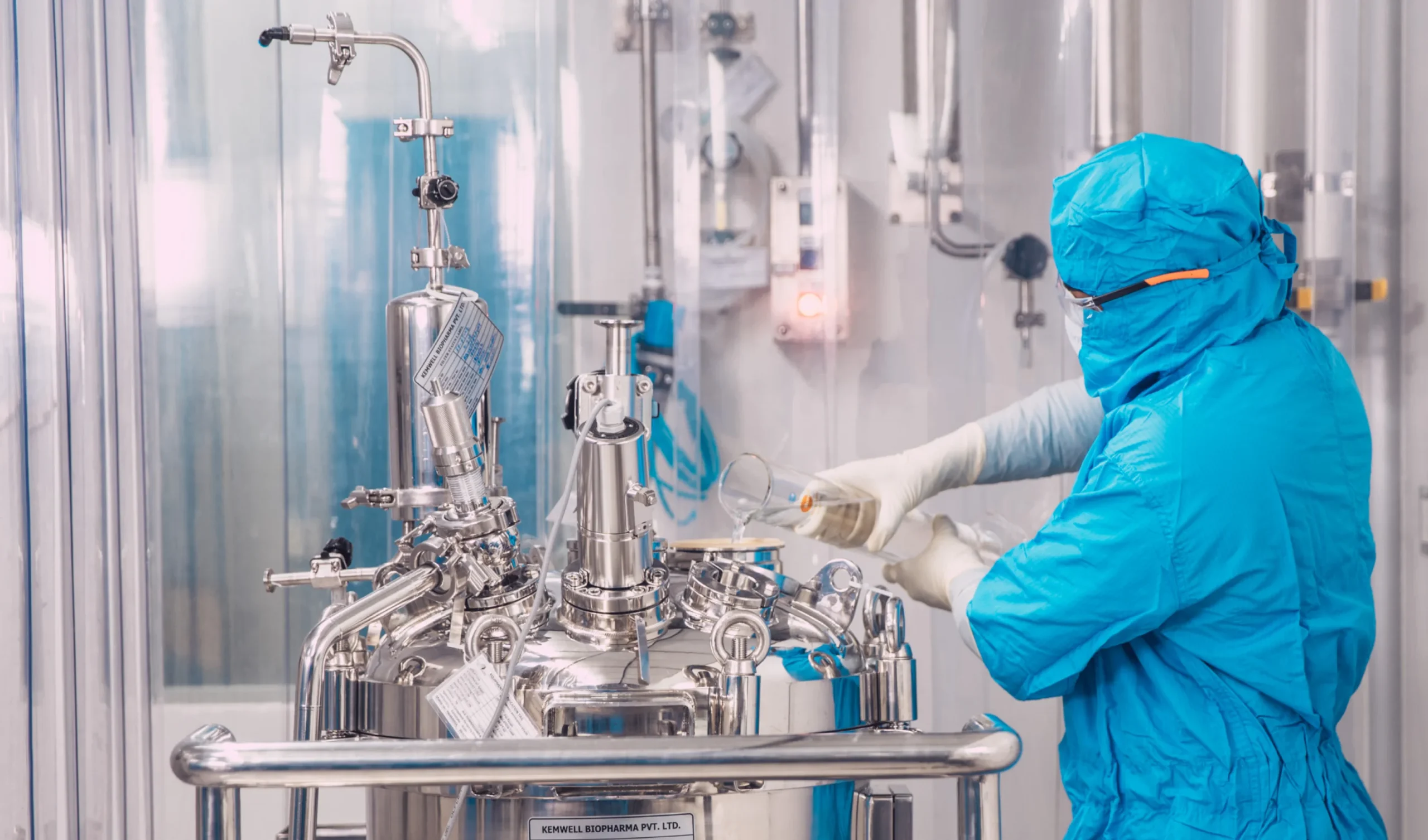








mRNA Tails Play Key Role in Folding Regulatory Proteins

mRNA 3′ UTRs have hundreds of highly conserved nucleotides, but their biological roles are unclear. In a new study published in Cell titled, “mRNA 3′ UTRs chaperone intrinsically disordered regions to control protein activity,” researchers from Memorial Sloan Kettering (MSK) Cancer Center now demonstrates that mRNA 3′ UTRs play a key role assisting the folding of regulatory proteins.
“The traditional view is that only specialized proteins act as ’chaperones’ to help other proteins fold correctly,” said Christine Mayr, MD, PhD, a member of the Sloan Kettering Institute and corresponding author on the paper. “Our research shows that RNA can do this, too—and that mRNAs act as their own chaperones for a group of important, hard-to-fold proteins.”
While 3′ UTRs have traditionally been dismissed as key regulators, Mayr emphasizes that thousands of human 3′ UTRs have highly conserved sequences across vertebrates, offering a clue of their function. “Biology doesn’t usually preserve things that aren’t needed,” she says.
Many larger, complex regulatory proteins, such as the transcription factors MYC, UTX, and JMJD3, possess long, flexible regions, named intrinsically disordered regions (IDRs), that do not fold into stable structures on their own.
The study showed that cells solve this folding problem using specialized compartments, known as mesh-like condensates. The 3′ UTR promotes IDR–IDR interactions and suppresses folding between domains. Results suggest that this chaperone activity prevents interference between hydrophobic clusters in the IDR with folding of the structured domain.
The team identified more than 2,700 genes with highly conserved 3′ UTRs, or about one in every eight protein-coding genes in the human genome. The proteins expressed by these genes contain intrinsically disordered regions that require RNA chaperones to facilitate folding.
“What we show is that for thousands of regulatory proteins in human cells, the genetic code alone isn’t enough to make a functional protein—you need the RNA chaperone too,” said Mayr.
The study has practical implications for laboratory research. For thousands of regulatory proteins, removing the 3′ UTR allows researchers to study the misfolded, and less active version of the protein.
The post mRNA Tails Play Key Role in Folding Regulatory Proteins appeared first on GEN - Genetic Engineering and Biotechnology News.
Apa Reaksi Anda?
 Suka
0
Suka
0
 Kurang Suka
0
Kurang Suka
0
 Setuju
0
Setuju
0
 Tidak Setuju
0
Tidak Setuju
0
 Bagus
0
Bagus
0
 Berguna
0
Berguna
0
 Hebat
0
Hebat
0