















































Mumbai Biocluster discusses cell, gene therapies and AI applications at BRIDGE Mumbai
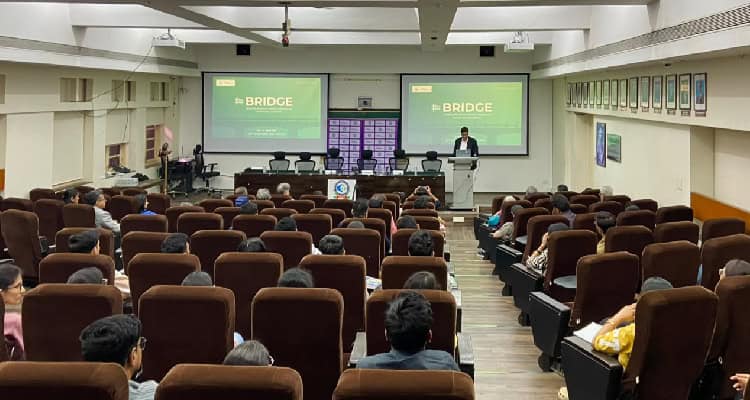
Mumbai Biocluster (MBC) hosted BRIDGE Mumbai (Building Research–Industry Dialogue for Growth and Excellence), bringing together leaders from academia, biotechnology, pharmaceutical industries, healthcare and investment to discuss opportunities in biopharmaceutical innovation and the translation of scientific research into commercially viable healthcare solutions.
The event featured two discussions: a fireside chat on the state of cell, gene and RNA therapies and a panel discussion on the convergence of artificial intelligence (AI) and life sciences and healthcare.
The fireside chat, moderated by Dr. Ratnesh Jain, featured Dr. Rahul Purwar, Professor at IIT Bombay and Founder and Chairman of ImmunoACT, India, and Dr. Madhusudan V. Peshwa, CEO and Board Member of MKC Biotherapeutics, Inc., USA.
The discussion examined the development of cell and gene therapies (CGT), with a focus on India’s capabilities in developing and commercialising therapeutic products. Drawing on the experience of bringing CAR-T cell therapy to patients in India, Dr. Purwar discussed challenges associated with product development, regulatory pathways, manufacturing and commercialisation. The conversation also examined how indigenous innovation, manufacturing processes and cost efficiencies can improve access to therapies.
The speakers also discussed developments beyond CAR-T therapies, including cell, gene and RNA-based therapeutic candidates progressing through clinical development in India.
Drawing on more than three decades of experience in the global CGT ecosystem, Dr. Peshwa shared his views on India’s position in developing next-generation biologics and advanced therapies. He discussed the potential of collaboration between India and the United States in accelerating innovation, strengthening development capabilities and enabling access to global markets. The discussion also addressed areas of therapeutic development that Indian innovators could consider and the development of products to address unmet patient needs.
The second session examined the application of AI across the life sciences value chain, covering research, drug discovery, clinical development, manufacturing, commercialisation and investment.
Moderated by Dr. Madhusudan V. Peshwa, the panel featured Dr. Jaideep Gogtay, Global Chief Medical Officer, Cipla; Prof. Ratnesh Jain, Associate Professor, Institute of Chemical Technology (ICT), Mumbai; Vinay Peshwa, Co-Founder and Managing Partner, Cortex Spark Ventures; and Dimpalkumar Shah, CEO, KODO Lifesciences.
The discussion brought together perspectives from the pharmaceutical, academic, manufacturing and investment sectors to examine the application of AI in healthcare and biopharmaceutical development.
Dr. Gogtay discussed the use of AI in evaluating the effectiveness and market uptake of pharmaceutical products, along with its application in clinical trials. The discussion highlighted the importance of identifying AI tools based on specific stages of the product lifecycle and their intended applications.
From a biomanufacturing perspective, Shah discussed opportunities for integrating AI into the development and manufacturing of GMP-grade starting materials, including plasmids, vectors and RNA. The discussion examined the challenges of moving innovations from research and development to GMP-compliant manufacturing while addressing customer and industry requirements.
Prof. Jain discussed the use of AI in academic research and higher education, including how students are being equipped with AI tools and incorporating them into their research. He also addressed the relationship between academia and entrepreneurship, particularly the role of AI in enabling students and researchers to translate their scientific expertise into start-up ventures.
Offering an investment perspective, Vinay Peshwa discussed trends in AI-led life sciences ventures, investment opportunities and the parameters used to evaluate their scientific relevance, commercial viability and potential to address unmet patient needs. He also shared his views on the priorities for investors and entrepreneurs developing AI-enabled healthcare and biotechnology ventures.
Both sessions included audience interactions, providing participants with an opportunity to exchange views, raise questions and engage with the speakers.
Through BRIDGE, Mumbai Biocluster aims to strengthen dialogue between research institutions, industry, entrepreneurs, clinicians and investors, creating opportunities for collaboration and supporting the translation of scientific discoveries into technologies, products and healthcare solutions.
BRIDGE Mumbai is part of Mumbai Biocluster’s engagement initiative leading up to Biologics 2027, scheduled to take place from January 28–30, 2027, at Mahatma Mandir, Gandhinagar, Gujarat. The initiative aims to build a connected innovation ecosystem to advance India’s biopharmaceutical capabilities and strengthen its position in the global life sciences landscape.
The post Mumbai Biocluster discusses cell, gene therapies and AI applications at BRIDGE Mumbai appeared first on Express Pharma.
Apa Reaksi Anda?
 Suka
0
 Kurang Suka
0
 Setuju
0
 Tidak Setuju
0
 Bagus
0
 Berguna
0
 Hebat
0