







































%20and%20Batch%20Production%20Records%20(BPR).png)











Parabilis Files for IPO, a Day After Signing Up-to-$2.3B Regeneron Collaboration
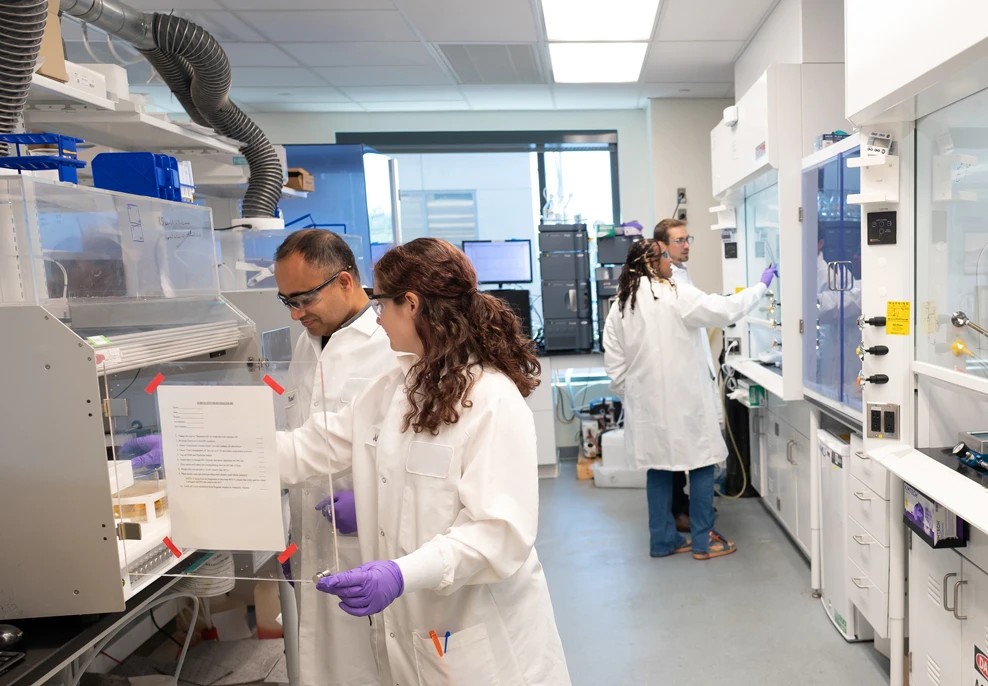
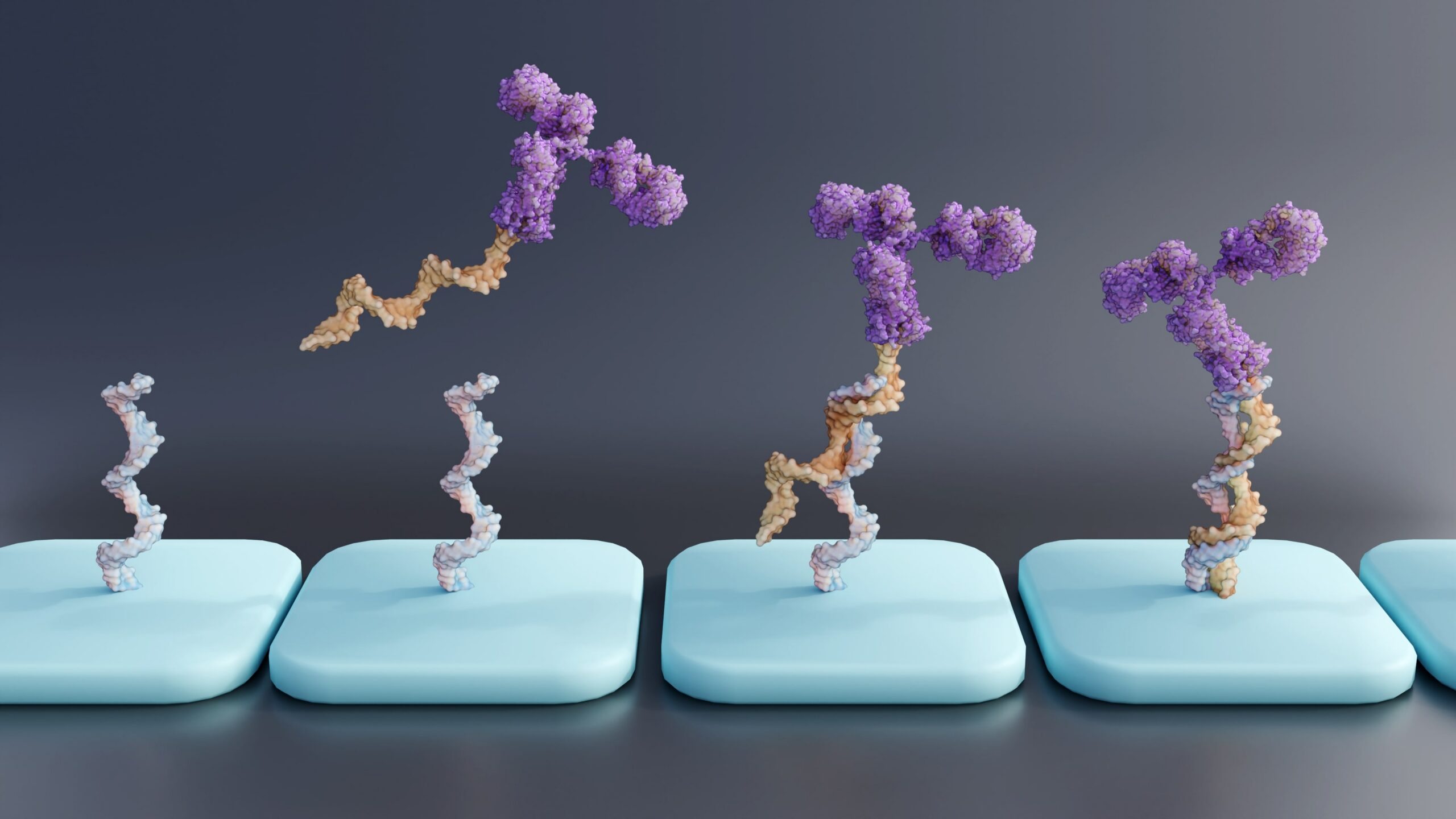
Parabilis Medicines, the developer of drugs and antibody-drug conjugates targeting historically undruggable protein targets and based on stabilized helical peptides or Helicons , has filed for an initial public offering (IPO), joining a growing parade of companies seeking to raise capital by tapping into the improving market for first time biotech stocks.
The company’s IPO filing came a day after Parabilis inked an up-to-$2.3 billion-plus strategic research collaboration with Regeneron Pharmaceuticals to discover and develop an initial five candidates encompassing “antibody-Helicon conjugates,” a new form of antibody-drug conjugates aimed at challenging and historically undruggable targets.
Regeneron has agreed to purchase approximately $75 million of Parabilis common stock in a concurrent private placement, at 90% of the IPO price per share.
It’s too soon to know how much money Parabilis plans to raise through the IPO. The company’s Form S-1 registration statement, filed Tuesday with the U.S. Securities and Exchange Commission (SEC), includes a placeholder “$100 million” figure that will inevitably be revised, and doesn’t say how many shares will be sold. Parabilis has applied to list its shares on The Nasdaq Global Market under the ticker symbol “PBLS.”
It’s also too early to know how much of the proceeds will go toward the four priorities it highlighted in its registration statement. Two of the four priorities relate to Parabilis’ lead Helicon peptide candidate zolucatetide (formerly FOG-001), a first and only direct inhibitor of the elusive β-catenin:TCF interaction, according to the company. Parabilis stated that it plans to continue ongoing clinical development of zolucatetide in desmoid tumors, including continuation of dose expansion and the launch of a Phase III registrational trial to topline data.
Parabilis also plans to continue ongoing clinical development of zolucatetide across several additional indications, including dose escalation and expansion in familial adenomatous polyposis (FAP); hepatocellular carcinoma, the most common type of primary liver cancer; and other rare tumors, with the aim of collecting data to support a registrational trial.
‘Expansive opportunity’
“We believe zolucatetide provides clinical validation of our first-in-industry Helicon approach and represents an expansive opportunity for medical and commercial impact,” Parabilis stated.
In addition, Parabilis plans to use IPO proceeds toward advancing its pipeline of additional programs—including its ERG protein degrader, an allosteric androgen receptor in its active state (ARON), and beta-catenin degraders—to Phase I clinical data; toward continued evolution of the Helicon platform for discovering and developing drug candidates; as well as toward general corporate purposes that include additional development efforts, working capital, and operating expenses.
According to Parabilis, zolucatetide has been evaluated in more than 150 patients to date and has generated positive clinical data in solid tumors characterized by alterations in the Wnt/beta-catenin pathway. In the drug’s lead indication of desmoid tumors, researchers have seen tumor reductions in 100% of patients with a 74% objective response rate (ORR) in patients who have had at least two post-baseline scans.
In March, Parabilis presented preliminary clinical data at the 11th Biennial Meeting of the International Society for Gastrointestinal Hereditary Tumors (InSiGHT) showing significant improvement in duodenal polyposis at 60 weeks in a patient with familial adenomatous polyposis (FAP) treated with zolucatetide in the company’s ongoing Phase I/II trial (NCT05919264).
The patient showed a 52.2% reduction in desmoid tumor diameter, as well as “substantial” reductions in polyp number and size compared with a pre-treatment evaluation nearly two years prior, consistent with downstaging from Spigelman stage II to stage I.
Parabilis says its Helicon discovery platform allows it to precisely tune potency, selectivity, and pharmacologic properties by integrating ligands and additional functionalities at multiple positions. The platform integrates artificial intelligence (AI)- and physics-based computational modeling with high-throughput peptide synthesis and experimental screening.
“While our initial programs are focused on disrupting protein-protein interactions and inducing targeted protein degradation, we believe our platform can incorporate other advances in small molecule drug design and extend them to targets that are likely to remain out of reach for other modalities,” Parabilis stated.
Parabilis was founded in 2015 as FogPharma to commercialize technology developed in and inlicensed from the lab of Harvard University researcher and serial entrepreneur Gregory Verdine, PhD. The company, which rebranded itself into Parabilis in 2024, says it has generated proprietary datasets, comprising millions of data points for hundreds of thousands of Helicons across dozens of drug-like properties, following a decade of Helicon drug discovery.
‘Continuous learning loop’
“These data power a continuous learning loop that refines our models from target selection through lead optimization, enhancing our speed, precision, and ability to generate high quality molecules against difficult targets,” Parabilis explained. “As a result, our platform produces unique complex synthetic molecules at scale and a compounding advantage that we believe is difficult to replicate.”
If it carries out the planned IPO, Parabilis would be the 12th biotech to go public this year. The 11 IPO companies to date have raised a combined $3.491 billion, compared to the $1.556 billion raised by 11 companies this time last year. Six of the 11 companies have seen their shares rise since their initial offerings, led by the 520% share price increase of Veradermics, a developer of treatments for dermatology and aesthetic conditions that closed Wednesday at $105.32 a share.
This year’s largest IPO—and the largest of any biotech—was the $625 million offering of Kailera Therapeutics, a developer of therapies for obesity and weight management based on glucagon-like peptide receptor 1 (GLP-1) agonists, alone or in combination with glucose-dependent insulinotropic polypeptide (GIP) receptor agonists.
Kailera last month completed what grew into a $718.75 million IPO last month that generated an estimated $662.1 million in net proceeds through the sale of 44,921,875 shares of common stock—including the exercise in full by underwriters of their option to purchase 5,859,375 additional shares—at the IPO price of $16 per share.
Should Parabilis’ planned IPO raise the placeholder $100 million amount, it would increase by 30% the $329.039 million in cash and cash equivalents that the company reported as of March 31.
Parabilis disclosed in its IPO filing that it ended the first quarter with a $45.316 million net loss, up 18% from its $38.342 million net loss of Q1 2025—as well as a net loss of $145.9 million for last year, up nearly 24% from its $117.9 million net loss for 2024. The company has no reported revenue.
Parabilis’ accumulated deficit rose 8% during Q1, to $586.82 million from $541.504 million at the end of 2025.
To fund its operations, Parabilis reported, it has raised a total $876.8 million as of March 31. That total consisted of $811.8 million from sales of its convertible preferred stock, $15 million in borrowings under a term loan and a $50 million Simple Agreement for Future Equity (SAFE).
The IPO comes just four months after Parabilis completed its last financing, an oversubscribed $305 million Series F round completed in January and co-led by investment firms RA Capital Management, Fidelity Management & Research Co., and Janus Henderson Investors.
Five investment firms were listed in the Form S-1 as underwriters for the IPO: Leerink Partners, BofA Securities, Evercore ISI, Guggenheim Securities, and LifeSci Capital.
The post Parabilis Files for IPO, a Day After Signing Up-to-$2.3B Regeneron Collaboration appeared first on GEN - Genetic Engineering and Biotechnology News.
Apa Reaksi Anda?
 Suka
0
Suka
0
 Kurang Suka
0
Kurang Suka
0
 Setuju
0
Setuju
0
 Tidak Setuju
0
Tidak Setuju
0
 Bagus
0
Bagus
0
 Berguna
0
Berguna
0
 Hebat
0
Hebat
0