












































%20and%20Batch%20Production%20Records%20(BPR).png)















Standardisation in dental photography: consistency over creativity
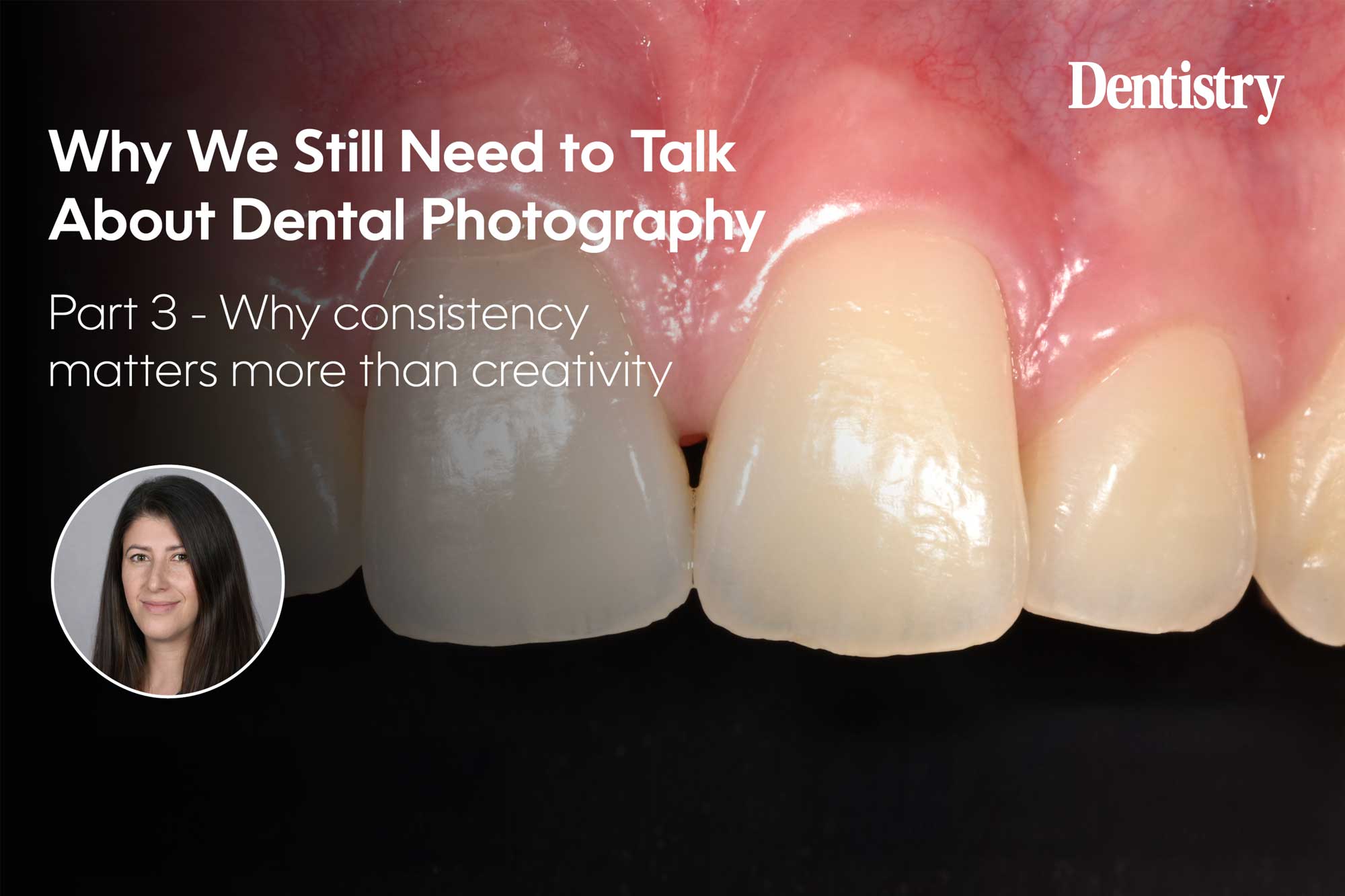
In part three of a series on clinical dental photography, Laura Short explains the importance of standardisation and consistency.
Photography is often associated with creativity – experimenting with angles, lighting, and composition to capture something unique. But clinical dental photography serves a different purpose.
In dentistry, photography is primarily about documentation, communication, and comparison. The most valuable images are not the most creative ones – they are the ones that are consistent, repeatable, and clinically reliable.
That’s why, in dental photography, consistency will always matter more than creativity.
Why standardisation matters
Clinical photographs are rarely taken in isolation. They are used to track treatment progress, compare outcomes, and communicate with colleagues or patients.
If images are taken from different angles, with inconsistent retraction, or with varying framing, accurate comparisons become much more difficult. Small variations that seem insignificant at the time can make it harder to evaluate changes over months or years.
Standardisation solves this problem. By following a consistent process – using the same views, angles, and positioning – clinicians can produce images that are easy to compare and far more useful for treatment planning and documentation.
Having a set, clear protocol for camera settings that can be repeatable is paramount.
I always recommend each practice to create a guide to the correct camera settings. This enables each team member to have clear instructions to follow exactly each time photography is required.
Consistency starts with technique
Many of the common issues in dental photography come down to simple compromises in technique. Throughout this series we’ve discussed examples such as:
- Using the correct retractor sizes for different views
- Positioning assistants properly to improve retraction
- Warming mirrors to prevent fogging
- Ensuring the patient opens wide enough for clear occlusal views.
These small adjustments make a significant difference to the quality and repeatability of clinical photographs.
Quality tools support standardisation
Consistency is also influenced by the quality of the tools being used. Retractors and mirrors are repeatedly sterilised and used in demanding clinical environments, so durability and performance matter.
Retractors that deform after repeated autoclaving or mirrors with poor reflectivity can affect retraction, visibility, and image clarity. Tools designed specifically for dental photography – such as clear lip retractors that maintain their shape and chrome-coated mirrors that provide high reflectivity – help clinicians achieve more consistent results.
Reliable equipment supports the same goal as good technique: clear, repeatable clinical images.
Where creativity fits
Creativity can still play a role in dentistry, particularly in marketing, social media, or patient education, where visual storytelling is important.
However, when documenting treatment, the priority should always be accuracy and repeatability. Clinical photography must represent the dentition clearly and consistently so that images can be compared and interpreted reliably.
Creativity can enhance photography – but it should never compromise standardisation.
The real goal of dental photography
Great dental photography isn’t defined by artistic style. It’s defined by consistency.
When clinicians follow a clear protocol and use the right tools, photography becomes a reliable clinical asset – supporting better treatment planning, clearer communication, and stronger documentation.
Because in clinical dentistry, the best photograph isn’t the most creative one.
It’s the one you can reproduce accurately every time.
My go-to products for consistent dental photography
Simple steps like correct patient positioning, proper assistant support, and warming mirrors before use can significantly improve image quality. Using reliable equipment is equally important. High-quality tools such as Gold Series lip retractors and chrome-coated palatal mirrors help clinicians achieve clear, repeatable images while maintaining patient comfort.
When good technique is combined with quality products, dental photography becomes a powerful tool for accurate documentation, treatment planning, and patient communication.
Explore the full range of dental photography products from DB Orthodontics.
This article is sponsored by DB Orthodontics.
Apa Reaksi Anda?
 Suka
0
Suka
0
 Kurang Suka
0
Kurang Suka
0
 Setuju
0
Setuju
0
 Tidak Setuju
0
Tidak Setuju
0
 Bagus
0
Bagus
0
 Berguna
0
Berguna
0
 Hebat
0
Hebat
0