








































































Mapping the Hidden Viral Communities of the Human Gut Microbiome
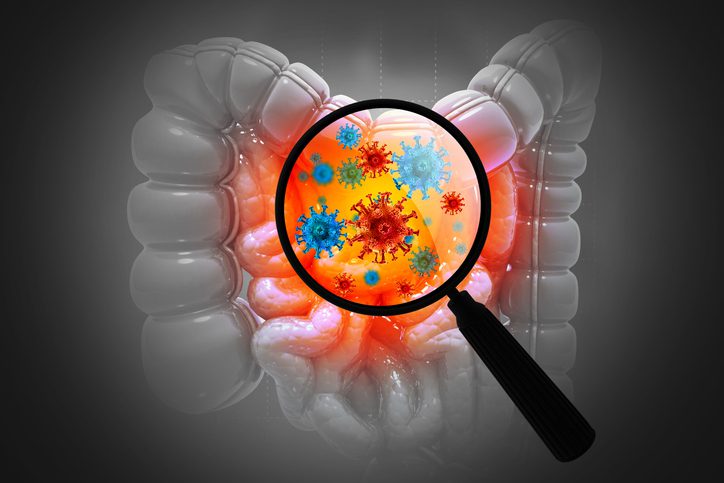
When people hear “gut microbiome” their first thought is likely the bacteria living inside our intestines. However, the human gut microbiome is home to a vast and largely unexplored world of viruses, which could determine how the gut ecosystem works.
New research has characterized a largely unexplored community of bacteriophages within the human gut. The findings provide an integrated picture of the gut ecosystem, connecting its viral, bacterial, and metabolic components, which influence health and conditions like IBS.
“Our research highlights that to fully understand the gut microbiome and its links to health and disease, we need to look beyond bacteria and consider the viruses that live alongside them,” notes Cristina Menni, PhD, who leads the metabolomics research group at the Department of Twin Research, Ageing and Genomic Epidemiology, King’s College London. “We reveal a fascinating and largely unexplored dimension of the gut microbiome—discovering that viruses are not only closely associated with bacterial communities, but also with the metabolites that connect the microbiome to our health. This opens exciting new avenues for understanding how the gut ecosystem works.”
The study is published in Nature Communications in the paper, “Population-level characterisation of the human gut phageome and its association with microbial metabolites.”
Research into the human gut microbiome has traditionally focused on bacteria, but little is known about its enormous population of viruses, particularly bacteriophages.
This work identified over 116,000 viral groups in the gut. More than 99% of these had no close match in the largest existing catalogue of gut viruses, highlighting how much of the viral world within the gut remains unexplored. They found that certain viruses were consistently more common alongside particular bacteria, while others tended to be less common.
“Gut viruses are difficult to study, so most of what we found simply isn’t in existing catalogues,” notes Panayiotis Louca, PhD, Research Associate at King’s College London. “What stands out is how closely they track with gut bacteria and with the chemicals those bacteria produce. We can’t yet say whether the viruses are driving that, and testing it is our next step.”
The team used data from over 1,000 TwinsUK participants, the largest UK Twin Registry with data on gut bacteria, health measurements, and diet. By studying twins, the researchers also found that environmental factors play a major role in shaping the gut viral community, while genetics also contributes to certain aspects of viral diversity. Although genetic factors were estimated to explain around 47% of the variation in overall viral diversity, most individual viral populations appeared to be predominantly influenced by environmental factors.
The researchers also identified a small group of viruses carrying genes linked to harmful bacterial behavior. These viruses tended to occur alongside bacteria that can sometimes cause infections and were less commonly found alongside bacteria involved in breaking down dietary fiber.
Differences in the microbiome might influence conditions, such as irritable bowel syndrome (IBS). IBS affects around 10% of the population and can significantly affect quality of life, yet its underlying causes remain poorly understood.
In a second study, published in Gut today, the research team identified 50 gut viral groups associated with IBS, most of which were less abundant in people with the condition. There were also differences in the patterns of relationships between bacteria and viruses, with many viruses infecting bacteria already linked to the condition, suggesting that IBS may involve changes in how the wider gut microbial community is organized, rather than changes in bacteria alone.
The next challenge will be to understand whether these viruses actively influence bacterial metabolism and how their relationships with bacteria change in different states of health and disease. Future studies will investigate whether these findings can help explain individual differences in microbial function and ultimately contribute to more personalized approaches to gut health.
The post Mapping the Hidden Viral Communities of the Human Gut Microbiome appeared first on GEN - Genetic Engineering and Biotechnology News.
Apa Reaksi Anda?
 Suka
0
 Kurang Suka
0
 Setuju
0
 Tidak Setuju
0
 Bagus
0
 Berguna
0
 Hebat
0






