




















































%20and%20Batch%20Production%20Records%20(BPR).png)











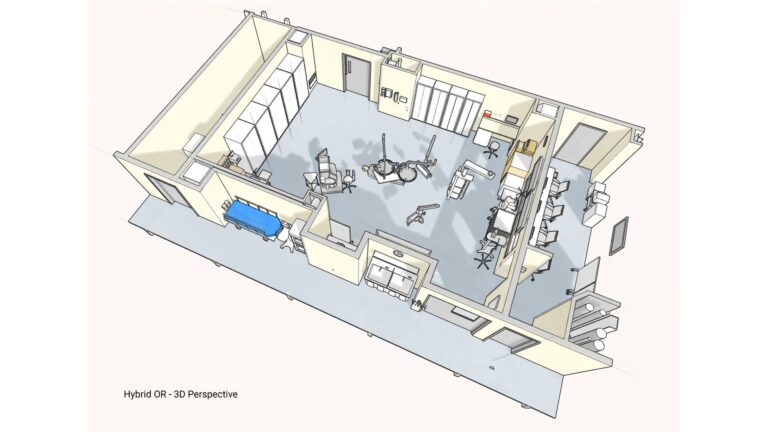



The fine line between reform and risk
A couple of recent notifications, one a notified amendment and the second one, a proposed amendment, concerning medicines have good intentions, but could have quite the opposite outcomes. While regulators are playing their role to rationalise restrictions, with the mandate to improve Ease of Doing Business, they have to also balance patient safety and public good.
Let’s first take a recent instance of authorities stepping in to investigate and if necessary, enforce anti-dumping duties on specialised packaging material. A recent LKS International Trade Team update informs about the Directorate General of Trade Remedies (DGTR) acting on a complaint from JPFL Films and initiating an Anti-Dumping Duty investigation concerning imports of Biaxially Oriented Polyamide (BOPA) film originating in and exported from China PR and Thailand.
As per the LKS International Trade Team update, BOPA films are high-performance specialised flexible packaging films manufactured from polyamide resin through biaxial orientation technology, known for its high mechanical strength, isotropic properties, odour and aroma resistance, hot and cold forming resistance, moisture and oxygen barrier properties, and puncture resistance.
BOPA film is used as specialised packaging material for food, liquids and pharma products. If the DGTR’s investigation finds that the imports of BOPA film from China PR and Thailand are at dumped prices and impacting the business of the domestic industry/company, then it can recommend anti-dumping duty, to rectify the harm to JPFL Films’ business. This case ties in directly to the crisis looming around pharma packaging, the theme of the cover story of Express Pharma’s July edition. (Resilience by Design: The Packaging Imperative).
Let’s now consider how some regulations could backfire. For instance, the Union Health Ministry has expanded the QR code-based drug traceability framework to include all vaccines, antimicrobials, narcotic and psychotropic drugs covered under the Narcotic Drugs and Psychotropic Substances (NDPS) Act, and anti-cancer medicines.
This notified amendment to the Drugs Rules, 1945 to expand the ambit of Schedule H2 is expected to “facilitate authentication of medicines at various stages of the supply chain and enable improved tracking and verification of drug products. The measure is expected to strengthen regulatory oversight and support efforts to curb the distribution of spurious medicines in the market.”
But industry experts have pointed out that QR codes can be counterfeited, leading to a false sense of security among patients. (https://www.expresspharma.in/how-counterfeiters-are-breaching-indiasqr-code-system/)
Manufacturers of vaccines, narcotic and psychotropic drugs, and anti-cancer medicines have a year to comply with this mandate while the provisions relating to antimicrobials shall become effective a year later, from July 1, 2028.
One hopes that regulators use the interim period to ensure that they have the taskforce and systems in place to enforce these mandates. This would, at the very least, entail more frequent surprise inspections and raids of vulnerable touch points within the pharma supply chain to make this initiative as impactful as it needs to be.
Secondly, let’s consider the Union Ministry of Health and Family Welfare’s proposal to rationalise/reduce the required residual shelf-life for imported drugs. The draft amendment proposes to revise the current requirement of a minimum residual shelf life of more than 60 per cent for imported drugs to 12 months at the time of import. Biological products and radiopharmaceuticals are exempted from this revision “in view of their specialised nature and public health considerations.”
On the face of it, this amendment has many advantages. The amendment is “expected to optimise supply management, reduce costs, and strengthen the availability of essential medicines in the country.” Patients are expected to get improved access to imported medicines, while importers of such medicines will get more time to distribute such medicines before expiry.
The proposed amendment is open for comments from industry till July 22, 2026. Industry response has been positive so far, as it seems to address supply chain issues and gives more time to sell imported medicines.
But from a patient safety point of view, how many patients in India are aware expired medicines could have health risks? How many patients check expiry dates? Are expired medicines indeed taken out of the pharma supply chain at all? Especially imported medicines, which would be more expensive? Would the Ease of Doing Business mandate result in compromised patient safety? Especially when it would be difficult to test the quality of such imported medicines as they near their expiry dates.
There have been many reports of expired medicines being re-sold to patients. In fact, the illegal sale and disposal of expired medicines was the topic of a Lok Sabha question in March 2026 (Unstarred Question no. 4641) from Jai Prakash of the Hardoi constituency of Uttar Pradesh, Bharatiya Janata Party.
His query was quite detailed and reveals the modus operandi of such scams: ‘whether the Government has taken or proposes to take strict action to curb the illegal and dangerous practice of reselling expired medicines, which involves altering expiry dates and reentering them into the supply chain’; whether the Central Drugs Standard Control Organization (CDSCO) has issued new guidelines on the safe disposal of expired/unused drugs to ensure that they are not diverted back into the market; and whether the Government has launched “Drug Take-Bank” programmes, where consumers can drop off expired medicine at designated locations.
In her reply, Anupriya Patel, Union Minister of State for Health and Family Welfare, informed that CDSCO, with the approval of the Drugs Technical Advisory Board (DTAB) had issued a guidance document (on May 26, 2025) on the disposal of expired/unused drugs. She also informed that State Licensing Authorities ‘are legally empowered and take stringent actions against violation of provisions of the Act and Rules including the instances of reselling the expired medicines.’
This exchange proves that there is enough awareness among legislators and regulators on the extent and serious harm to consumer health posed by expired medicines, imported or manufactured in India. Whether these rules are implemented and enforced enough is another question.
There is no doubt that regulatory oversight has had some wins. The recent CDSCO advisory against ‘promotional activities, including so-called “awareness campaigns,” that function as a surrogate advertisement for prescription drugs including Glucagonlike peptide-1 (GLP-1) receptor agonists,’ was a timely reminder that what may work in other markets, may not be aligned to Bharat’s realities.
These recent amendments and reforms underline the fine line between reform and risk. Regulators like the CDSCO, Ministry of Health & Family Welfare have a tough balancing act: to bring in business efficiencies without compromising public health. Converting good intentions into impactful benefits for all stakeholders will need stringent implementation and enforcement.
VIVEKA ROYCHOWDHURY,
Editor
viveka.r@expressindia.com
viveka.roy3@gmail.com
The post The fine line between reform and risk appeared first on Express Pharma.
Apa Reaksi Anda?
 Suka
0
Suka
0
 Kurang Suka
0
Kurang Suka
0
 Setuju
0
Setuju
0
 Tidak Setuju
0
Tidak Setuju
0
 Bagus
0
Bagus
0
 Berguna
0
Berguna
0
 Hebat
0
Hebat
0