












































%20and%20Batch%20Production%20Records%20(BPR).png)










Treating diastema with periodontal disease: a multidisciplinary case
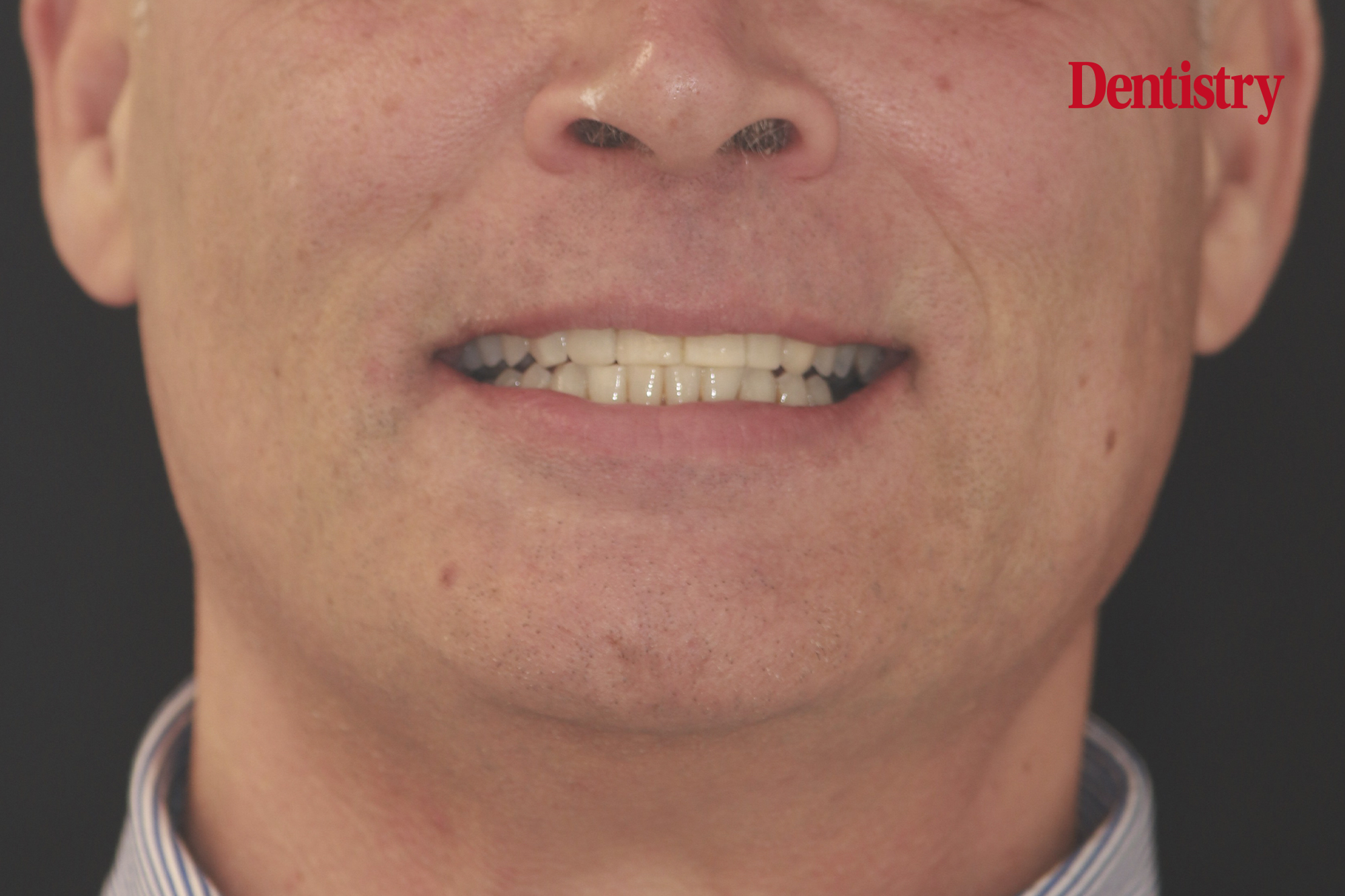
Nieves Ros demonstrates how periodontal treatment, Invisalign and composite bonding can be combined to manage diastema and tooth migration associated with periodontal disease.
When this 56-year-old patient first came to see me at Smmmile Store Bristol, his concern was clear and immediate: a growing gap between his upper anterior teeth that had been developing over recent years and was increasingly affecting his confidence.
As a businessman who regularly led client meetings, his smile mattered – not just aesthetically, but professionally. He described becoming progressively self-conscious about it, noticing that it had started to alter the way he carried himself.
Examination and diagnosis
A clinical examination was carried out and revealed that the diastema and tooth migration were not simply a cosmetic issue. The patient had been diagnosed with active periodontal disease by a previous dentist, and this was the root cause of the tooth shifting we were observing.
X-rays confirmed generalised bone loss and, critically, significant bone loss on the mesial aspect of the UL1 – a finding that would profoundly influence every treatment decision that followed.
Panoramic radiograph (OPG) at presentation. Generalised bone loss is evident, with particular involvement of the mesial aspect of UL1 – a key constraint in treatment planning
Additionally, the UL3 had been previously root canal treated and restored with a crown, adding a further restorative variable to an already complex picture.
Pre-treatment right lateral intraoral view
Pre-treatment frontal intraoral view
Pre-treatment close-up smile view, showing the aesthetic impact of the anterior spacing and colour mismatch with the existing UL3 crown
Periodontal probing confirmed deep pockets with active bleeding on probing across multiple sites. Understanding this patient as a person was equally important. He had a clear ‘driver’ personality type: direct, outcome-focused, and eager to understand timelines, risks, and realistic expectations. Ambiguity was unwelcome.
This shaped how I communicated throughout the case – with transparency and precision at every stage.
Periodontal therapy
Before any restorative or orthodontic treatment could be considered, the active periodontal disease had to be brought under full control. This was non-negotiable.
We embarked on a structured course of periodontal therapy – including oral hygiene instruction and a full course of supra- and subgingival debridement – with close monitoring until probing depths had reduced and bleeding on probing was eliminated. Only once the periodontium was stable did we discuss the restorative and aesthetic pathway forward.
The options for addressing the spacing were substantially limited by one critical constraint: the UL1 could not be moved.
The bone loss on its mesial aspect meant that any orthodontic force applied to that tooth risked further periodontal attachment loss. A conventional approach attempting full gap closure was therefore not viable.
The solution we agreed upon was a carefully sequenced combination: Invisalign to redistribute and reduce the spaces strategically, followed by direct composite bonding across the upper anterior five teeth to achieve a harmonious, symmetrical result – all with UL1 held stationary throughout.
Diastema treatment
With the periodontium stable and the patient fully consented, we commenced Invisalign treatment.
The ClinCheck digital planning was instrumental here: by mapping tooth movements in advance, I was able to impose hard constraints around the UL1 and design the redistribution of spaces so that the final bonding would be both clinically feasible and aesthetically predictable.
Invisalign ClinCheck – initial tooth position
Invisalign ClinCheck – planned end position
The ClinCheck images illustrate a key planning decision: the spaces were not fully closed orthodontically. The larger central diastema (3.0mm) was reduced substantially but redistributed, with smaller residual spaces (0.3-0.5mm) planned strategically between teeth to allow symmetrical composite additions without placing any movement demands on the UL1.
Managing a patient with known bone loss throughout orthodontic treatment requires vigilance, and we maintained a close periodontal recall schedule interspersed throughout the aligner series. The patient was highly compliant, motivated by a clear picture of the outcome ahead.
Once the orthodontic phase was complete, direct composite bonding was carried out across the UL1, UL2, UR1, UR2 and UR3. A layering technique was used to replicate natural enamel translucency and surface texture.
The central challenge was matching the existing crown on UL3 – which the patient wished to retain – requiring careful shade selection and incremental layering to harmonise with the ceramic restoration’s optical properties without replicating it exactly.
Post-treatment right lateral intraoral view
Post-treatment frontal intraoral view
Post-treatment left lateral intraoral view
Post-treatment close-up smile. The result demonstrates improved symmetry, natural tooth proportions, and a seamless integration with the retained UL3 crown
Aftercare
Given the underlying periodontal history and the presence of direct composite restorations, a robust maintenance programme was essential.
The patient was placed on periodontal recall schedule, combining professional cleaning with monitoring of probing depths, bone levels, and any signs of relapse. He was also counselled on composite bonding maintenance – the risk of staining, the need to avoid biting hard foods, and the expectation that periodic polishing or minor refinements would form part of his long-term care.
He took to this positively. Maintenance appointments became something he engaged with proactively – a meaningful shift from a patient who initially arrived carrying the weight of a longstanding, unmanaged condition.
Case reflection
This case tested every dimension of clinical decision-making – not just technically, but in terms of communication, expectation management, and adaptability under genuine uncertainty.
Looking back, I am proud of how the sequencing held together: treating the periodontium first, planning orthodontics around the hard constraint of the UL1, and using composite bonding to resolve what orthodontics alone could not.
The ClinCheck planning proved particularly valuable, as it allowed me to show the patient – visually and precisely – exactly where spaces would end up before any aligners were fitted.
If I were to approach anything differently, I would perhaps invest even more time in pre-treatment visualisation tools: a detailed digital smile design or mock-up to show the expected composite result alongside the planned orthodontic outcome.
Given his personality type, concrete previews were especially reassuring during the longer orthodontic phase, and earlier access to those visuals might have reduced some of the uncertainty he experienced mid-treatment related to the future bonding.
The UL3 crown matching was the other area of inherent unpredictability. Matching composite to an existing ceramic restoration is always challenging, and while the result was successful, future cases like this might benefit from closer characterisation of the original restoration before beginning bonding.
Conclusion
This case illustrates what becomes possible when periodontal health, orthodontics and restorative dentistry are planned as a coherent whole rather than in sequential isolation.
By accepting the limitations imposed by the UL1’s bone loss early in the process – rather than trying to work around them reactively – it was possible to design a treatment pathway that was both clinically sound and aesthetically rewarding.
More than anything, this case was a reminder that treating a patient well means treating the whole picture. This was not simply a man with a gap in his teeth; he was someone whose professional identity and personal confidence were deeply connected to his smile.
Seeing him now – relaxed at recall appointments, confident in how he looks, and an enthusiastic advocate for the practice – is the most meaningful measure of success.
Pre-treatment full-face smiling portrait
Post-treatment full-face portrait
Follow Dentistry.co.uk on Instagram to keep up with all the latest dental news and trends.
Apa Reaksi Anda?
 Suka
0
Suka
0
 Kurang Suka
0
Kurang Suka
0
 Setuju
0
Setuju
0
 Tidak Setuju
0
Tidak Setuju
0
 Bagus
0
Bagus
0
 Berguna
0
Berguna
0
 Hebat
0
Hebat
0