

































































Why dentistry must confront addiction and mental health honestly
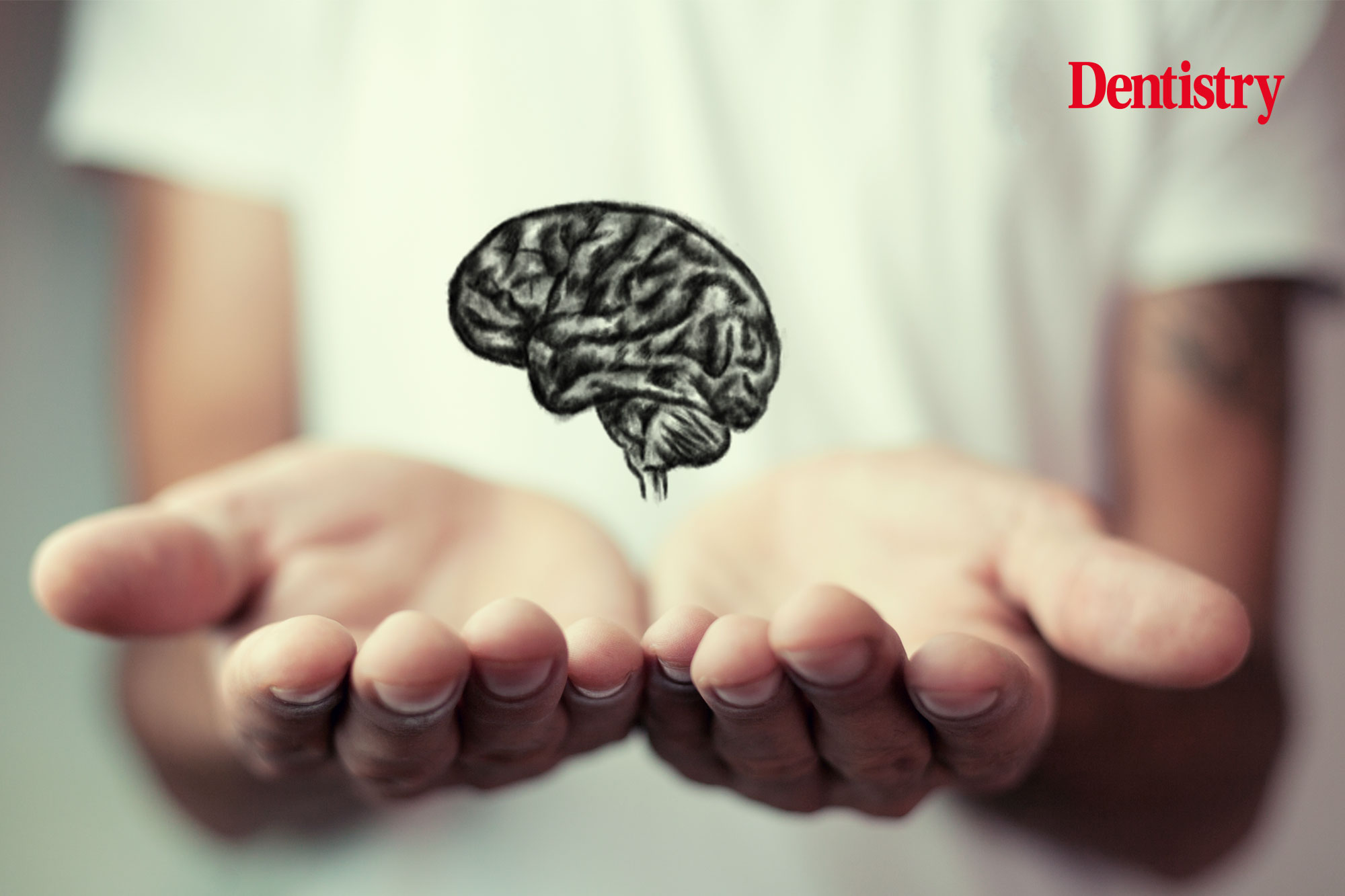
Luke Hand explores the emerging picture of addiction in the dental profession, and how people who dedicate their careers to caring for others can take care of their own mental health.
There is a peculiar psychological contract that exists between society and healthcare professionals. We expect competence without vulnerability. Precision without hesitation. Calmness without cost. And dentistry, perhaps more than any other profession, embodies this contradiction perfectly.
Dentists spend their lives working millimetres from consequence. Their hands operate in confined spaces where perfection is not a luxury, but a requirement. Their mistakes are visible, personal, and permanent. Yet the psychological cost of maintaining that level of sustained precision, day after day, is something we almost never discuss.
Dentistry is, in behavioural terms, a profession defined by asymmetry. Patients experience dentistry episodically: an appointment, an intervention, a resolution. Dentists experience it cumulatively. And cumulative pressure, left unacknowledged, has a way of finding its own release.
The psychology of responsibility without release
One of the great misunderstandings about addiction is that it is primarily about substances. It isn’t. It is about relief. Relief from internal states that feel unsustainable to carry continuously.
In the UK and Ireland, dentistry has quietly developed a reputation as one of the most psychologically demanding professions in healthcare. Studies conducted by the British Dental Association have found that over 50% of dentists report high levels of stress, with significant proportions experiencing burnout, anxiety, and depression.
More concerning still is the emerging data around addiction and suicide risk within the profession. Research published in the British Dental Journal and supported by organisations such as the Dentists’ Health Support Programme has highlighted elevated rates of alcohol misuse, prescription medication dependency, and mental health crisis among dental professionals compared to the general population.
Permission to seek help
Paradoxically, these same professionals are often the least likely to seek help. Not because they lack awareness. But because they lack permission. Permission, culturally and psychologically, to admit that they themselves may need care.
Karl Young once observed that the heaviest burden people carry is not suffering itself, but suffering alone.
Dentistry can, unintentionally, create precisely that condition. It is a profession that attracts conscientious, high-performing individuals. People with strong internal standards. People who derive identity from competence and reliability.
But identity, when built exclusively on being ‘the capable one’, leaves very little room for being human. Admitting vulnerability can feel, psychologically, like admitting disqualification. So instead, many endure silently. They continue to perform. Continue to deliver. Continue to fulfil their responsibilities to patients, colleagues, and families. All while privately negotiating internal battles no one else can see. I know this dynamic not academically, but personally.
Growing up alongside addiction
Addiction was not something that appeared suddenly in my life. It was something I grew up around. My father suffered from severe, chronic alcoholism for much of his adult life. Over time, this progressed to alcohol-related brain damage (ARBD), a devastating and irreversible condition that alters cognition, memory, and personality.
Eventually, his illness reached a point where he had to be sectioned under the Mental Health Act for six months. It was not a decision made lightly. It was simply the only way to keep him safe. Following his discharge, he required long-term private care, the only viable solution available to us as a family.
Around the same time, my brother was fighting his own lifelong struggle with alcohol. He experienced periods of homelessness spanning over 12 years. In 2024, he passed away at the age of just 50.
Addiction, in other words, was not an abstract concept in my life. It was a reality with names, faces, and consequences. And yet, despite this proximity, I still found myself struggling with my own relationship with alcohol during my career in the dental industry. Because addiction does not discriminate based on awareness. It emerges wherever sustained psychological pressure meets insufficient support.
Finding support for addiction and mental health problems
And yet, if there is one thing I learned during that period, it is this: the dental profession is not merely clinically skilled. It is profoundly human. Without the support, understanding, and compassion I received from colleagues, mentors, and employers – particularly during my time working within the dental sector and alongside organisations such as FMC my story may have unfolded very differently.
They did not respond with judgment. They responded with care and created space for recovery, rather than forcing concealment. And that distinction matters more than we often realise. Because recovery is not simply a medical process. It is a psychological one. It requires safety, it requires dignity and it requires the restoration of hope.
Fortunately, there are now dedicated organisations working to support dental professionals facing addiction and mental health challenges. In the UK, the Dentists’ Health Support Programme provides confidential assistance specifically tailored to dentists and dental students. Similarly, the British Doctors and Dentists Group offers peer support for professionals in recovery from addiction. In Ireland, the Dentists’ Health Support Trust provides confidential pathways to care, recognising the unique pressures faced by the profession.
These organisations exist because the problem exists. And because recovery, when properly supported, is not only possible – it is common. What is uncommon is talking about it openly.
From silent endurance to supported sustainability
Unfortunately, there remains a persistent myth that needing help reflects weakness. In reality, the opposite is true. Seeking help is an act of responsibility. Not only to oneself, but to patients, families, and colleagues. Because untreated addiction does not remain contained. It expands. It compromises health, relationships, and professional longevity.
On the other hand, recovery does something remarkable. It restores not only stability, but perspective. Many individuals who emerge from recovery report not diminished capacity, but enhanced clarity, resilience, and empathy. They do not return as diminished versions of themselves. They return as integrated ones.
Today, my work focuses on supporting individuals facing these very challenges. Not because I was trained to do so in theory. But because I understand, intimately, what it means to stand on both sides of that divide. Through Satori Recovery, we provide medically supervised, psychologically informed recovery programmes designed specifically for individuals who require clinical excellence alongside discretion and dignity. Recovery, when approached properly, is not about removing something from a person. It is about restoring something: their clarity, their stability, their future.
Perhaps the most important shift required within dentistry, and healthcare more broadly, is not medical, but cultural. We must move from a model of silent endurance to one of supported sustainability. We must recognise that those who care for others are not immune to needing care themselves. And we must replace stigma with understanding. Because behind every steady hand is a human being. And behind every human being is a nervous system that requires care, protection, and occasionally, repair.
The good news is this: recovery is not rare. What is rare is creating environments where it is allowed to happen openly. But when we do, the results can be extraordinary. Not only for individuals. But for the profession as a whole.
Follow Dentistry.co.uk on Instagram to keep up with all the latest dental news and trends.
Apa Reaksi Anda?
 Suka
0
 Kurang Suka
0
 Setuju
0
 Tidak Setuju
0
 Bagus
0
 Berguna
0
 Hebat
0