






































%20and%20Batch%20Production%20Records%20(BPR).png)











Why more UK orthodontists are bringing aligner production in-house
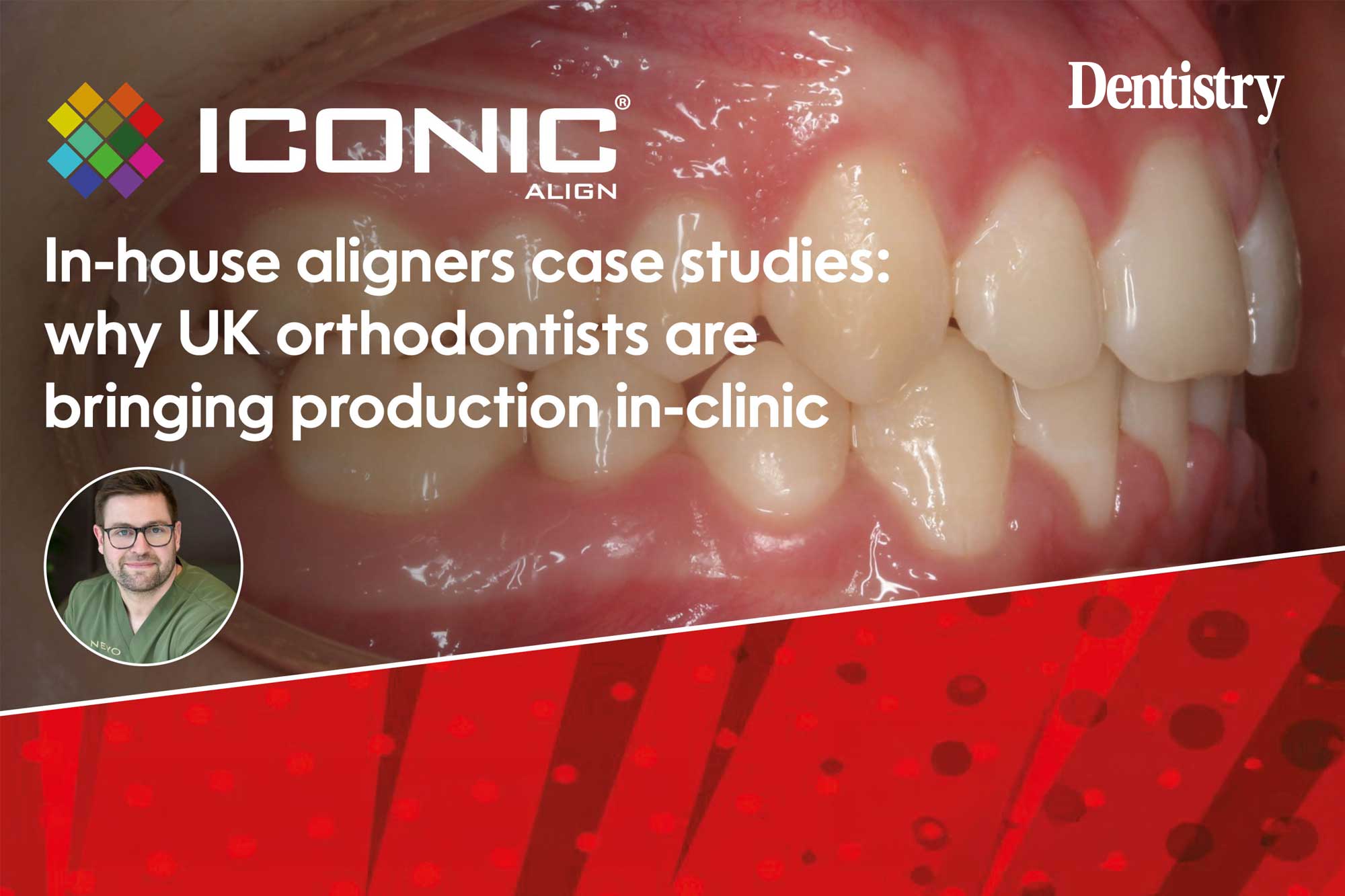
Neil Woodhouse explores why many orthodontists are investing in in-house aligner production using two key case studies.
Clear aligner demand across the UK shows no sign of slowing. As patients continue to prioritise discreet, comfortable orthodontic treatment, practices are under increasing pressure to deliver faster results, greater flexibility and a more personalised experience.
In response, a growing number of clinicians are shifting away from fully outsourced systems and investing in in-house aligner production. By combining digital workflows with modern thermoforming techniques and advanced materials such as Iconic Align, practices are gaining more control over both treatment and business performance. So, what’s driving this shift – and is it the right move for your practice?
Taking back control of aligner treatment
Outsourced aligner systems offer convenience, but they can also limit clinical input. Treatment planning is often completed remotely, which may restrict control over staging, biomechanics and appliance design. In-house aligner production changes that dynamic entirely.
By bringing manufacturing into the practice, orthodontists can directly manage every aspect of treatment – from initial setup through to final detailing. This includes full control over attachment placement, trim lines and force application, allowing treatment to be tailored precisely to each patient.
For clinicians who value autonomy and precision, this level of control is a major advantage.
Speed as a competitive advantage
Turnaround time is one of the most immediate benefits of in-house aligners. Rather than waiting days – or even weeks – for external production and delivery, practices can design, print and thermoform aligners within hours. This means faster treatment progression, fewer delays and the ability to respond quickly to refinements – ultimately improving both efficiency and patient satisfaction.
Improving profitability and accessibility
Cost remains a key consideration in aligner therapy. Many outsourced systems operate on fixed pricing models, which can limit flexibility – particularly for minor cases or short-term alignment. In-house clear aligner production offers a more scalable alternative. By reducing per-case costs, practices can:
- Improve profit margins
- Offer more competitive pricing
- Expand access to aligner treatment for a wider patient base.
This is particularly valuable for relapse cases, cosmetic alignment and hybrid treatments.
Case study one: adult alignment
A 50-year-old female with mild to moderate upper and lower crowding was efficiently treated in seven months using in-house aligners. No attachments or IPR required.
Case study two: functional correction
Functional correction: A 16-year-old male with Class II Division 2, deep bite, and arch crowding/spacing was treated with Neyo Pro in-house aligners with mandibular advancement blocks for 10 months, followed by six months of fixed appliances for final detailing.
Building a digital orthodontic workflow
Successful in-house aligner systems rely on a well-structured digital workflow. While this requires initial investment, the technology is now more accessible than ever.
Typical components include:
- Intraoral scanning for accurate digital impressions
- Treatment planning software for aligner staging
- 3D printing for model production
- Thermoforming equipment for aligner fabrication.
With the right setup, practices can create a streamlined, repeatable process that integrates seamlessly into daily workflows.
Why material choice matters
Not all aligner materials perform equally. For predictable tooth movement, consistency and durability are essential. Iconic Align has been developed to deliver controlled, light forces while maintaining flexibility and clarity. Its resistance to deformation supports accurate tracking throughout treatment, while its transparency meets patient expectations for aesthetics. From a clinical and operational perspective, ease of thermoforming and finishing also plays a key role – helping teams maintain efficiency without compromising quality.
Expanding what’s clinically possible
One of the biggest advantages of in-house aligners is the ability to go beyond simple cases. With full control over design and production, clinicians can adapt treatment as it progresses and combine aligners with other orthodontic techniques. This opens up new opportunities for managing more complex cases, offering a level of flexibility that can be difficult to achieve with outsourced systems.
Are there challenges?
Adopting in-house aligner production is not without its hurdles. Practices must commit to training, workflow development and ongoing quality control. A skilled and engaged team is essential, particularly when it comes to digital design and laboratory processes. However, many practices find that these challenges quickly translate into strengths. Teams often take greater ownership of treatment, leading to improved consistency and better patient outcomes.
A shift in modern orthodontics
In-house aligners are no longer a niche concept – they are becoming a key part of modern orthodontic practice in the UK. By combining speed, control and cost efficiency, this approach enables clinicians to deliver highly personalised treatment while strengthening their practice offering. For those willing to invest in the technology and training, the rewards are clear: greater clinical freedom, improved workflows and a better overall patient experience.
In-house thermoforming with Iconic Align provides orthodontists with a high level of control, flexibility and efficiency. While implementation requires investment, commitment and a focus on clinical excellence, the long-term benefits are significant – including improved treatment outcomes, greater cost efficiency and the ability to deliver truly personalised care. For clinicians who value precision in planning, staging and innovation, in-house aligner production represents more than an alternative – it marks a progressive step forward in modern orthodontic practice.
Discover Iconic thermoforming materials from DB Orthodontics – precision-engineered for consistent performance and trusted by technicians, clinicians and patients worldwide.
This article is sponsored by DB Orthodontics.
Apa Reaksi Anda?
 Suka
0
Suka
0
 Kurang Suka
0
Kurang Suka
0
 Setuju
0
Setuju
0
 Tidak Setuju
0
Tidak Setuju
0
 Bagus
0
Bagus
0
 Berguna
0
Berguna
0
 Hebat
0
Hebat
0