































Accelerating Genetic Gain: Why Germ Cell Transfer Is Capturing Industry Attention
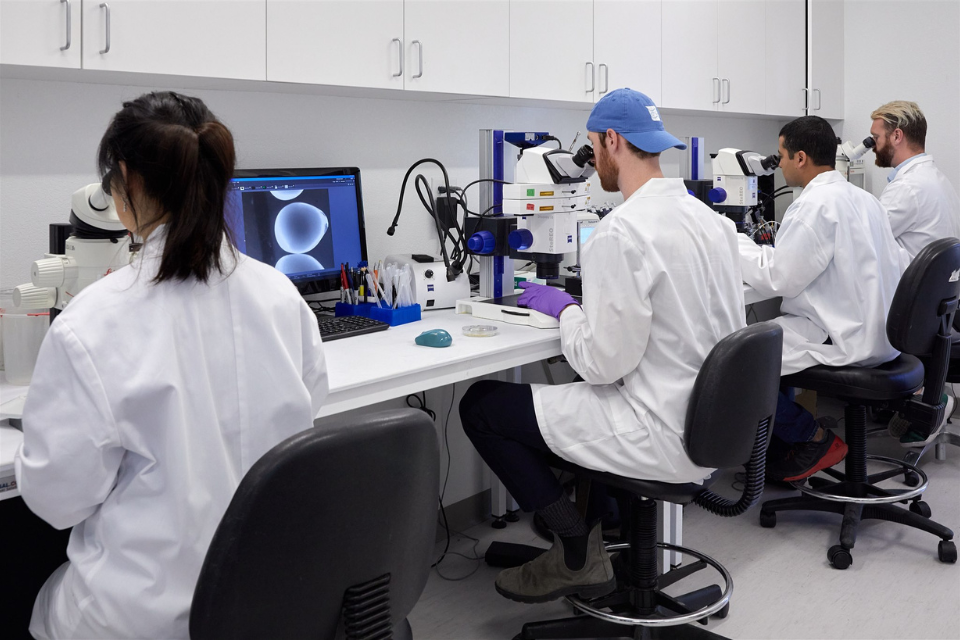
Aquaculture breeding programs have evolved far beyond a sole focus on growth. Producers now balance a much broader set of priorities, including animal welfare, climate resilience, production efficiency, disease resilience, and long-term sustainability. As genetic tools become more advanced, there is a greater opportunity to shape breeding strategies around diverse traits that deliver real commercial value to meet industry demands.
One technology attracting growing attention is Germ Cell Transfer (GCT), where germ cells – cells that eventually become sperm or eggs – are transferred from a donor fish into a surrogate host. When transferred into a germ-cell-free host, the surrogate produces only donor-derived gametes. For breeding programs, the opportunity extends well beyond reproductive control. GCT can help amplify elite genetics, separate genetic improvement from broodstock production, strengthen biosecurity, and potentially accelerate breeding cycles.
GCT is particularly relevant in Atlantic salmon, where challenges such as parasites, disease resistance, robustness, and early male maturation continue to carry significant economic consequences. These issues can reduce harvest weights, lower fillet quality, increase mortality, compromise welfare, and reduce overall production efficiency.
The Economic Impact
Recent bioeconomic modelling in salmonids highlights the scale of the opportunity. The use of GCT to generate all-female production cohorts has been estimated to deliver approximately USD 6.89 million in additional net profit per 30,000 MT production cycle, representing a 10.1 per cent increase in profitability from the same infrastructure and smolt inputs.
The value creation is driven by recovered biomass from improved survival and reduced downgrade losses associated with early male maturation. For producers, this demonstrates how reproductive technologies such as GCT can create measurable commercial value while also improving production consistency and welfare outcomes.
The Broader Value
The major role of any hatchery or breeding program is to produce fingerlings for stocking into production systems. GCT creates several opportunities to improve how this process is managed and scaled.
By transferring germ cells into surrogate lines or related species with stronger hatchery performance or higher fecundity, producers are able to generate larger numbers of juveniles within the same space and production timeframe. In some cases, surrogate species with shorter generation intervals may also help accelerate genetic gain by reducing breeding cycle length.
GCT also creates greater flexibility within breeding programs. Rather than maintaining large populations of elite broodstock, producers can amplify valuable genetics through surrogate hosts.
High-value donor animals can be identified early using genomic tools, while surrogate animals handle gamete production at commercial scale.
The technology may also improve biosecurity and genetic transfer between locations. Moving preserved germ cells instead of live animals may reduce both transport complexity and biosecurity risk. Importantly, GCT integrates naturally with established genomic selection strategies.
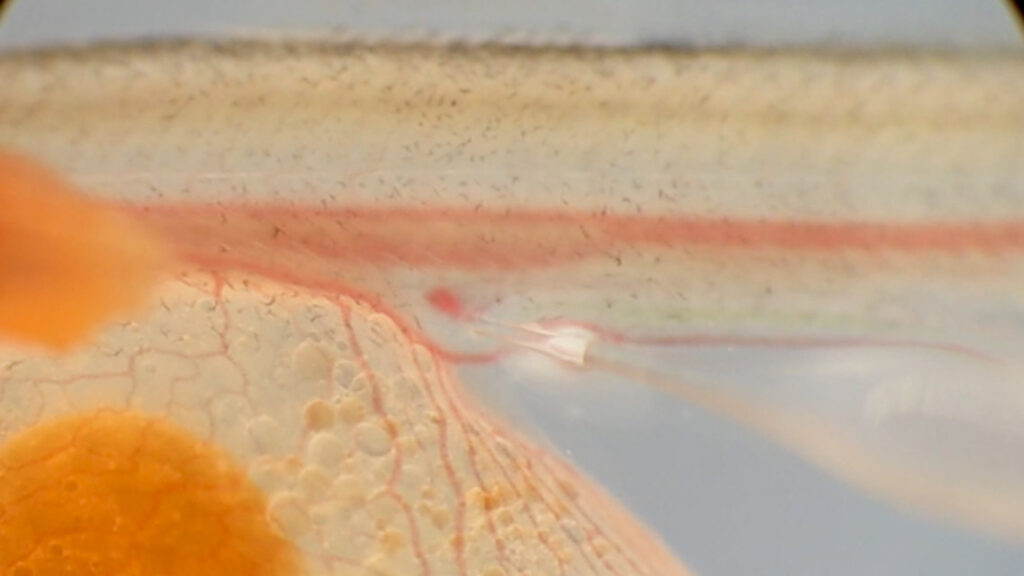
Atlantic salmon (Salmo salar) hatchling at around 15mm
Strengthening Elite Genetics
One of the clearest applications for GCT is the amplification of elite genetics.
In traditional breeding programs, a relatively large percentage of broodstock candidates are typically retained to preserve diversity and maintain sufficient reproductive capacity to meet production requirements. With GCT, breeding programs can become much more selective.
Instead of advancing the top 20 per cent of animals, programs may be able to focus on only the very best individuals while still producing sufficient broodstock numbers through surrogacy.
This changes the pace of genetic improvement. Selection intensity increases, genetic gain accelerates, and elite traits can be scaled much more rapidly.
The impact is particularly significant in highly fecund marine species and those with long maturation timelines, where each generation incurs substantial costs and investments. In species such as cobia or seriola, a single donor line may ultimately generate very large numbers of offspring through surrogate broodstock systems.
Supporting Monosex Production
GCT also creates opportunities for producing monosex populations.
Many finfish industries already rely on monosex production because one sex often grows faster, matures later, or delivers more consistent harvest quality. Traditional approaches for generating monosex stocks can be labour-intensive, inconsistent across generations, and, in some cases, involve potentially dangerous chemicals that require careful management, use, and disposal protocols.
By incorporating germ cell transfer, breeding programs are able to establish more controlled and scalable systems for producing neo-males or neo-females in species with well-defined genetic sex determination.
For producers, this can improve production consistency and reduce biological variability during grow-out.
Preserving Valuable Genetics
Another major advantage of GCT is long-term genetic preservation.
Conventional cryopreservation methods typically rely on storing sperm. While effective for preserving partial genetics, rebuilding an identical population from sperm alone can take multiple generations, and may also result in the loss of maternally inherited mitochondrial DNA.
Germ cell preservation offers an alternative. By preserving germ cells and reintroducing them through surrogate hosts, breeding programs can potentially recreate donor populations much more accurately in the first generation. Unlike sperm cryopreservation, these donor populations may include both males and females.
For valuable breeding lines, rare genetics, or insurance against disease outbreaks and catastrophic loss events, this represents a significant strategic advantage.
A Practical Tool, Not a Replacement
Importantly, GCT is not intended to replace selective breeding. Instead, it acts as an enabling technology that strengthens existing breeding strategies.
Modern aquaculture breeding programs are increasingly combining multiple tools:
- selective breeding for long-term gain,
- genotyping for improved accuracy,
- genomic selection for difficult traits,
- genome editing for sterility and trait advancement,
- and advanced reproductive technologies like GCT to improve operational efficiency.
The most successful programs are unlikely to rely on a single technology. Instead, competitive advantage will come from integrating these approaches into practical, commercially scalable systems.
Looking Ahead
Industry interest in Germ Cell Transfer is increasingly shifting beyond sterility alone and toward the broader value the technology can deliver within breeding programs. While reproductive control remains important, the larger opportunity lies in how GCT can improve the deployment of elite genetics, increase selection intensity, support monosex production, strengthen biosecurity, preserve valuable genetic resources, and potentially accelerate breeding cycles.
For commercial producers, these benefits translate directly into measurable operational value: improved production consistency, faster genetic progress, reduced biological losses, and stronger overall profitability.
As aquaculture breeding programs continue to evolve, integrating technologies that improve both biological performance and operational efficiency are likely to play an increasingly important role.
The post Accelerating Genetic Gain: Why Germ Cell Transfer Is Capturing Industry Attention appeared first on CAT-Center for Aquaculture Technologies.
Apa Reaksi Anda?
 Suka
0
Suka
0
 Kurang Suka
0
Kurang Suka
0
 Setuju
0
Setuju
0
 Tidak Setuju
0
Tidak Setuju
0
 Bagus
0
Bagus
0
 Berguna
0
Berguna
0
 Hebat
0
Hebat
0