






























Hatching egg cracks: reducing losses along the production continuum
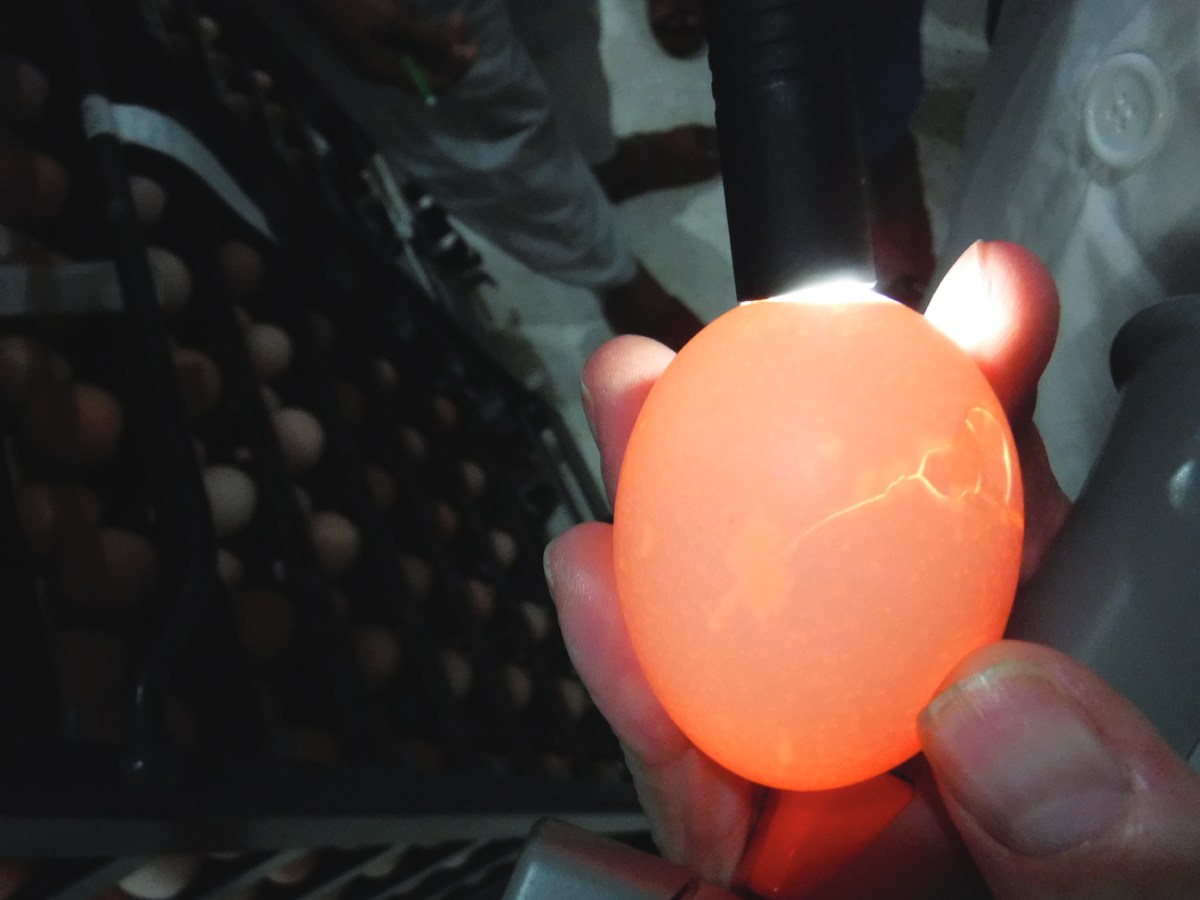
Hairline cracks are an important area to investigate when hatchability decreases or contamination increases. To understand the impact of cracked eggs on hatchability, a trial was conducted comparing cracked eggs with non-cracked eggs.
As shown in Table 1, cracked eggs decreased hatchability and increased 2nd grade chicks, cull chicks, embryonic mortality and contamination. The data clearly indicate that shell damages cause great losses. Therefore, it is extremely important to manage all processes, from the farm to the hatchery, in order to identify where cracks are occurring.

Cobb-Vantress. Unpublished data.
Considering the impact of hairline cracks on production, identifying and correcting the sources of cracked eggs can improve hatchability and chick quality. From the farm to the hatchery, there are multiple areas in the production continuum to investigate.
On the farm
Hens
If the hens were not in the correct condition before light stimulation, they may have abnormal nesting behaviors. This can include hens dropping eggs from a standing or even walking position, which can cause eggs to crack on impact.
Hens may also cause cracks by pecking at eggs. Pecking at eggs occurs primarily with floor and slat eggs. There are multiple reasons for egg pecking including the house configuration, slat type and design, nest quality and management related issues.
Team member handling
The care taken in egg collection can have a big impact on the quality of eggs. Whether in manual or mechanical nests, collection is a critical control point. It is important to observe the frequency, duration and time interval between collections. If eggs are accumulating in the nests, or on the collection belt and tables, the number of cracked eggs is likely to increase. After feeding, the hens will begin laying eggs. Time collection accordingly and keep in mind as hens get older, they lay eggs later in the day. Monitor egg production and adjust collection times to align with peak laying periods.
In manual nests collect eggs 4 times each day. Three collections before midday, with a fourth collection in the late afternoon to ensure all nests are clean. If there are more than three eggs in a nest, revise the egg collection schedule.
With manual collections, extreme care should be taken when transporting eggs from different nest rows or houses to a central on-farm location. It is very important that eggs are protected from sun and rain. Like collection, the packing process requires care and it is important to prevent the accumulation of eggs, excessive egg rolling and rough handling.
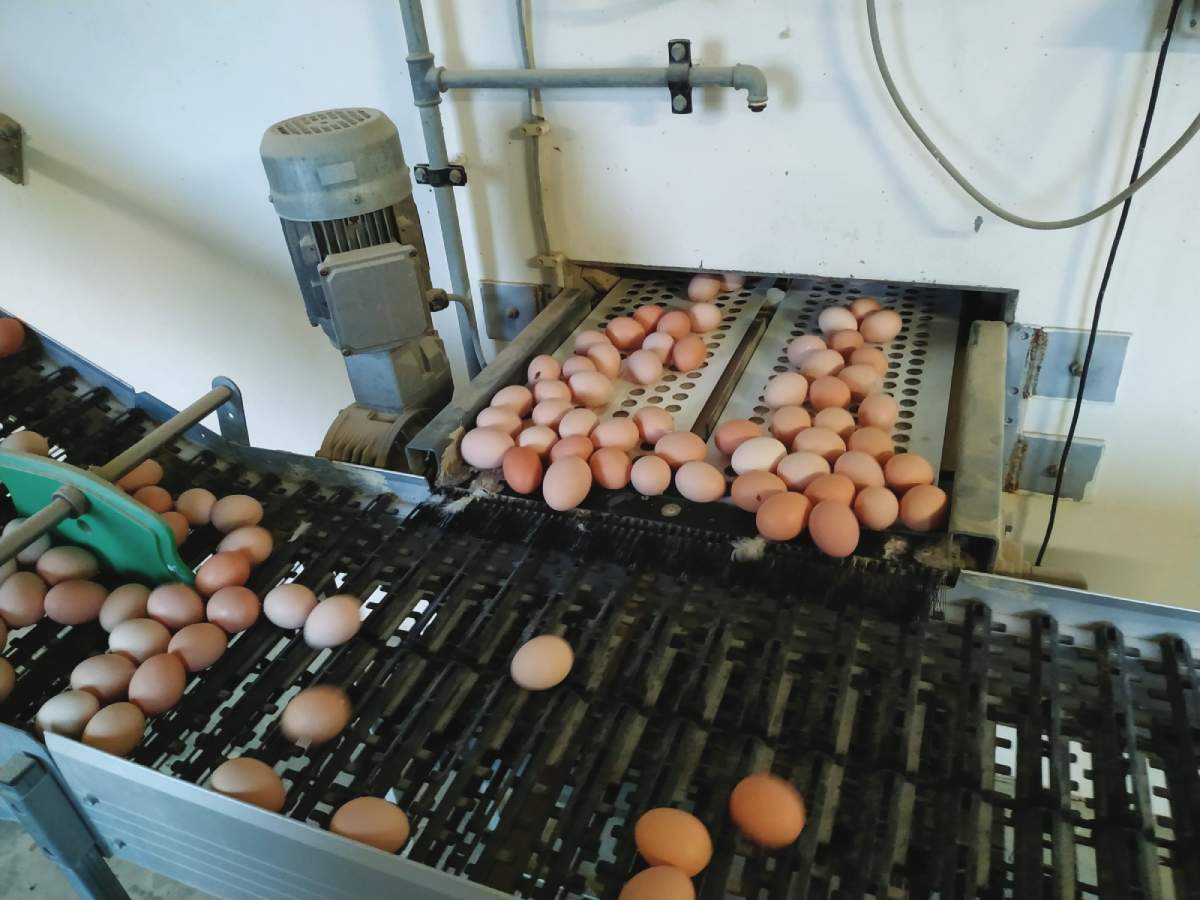
In mechanical nests, where eggs are collected on a belt and sent to an egg collection table, the number of collections depends on environmental house temperature and the belt capacity. However, typically a minimum of 3 collections per day is sufficient. Activating the conveyor belt system only once per day is not recommended, as 7 to 8 hours of production will accumulate on the belt system and increase the risk of cracked eggs.
If eggs are accumulating on the collection tables, reduce the speed of the egg transport belt to prevent accumulations. It is important to have belts that are wide enough (25 cm for each nest side is ideal) so that eggs can collect on the belts without microfractures.
Equipment maintenance
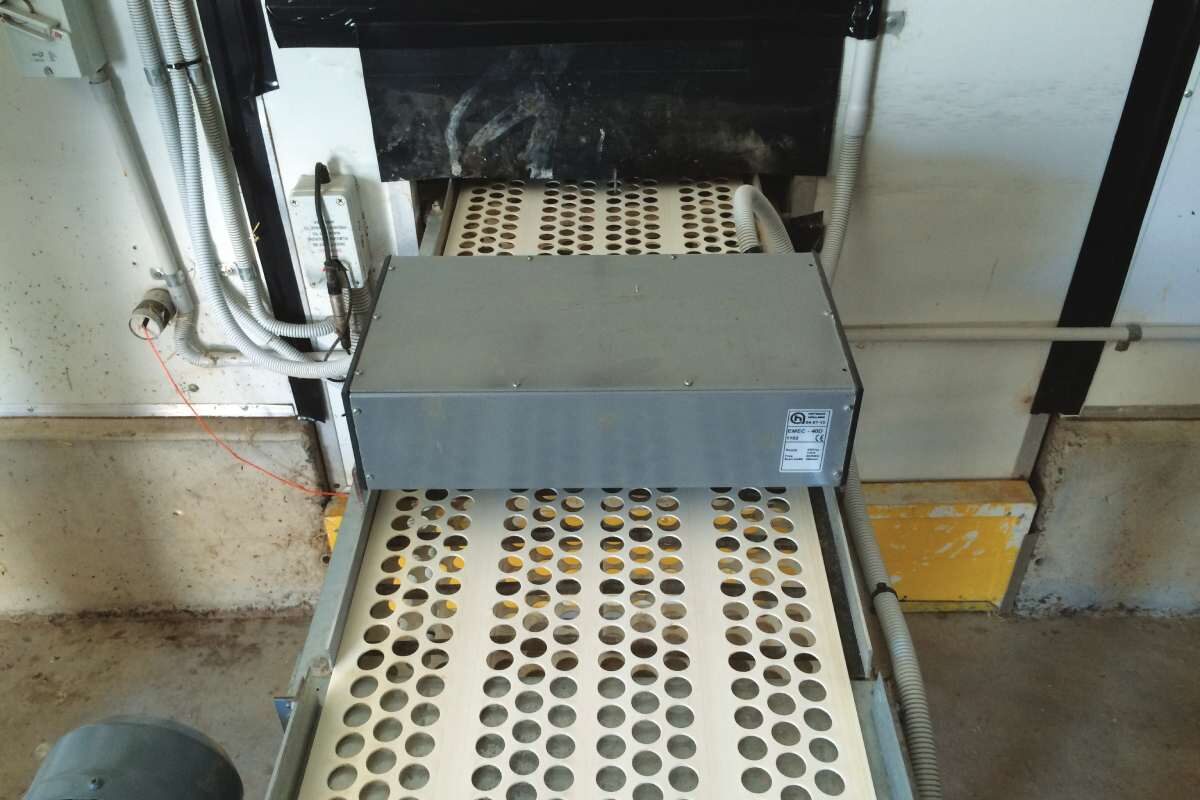
As automation increases, equipment maintenance is critical as it can have a big impact on the number of cracked eggs. An electronic egg can be used to measure the G-forces applied to the eggshells along the transport system. Areas in the transport system where eggs are more likely to crack can be identified and addressed.
For nests, check the nest pads and replace them before they become excessively worn. Also ensure that the nest pads are installed correctly. In community nests, if the plastic flaps between the nest pads and the egg belt are damaged and curling, hens may peck at eggs when the conveyor belt is visible.
Egg yolk present on the belt can be an indication of broken and shell-less eggs. If eggs are breaking, it is also likely that eggs are cracking.
Conveyor belts moving eggs to a packing unit or a central collection table must be wide enough to support a large quantity of eggs. Systems that have only one conveyor belt in the center that is shared by nests on both sides are more prone to egg damage. In poorly adjusted systems, eggs can roll to the center of the belt, hitting each other.
Check that the mechanical community nests are level, collection belts are not warped, and clamps are holding the belt in place. Adjust the tension on the belt so that the eggs are evenly distributed on the belt. The belt should not sag which will cause eggs to bunch together, nor should it be too tight as this can cause eggs to bounce. These items should be part of a regularly scheduled maintenance program, which includes replacing parts before they fail.
When designing a new system, factors to consider include the number of birds per nest, the system being used (manual or mechanical) and flock density.
Feed and nutrition
It is difficult to correct eggshell quality once it deteriorates considerably. Regularly evaluate eggshell quality and if issues occur, check calcium availability and particle sizes, as well as phosphorous and vitamin D3 levels in the diet.
- An imbalance of calcium, phosphorous and vitamin D3 can cause weak eggshells.
- If the hens deplete calcium reserves, eggshell quality decreases and more cracked eggs occur. This could be the result of low or fluctuating calcium levels. Test the feed and determine if the formulation is correct. If so, mixing or milling inaccuracies may be an issue.
- If limestone particles in the feed are too fine, calcium uptake may be reduced. This issue is more common in pelleted and crumbled feeds.
- Feed contaminants including Nicarbazine and mycotoxins may have a negative effect on eggshell color, quality and hatchability.
Environmental issues
Ventilation issues that cause the house temperatures to rise above the thermo-neutral zone of the birds can induce heavy respiration. As a result, respiratory alkalosis can occur. In this condition, the blood pH rises above normal, the kidneys attempt to compensate by excreting bicarbonate and calcium levels are depleted. Ultimately eggshell quality is reduced.
Disease challenges
Disease challenges can have a negative effect on the uterus and/or oviduct of the bird and ultimately impact the eggshell quality. Eggs should have a uniform color and a shiny appearance if the cuticle is formed correctly. If the oviduct is impacted by disease, the shell cuticle may be malformed or absent.
Transportation
Transporting eggs is critical and must be consistently monitored. Evaluate the condition of roads and transportation vehicles. Supervise employees and prevent rough handling. Make drivers aware of the fragility of the eggs. In order to assess the care and quality of transport, communicate with the hatchery regarding the number of cracked eggs before and after delivery.
Hatchery
In the hatchery, monitor the egg quality weekly, evaluating a sample of at least 600 eggs per breeder flock, divided among the houses. Evaluate and record the number of cracked, upside down, dirty and thin shelled eggs. Sample eggs or trays per house, when it is possible to track the house origin of the eggs. Remove the eggs from the tray and evaluate them individually by candling.
If the eggs are evaluated on the farm and arrive at the hatchery in incubation trays, ready to incubate, cracked eggs can be counted and removed. However, if the eggs are sorted in the hatchery, the evaluation will be more complicated and must consider how to identify cracked eggs and their sources. Note that the automated equipment used for classification must be closely monitored, as it can be an important cause of cracks if machines are not adjusted correctly. By evaluating and sorting cracked eggs, the hatchery can communicate with the farm and work together to improve the quality of the eggs.
Conclusions
A fundamental factor of success is monitoring critical control points in the egg production process. Assessing and auditing the process along the production continuum will provide information about where the operation should focus to reduce losses from cracked eggs. Consistent communication between the farm and hatchery is also very valuable to improve the quality and reduce damage to hatching eggs.
Apa Reaksi Anda?
 Suka
0
Suka
0
 Kurang Suka
0
Kurang Suka
0
 Setuju
0
Setuju
0
 Tidak Setuju
0
Tidak Setuju
0
 Bagus
0
Bagus
0
 Berguna
0
Berguna
0
 Hebat
0
Hebat
0