
























Using AI to Revolutionize Gut Microbiome Analysis in Aquaculture

Aquaculture is an increasingly vital player in the global food market, and currently supplies over half of the world’s seafood, according to the US Department of Agriculture. As demand for aquaculture products grows, the industry’s response works to keep pace.
One way farmers are doing this is by integrating observational and proactive systems that monitor fish in real time. Keeping tight tabs on fish populations and water quality allows farmers to better understand their operational conditions.
An important aspect of this is fish health and growth. Problems like disease can run rampant in farms, hampering fish growth and ultimately the quality of the end product, according to the World Aquaculture Society, underscoring the importance of stopping health problems before they spread.
Now, some companies are looking toward creating new technologies that can monitor fish populations and detect changes in health instantaneously, before they become a problem.
An example of Aquagut sample acquisition with salmon. (Credit: AquaGut)
Challenges with Monitoring Fish Health in Aquaculture
Horaizon AI started off in human healthcare by analyzing gut microbiomes, and has recently moved into gut microbiome analysis for terrestrial animals and, now, aquatic species. Alan Cook is an aquaculture consultant who has partnered with Horaizon AI to develop their new aquaculture diagnostics program: AquaGut.
“They found that using a fecal sample, they were able to quantify the metabolic activity present in a gut sample,” Cook says of Horaizon’s technology.
Across both terrestrial and aquatic species, the gut microbiome serves as an indicator of health, performing the same basic functions in animals. However, Cook says that the aquaculture industry has historically relied on more observational or easily accessible tests, such as measuring weight or gill microbiome analysis, rather than examining gut health.
Getting fecal samples is the primary method for analyzing gut health, and traditionally, samples had to be sent to labs for analysis. Cook says this method was laborious, expensive, and often took several weeks for analysis to be completed. This timeline, similar to historic observation methods, might only catch onto health changes when they’re already a problem.
Cook says that AquaGut lays out a process to observe and track changes in population health as they happen, rather than waiting until a problem shows up visibly.
How Does AquaGut Work?
Cook primarily sees AquaGut as a proactive method that could tell farmers to try different foods and maximize growth. He explains that choosing the right feed source can proactively prevent health problems while also minimizing costs.
“The biggest application for me is around feeding efficiency and getting better growth and reducing the amount you spend on feed,” Cook states.
The process starts by collecting a small fecal sample, dewatering it, and smearing it on AquaGut’s premade template. Then, users take a picture and upload it to the AquaGut app, where the Horaizon AI analyzes it.

An example of fecal smear microbiome results. (Credit: AquaGut)
Cook says that the analysis looks for biomarkers, like color and texture, of common functional microbes.
“It looks for those key types, butyrate producers, fatty acid producers, fermenters, and pathogen inhibitors,” Cook explains, “and then gives you a diversity score.”
High microbial diversity indicates a healthy gut and, therefore, a healthy fish. However, the analysis isn’t a one-off test, as farmers must have a large sample size. Rather, for the first few months, farmers must conduct multiple tests to understand the normal diversity levels in the species they’re raising.
Then, they can track changes in their stock’s gut diversity over time, and look for when fish are falling below that benchmark. Cook believes this method can be used in multiple ways, for both disease prediction and for choosing the best food.
“If you see a real drop in diversity or a real increase in pathogen inhibitors, it can suggest to you that you’ve got an impending health issue,” Cook says.
He continues, “If your use is about trying to figure out whose feed is better, you should also see that indicated in the diversity […]. You should see which gut is delivering better performance.”
Cook believes it’s a way for aquaculture farmers to get a snapshot of gut health and growth, without the need for traditional labor and time-intensive sampling and observation.
He also explains that it can be paired with water quality measurements, which have seen advances in real-time monitoring in the industry. This can provide a holistic view of farm conditions, and also show whether water quality conditions are impacting fish gut health or how they feed.
“This should allow farmers to have insight into gut biome populations, and that should be a very powerful tool for water quality, understanding the impact the environment has on the selection of diets,” Cook says.
However, he admits that, although AquaGut is trying to simplify the process, implementation isn’t always easy.

A flowchart of the AquaGut microbiome analysis. (Credit: AquaGut)
Challenges with Implementing Gut Health Analyses
AquaGut, AI in aquaculture, and gut microbiome analysis are all relatively new in the industry. Therefore, a large part of Cook’s job as a consultant with Horaizon is to talk with farmers about this new technology. He explains that while many of them see the value in instantaneous health and growth readings, they may find trouble when trying to implement a technology like AquaGut.
“Fish farming is hard, and trying to bring something new online requires extra effort and needs to deliver enough value to carve out time in your already busy day,” Cook says.
While the value of healthy populations may be obvious to farmers, using the gut as a surrogate for population health may be uncharted territory.
Sometimes, this is simply because they’re used to alternative methods of tracking health and feeding. If that’s the case, and they’ve never incurred the costs of gut microbiome analysis before, Cook says the selling point on cutting costs becomes null.
“If they’re not currently testing [gut health], the fact that it’s 10% of the existing costs, when they don’t have even that cost today, is not very compelling,” Cook explains.
To address the issue of implementing quicker microbiome analysis at a broad scale, Cook says that AquaGut is prioritizing showing instances of its use in the real world.
AquaGut Case Studies
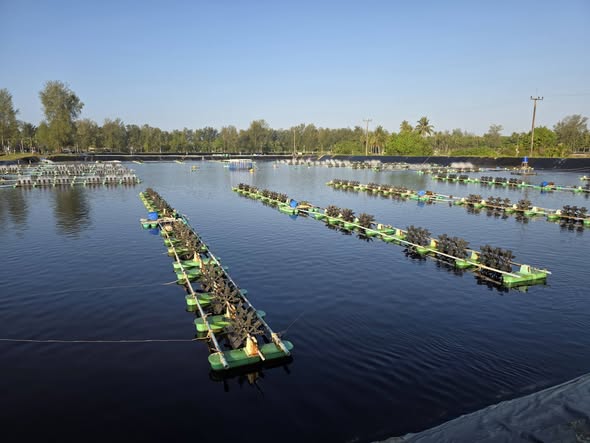
AquaGut’s primary method for testing its technology is by offering farmers low-cost or free field trials. Cook says they are planning trial runs with a shrimp farm in Thailand and a tilapia hatchery.
“Once you have those commercial use cases that demonstrate the importance of what you’re doing, then you start to get some traction,” Cook says.
Cook says that, while lab results and research studies are helpful, they aren’t always enough. In an industry that’s demanding and results-based, farmers want to see real-world applications before incurring the costs and time it takes to implement new technologies.
That’s why AquaGut is conducting case studies early, to build up the data and show positive changes from their technology. Ultimately, Cook hopes that these case studies will show the importance of gut analysis and push aquaculture health monitoring in a better, more efficient direction.
“My hope is that this becomes another tool in the tool chest for farmers to monitor the health of their fish at a more microbial level, on a day-to-day basis,” Cook says.
The post Using AI to Revolutionize Gut Microbiome Analysis in Aquaculture appeared first on FishSens Magazine.
Apa Reaksi Anda?
 Suka
0
Suka
0
 Kurang Suka
0
Kurang Suka
0
 Setuju
0
Setuju
0
 Tidak Setuju
0
Tidak Setuju
0
 Bagus
0
Bagus
0
 Berguna
0
Berguna
0
 Hebat
0
Hebat
0