






























Before the Dirt Moves: Stormwater Responsibilities on Idaho Construction Sites
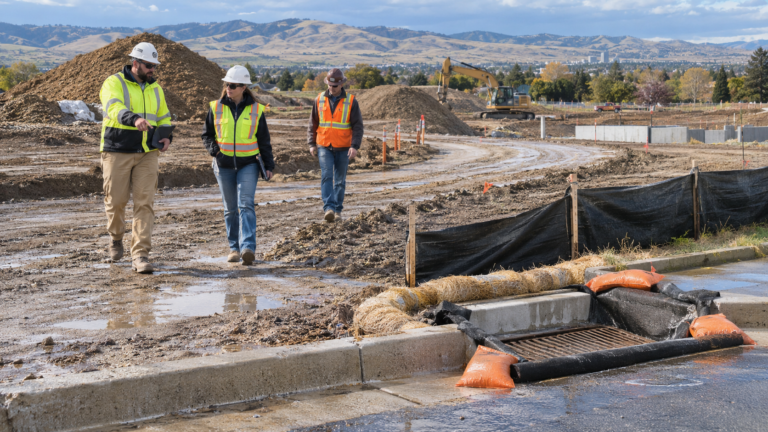
A construction site does not need a creek running through it to affect water quality. Rain or snowmelt can move across graded soil, enter a roadside ditch or storm drain, and eventually reach surface water far from the original disturbance. Idaho DEQ explains that stormwater can pick up sediment, dirt, oil, grease, pesticides, and other pollutants as it moves across land and hard surfaces.
Construction adds several additional pollutant sources. Clearing, grading, excavation, stockpiles, vehicle traffic, concrete work, fuel storage, and exposed soil can all affect runoff. EPA lists common construction-site pollutants including sediment, oil and grease, concrete washout, construction chemicals, nutrients, and debris. Effective stormwater management therefore begins before earthwork starts rather than after muddy water is already leaving the project.
The Permit Threshold Is Not Always the Individual Lot Size
Idaho Department of Environmental Quality administers construction stormwater coverage through the Idaho Pollutant Discharge Elimination System, or IPDES. DEQ states that construction activities that disturb one acre or more and discharge stormwater require coverage under the Construction General Permit. That basic threshold is important, but it does not mean every project under one acre is automatically exempt.
A smaller construction area may still require coverage when it forms part of a larger common plan of development or sale that ultimately disturbs at least one acre. EPA applies the same basic rule, covering projects that disturb less than one acre when they are part of a common plan that will disturb one acre or more. This can matter for builders working on individual lots within subdivisions or other phased developments.
Idaho’s Construction General Permit defines a common plan broadly. It can include drawings, permit applications, advertisements, zoning requests, boundary markings, or other evidence that multiple construction activities are connected within one development. The Idaho CGP specifically includes projects disturbing less than one acre when they are part of such a larger common plan.
Some projects may qualify for exceptions or waivers, and local governments can impose additional requirements. DEQ currently notes that projects disturbing less than 5 acres with a rainfall erosivity factor below 5 may qualify for a low-erosivity waiver under applicable conditions. Because applicability depends on the actual project and location, permit questions should be resolved before mobilization rather than inferred from lot size alone.
A SWPPP Has to Describe the Actual Site
Where Construction General Permit coverage is required, the Stormwater Pollution Prevention Plan, or SWPPP, is a central part of compliance. Idaho DEQ states that the SWPPP must be completed before the Notice of Intent is submitted. The plan should identify potential pollutant sources, describe control measures, show drainage and discharge points, and explain inspection, maintenance, and corrective-action procedures.
Site mapping is especially important. A temporary entrance, stockpile, drainage swale, inlet, low point, or changing grade can alter where runoff actually travels. DEQ says a construction SWPPP should document where BMPs are installed, the site’s discharge points, responsibility for implementing the plan, and associated training and maintenance records.
That makes a generic list of BMPs much less useful than a site-specific strategy. Silt fence, inlet protection, stabilized entrances, sediment traps, erosion-control blankets, concrete washout containment, and material-storage practices address different risks. The right measure depends on slope, soil, drainage, construction sequencing, nearby infrastructure, and where water is likely to leave the site.
The purpose is not to install the largest possible number of controls. It is to prevent erosion where practical, intercept sediment where necessary, protect drainage features, manage pollutant-generating activities, and maintain those measures so they continue working as construction changes.
Compliance Continues After Construction Begins
A SWPPP is not finished simply because the Notice of Intent has been submitted. Idaho DEQ identifies regular inspections as a key requirement of Construction General Permit coverage. Field inspections should look for damaged or overwhelmed controls, sediment accumulation, exposed stockpiles, new drainage pathways, unstabilized areas, and activities that were not anticipated when the plan was first written.
Construction itself continually changes drainage. A site may be regraded, utilities installed, access roads moved, or stockpiles relocated. A storm may also reveal flow patterns that were not obvious during dry weather. When those changes affect pollutant sources or runoff, the stormwater program needs to respond rather than continuing to rely on controls designed for an earlier phase of work.
Clear responsibility matters. Someone on the project team needs to recognize deficiencies, arrange maintenance, document inspections, and ensure corrective measures are carried out. Idaho DEQ’s compliance program includes construction-site inspections that specifically evaluate BMPs and SWPPP implementation, so the field condition of the site matters as much as the paperwork.
The practical benefit of good stormwater management extends beyond regulatory compliance. Keeping sediment onsite can reduce cleanup, protect neighboring property and drainage systems, and prevent avoidable interruptions. Sequencing work carefully, limiting unnecessary disturbance, stabilizing completed areas, and correcting damaged controls promptly are ordinary construction-management practices that also support water-quality compliance.
For projects in Boise, Meridian, Nampa, elsewhere in the Treasure Valley, and across Idaho, stormwater planning is usually easier before grading begins than after runoff problems develop. Permit applicability, drainage patterns, BMP selection, inspection responsibilities, and changing site conditions should all be addressed early and revisited throughout construction.
Summit Environmental: https://www.summitenvironmentalinc.com/ can assist Idaho project teams with stormwater compliance, SWPPP development, site evaluations, BMP planning, and ongoing environmental support. A useful SWPPP should do more than satisfy a paperwork requirement—it should remain practical and accurate as the construction site changes. Check it out at https://www.summitenvironmentalinc.com/

The post Before the Dirt Moves: Stormwater Responsibilities on Idaho Construction Sites first appeared on WorldWide Aquaculture.
Apa Reaksi Anda?
 Suka
0
 Kurang Suka
0
 Setuju
0
 Tidak Setuju
0
 Bagus
0
 Berguna
0
 Hebat
0