





























































Standing Ab Exercises: Core Workouts You Can Do Anywhere


Most ab routines start the same way. Lie down, stare at the ceiling, and crunch your way through 15 minutes on a gym floor that may or may not have been wiped down this decade. No mat, no floor space, zero interest in questionable carpet? Standing ab exercises solve that.
These movements train your core the way it functions, upright and stabilizing your spine against gravity while the rest of your body moves. This guide covers 10 standing core exercises, from bodyweight basics to suspension training variations, that you can do at home, in a gym, or in a hotel room with nothing but a door and some floor space.
Why Standing Ab Exercises Work
Your core's main function is spinal stabilization. Every time you carry groceries, throw a ball, or catch yourself on an icy sidewalk, your core fires as an integrated system to keep your spine safe and your body balanced. Standing ab exercises replicate that demand far more closely than lying on the floor. You don't need a full setup of abs training equipment to get started; most of these exercises use nothing but your body weight.
When you train your abs on your feet, you recruit the full core system at once. Rectus abdominis, obliques, transverse abdominis, erector spinae, hip stabilizers, and glutes all working as a connected unit. A 2023 systematic review in the Journal of Sports Science and Medicine analyzed 21 studies and found that core training produced significant improvements in balance and sport-specific performance, including jumping power and throwing velocity.
Floor exercises still have their place. Crunches and planks isolate specific muscles effectively and belong in a well-rounded routine. But standing exercises train the core as a coordinated whole, and that functional strength transfers better to how you move through your day.
A crunch trains your abs to flex your spine while lying down, but how often does real life ask you to do that? Standing ab exercises train the muscles responsible for keeping you stable while you walk, lift, twist, and reach. That functional carryover is what makes them worth your time.
Standing abs are a solid option for anyone who deals with back, hip, neck, or wrist discomfort during floor work. No mat needed. No floor space required.
Standing Bicycle Crunch
The standing bicycle crunch takes the sculpting power of the classic floor version and adds a balance challenge. It hits the obliques and rectus abdominis without any equipment, making it one of the most accessible standing ab exercises you can do anywhere.
How to Do It
-
Stand with feet hip-width apart and hands behind your head.
-
Drive your right knee up while rotating your torso to bring your left elbow toward it.
-
Return to the starting position and repeat on the opposite side, alternating for reps.
Keep your chest tall throughout the movement and focus on driving the crunch from your obliques rather than just pulling your elbow forward. Your neck stays relaxed.
Standing Oblique Crunch
This one isolates the obliques through lateral flexion, making it one of the most effective standing oblique exercises for building side-body strength with zero equipment. It's beginner-friendly and still challenging enough to earn a spot in any standing ab routine.
How to Do It
-
Stand with feet shoulder-width apart, one hand behind your head and the other arm extended along your side.
-
Lift the knee on the same side as the extended arm while crunching your elbow down toward it.
-
Squeeze the oblique at the top, then return to the start position with control.
Keep the movement strictly lateral. Leaning forward or rotating your torso shifts the work away from the obliques.
Standing Wood Chop
The wood chop is a dynamic rotational movement that builds the kind of power you use in sports and daily life. Think swinging, throwing, lifting, reaching across your body. It's one of the most effective weighted ab exercises you can do on your feet, lighting up the obliques and rectus abdominis. You can use a dumbbell, medicine ball, or kettlebell. The TRX YBell is a strong pick here. Its multiple grip positions let you adjust your hand placement to match each phase of the rotation, covering the holds you'd normally need both a dumbbell and a kettlebell for.
How to Do It
-
Stand with feet slightly wider than shoulder-width.
-
Hold the weight at one hip with both hands.
-
In one fluid motion, rotate and lift the weight diagonally across your body to above the opposite shoulder, pivoting your back foot to allow the rotation.
-
Reverse the movement with control.
The power comes from your hips and core, not your arms. Fight the urge to rush the downward phase.
TRX Standing Rollout
The TRX Suspension Trainer™ turns the basic rollout into a demanding anti-extension exercise. The instability of the straps forces deeper core engagement than a standard ab wheel, and you control the difficulty by adjusting your body angle. Closer to the anchor point is easier. Farther away is harder. Among TRX exercises, the rollout is one of the most effective for building anti-extension strength through the entire core.
How to Do It
-
Face away from the anchor point, holding the TRX handles with arms extended at shoulder height.
-
With feet planted, slowly extend your arms overhead while keeping your core rigid and your spine neutral.
-
At full extension (or as far as you can control without your lower back arching), pull back to the starting position by engaging your abs.
Start with a steeper angle and progress forward as you build strength.
Standing March with Twist
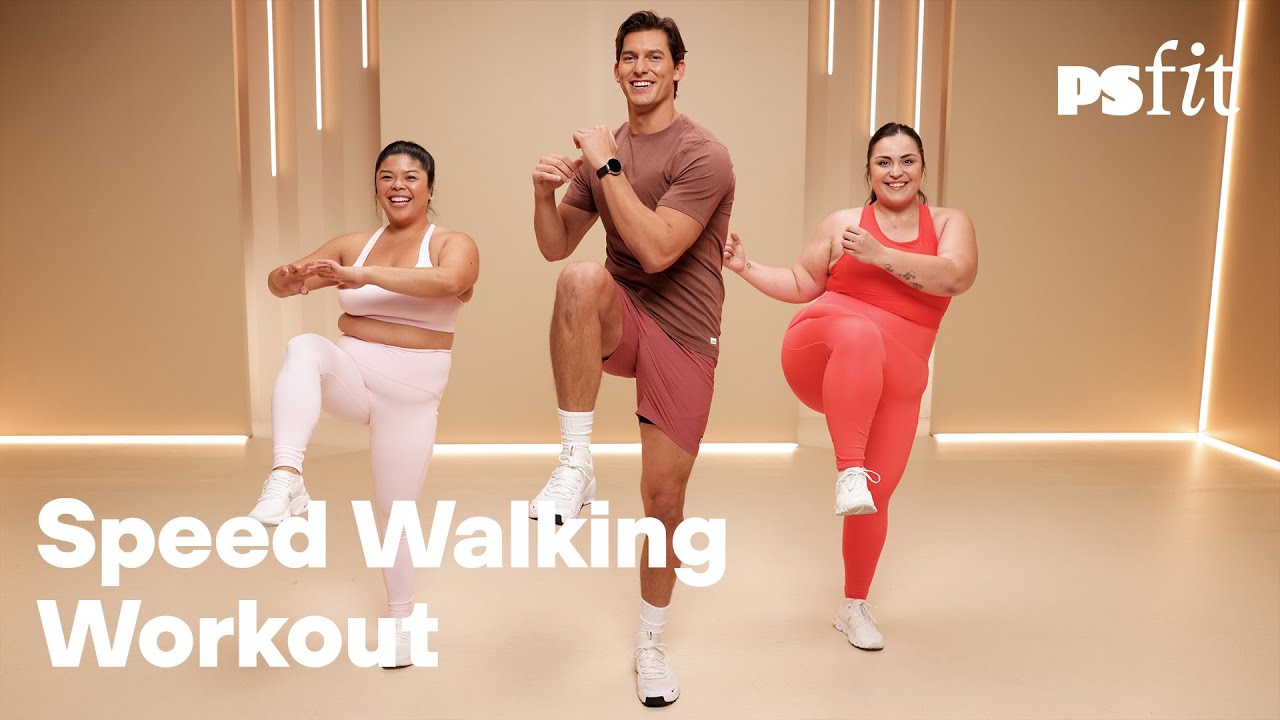
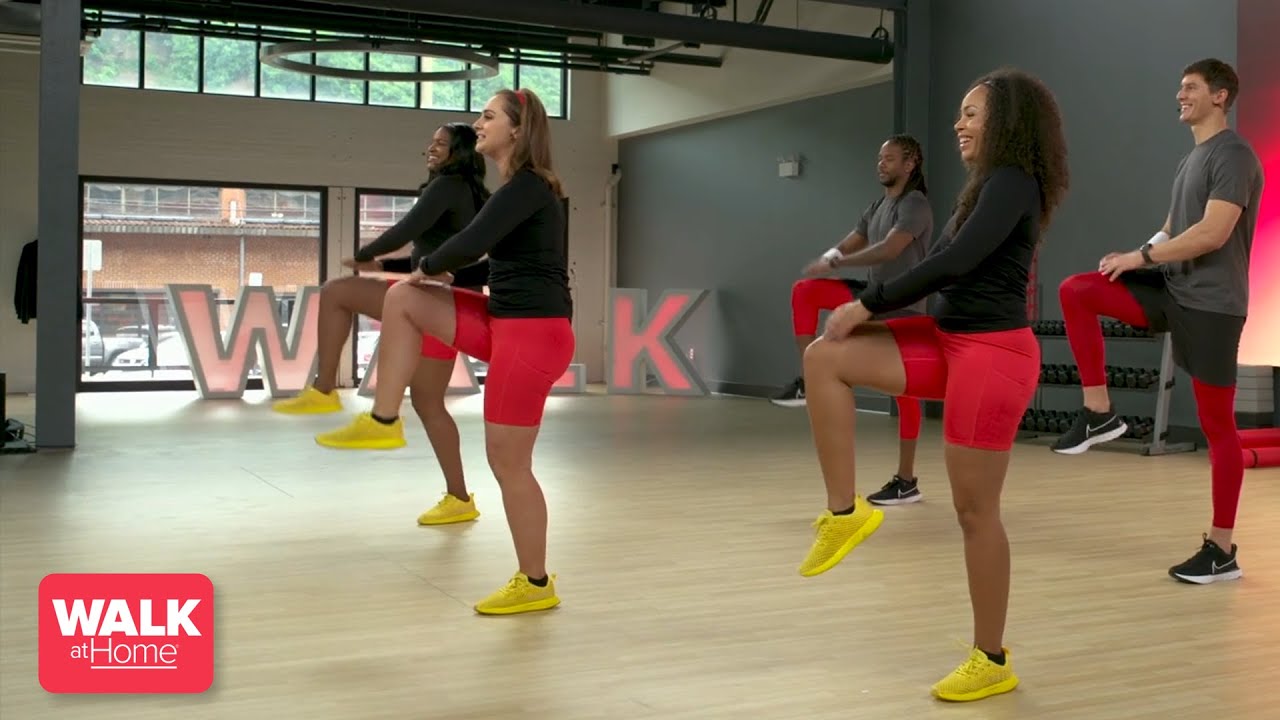
A bodyweight movement that combines a high-knee march with a torso rotation. It targets the obliques and hip flexors while building coordination, and the lower intensity makes it one of the best bodyweight core exercises for warm-ups or active recovery within a standing ab circuit. Slow, controlled reps make this one count.
How to Do It
-
Stand tall with your elbows bent at 90 degrees.
-
Lift your right knee toward chest height while rotating your torso to bring your left hand toward the right knee.
-
Lower and repeat on the opposite side in a steady marching rhythm.
Keep the rotation controlled and deliberate. This one rewards smooth, purposeful movement over speed.
High Knee to Elbow
An upright crunch variation that challenges balance, coordination, and core stability and drives your heart rate up. The explosive knee drive hits the full rectus abdominis and obliques with each rep, making it useful in HIIT-style circuits where you want core work and conditioning in the same movement.
How to Do It
-
Stand with feet hip-width apart and hands behind your head.
-
Drive your right knee up explosively while bringing your left elbow down to meet it at roughly waist height.
-
Return to the start and switch sides.
Focus on crunching the abs with each rep. Your torso should flex and rotate, not just your knee and elbow moving toward each other.
TRX Standing Anti-Rotation Press
Anti-rotation is one of the core's most important real-world jobs. Among core stability exercises, few train it as directly as this one. Every time you brace while carrying something heavy on one side or resist being pulled off balance, your core is working in anti-rotation. The offset load from a single TRX Suspension Trainer strap creates that same rotational pull, and your core has to fight against it. You can scale the difficulty up or down by adjusting your stance width and distance from the anchor point.
How to Do It
-
Stand sideways to the anchor point with feet shoulder-width apart.
-
Hold one TRX handle at chest height with both hands.
-
Press the handle straight out in front of your chest, resisting the pull toward the anchor.
-
Hold at full extension for two to three seconds, then return to your chest.
-
Complete all reps facing one direction before switching sides.
Keep your hips and shoulders square to the front and brace your core before each press.
Standing Side Bend
Simple and effective when done right, the standing side bend uses a single dumbbell to create lateral resistance the obliques have to work against. Most people go too heavy and use momentum. Lighter weight with a slow, deliberate contraction works better. If your dumbbell collection starts heavier than you need, the TRX YBell Neo Series begins at just 2.4 pounds, making it easier to find the right weight for slow, controlled reps.
How to Do It
-
Stand with feet hip-width apart, holding a dumbbell in one hand at your side.
-
Place the opposite hand behind your head or on your hip.
-
Slowly bend laterally toward the weighted side, then use the obliques on the opposite side to pull yourself back to upright.
-
Squeeze at the top.

-
Complete all reps on one side before switching.
No forward or backward lean, no momentum. Go lighter than you think you need to.
Standing Bird Dog
The traditional bird dog is done on all fours, but the standing version increases the challenge by performing it on one leg. It trains the posterior core (erector spinae, multifidus) alongside the abs, and the single-leg stance adds a serious stability demand. You'll build coordination and proprioception that carry over to most sports and daily activities.
How to Do It
-
Stand on one leg with a slight knee bend.
-
Simultaneously extend the opposite arm forward and the free leg straight behind you, hinging slightly at the hip.
-
Your body should form a roughly straight line from fingertips to extended toes.
-
Pause at full extension, then return to standing.
-
Complete all reps on one side before switching.
Move slowly, fix your gaze on a point in front of you for balance, and squeeze the glute on your standing leg.
TRX Rip Trainer Rotation
The TRX Rip Trainer was built for rotational movement, and it shows. The asymmetrical resistance cord creates a loading pattern that challenges the obliques and transverse abdominis while firing up your hip stabilizers through the full range of motion. Athletes in golf, baseball, tennis, and martial arts use it regularly for developing explosive rotational power that transfers directly to their sport. The rotation shown here is one of many TRX Rip Trainer exercises that build rotational power, and it's the most targeted option for the obliques.
How to Do It
-
Stand perpendicular to the anchor point with feet slightly wider than shoulder-width.
-
Hold the Rip Trainer bar at chest height with both hands, resistance cord side closest to the anchor.
-
Rotate away from the anchor, driving the movement from your hips and core while pressing the bar away from your chest.
-
Control the return.
-
Complete all reps on one side before switching.
Initiate every rep from the hips, not the arms, and keep your chest tall throughout.
How to Build a Standing Ab Workout
Pick three to five exercises per session and mix your movement patterns. You want a combination of anti-extension (rollout), rotation (wood chop, Rip Trainer rotation), lateral flexion (side bend, oblique crunch), anti-rotation (anti-rotation press), and balance work (bird dog). That variety ensures you're training the core from every angle it needs. If you have a kettlebell available, kettlebell ab exercises offer another way to load standing core movements with progressive resistance.
For most exercises, aim for 10 to 15 reps per side. Anti-rotation holds work best in the 20 to 30 second range. Two to three standing core workout sessions per week is enough for most people, or you can tack two to three standing ab exercises onto the end of any workout.
The research on core training backs that approach. That same research found that programs lasting four weeks or more produced measurable improvements in balance and performance. Consistency over time beats volume in a single workout.
If you're already doing compound lifts like squats and deadlifts, your core gets significant work during those movements. Two dedicated standing ab sessions on top of your regular training is plenty.
A solid starting circuit is to pick one exercise from each movement pattern category, perform three rounds, and rest 30 to 45 seconds between rounds. The whole thing takes about 12 minutes and hits the core from every direction.
Frequently Asked Questions
Are standing ab exercises as effective as floor exercises?
Both have value, and the strongest approach uses both. Floor exercises like crunches isolate the rectus abdominis more directly. Standing exercises train the core as an integrated unit and build functional strength that transfers to daily movement and sports. For building real-world core stability, standing exercises hold their own. Adding a medicine ball opens up even more options; medicine ball core exercises bridge the gap between bodyweight and loaded movements.
How often should you do standing ab exercises?
Two to three times per week works for most people. Core muscles recover relatively quickly but still benefit from rest between sessions. You can do a dedicated 10 to 15 minute standing ab workout on training days or add two to three exercises at the end of any workout.
Can standing ab exercises replace crunches and planks?
For many people, yes, especially if floor exercises cause discomfort in the back, hip, neck, or wrists. For maximum core development, mixing standing and floor exercises gives you the most complete stimulus. But standing exercises on their own build serious functional strength that your core relies on for everyday movement.
Strengthen Your Core on Your Feet
Standing ab exercises build functional core strength you use every day, whether you're training at home, in a hotel room, or at the gym. They're practical and effective at every fitness level.
The TRX Training Club™ app has over 500 on-demand workouts, including dedicated standing core circuits you can follow along with at home, in a gym, or on the road. No programming or guesswork needed. This guide's TRX exercises use the Suspension Trainer, the YBell, and the Rip Trainer. The Suspension Trainer weighs about two pounds, anchors to any door, and gives you a full-body training system that fits in a bag. See the full TRX lineup at trxtraining.com.
References
Rodriguez-Perea, Angel, et al. "Core Training and Performance: A Systematic Review with Meta-Analysis." Biology of Sport, vol. 40, no. 4, 2023, pp. 975-992.
"Why You Should Train the Core Standing Up." ACE Fitness, American Council on Exercise, www.acefitness.org/resources/pros/expert-articles/4834/why-you-should-train-the-core-standing-up/
What's Your Reaction?
 Like
0
Like
0
 Dislike
0
Dislike
0
 Agree
0
Agree
0
 Disagree
0
Disagree
0
 Excellent
0
Excellent
0
 Useful
0
Useful
0
 Great
0
Great
0