





















































%20and%20Batch%20Production%20Records%20(BPR).png)
















Anticancer Candidate Strengthens Bones and Prevents Weight Gain in Postmenopausal Mice
The results of a preclinical study by researchers at the University of East Anglia suggest that an experimental anticancer drug could stop osteoporosis and help women prevent weight gain after the menopause. Their study in mice found that the small molecule drug CADD522 not only protected against osteoporosis but could also reduce body fat and reverse some of the metabolic changes linked to menopause. Currently in development for cancer therapy, CADD522 is a small molecule inhibitor of the transcription factor RUNX2, which is helps to drive the growth and spread of several cancers.
Research lead Darrell Green, PhD, at UEA’s Norwich Medical School, said, “We have uncovered an entirely new way of tackling the disease. We found that a drug originally developed to stop cancer could help millions of women facing the twin challenge of fragile bones and midlife weight gain. We hope our work could lead to a new generation of osteoporosis treatments that tackle bone loss while also addressing some of the wider metabolic consequences of menopause.”
Green is senior and co-corresponding author of the team’s report in npj Drug Discovery, titled “RUNX2 inhibitor CADD522 improves bone microarchitecture and lipid metabolism in post-menopausal bone loss.” In their paper the team concluded that their collective studies “… identify RUNX2 inhibition as a therapeutic strategy that simultaneously improves skeletal integrity and metabolic homeostasis, supporting further development of CADD522 for osteoporosis and other RUNX2-driven diseases.”
Osteoporosis is a metabolic bone disorder characterized by low bone mass, structural deterioration and increased fracture risk. The disorder affects one in three women and one in five men aged over 50 years globally, the authors wrote, but there are limited therapeutic options. “… existing antiresorptive and anabolic therapies remain limited by safety concerns, contraindications and poor long-term adherence,” the authors stated. “Thus, new treatments with few side effects and broader applicability remain a clinical priority.”
Green said: “Osteoporosis affects around one in three women over the age of 50, leaving sufferers vulnerable to painful fractures that can seriously impact quality of life. Current treatments exist, but many are plagued by side effects, safety concerns or inconvenient dosing schedules that make long-term use difficult.
The researchers had previously evaluated the small molecule RUNX2 antagonist CADD522 in several preclinical cancer models. “RUNX2 is critical for in utero skeletogenesis and cancer metastasis,” they explained. Unexpectedly, studies indicated that CADD522 reduced cancer-induced bone disease, “… suggesting potential utility in osteoporosis.”
For their newly reported study Green and colleagues investigated whether RUNX2 inhibition could protect against post-menopausal bone loss, in an ovariectomy-induced mouse model, to mimic the hormonal changes seen after menopause.
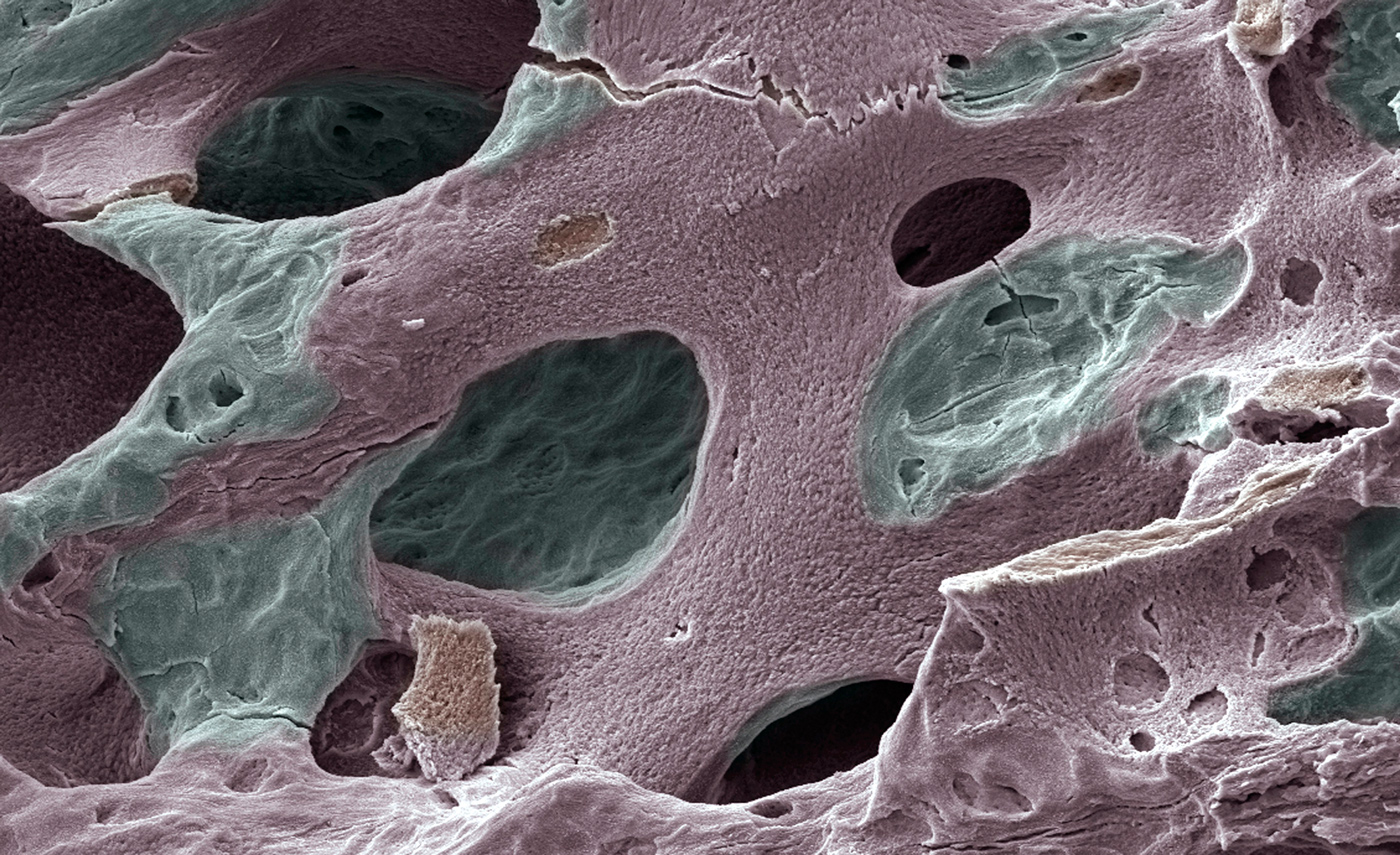
The team found that animals treated using CADD522 for eight weeks showed significant improvements in bone health. Scans revealed increased bone volume and better preservation of the delicate honeycomb-like structures inside bones that are crucial for strength and resilience. Blood tests suggested the drug stimulated new bone growth, without interfering with the body’s normal process of breaking down and rebuilding bone.
Green said: “This is particularly important because many existing osteoporosis drugs work by suppressing bone loss, which can sometimes lead to complications when used for long periods.”
The biggest surprise came when the investigators looked beyond bone health, Green continued. “The mice receiving CADD522 weighed less than their untreated counterparts despite eating the same amount of food. They also had less body fat and fewer fat deposits accumulating inside their bone marrow—a process that is commonly seen after menopause and is linked to declining bone health.” The authors wrote in summary, “A remarkable finding was that the skeletal improvements occurred alongside reduced peripheral and marrow adiposity and selective remodeling of lipid metabolism.”
The team also examined brain tissue and found the drug appeared to reverse several menopause-related changes in fatty acids. Levels of beneficial omega-3 fats, including DHA, remained largely intact, while a number of other lipid abnormalities shifted back towards healthier patterns. “Rather than inducing indiscriminate metabolic disruption, RUNX2 inhibition therefore appears to restore specific lipid pathways perturbed by menopause,” the team noted. “Although the relationship between altered brain lipid composition and cognitive function was not examined in the present study, the selective remodeling of brain lipids following CADD522 treatment raises the possibility that RUNX2 inhibition may influence neurological adaptations to menopause in addition to preserving skeletal integrity.”
Green added: “We didn’t directly test for memory or thinking ability, but our work raises questions about whether this drug could one day help address wider menopause-related health problems.” The team suggests that further studies should determine whether the metabolic effects demonstrated translate into improvements in cognition or other measures of brain health.
The prospects for future clinical applications also received a boost from safety testing. Experiments in mice, rats and dogs found CADD522 could be taken orally and was well tolerated. “Cross-species pharmacokinetic and toxicological studies demonstrated oral bioavailability, favorable short-term tolerability and target engagement despite rapid systemic clearance, while cellular thermal shift assays confirmed direct engagement of RUNX2,” they noted.
The team also found the drug appeared to be metabolized more slowly in human tissue than in rodents, potentially improving its performance in people. “This is still in the early stages and has so far only been tested in animals but we hope that the benefits will translate to humans to ultimately reduce fracture rates,” added Green.
In conclusion, the authors wrote, “In summary, our findings reveal an unexpected role for RUNX2 inhibition in protecting against post-menopausal bone loss while simultaneously improving systemic metabolic homeostasis.” They suggest that their study “… establishes a translational framework for further development of CADD522 and identifies RUNX2 as a therapeutically tractable regulator of skeletal and metabolic adaptation in adulthood.”
The post Anticancer Candidate Strengthens Bones and Prevents Weight Gain in Postmenopausal Mice appeared first on GEN - Genetic Engineering and Biotechnology News.
Apa Reaksi Anda?
 Suka
0
Suka
0
 Kurang Suka
0
Kurang Suka
0
 Setuju
0
Setuju
0
 Tidak Setuju
0
Tidak Setuju
0
 Bagus
0
Bagus
0
 Berguna
0
Berguna
0
 Hebat
0
Hebat
0