




















































Making photogrammetry the full-arch standard
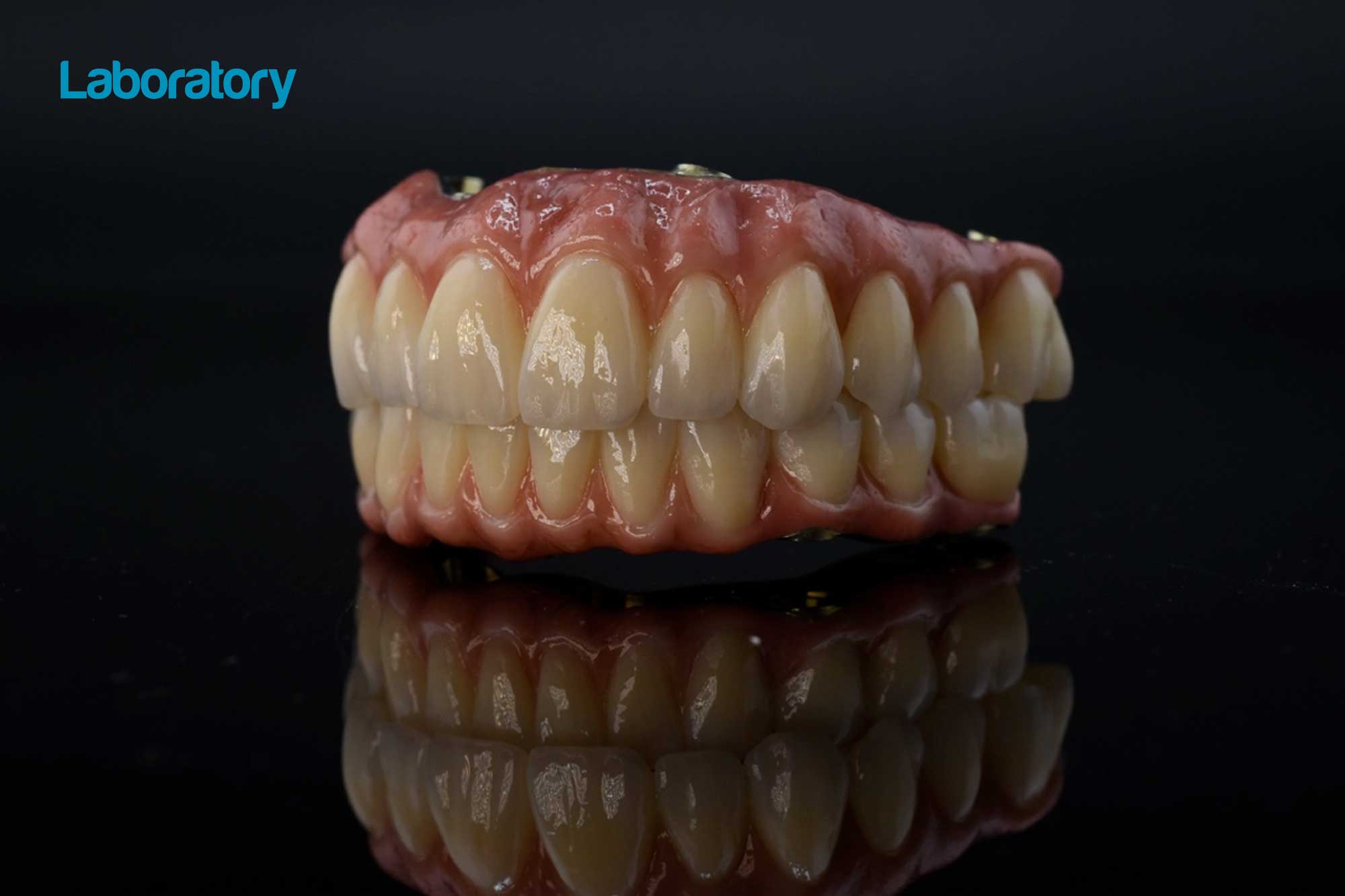
Joe Ganderton explores how photogrammetry can remove uncertainty from full-arch cases, improving fit, efficiency and confidence across the team.
When I first started working on full-arch implant cases, photogrammetry was viewed as disruptive. It was something innovative clinicians were beginning to explore, but it was far from routine. Most cases relied on high-quality intraoral scans of scan bodies and, although we all understood the potential for distortion across long spans, that risk was largely accepted.
Full-arch dentistry has always been described as complex, and rightly so. It demands careful planning, close collaboration between clinician and laboratory, and a sound understanding of biomechanics and aesthetics. Over time, however, I began to question whether some of the complexity we were managing was not purely clinical, but digital.
In single-unit cases, small discrepancies in data capture may never become visible. In a full arch, they rarely remain insignificant. When restoring multiple implants across an edentulous span, minor positional inaccuracies can compound and only reveal themselves at the point of fit.
Limits of ‘good enough’ data
Long-span intraoral scans are susceptible to stitching distortion.
Small discrepancies between scan bodies, soft tissue interference and cumulative tolerance stacking may each appear manageable in isolation, yet together they introduce uncertainty that affects every stage of design.
That uncertainty shapes behaviour in the laboratory. Technicians begin compensating for possible distortion, often subconsciously. Frameworks may be designed cautiously, occlusion approached defensively, and when a bridge does not seat as expected, the team is left questioning whether the issue lies in surgery, mechanics or data capture.
Those recurring moments of doubt led us to a simple question at Corus Remo Dental Lab: if technology exists that can provide verified spatial accuracy of implant positions, why continue relying on relative positioning alone?
A discussion surrounding the straw technique with a clinician highlighted to me a contradiction: if the promise of digital dentistry is precision, why are we attempting to fine-tune digital workflows through analogue verification?
If the promise of digital dentistry is precision, why are we attempting to fine-tune digital workflows through analogue verification?
Making photogrammetry the baseline
Photogrammetry systems capture implant positions using multi-angle optical triangulation, producing a precise three-dimensional coordinate map that is independent of soft tissue and free from stitching distortion. In practical terms, we are no longer estimating where implants sit in relation to one another; we are working from confirmed spatial data.
When we made photogrammetry our standard input for full-arch cases, the impact was immediate. Passive fit became more predictable because frameworks were designed around verified implant positions. Chairside adjustments reduced, and fit appointments shifted away from troubleshooting seating issues towards refining aesthetics and occlusion. Digital verification also became more meaningful, as we could confidently overlay photogrammetry data with intraoral scans of healed soft tissue, CBCT records and provisional designs.
We are no longer estimating where implants sit in relation to one another; we are working from confirmed spatial data.
Over the past year we have completed more than 400 full-arch cases, and that volume has reinforced how much difference reliable input data makes to downstream efficiency. With appointments reduced from six to as few as three and fewer phone calls with clinicians regarding patient issues and troubleshooting.
The effect on design and team confidence
One of the more significant changes has been in mindset. When the starting point is stable, design decisions become more deliberate. There is less need to build in tolerance to guard against potential inaccuracies. Framework thickness, material choice and occlusal planning can be approached with intention rather than caution.
Within the laboratory, this has had a noticeable cultural effect. Technicians are more confident in their work because they trust the data they are building from. Reducing avoidable remakes improves not only efficiency but morale and accountability. Accuracy, in that sense, extends beyond microns. It influences how teams think and collaborate.
Consistency over optional upgrades
We did consider offering photogrammetry as a premium option. Commercially, that would have been straightforward. In practice, it would have introduced inconsistency.
Different data capture methods demand different expectations, which creates friction within a workflow. We therefore took the view that for full-arch cases, photogrammetry should not be an enhancement but the baseline.
To support that approach, we introduced a dedicated booking system through our app, allowing clinicians to reserve scanners alongside patient appointments and specify when scans will be ready for technician review. Removing logistical uncertainty is just as important as improving technical accuracy in complex cases.
Our protocol now reflects this emphasis on verified implant positioning. Planning remains prosthetically driven. Following surgery or osseointegration, implant positions are captured using photogrammetry, with healed soft tissue recorded via intraoral scan. Trial stages and final restorations are then designed on the basis of confirmed coordinates.
Photogrammetry does require investment and clinician engagement, and it does not eliminate the need for judgement. However, in high-value full-arch cases where chair time and reputational considerations are significant, the cost of working from uncertain implant positioning can be far greater. For us, what was once considered disruptive has become responsible practice. Full-arch implant dentistry will always demand skill and experience. Photogrammetry does not replace those qualities.
It provides a more predictable digital foundation on which they can operate, allowing the focus to return to function, aesthetics and long-term success.
Create a free account for unlimited access — plus the Dentistry Bulletin delivered to your inbox.
Apa Reaksi Anda?
 Suka
0
 Kurang Suka
0
 Setuju
0
 Tidak Setuju
0
 Bagus
0
 Berguna
0
 Hebat
0