









































%20and%20Batch%20Production%20Records%20(BPR).png)














Greed or psychological crisis? The human impact of NHS clawback
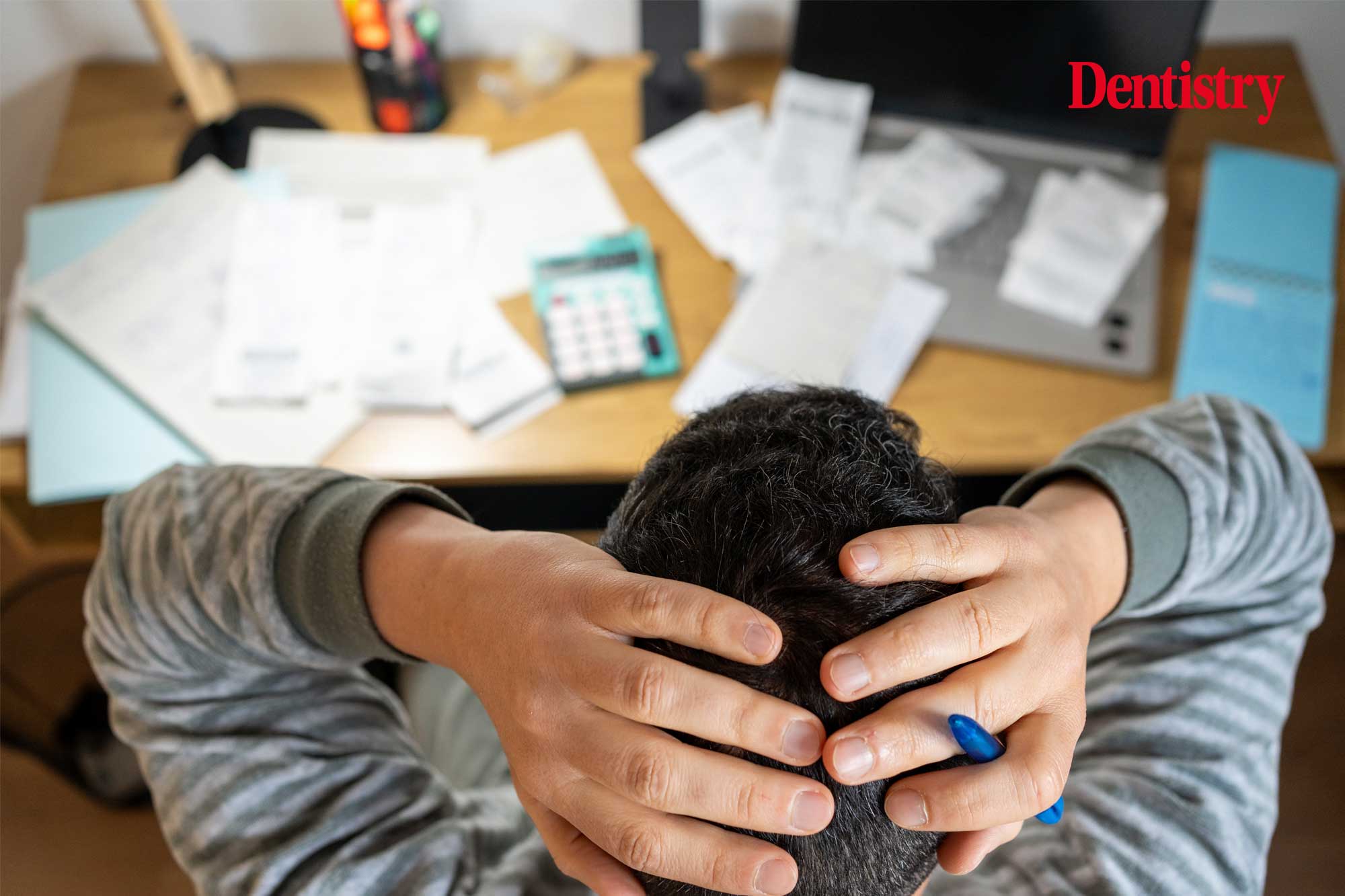
In the wake of a high-profile fraud case, Sarah McKimm explores the psychological impact of NHS clawback and how it can change a clinician’s perspective.
Recent headlines have once again brought conversations around NHS dental contracts, clawback and accountability into sharp focus. Following a recent case involving a former dentist convicted of fraud relating to NHS claims, questions naturally arise about pressure, responsibility and the complex environment in which dental professionals are working.
It is important to be clear: psychological pressure does not excuse unethical or fraudulent behaviour. Every healthcare professional remains accountable for their actions, and maintaining trust between clinicians, patients and the wider healthcare system is fundamental.
However, understanding the psychological context in which decisions are made is not the same as excusing those decisions. Psychology asks us a different question. Not simply, ‘What happened?’ but also, ‘What was going on for the person at the time?’.
The psychological impact of pressure
Exploring how pressure changes people’s actions is a conversation about understanding human behaviour, not excusing it. Accountability and wellbeing are not opposing ideas; both are essential within healthcare.
When we hear the word clawback, our minds often go straight to finances, contracts, UDAs, targets and percentages. Yet, from a counselling perspective, money is rarely just about money. Behind every contract is a clinician carrying responsibility. Behind every target is a nervous system trying to keep up with constant demands. And behind every clawback figure is often a person managing fear, uncertainty and the pressure of trying to sustain a service. Its impact extends far beyond the balance sheet. It reaches into confidence, identity, relationships and psychological wellbeing.
As both a counsellor and someone who has spent over two decades in dentistry, I have become increasingly interested in the stories we don’t always tell. We openly discuss recruitment crises, contract reform and access to care, yet we rarely stop to ask what it actually feels like to work within a system where professional worth can begin to feel measured by numbers and the answer is rarely straightforward.
Living under prolonged pressure
Our nervous systems are designed to respond to threat. Traditionally, that threat might have been physical danger: think rustling grass, dangerous animals, scarcity. Today, our brains are equally capable of interpreting financial insecurity, uncertainty and sustained pressure as threats that require the same physiological response. When the pressures surrounding contract performance become chronic rather than occasional, many clinicians find themselves living in a state of heightened alertness. Cortisol and adrenaline are no longer reserved for genuine emergencies. They become the backdrop to everyday working life.
Perhaps you’ve noticed it yourself. The appointment list is finished, yet your mind is still racing. You replay conversations with patients while driving home, mentally calculate UDAs while making tea, and wake during the night thinking about targets rather than treatment plans. Your body may have left the practice, but your nervous system hasn’t.
As counsellors, we often talk about the ‘window of tolerance’. This is the zone where we feel calm enough to think clearly, regulate our emotions and respond rather than react. It is where problem solving, empathy and clinical judgement are at their best.
The difficulty with prolonged workplace stress is that it gradually narrows this window. Small setbacks begin to feel overwhelming. A failed appointment becomes more than an inconvenience. An emergency patient requiring extra time becomes another calculation. Decision making feels harder. Patience becomes thinner. Concentration slips.
This isn’t because clinicians have become less capable. It is because our brains simply do not function at their best when they believe they are under constant threat.
When the fear becomes reality
For some dental professionals, clawback remains an ongoing concern in the background. For others, it becomes a very real event. Receiving notification that a significant amount of funding must be returned can understandably trigger a range of emotional responses. Beyond the practical implications, there can be feelings of fear, uncertainty, anger, shame and grief.
The psychological impact of financial stress is well documented, but within dentistry there can be an additional layer. A clawback is not simply experienced as a financial loss. For some clinicians it can feel like a judgement on their professional ability, their practice management or their commitment to patient care.
This is where the distinction between an event and the meaning we attach to that event becomes important. One clinician may experience the loss of income as a practical challenge requiring problem solving. Another may internalise it as evidence that they have failed, that they are not good enough or that their years of dedication are somehow being invalidated.
From a counselling perspective, it is often the meaning we make of difficult experiences that determines their emotional impact. When a person is already operating under prolonged stress, the arrival of clawback can feel like the final piece of evidence confirming their fears. The nervous system does not always distinguish between a financial threat and a threat to identity, security or belonging.
The grief we don’t always recognise
One aspect of clawback that is rarely discussed is the experience of ambiguous loss. Ambiguous loss is a term used within grief psychology to describe situations where there is a sense of loss, but the loss does not always have clear recognition, closure or acknowledgement. Unlike bereavement, where society generally understands the need to grieve, ambiguous losses can be harder to process because there may be no obvious marker, ritual or external validation that something significant has changed.
For a dental professional experiencing clawback, the loss may not only be financial. It may be the loss of security they believed they had. The loss of confidence in their ability to succeed within the system. The loss of a future plan attached to that income. Or, the loss of an identity built around being a capable and successful clinician.
These losses can feel very real, even though they are not always visible to others. A person may continue arriving at work, treating patients and appearing outwardly functional, while internally trying to process a significant shift in how they see themselves, their career and their future.
Acknowledging these experiences does not remove accountability or responsibility. Instead, it recognises that humans are meaning-making beings. When something important is threatened or taken away, we naturally try to understand what that means about ourselves and the world around us. Creating space to process these experiences can be an important part of preventing shame becoming isolation. When people feel supported enough to reflect, they are more able to learn, adapt and make values-based decisions.
When pressure affects perspective
One of the areas psychology explores is how sustained stress can influence the way we process information and make decisions. When the nervous system is operating in a state of threat, our thinking can become more focused on immediate survival and reducing discomfort. Cognitive flexibility can reduce, making it harder to step back, consider different perspectives and think through longer-term consequences.
This does not remove responsibility, nor does it make poor decisions acceptable. It does help us understand why creating spaces where clinicians can seek support, challenge thinking and have honest conversations matters.
Isolation can be particularly damaging. When people feel ashamed, overwhelmed or fearful of judgement, they may become less likely to reach out. The very moment someone may need reflection and support can become the moment they withdraw. This is why psychologically safe environments are so important within healthcare.
Moral injury: when values and reality collide
Behaviour makes sense once we understand the context in which it developed. I wonder whether the same is true for the emotions many dentists experience around clawback. Perhaps some of the frustration, self-doubt or exhaustion experienced by clinicians are understandable human responses to working within prolonged uncertainty, where the demands placed upon people frequently exceed the resources available to meet them.
Understanding those responses does not remove professional responsibility. Instead, it allows us to have more honest conversations about wellbeing, decision making and the conditions in which people work.
One of the concepts that resonates most with me is moral injury. Many people are familiar with burnout, but moral injury speaks to something different. It occurs when healthcare professionals know the ethically appropriate course of action but feel repeatedly prevented from acting in accordance with their professional values because of organisational or systemic constraints.
Dentistry attracts caring, conscientious people. Most entered the profession wanting to relieve pain, restore confidence and improve lives. Yet when systems repeatedly create conflict between patient-centred care and contractual demands, an internal tension can begin to emerge. It can sound like: ‘This isn’t the kind of dentist I wanted to become.’ That quiet sentence carries enormous emotional weight. This is not simply frustration. It is grief for the professional identity someone imagined when they first entered the profession.
The hidden burden of perfectionism
Alongside this sits another familiar visitor: perfectionism. Perfectionism often masquerades as dedication. In healthcare it is frequently rewarded. Attention to detail saves lives, prevents errors and improves patient outcomes. However, perfectionism also has a shadow side. When external pressures increase, the internal critic often becomes louder.
‘I should have worked harder.’
‘I should have seen more patients.’
‘I should have found a way.’
Notice how quickly the system becomes the self. Instead of recognising structural limitations, many clinicians quietly personalise circumstances that were never fully within their control.
Counselling teaches us that this is one of the ways shame develops. Shame tells us not that something is difficult, but that we are somehow inadequate. The distinction matters. Guilt says: ‘Something went wrong.’ Shame whispers: ‘Something is wrong with me.’ When that voice becomes persistent, confidence slowly erodes, even in highly skilled professionals.
What strikes me most is that many dentists continue showing extraordinary empathy towards their patients while extending very little of that same empathy towards themselves. If a colleague described the pressures they were facing, most of us would respond with understanding. Yet when it comes to our own struggles, the language often changes.
‘I should cope.’
‘Everyone else manages.’
‘I just need to work harder.’
Empathy somehow becomes something we reserve for everybody else.
Why this conversation matters
Perhaps this is why conversations about clawback cannot simply remain financial discussions.
Psychological wellbeing is not a luxury sitting alongside clinical practice; it underpins it. A regulated nervous system supports better decision making, clearer communication, stronger relationships and safer patient care. When clinicians feel psychologically supported, everyone benefits.
Behind every UDA is a person balancing patient-centred care with contractual compliance. A person trying to meet contractual expectations while remaining true to the values that first led them into dentistry. The question we should be asking is: ‘How do we create a profession where clinicians feel psychologically safe enough to ask for support before pressure becomes crisis?’
If we can begin to acknowledge the human story with the same openness we bring to discussions about reform and policy, perhaps we can create a profession that not only supports clinical excellence but also the wellbeing of those delivering it. Isn’t that a conversation worth having?
Read more of Sarah’s advice:
- Inappropriate behaviour from a colleague: how should I respond?
- I’m nervous to return to dentistry after extended sick leave
- My employee’s personal life is impacting my dental business
- How do I stay relevant when the dental profession is changing so fast?
- I need time off dentistry but I don’t know how to ask for it.
Follow Dentistry.co.uk on Instagram to keep up with all the latest dental news and trends.
Apa Reaksi Anda?
 Suka
0
Suka
0
 Kurang Suka
0
Kurang Suka
0
 Setuju
0
Setuju
0
 Tidak Setuju
0
Tidak Setuju
0
 Bagus
0
Bagus
0
 Berguna
0
Berguna
0
 Hebat
0
Hebat
0