


























































Greener Biomanufacturing Starts Beyond the Bioreactor

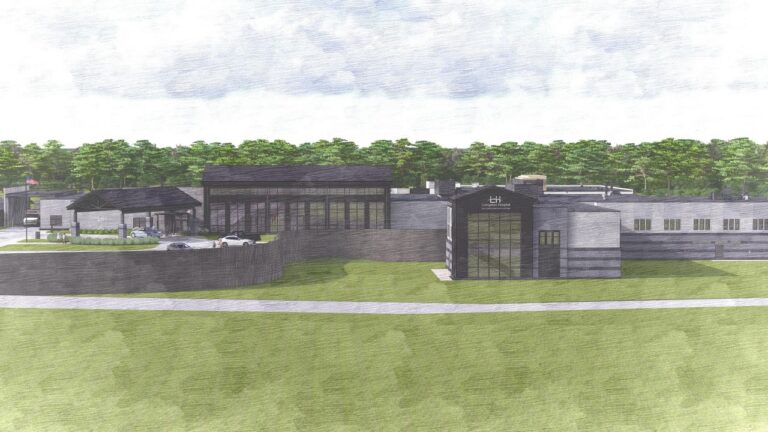
When it comes to making monoclonal antibodies greener, the biggest energy drain might not be the bioreactor. It might be the building around it.
A new modeling study found that approximately 85% of energy demand in antibody manufacturing came from facility infrastructure, including heating, ventilation, and air conditioning (HVAC), lighting, and utilities. Electricity for HVAC alone accounted for 46% of energy use, while lighting added another 21%. Published in New Biotechnology, the findings suggest that improving a plant’s layout and operations could be as important as upgrading its production technology.
Benjamin Smith, PhD, a principal data scientist at Amgen, and his colleagues from the National Institute for Innovation in Manufacturing Biopharmaceuticals (NIIMBL) Process Intensification Sustainability Workgroup modeled three manufacturing scenarios: stainless-steel fed-batch, single-use fed-batch, and end-to-end single-use continuous processing. Using BioSolve Process software, the researchers compared water and materials consumption, energy demand, and greenhouse-gas emissions for facilities producing roughly 120 kg of antibody annually.
The fed-batch scenarios relied on 2,000-L bioreactors, while continuous processing used a 500-L bioreactor over a longer production run. Despite its smaller vessel, the continuous system delivered comparable annual output with less infrastructure. Its modeled facility occupied 12,387 cubic meters, versus 14,089 for single-use fed-batch and 14,937 for stainless-steel fed-batch.
That smaller footprint translated into lower energy intensity: 13,239 kilowatt-hours per kilogram of antibody for continuous manufacturing, compared with 17,017 and 19,120 kilowatt-hours for the two fed-batch approaches, respectively. The researchers concluded that, at equivalent output, “facility footprint—not process type—is the main determinant of energy intensity.”
Yet continuous processing was not automatically greener on every measure. Stainless-steel systems consumed considerably more cleaning water but required substantially fewer disposable consumables. Single-use fed-batch had the highest consumables intensity. Continuous processing required more culture medium and certain buffers, demonstrating why sustainability decisions involve competing demands.
Making the facility work smarter
The researchers also modeled a more efficient continuous process incorporating a 50% increase in antibody titer, two flow-through polishing steps, fivefold concentrated medium, and reuse of media and buffer bags. Compared with baseline continuous processing, this combination cut water use per kilogram of product by 26% and consumables intensity by 58%. Modeled carbon dioxide-equivalent emissions fell by 66% to 78% relative to the baseline continuous and stainless-steel fed-batch scenarios, respectively.
Building improvements offered another opportunity. Reducing cleanroom classifications where appropriate, optimizing airflow and lighting, increasing equipment density, and improving utilities could together lower modeled facility energy consumption and emissions by up to approximately 35%. Climate also mattered: temperate locations generally required less heating or dehumidification than colder or humid sites.
The findings come with qualifications. The models considered hypothetical single-bioreactor plants, not larger commercial facilities with multiple production trains. The assessment also excluded some lifecycle impacts, including raw-material production and transportation. The workgroup plans to extend the analysis through lifecycle assessment and test-bed data.
For bioprocess developers, the implication is that boosting productivity and shrinking the space needed to achieve it might deliver sustainability gains beyond those available from individual equipment upgrades. Greener antibody manufacturing could begin with rethinking the factory itself.
The post Greener Biomanufacturing Starts Beyond the Bioreactor appeared first on GEN - Genetic Engineering and Biotechnology News.
Apa Reaksi Anda?
 Suka
0
 Kurang Suka
0
 Setuju
0
 Tidak Setuju
0
 Bagus
0
 Berguna
0
 Hebat
0