







































Building Custom DNA without Bacterial Constraints

Sponsored content brought to you by

The standard way to build custom DNA still runs through a living cell: assemble the sequence, push it into bacteria, grow overnight, extract, clean up. Molecular biologists have leaned on this for half a century, and for most constructs it works. But it is slow to schedule, demands culturing and biosafety infrastructure, and quietly fails on the sequences researchers care about most.
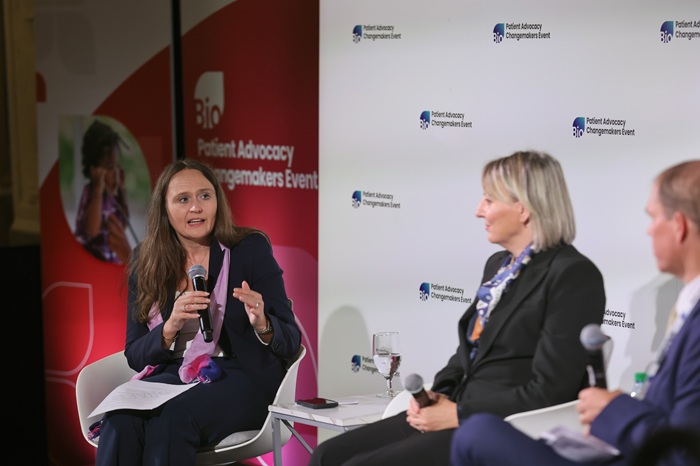
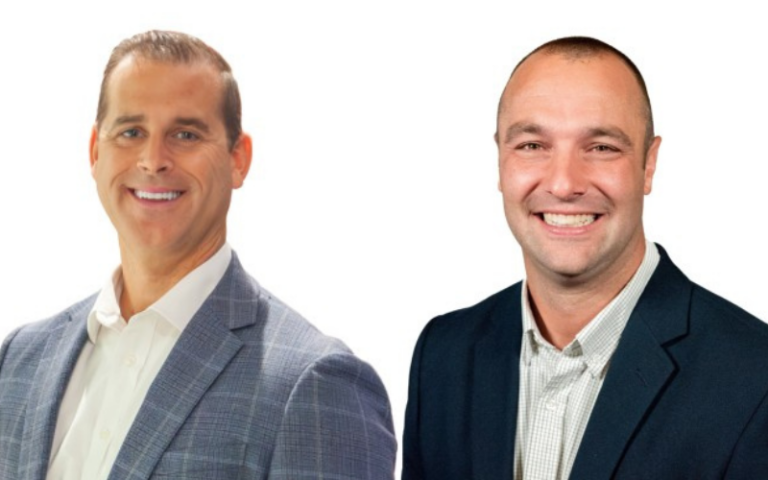
Those failures were the starting point for Ribbon Bio. “Sometimes the sequence we want to study is precisely the sequence that bacteria do not want to maintain,” said Divya Vijay Pratheek, the company’s vice president of product, in a recent GEN webinar. Toxic elements and secondary structures can collapse a clone, costing days or weeks of troubleshooting. Outsourcing relieves the bottleneck but puts proprietary sequences in someone else’s hands.
Taking out the host
Ribbon Bio’s cell-free assembly technology removes bacteria from the equation entirely thus eliminating several practical burdens. Without a host, Pratheek explained, there is no endotoxin or residual genomic DNA to carry into downstream assays, contamination that matters most for therapeutic and patient-facing work. Since sequences no longer have to survive inside a living host, toxic or unstable designs become workable, and the failure points of transformation, colony selection, and plasmid prep fall away.
The workflow opens with software. Ribbon Bio’s proprietary algorithm reads target sequences for trouble spots such as GC content, repeats, homopolymers, and secondary structure, then lays out oligo pools with boundaries chosen to sidestep them. Ribbon’s proprietary enzymes stitch the oligos into fragments, checked before assembly into the finished molecule. The design is tuned most to catch most complexities, before they lead to failed reactions.
From service to bench
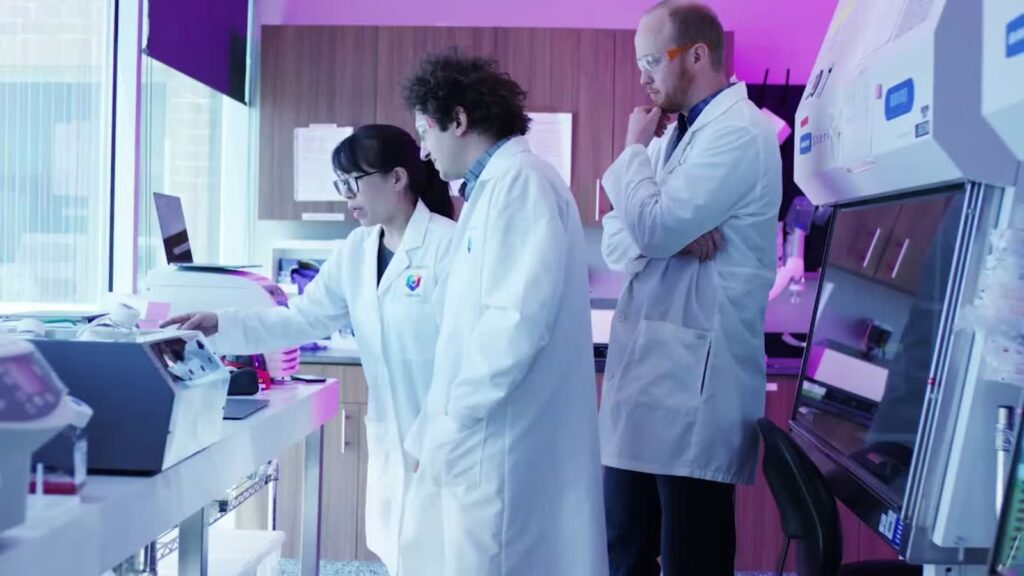
The company first sold this as a synthesis service, MiroSynth , which it still runs for extremely complex molecules. These days, the MiroMine kit puts the method directly in customers’ hands enabling them to build complex DNA in house. The early-access version builds molecules up to roughly 7 kilobases, needs only standard lab hardware, and runs manually or using automation, with platform scripts in progress.
The figures came from Ribbon Bio’s own runs. Molecules near 3.4 and 6.8 kb returned 100% sequence-perfect reads, and a roughly 4 kb construct came in at 88%, shown openly against the company’s 90% accuracy floor. Fragments ranging from 30%–70% global and 20%–82% local GC content, plus repeats and homopolymers, cleared the same four-hour workflow. Endotoxin levels sat at or below 0.1 units per microgram, with no detectable bacterial genomic DNA.
A library builder’s test
Flock Bio, a company that assembles pooled custom DNA libraries, is an early user of Ribbon Bio’s kit. In one internal study, the company’s scientists ran 12 fragments through MiroMine and got all 12, roughly half of them high-complexity, cleanly assembled.
The payoff was speed. With MiroMine, Flock ran fragment assembly, cleanup, checks, and pooled ligation inside one working day; with cloning adding three to four days, a full library can land in a week. “If we get that oligo pool on Monday, we’re shipping by Friday,” said Matthew D. Youngblut, PhD, Flock Bio’s co-founder and chief scientific officer, who pointed to value of fast-turn work for things like antibody discovery, binder design, and more.
The takeaway
For over fifty years, traditional DNA assembly has relied on bacterial propagation, a process that introduces labor intensive processes, sequence constraints, contamination risks, and extended production cycles. In this webinar, Ribbon Bio and Flock Bio lay out a case for retiring that requirement: purer starting material, access to sequences bacteria reject, and a turnaround counted in days instead of weeks. For scientists working in therapeutic development, endotoxin-free production addresses regulatory and safety concerns that currently require additional purification steps. The technology also enables iteration cycles that match the pace of modern screening technologies, particularly in competitive areas like antibody discovery. While the program is young and not every use case is proven, the direction is clear: pull the build onto the bench, and the science can start sooner.

Try MiroMine in your lab today at www.ribbonbio.com/miromine.
The post Building Custom DNA without Bacterial Constraints appeared first on GEN - Genetic Engineering and Biotechnology News.
Apa Reaksi Anda?
 Suka
0
 Kurang Suka
0
 Setuju
0
 Tidak Setuju
0
 Bagus
0
 Berguna
0
 Hebat
0