




























































Hamburg Hosts 2026 European Gene Therapy Conference
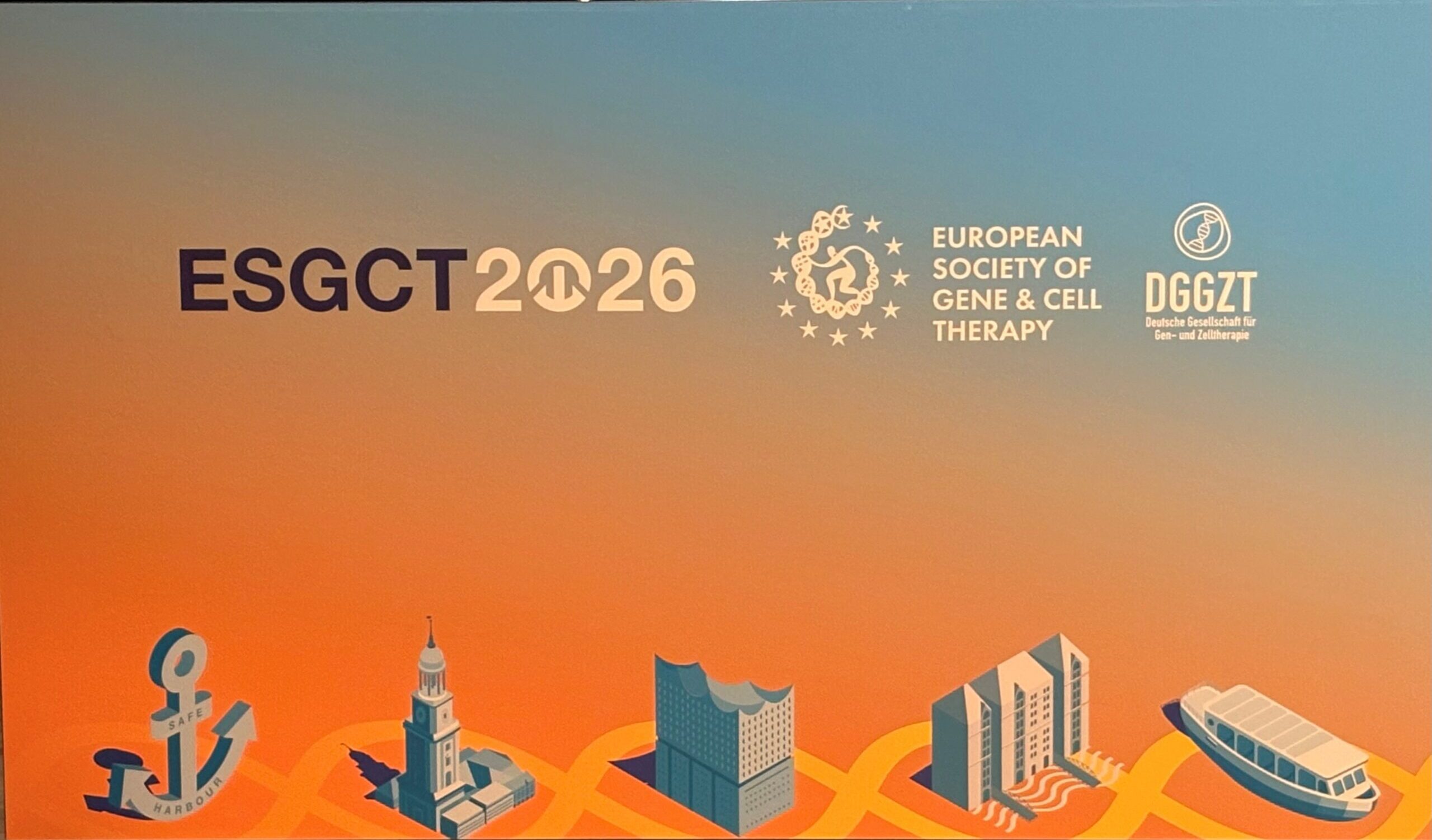
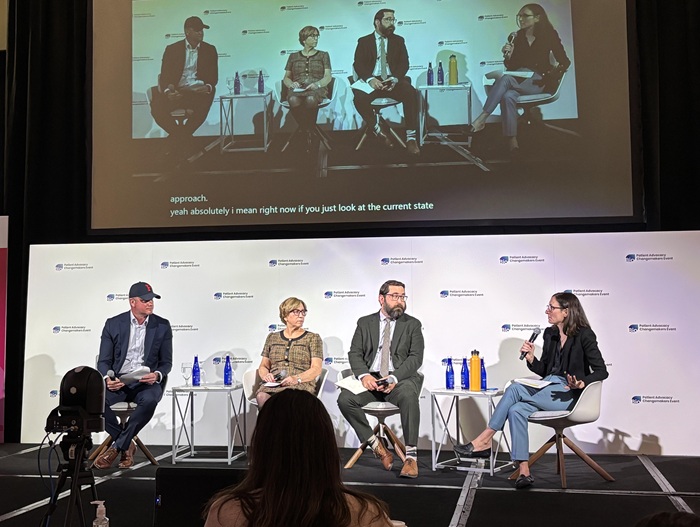
HAMBURG—The historic German port city of Hamburg is playing host to the European Society of Gene & Cell Therapy (ESGCT) conference this week.
As noted in the opening session, the Port of Hamburg was established more than 800 years ago. It is also a proud center of editing—newspapers rather than genes—as the site of the headquarters of Der Speigel and Die Zeit. And of course, Hamburg famously helped forge the sound and legend of the “Fab Four”—the Beatles played numerous gigs between 1960-62 in the central St. Pauli district. It was also where Ringo Starr met his future bandmates in 1960.
Patient safety, expanding access to gene therapy, and progress towards an HIV vaccine were prominent themes among the early talks at ESGCT 2026. In the opening plenary session, Dimitrios Mougiakakos, MHBA, discussed his group’s research on CAR T therapy for lupus, noting progress but some patient deaths. “Lower risk does not mean no risk,” he said, pointing to the rapid production of CAR T cells as a potential risk factor. A “Volkswagen approach” might be better than a “Ferrari approach,” he concluded.
Italian professor Giuliana Ferrari, PhD, discussed her team’s research on beta-thalassemia, one of the “less rare of the rare diseases,” characterized by more than 400 different globin gene mutations. Ferrari noted that some of the patients in the ex vivo TIGET-BTHAL Phase I/II trial, which began in 2015, had restarted blood transfusions, while others remained transfusion-independent after nine years, producing respectable levels of hemoglobin.
Ferarri’s team has spent several years optimizing manufacturing protocols to launch a new trial, Bthal FT007-01. The first two patients have been enrolled in this Phase IIb trial, an academic initiative between Italian groups designed to provide affordable access to gene therapy. Refinements include the implementation of a shorter 40-hour cell culture and gene transduction protocol (down from 60 hours) and a change in conditioning regimen.
HIV hope
In addition to his academic position at Scripps Research Institute, Bill Schief, PhD, is also the vice president of protein design at Moderna. Although he acknowledged he was a slightly unusual choice for a plenary speaker, as his work was not technically gene therapy, he relished the chance to present his team’s promising work on the quest to engineer a specific immune response and to develop a functional HIV vaccine.
The statistics remain sobering: More than 40 million people live with HIV, but more than 20 percent do not receive antiretroviral therapy. There are 1.2 million new HIV infections and 570,000 deaths per year. All told, 44 million people have died of AIDS, and global funding for AIDS research is going down. “We need a vaccine,” Schief emphasized.
Schief and colleagues are designing vaccines to guide the immune system toward antibodies that target conserved, vulnerable regions of the HIV envelope protein. Hope resides in the development of broadly effective Abs (bnAbs). A successful HIV vaccine will need to induce multiple classes of bnAbs, Schief said.
Schief reviewed research to deliver a sequence of immunogens, using priming, “shepherding,” and “polishing,” with the goal of producing bnAbs and long-lived plasma cells to sustain production. The strategy is “very complicated but not crazy,” Schief said, citing the need for serum bnAbs to have breadth, potency, and durability.
Over the past two years, researchers have reported clinical results and animal studies that represent significant advances towards their goal. In 2025, Schief’s team reported promising Phase I results in Science. IAVI G002, conducted in the U.S., tested an mRNA vaccine designed to activate the desired antibody precursors, followed by a different mRNA vaccine intended to advance their development. IAVI G003 was conducted in Rwanda and South Africa, testing the initial vaccine approach in African populations.
“Let’s make sure the strategy works there [in Africa],” Schief said. The findings provided proof of concept but stopped short of a full vaccine. Earlier this year, Schief and colleagues published in Nature results showing that germline-targeting vaccines can induce pre-specific bnAbs in memory B cells and serum in non-human primates.
CAR T promise
Michel Sadelain, MD, PhD, presented a compelling overview of the promise of CAR T therapy in oncology and other therapeutic areas. Of the seven CAR T therapies approved in the U.S. to date, five target CD19. In oncology, survival duration has quadrupled from about six months to more than 25 months. Sadelain said there was promising data in other fields, including rheumatology (lupus, arthritis, and scleroderma), as well as preliminary results in neurology (myasthenia gravis). This progress has all been achieved with the original two molecular designs that yielded Yescarta and Kymriah: CD28z CAR and 4-1BBz CAR.
But progress in tackling solid tumors with CAR therapy has not kept pace with hematological malignancies, Sadelain said. He listed five primary challenges in this regard:
- The need to increase functional persistence of T cells
- Potency
- Sensitivity
- The need to understand and prevent toxicity
- New targets
In one line of research, Sadelain’s team revisited signaling strength, with a view to tempering it. In 2025, the group showed that by switching from three ITAMs to a single ITAM, they could create a strong effector function with much greater persistence. This “1XX” signaling module was taken to the clinic in B-cell lymphoma, with excellent responses seen administering as few as 25 million cells—a tenth of the regular dose (100-400 million cells).
In another approach, Sadelain’s team has used CRISPR to develop a new CAR—the HLA-independent T cell (HIT) receptor—that is at least 10-fold more sensitive. The characterization of this CAR in solid tumors such as renal cell carcinomas in immunodeficient mice continues.
*ESGCT 2026; Hamburg, Germany; October 27-30, 2026.
The post Hamburg Hosts 2026 European Gene Therapy Conference appeared first on GEN - Genetic Engineering and Biotechnology News.
Apa Reaksi Anda?
 Suka
0
 Kurang Suka
0
 Setuju
0
 Tidak Setuju
0
 Bagus
0
 Berguna
0
 Hebat
0