



















































%20and%20Batch%20Production%20Records%20(BPR).png)

















How generative AI is exacerbating dental negligence claims
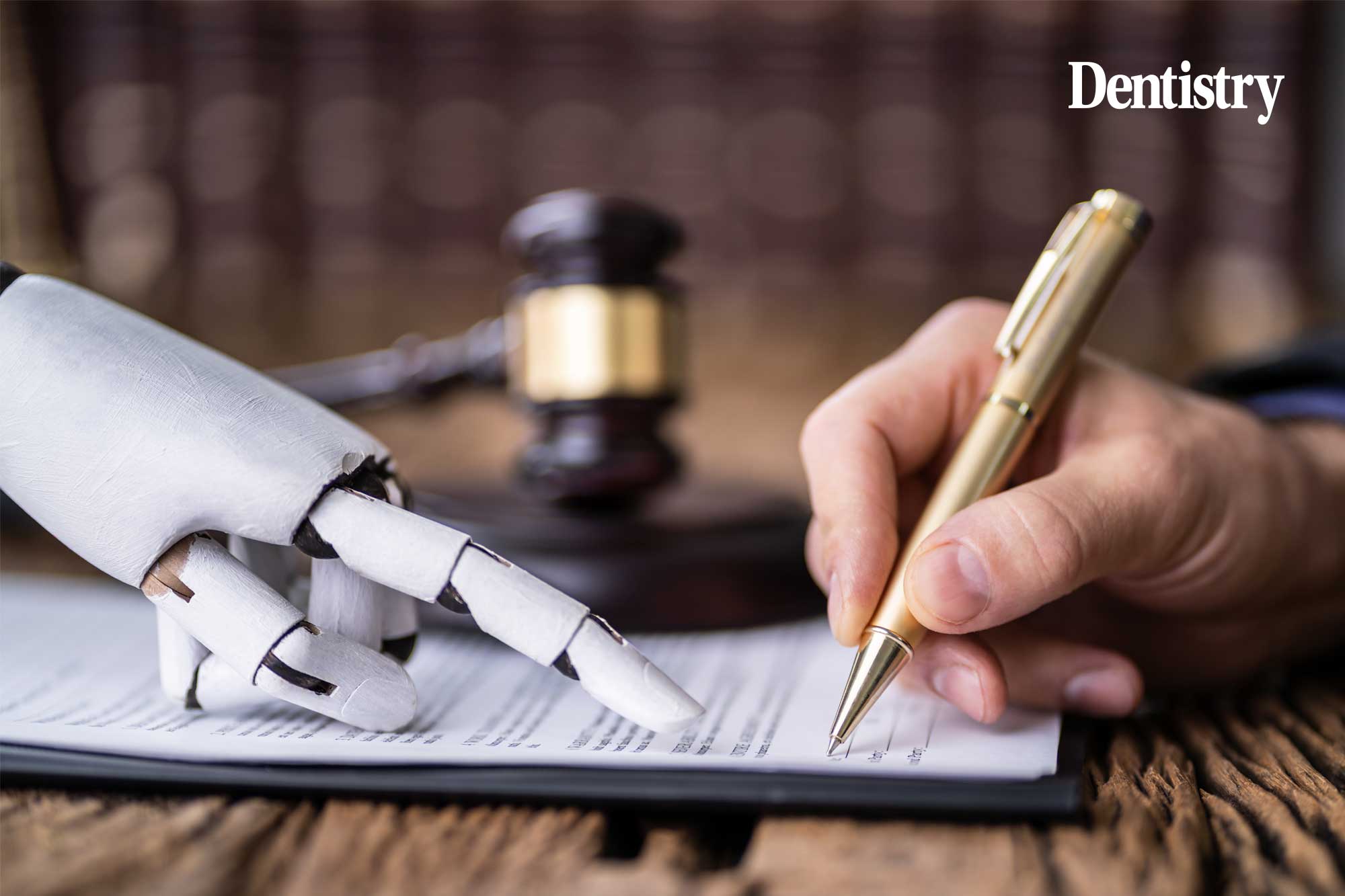
Damian Whitlam explores how generative AI is making it easier for patients to pursue dental complaints and negligence claims, while creating new risks and resource pressures for practices, insurers and regulators.
Generative AI is increasingly being used by patients to bring complaints and negligence claims against dental providers. The AI model makes it easier for patients to pursue disputes because the barriers to adoption are low and the technology is simple to access and use. Put simply, it has never been easier for patients to complain.
What is generative AI?
Both patients and practices are now using generative AI to bring and respond to complaints and claims. This type of AI can create new, complex content including text and images. Large language models learn patterns, relationships and structures from large datasets and then generate new content that reflects those patterns in response to user prompts.
Generative AI is a probabilistic technology. This means it predicts the most likely response based on patterns in its training data rather than retrieving facts in the way a database does. As a result, the AI can sometimes ‘hallucinate’, generating content that is inaccurate, misleading or unsupported by reliable sources, while presenting it as though it were correct.
Dental practices and their insurers therefore need to be ready to respond as efficiently as possible to this new breed of complaints and claims which present emerging risks.
Increased complexity of dental complaints and claims
Freely available generative AI tools can be used to produce lengthy letters of complaint and letters of claim running to hundreds of pages in a matter of minutes. At Weightmans, anecdotally we have seen complaints received by our dentistry clients becoming longer, more detailed and increasingly opaque as AI uses legal jargon in allegations.
What was once a short email outlining concerns can now be difficult to unpick and understand because generative AI can confidently generate incorrect legal analysis, misstate facts and even invent case law at a speed and volume that we have not previously had to deal with.
Impact on dental practices
The knock-on effect is that responding to complaints and letters of claim requires significant additional time and resource, regardless of the merits of the case.
While documents may appear polished and persuasive, they are not always accurate. The challenge for defendants is that AI-generated documents from claimants cannot simply be dismissed because they appear implausible. Practices must carefully review patient records and consult clinicians to prepare thorough responses to often confusing allegations to tight deadlines.
Where documents created using generative AI contain legal arguments that ultimately prove to be incorrect, each allegation must still be considered and addressed. That places additional pressure on practices and insurers while also raising important questions about proportionality in litigation.
Practices face growing pressure on resources as a result of the increased use of generative AI to create documentation, but failure to spot, properly investigate and acknowledge genuine concerns at an early stage can lead to protracted and expensive legal proceedings.
The risks of generative AI for defendants
Practices may consider it quicker and cheaper to use generative AI to respond to complaints and claims, but this can be risky for defendants.
Generative AI can support the response to claims process, but it cannot replace professional judgement. Every factual assertion, legal reference and clinical opinion must still be verified.
Getting the response to a claim wrong can potentially result in criticism by the court and adverse costs consequences for dental practices.
It is therefore important to seek early legal advice to mitigate these risks. Using publicly available generative AI can also cause issues around confidentiality as the materials are likely to contain health data and some models retain and uses the information for training.
Similar issues are arising in inquests and investigations by professional regulators. Complaints to regulators using generative AI are often more complex and raise wider issues which, even if often tangential, irrelevant or sometimes not even reflective of what has actually occurred, require investigation by the regulator and a response from the registrant.
As with claims, this leads to increased cost, but also higher levels of concern on the part of the individual under investigation. The use of generative AI by registrants to formulate reflections to regulators addressing alleged misconduct is also becoming more prevalent. Different regulators are adopting different approaches to its use in that context.
What the courts are saying about generative AI
The courts are already taking steps to combat the misuse of generative AI when used in legal proceedings. Judicial guidance was released in October 2025 which encouraged the court to inquire about the use of AI chatbots, and to remind litigants that they are responsible for the material they put to the court or tribunal.
This followed a number of significant court decisions from the spring of 2025 where the court put the use of AI chatbots, by lawyers and individuals, under the microscope, outlining the sanctions that could apply if misused. And in the recent case of Cork versus Smith, three solicitors were publicly admonished by the court and referred to the Solicitors Regulatory Authority after submitting misleading material containing fabricated statutory text as a result of using generative AI.
The Crown Prosecution Service also recently apologised after court documents contained non-existent legal authorities that were likely created by generative AI. While the court accepted there was no intention to mislead, it made clear that there had been a failure to verify the accuracy of authorities before the documents were filed.
The Civil Justice Council has recently published an interim position update in relation to the consultation on the use of AI for the preparation of court documents by lawyers.
The direction of travel confirms that the Working Group will continue looking at ‘maintaining the current position for AI use in professional legal drafting [namely, that existing professional responsibility frameworks are considered largely sufficient to govern appropriate use]; introducing proportionate transparency in relation to expert evidence, and recognising the distinct and evolving challenges posed by litigants in person’.
Preparing for what’s next
For the dental sector, the question is no longer whether generative AI is impacting complaints and claim. The question is now: how can practices and insurers respond most effectively to this evolution?
Those that embrace AI responsibly and maintain robust professional and legal oversight of the use of it will be best placed to benefit from the technology while managing its risks.
As generative AI continues to remove barriers to bringing complaints and legal claims, the demands on defendants are only likely to grow. It is therefore important for dental practices and their insurers to seek early legal advice to minimise the risks and significant avoidable costs that can arise.
Follow Dentistry.co.uk on Instagram to keep up with all the latest dental news and trends.
Apa Reaksi Anda?
 Suka
0
Suka
0
 Kurang Suka
0
Kurang Suka
0
 Setuju
0
Setuju
0
 Tidak Setuju
0
Tidak Setuju
0
 Bagus
0
Bagus
0
 Berguna
0
Berguna
0
 Hebat
0
Hebat
0