
































































Illumina Offers Early Access to Duplex Sequencing for MRD, Tumor Evolution Research
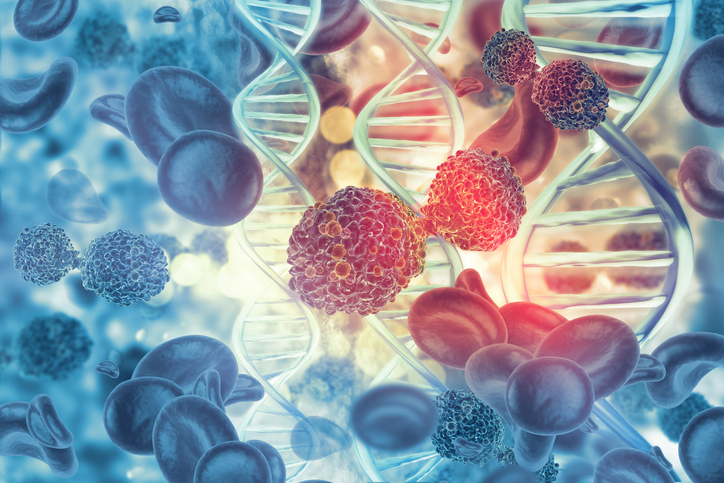
Spotting a handful of tumor DNA fragments among one million total DNA fragments may be the kind of sensitivity researchers need when studying molecular residual disease (MRD), the small amount of cancer that can remain after treatment. Illumina has opened an early access program for a sequencing workflow to support research in that range.
Announced this week, the research-use-only workflow is designed to detect trace amounts of circulating tumor DNA (ctDNA) in plasma samples and to support longitudinal, whole-genome studies of MRD and tumor evolution. Kits are expected to ship in the first quarter of 2027.
The workflow relies on duplex chemistry, which confirms each base call using both complementary strands of the original DNA molecule. Seeing the same change on both strands increases confidence that it is biological rather than an error introduced during library preparation or sequencing, according to the Illumina press release.
On the hardware and software side, the workflow combines the NovaSeq X sequencing platform with DRAGEN bioinformatics software. Illumina said that pairing NovaSeq X sequencing with duplex chemistry yields quality scores above Q65. DRAGEN then generates duplex consensus reads, optimizes quality scores, and interrogates thousands of tumor-specific variants across the genome, combining evidence from the few that may be present in plasma. The workflow supports 5–10 ng of cell-free DNA (cfDNA) input.
In representative studies, the workflow reproducibly detected ctDNA at 2.5 parts per million.
“Researchers need effective ways to find the faintest traces of tumor DNA—signals that can be especially difficult to detect in early-stage, low-shedding, or low-mutation-burden tumors,” said Cande Rogert, vice president, global head of advanced science at Illumina, in a press release. “This early access technology is an important step toward helping researchers explore those challenging settings with greater sensitivity and generate evidence that can advance MRD research.”
The duplex workflow adds to Illumina’s MRD research portfolio and complements Illumina WGS Oncology Prep, which supports tumor fingerprinting and longitudinal ctDNA monitoring in a standardized whole-genome workflow.
NYU Langone Health is among the early access users and is applying the approach to MRD research. “MRD research is moving fast, and new tools are making it possible to bring ultrasensitive, tumor-informed analysis in-house,” said Matija Snuderl, MD, director of molecular pathology at NYU Langone Health. He added that the team looks forward to “generating evidence with a non-bespoke approach that can help advance our understanding of disease recurrence.”
The post Illumina Offers Early Access to Duplex Sequencing for MRD, Tumor Evolution Research appeared first on GEN - Genetic Engineering and Biotechnology News.
Apa Reaksi Anda?
 Suka
0
 Kurang Suka
0
 Setuju
0
 Tidak Setuju
0
 Bagus
0
 Berguna
0
 Hebat
0






