






























































Rethinking the Clone-First Paradigm for First-in-Human Biologics

For decades, biologics development has followed a familiar sequence: create an expression construct, transfect host cells, isolate single cells, screen hundreds or thousands of clones, select a lead clone, establish a cell bank, develop the process, and then manufacture clinical material.
It is a proven model. But there is an increasingly important question for early-stage drug development: Does every molecule need to complete that entire sequence before investigators can answer the first clinical question?
For many first-in-human programs, the immediate objective is not commercial manufacturing. It is to produce a relatively small quantity of well-characterized material, establish appropriate controls and determine whether a therapeutic candidate demonstrates sufficient clinical promise to justify further investment.
That changes how developers can think about cell line development.

Moving cloning off the critical path
One approach is to manufacture initial clinical material from a characterized stable cell pool, while single-cell cloning is deferred or proceeds in parallel.
This is fundamentally different from using a transient expression system. A stable pool consists of cells in which the expression construct has been integrated into the host-cell genome. The challenge is controlling the heterogeneity within that population.
With conventional random integration, cells can differ substantially in transgene copy number, insert integrity and integration location. Those differences can translate into variability in growth, productivity, stability and product quality. Single-cell cloning solves this problem by searching a heterogeneous population for an individual clone with the desired characteristics. An alternative is to reduce heterogeneity earlier.
Transposase-based cell line development systems, such as the Leap-In Transposase platform used in our work, employ a cut-and-paste mechanism for genomic integration. By creating a more controlled integration process, these systems can generate stable pools with a narrower distribution of cellular characteristics than conventional random integration.
The distinction is important. The pool does not become clonal. It becomes more predictable.
That predictability creates the possibility of using the stable pool itself as the manufacturing substrate for an early clinical program.
What does the data need to show?
Deferred cloning should not be interpreted as deferred characterization.
A stable pool intended for GMP manufacturing still requires an appropriate control strategy, including assessment of identity, purity and adventitious agents, along with limits on population doublings and evidence that the cell population remains suitable throughout the intended manufacturing window.
The resulting protein also needs to be characterized. The relevant question is whether material produced by the pool has appropriate identity, purity, potency and product-quality attributes for the intended clinical study.
Published experience with transposon-generated stable pools provides an important proof-of-concept. Stable pools have been used for GMP manufacturing at substantial scale, with later clone-derived processes demonstrating comparable process performance and product-quality profiles.
In these studies, viable cell concentration, viability, antibody titer and cell-specific productivity tracked similarly between pool- and clone-derived manufacturing. Product-quality measurements, including purity, charge variants and glycosylation, also fell within comparable ranges.
That does not mean a pool and its derivative clone will be identical across every analytical measurement. Nor does historical experience eliminate the need for molecule-specific assessment.
It demonstrates something more useful: The relationship between pool-derived and later clone-derived material can be characterized and managed.
Right-sizing the manufacturing process
Changing the cell line development strategy also creates an opportunity to reconsider scale.
Early clinical studies may require only modest quantities of a biologic, particularly for potent antibodies and other protein therapeutics. Yet sponsors frequently manufacture those first batches using infrastructure designed for much larger material requirements.
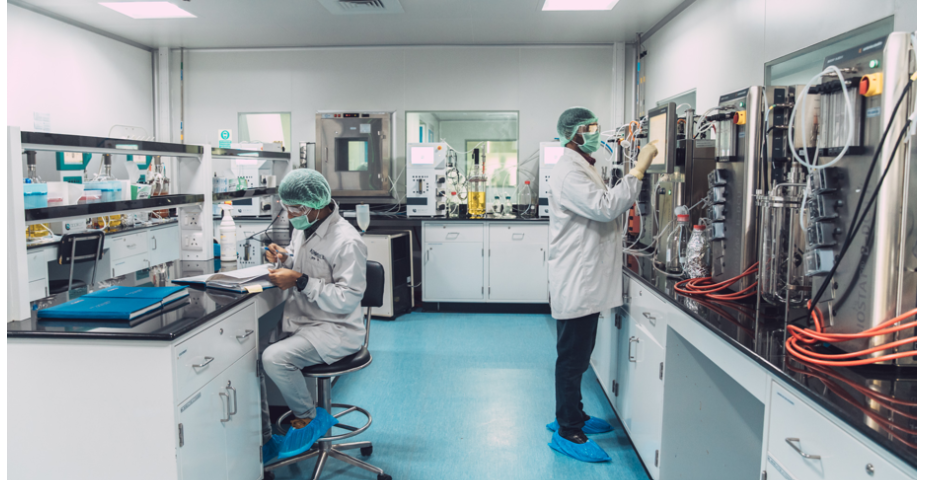
A small-scale, closed upstream process can better match manufacturing capacity to the clinical question.
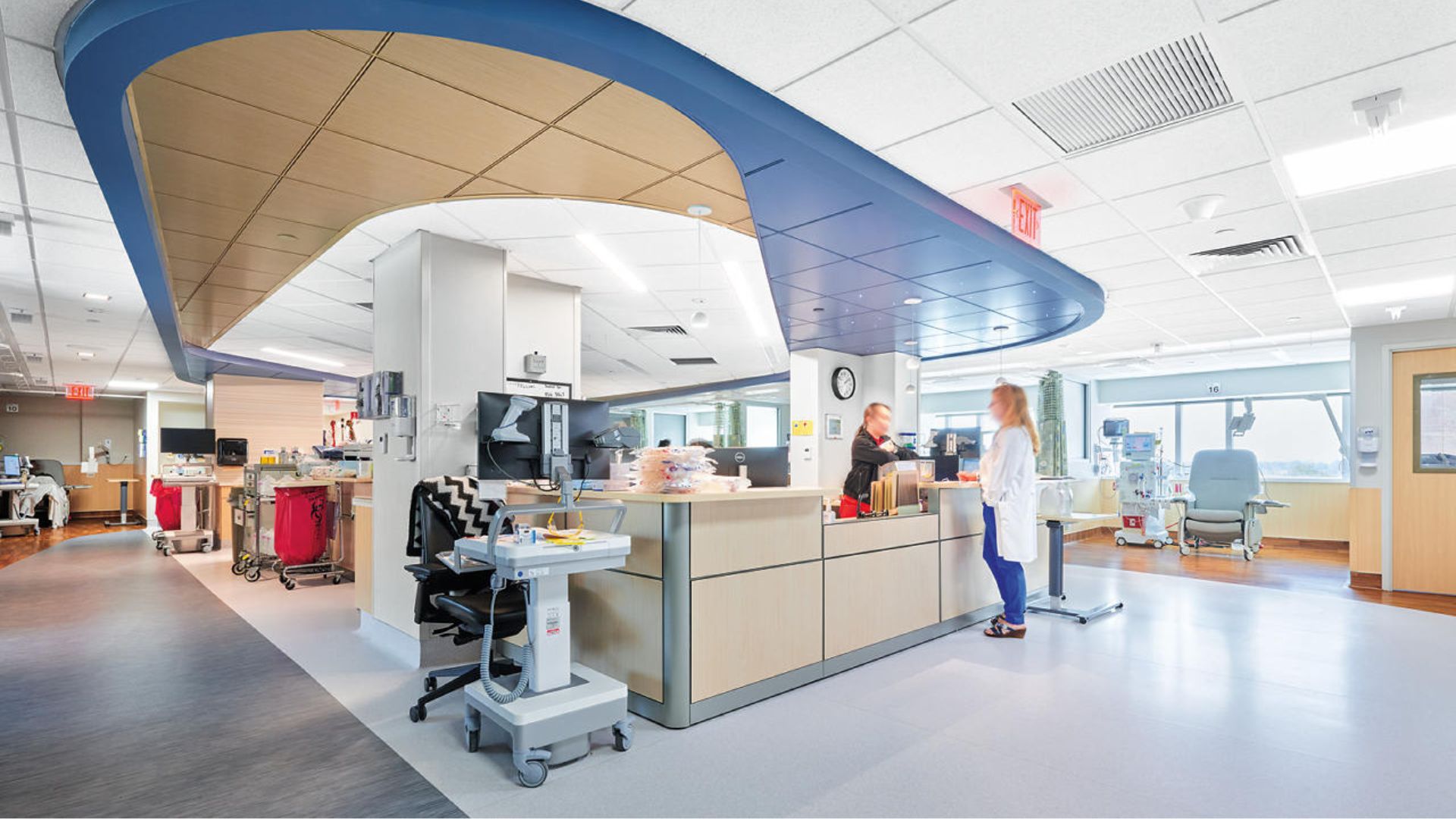
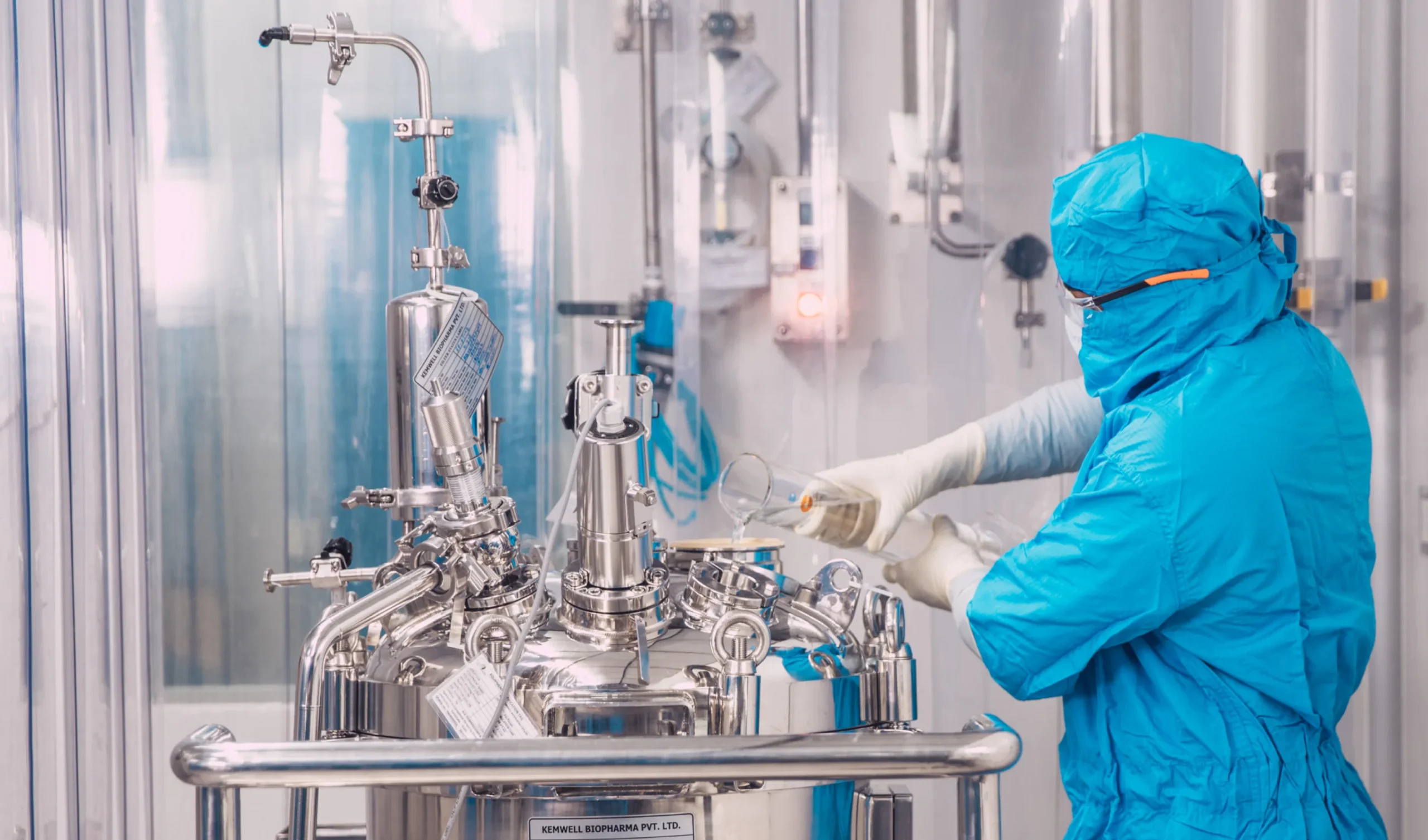
In the SmartScale GMP platform developed at GBI Biomanufacturing, for example, stable-pool development is connected to a shake-flask-based upstream process using OptimumGrowth flasks, progressing from seed culture through a 7-liter production scale. The upstream process is then integrated with downstream purification, drug substance manufacturing and fill-finish.
The principle is more important than the particular vessel: Use the smallest robust GMP process capable of producing the amount of material the clinical program actually requires.
Importantly, starting small should not strand a successful molecule at small scale. A development strategy should anticipate movement into larger single-use bioreactors, fed-batch or perfusion processes if clinical demand increases.
Sequence the risk rather than eliminate the work
This approach reflects a broader change occurring in early biologics development.
Historically, developers have often tried to resolve risks associated with later-stage development before administering the first clinical dose. That can make sense when the probability of technical or clinical success is high. For novel therapeutics, however, it can commit substantial time and capital before the most fundamental uncertainty has been resolved: Does the drug work in patients?
A phase-appropriate CMC strategy does not eliminate necessary development activities. It sequences them.
For a suitable molecule, a sponsor can generate a controlled stable pool, characterize that population, manufacture a small GMP batch and establish the CMC package necessary to support the initial clinical investigation. Meanwhile, single-cell cloning can continue in parallel or begin after the program has generated evidence supporting further investment.
If the clinical signal is positive, a derivative clone can be selected, banked and advanced toward the more extensive process characterization expected later in development. Comparability between pool- and clone-derived material then becomes a defined development activity rather than an assumed outcome.
Not every biologic will be a good candidate. Molecules with difficult product-quality profiles, unstable expression, unusual safety considerations or large initial material requirements may favor a conventional clone-first strategy.
But single-cell cloning should no longer be treated automatically as the starting line for every first-in-human biologic.
For appropriate molecules, stable-pool manufacturing provides another option: characterize what matters, manufacture at the scale the study requires and move the first clinical question forward while conventional cell line development continues in parallel.
For drug developers facing increasingly constrained capital and intense pressure to reach meaningful clinical milestones, the question may no longer be, “How quickly can we select the final clone.” It may now be: “Can stable pools move biologics to first-in-human studies faster?”
The post Rethinking the Clone-First Paradigm for First-in-Human Biologics appeared first on GEN - Genetic Engineering and Biotechnology News.
Apa Reaksi Anda?
 Suka
0
 Kurang Suka
0
 Setuju
0
 Tidak Setuju
0
 Bagus
0
 Berguna
0
 Hebat
0