




































%20and%20Batch%20Production%20Records%20(BPR).png)










New embedded scientist role drives system-wide improvements for children, families

HN Summary
• Hamilton Health Sciences has introduced an embedded scientist role within its Extensive Needs Service to drive research that improves care for children and youth with complex health and behavioural needs.
• Working directly within the clinical program, the embedded scientist uses patient data, health system research and community partnerships to identify service gaps, improve equity and strengthen care delivery across Ontario.
• The initiative reflects HHS’s commitment to integrating research into everyday healthcare, helping translate evidence into practical, system-wide improvements for children, families and care teams.
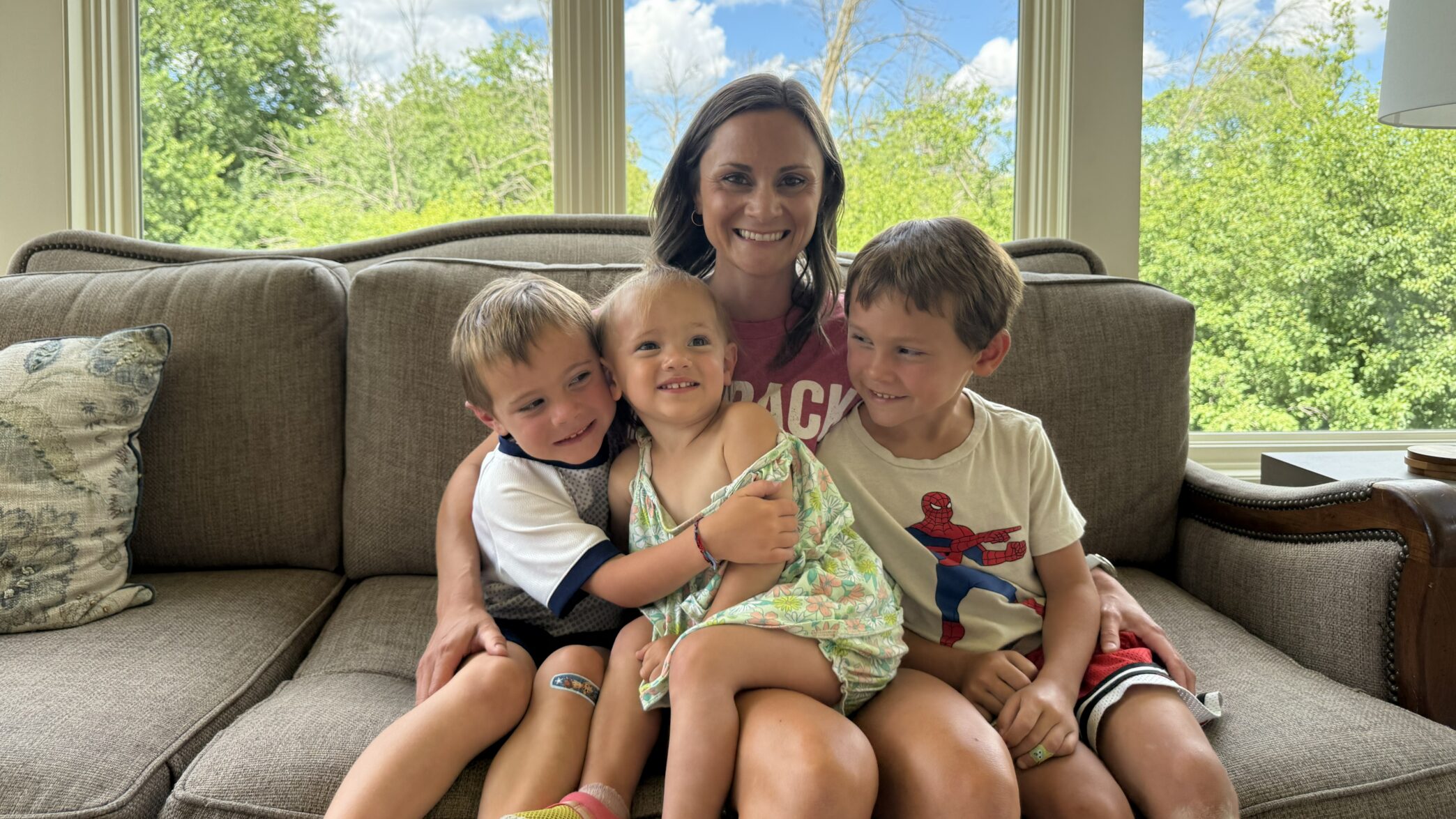
Hamilton Health Sciences’ (HHS) research and innovation team has partnered with the Extensive Needs Service (ENS) at our McMaster Children’s Hospital (MCH) to explore ways to advance care for children, youth and families in this provincial program.
Central to this collaboration was the creation of a role for an embedded (hospital-based) scientist, tasked with discovering ways to make system-wide improvements to ENS program delivery at MCH and beyond.
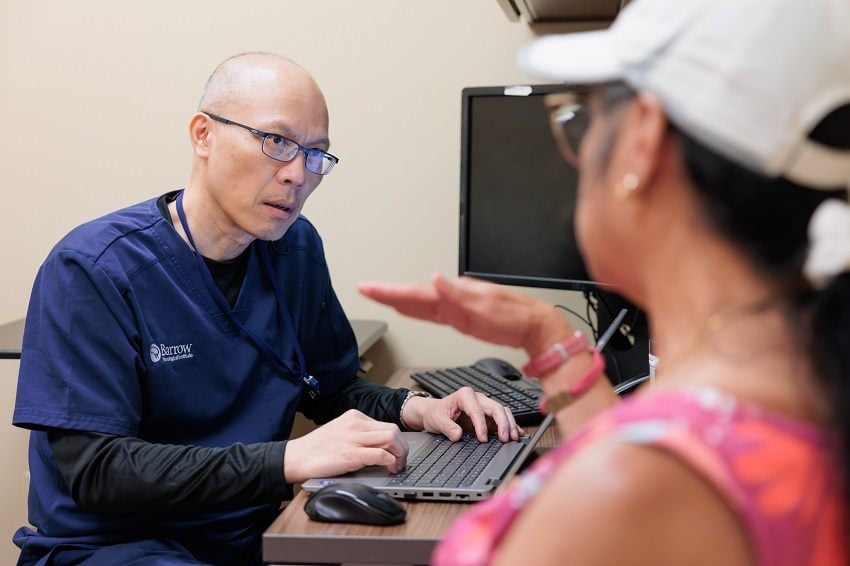
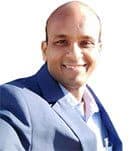
Dr. Jordan Edwards completed his postdoctoral fellowship at the Offord Centre for Child Studies, an affiliated institute of HHS and our key academic partner McMaster University, in 2024 and had been working as a research associate with the ENS program before taking on the scientist position last November. Edwards is an epidemiologist and health services researcher who studies the health of populations and how our health system can better meet the needs of children, youth and families. As an early career scientist, Edwards is at the beginning of his career as a health-research lead. He’s also an assistant professor at McMaster University.
Making research a priority
The ENS program supports children and youth with complex health and behavioural needs, along with their families, by bringing together a team of professionals such as doctors, therapists and social workers to create a single, coordinated care plan tailored to each child. It’s led by MCH, CHEO in Ottawa, and Holland Bloorview in Toronto, and works closely with community partner sites.
When the ENS program was launched in April 2023, it included a role for research and evaluation in order to constantly monitor its effectiveness and identify areas for improvement. Having an embedded scientist on the team helps program leaders better understand the families they’re supporting, identify service gaps, and improve the system so it’s more equitable.
What makes embedded scientists unique?
HHS is a top five Canadian research hospital, where hundreds of doctors, nurses and allied health care professionals like physiotherapists, occupational therapists, and social workers conduct leading-edge research every day, aimed at finding new and better ways to provide patient care.
This research is typically led through partnerships with universities and research organizations. For example, an HHS doctor may lead a study involving patients in collaboration with our key academic partner, McMaster University, or through organizations like the Population Health Research Institute, a joint institute of HHS and McMaster.
Embedded scientists are different. They work directly for HHS, and collaborate with McMaster, focusing exclusively on research that addresses real-world challenges within our hospital and the broader health-system. Their work is designed to identify practical opportunities for improving care delivery and patient outcomes, for system-wide improvements.
“The success of our Extensive Needs Service shows what’s possible when science, clinical care, and operations work together,” says Dr. Tamar Packer, HHS’ interim vice president of women’s and children’s health, and president of MCH.
“By embedding scientists within care teams, we are turning evidence into action, improving outcomes for children, youth, and families, and helping build a stronger system of care across Ontario.”
Driving system-wide advancements
Edwards works with patients, families, communities, hospital teams, leaders and reams of data in search of ways to improve and advance how the ENS program is delivered at MCH, as well as provincially. His research explores ways to improve care and reduce gaps in health and social outcomes for children, youth and families, with a focus on ensuring equity for people from diverse and underserved communities.
“We’re bringing together the patient and family data we’ve collected with health data from across the province to better understand where needs are greatest and where support is still falling short,” says Edwards. “This helps us plan how to deliver and expand the service so it’s reaching families more fairly.”
His role includes setting the research direction, securing funding, building teams and overseeing this work from start to finish. He’s also responsible for the quality and impact of the research.
Edwards credits HHS leadership including Packer; Dr. Marc Jeschke, vice president of research and innovation, and chief scientific officer; Katie Porter, executive director of research strategy and operations; and Tracey MacArthur, president and CEO; for their commitment to embedding research into a hospital setting, including creating new scientist roles. He also credits Karen Margallo, director of child and family community integrated care; Trish Wilson, ENS clinical manager; for partnering with HHS Research and Innovation in developing these roles.
“This type of system-wide research wouldn’t be possible without the support of our hospital leadership,” says Edwards. “Their support allows embedded researchers to take a system-level view and find better, more equitable ways to deliver care.”
The post New embedded scientist role drives system-wide improvements for children, families appeared first on Hospital News.
Apa Reaksi Anda?
 Suka
0
Suka
0
 Kurang Suka
0
Kurang Suka
0
 Setuju
0
Setuju
0
 Tidak Setuju
0
Tidak Setuju
0
 Bagus
0
Bagus
0
 Berguna
0
Berguna
0
 Hebat
0
Hebat
0