













































%20and%20Batch%20Production%20Records%20(BPR).png)














Prolonged Ruxolitinib Cream Shows Repigmentation in Vitiligo Despite Early Minimal Response: Study

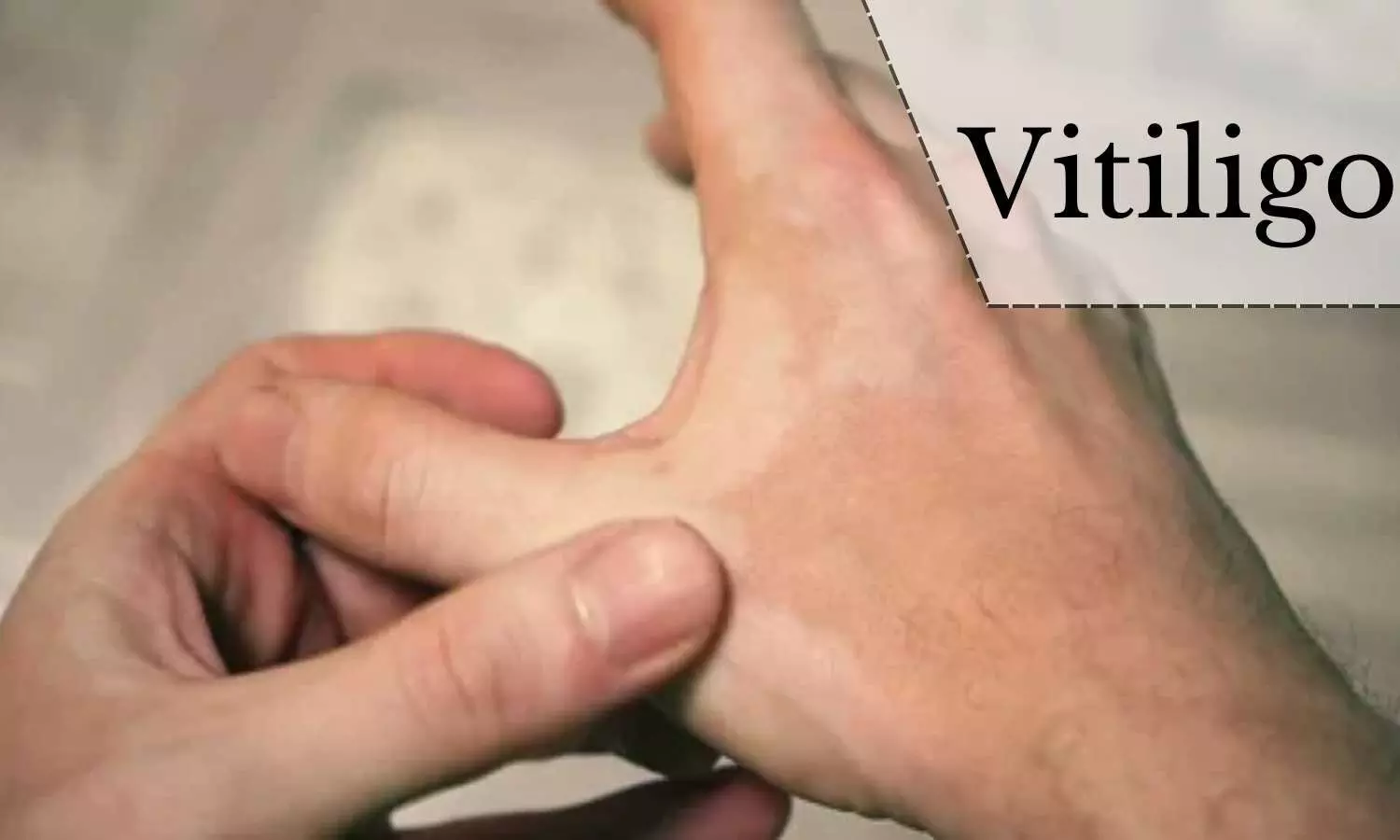
USA: A new study has revealed that prolonged treatment with ruxolitinib cream may still lead to significant repigmentation in patients with vitiligo who initially show little improvement. Among patients with minimal response at six months, continued therapy for up to two years resulted in notable pigment restoration. By week 104, facial improvement was observed in 90.1% of patients, while the proportion achieving at least 75% improvement in the Facial Vitiligo Area Scoring Index (F-VASI75) increased from 13.3% at week 52 to 54.9%.
The findings were reported in the Journal of the European Academy of Dermatology and Venereology by Albert Wolkerstorfer of Amsterdam University Medical Center and colleagues in a letter to the editor.
Ruxolitinib cream, a topical Janus kinase (JAK) 1/JAK2 inhibitor, is the first approved topical therapy for repigmentation in nonsegmental vitiligo. Earlier phase 3 trials (TRuE-V1 and TRuE-V2) in adolescents and adults aged 12 years and older demonstrated meaningful repigmentation and good tolerability over 52 weeks. Further improvement in both facial and body pigmentation was later reported in the TruE-V long-term extension study, with treatment continued up to 104 weeks.
Because repigmentation in vitiligo is typically gradual, patients may require long treatment periods before visible improvement occurs. This delay can add to the psychological burden associated with the disease. The researchers therefore assessed outcomes among patients who had minimal or no repigmentation after the first 24 weeks of therapy to determine whether prolonged treatment could still provide benefit.
In the original trials, patients were randomly assigned in a 2:1 ratio to receive ruxolitinib cream 1.5% applied twice daily or a vehicle cream for 24 weeks. All participants then entered an open-label extension and used ruxolitinib cream for an additional 28 weeks. Those who did not achieve near-complete facial repigmentation by week 52 continued treatment for another year.
The researchers reported the following findings:
- The analysis included patients who initially received ruxolitinib cream but had less than 25% improvement in facial or total body vitiligo scores at week 24.
- Among 443 patients in the efficacy-evaluable population, the mean baseline Facial Vitiligo Area Scoring Index (F-VASI) was 0.92 and the Total Vitiligo Area Scoring Index (T-VASI) was 6.64.
- Among 127 patients with little or no facial repigmentation at week 24, improvement increased with continued treatment.
- Facial improvement was observed in 71.7% of patients at week 52, 87.5% at week 80, and 90.1% at week 104.
- The proportion of patients achieving the clinically meaningful threshold of F-VASI75 increased during follow-up.
- Among 193 patients with limited or no body repigmentation at week 24, improvement rates increased from 68.8% at week 52 to 81.4% at week 80 and 84.9% at week 104.
- Clinically meaningful total body improvement (T-VASI50) was achieved by 50% of patients after two years of treatment.
The authors concluded that more than 80% of patients with minimal early response experienced measurable repigmentation with prolonged therapy, highlighting the importance of continuing treatment even when improvement is not seen within the first six months.
Reference:
Wolkerstorfer, A., Gooderham, M. J., Sebastian, M., Rosmarin, D., Blauvelt, A., Alam, M. S., Zdybski, J., Wei, S., Kornacki, D., Passeron, T., & Harris, J. E. Prolonged ruxolitinib cream treatment for vitiligo among patients with no or limited response in the first 6 months. Journal of the European Academy of Dermatology and Venereology. https://doi.org/10.1111/jdv.70402
Apa Reaksi Anda?
 Suka
0
Suka
0
 Kurang Suka
0
Kurang Suka
0
 Setuju
0
Setuju
0
 Tidak Setuju
0
Tidak Setuju
0
 Bagus
0
Bagus
0
 Berguna
0
Berguna
0
 Hebat
0
Hebat
0

Edusehat
Platform Edukasi Online Untuk Komunitas Kesehatan Agar Mendapatkan Informasi Dan Pengetahuan Terbaru Tentang Kesehatan Dari Nasional Maupun Internasional. ||
An online education platform for the health community to obtain the latest information and knowledge about health from both national and international sources.