












































%20and%20Batch%20Production%20Records%20(BPR).png)
















SIRO Clintech reloaded
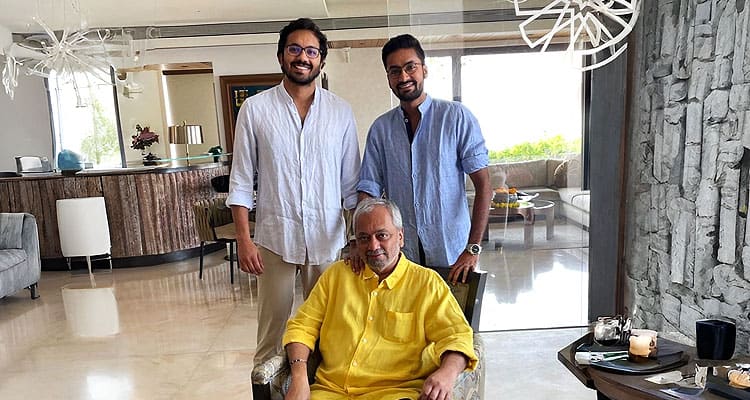
Corporate history is replete with examples of the ‘third generation curse’, but the Daftary family seem to be bucking that trend. Sure, they sold Bharat Serums & Vaccines (BSV), founded in 1971 by family patriarch Vinod G Daftary, to Advent International in 2020.
But the family has ambitious plans for SIRO Clintech, a company founded in 1996, by the second generation, Dr Gautam V Daftary. The third generation, Dr Daftary’s sons Akshay and Karan, are firmly in the saddle.
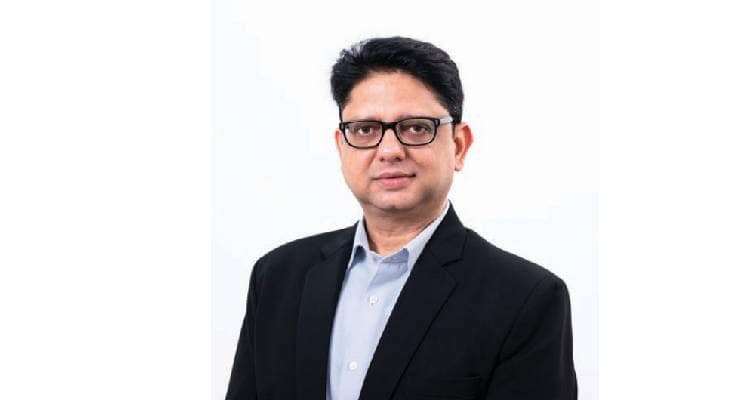
“Divestment of SIRO is not part of the strategic plan”, says Founder and Chairman of SIRO Clintech Dr Daftary. Karan Daftary, MD, SIRO Clintech, emphasises that “the focus is much more on growth than on an exit plan. SIRO Clintech is today focused on becoming the largest and most advanced technology-enabled CRO in India. ”
Divestment increased focus
BSV’s divestment to private equity Advent International in 2019 “was an inflection point for the family”, reflects Dr Daftary, as it allowed the family “to focus our leadership attention on SIRO in a way that wasn’t possible before, and the past decade has been the most focused period of growth in SIRO’s history.”
He explains that SIRO’s independence is deliberate as it allows them to invest with a long-term perspective, something that is difficult in a private equity-owned model. “We are among the very few Indian CROs to make sustained investments in R&D, and SIROai is the result of more than five years of foundational work. That kind of commitment is only possible when you have a long-term vision beyond the next business cycle.”
Daftary concurs, saying “We remain open to divestment or strategic options over the longer term, but right now the priority is to grow each business, organically or inorganically, rather than pursue an exit plan. Across all businesses, the immediate focus is on infusing safe technology to reduce manual effort, expand the revenue base and grow the client base and service portfolio.”
Agreeing with his father, Daftary points out that the demerger two years ago was an important structural change because it gave each business greater focus across its respective markets, clients and positioning. “We are now at a point where we believe the longevity of companies is highly dependent on the technology built into them, as well as on how safely that technology is implemented. That has influenced how we have repositioned the group and how we approach the business.”
On the other revenue streams, Daftary says the medical writing business has moved its focus to the UK and other larger European and US markets because of the opportunities for standardised service offerings. SIRO’s staffing business is India-centric in terms of operations, while hiring globally. The demerger therefore created focused businesses that can grow in their own manner.
Making the generational divide work
As much as the two generations are in sync on this aspect, Dr Daftary admits that “the generational difference is real.” But the family has made this difference work, as “differences resolve through the discipline of asking each other the harder version of the question, and through mutual respect for what each generation genuinely brings.”

As Dr Daftary explains, “I carry the memory of every cycle SIRO has been through over three decades. Karan carries the read on where the industry is heading next, and the operational tempo the current market demands. Neither view is complete on its own. The way it works in practice is not that one voice wins. It is that we test each other. When Karan pushes for something aggressive on AI or capability build, the question I ask in return is whether we have thought through the downside. When I am cautious on a market move, the question Karan asks is whether the caution reflects the current market or a market that has already changed. Both questions are useful, and neither is decorative.”
As Daftary puts it, “I would describe the difference less as “safe versus aggressive” and more as “experience versus youth.” Experienced leaders understand not only the opportunities but also the downstream consequences of decisions. The younger generation tends to have a stronger pulse on how quickly technology and market adoption are changing. The combination works well: we can move quickly while still operating in a realistic and safe manner.”
He emphasises that they are not trying to build the business around quick profits, but “to build a brand and a legacy over decades. We have seen that model work within the family and want to replicate it. In that sense, the combination of access to AI and technology, together with experienced oversight and guidance around the requirements of drug development and patient care, is a major advantage.”
The past three decades
SIRO has ridden both the crests and troughs of global and India’s clinical research sector.
Looking back over the past three decades, Dr Daftary agrees, “The last three decades of Indian CRO business has not been a straight line story. Every five to seven years, the industry has had to reset, and each of those resets pushed SIRO to strengthen a different capability. That is the discipline of an evidence business.”
At each reset, SIRO seems to have redefined itself, moving to where the market is.
For instance, as Dr Daftary points out, “When competition grew, SIRO moved up the value chain into strategic services. Medical writing, biometrics, and regulatory science were less commoditised than trial operations, and quality mattered more than headcount. The diversification from medical writing came through a deliberate build over the past decade of what is now the four-pillar architecture: Development clinical trials, Post-approval clinical programs, Real-world evidence, and Evidence platforms and intelligence. Medical writing sits inside the fourth pillar as one capability among several.”
Similarly, “when global pharma tightened R&D investment through the 2010s, we deepened the Indian sponsor base and the Post-Approval and RWE offerings, both of which grew as regulators moved to require more local evidence. And on US client over-dependence, geographic and sponsor diversification was a deliberate multi-year shift. US concentration was reduced by design, not by accident, and the Indian sponsor base has become a genuine growth engine over the past decade.”
Giving his perspective, Daftary narrates how as India’s first CRO in 1996, SIRO was involved in building parts of the Indian CRO ecosystem, including work around ethics committee and site guidelines. Over the early years, the company developed large partnerships with global companies, which made them one of the prominent players in the Indian clinical research market.
As the clinical trial market in India reached a peak, SIRO opened to private equity investment. 3i Group and Kotak Private Equity became part of the growth story, and a decision was subsequently made to acquire Omega, a large European CRO, in 2008.
In hindsight, Daftary feels that that “was the right decision at the wrong time” as the acquisition coincided with the recession, which led to reduced R&D spending and made the economics and local operations considerably more difficult. Ultimately, SIRO wound down those operations.
Around 2016–2017, the company retained the conviction that clinical research was a business they could scale. With the third generation ready to join the company, SIRO acquired the business back.
The group is now 100 per cent family-owned and completely debt-free, says Daftary, with operations funded through their own cash flows and investments, “which gives us a lean operating model across the group.”
He reveals that SIRO’s clinical research work today is focused primarily on Indian patients. The client roster comprises large Indian pharma companies and Indian affiliates of global companies, as well as FMCG, medical device and vaccine companies. Medical writing has a global footprint, particularly across Europe, the US, APAC and the Middle East, because it can be delivered as a standardised service within larger development programmes, reasons Daftary. The staffing arm is geography-agnostic and works across markets. Overall, the group remains under complete family control.
Revenue wise, across the group, growth was around 40 per cent last year and approximately 15–20 per cent the year before, following some ups and downs in the earlier period. “The momentum over the last two to three years has been strong, and we are looking to build on it further this year. We have also added around 10–12 new clients in the six months since January. The key lesson has been that systems, people and processes need to be built first; only then can the business scale. The last two years have provided that launchpad and enabled us to grow well above industry averages,” claims Daftary.
All this has positioned SIRO for the next reset.
From clinical trials to clinical evidence
As Dr Daftary puts it, “The shift from project-based clinical trials to lifecycle evidence partnerships is the single biggest change in the CRO business model in the last decade. It reflects a change in what sponsors actually need. They need evidence at every stage of the product lifecycle: before approval, immediately after approval, and years into commercialisation.”
While project-based CROs deliver a trial, Lifecycle Evidence Partners deliver a continuous evidence stream across the full commercial life of the product. According to Dr Daftary, “SIRO has architected the business around this shift. The four pillars are the operating structure, not a marketing frame. The tagline that captures this shift is clinical trials to clinical evidence, and it reflects both the direction the industry is moving in and the direction SIRO has already moved to.”
Looking ahead, Dr Daftary believes that the next chapter is scaling the model. “The shift is not just a business model change; it also reflects a maturing regulatory environment that asks for evidence long after approval, and a maturing scientific standard that asks for evidence from the population the drug will actually treat.”
So, how does a lifecycle evidence partnership look like in practice?
Dr Somesh Bolegave, Head Biometrics, Regulatory & Medical Services, SIRO Clintech explains with an example, citing an oral insulin product that had been approved in the US but faced challenges around integration and adoption in India. The product represented an important area of formulation science because moving insulin away from injectable delivery has long been an important goal in diabetes care.
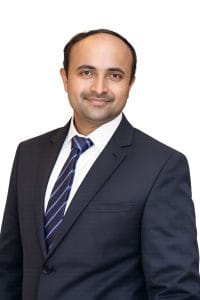
The regulatory challenge in India was the absence of sufficient local evidence for the product. Rather than treating approval as the end of the process, the strategy was to develop an India-specific evidence pathway. SIRO Clintech partnered with Cipla to define a route that would satisfy regulatory requirements while also generating confidence in the evidence. SIRO Clintech conducted the Phase III trial, which received approval from the Indian regulator in 2025. The product is now available in the Indian market.
However, Dr Bolegave emphasises that regulatory approval is not the end of the evidence journey. Phase III trials are conducted in selected populations, so evidence from Phase IV and post-marketing studies is important for understanding performance in a broader, realworld population.
He points out that that is the shift from seeing regulatory approval as a milestone to building evidence throughout the product lifecycle. “As AI capabilities expand, patient voice and social media feedback can also be incorporated into the evidence generation process, so that decision-making is informed not only by developers and companies but also by patient experience and needs.”
He cautions that the challenge is to generate evidence quickly while ensuring that it remains scientifically robust and validated, and reasons that this is where an experienced CRO can combine its knowledge of trial conduct and evidence generation with technology to make the process more efficient.
Policy support
India’s policy framework and regulation seems to have finally caught up with the industry’s evolution, with long awaited policy changes closing gaps.
Both Daftary and Dr Bolegave believe that the New Drugs and Clinical Trial (NDCT) Rules 2019 fundamentally changed the pace and predictability of clinical trial approvals in India.
The measurable difference has been in timelines. Approval cycles that could earlier run six to nine months now sit within defined statutory timelines that regulators have largely honoured. NDCT 2019 delivered defined timelines, expanded scope of oversight, and a formalised SEC review structure, creating the foundation for subsequent reforms.
In their opinion, the 2026 prior intimation pathway is the clearest recent signal of the direction of travel. It compressed review timelines from 90 to 45 working days for eligible studies. They reason that that is a signal that the regulator is willing to move fast when the scientific case is well made and the CRO track record is established.
Going forward, they both believe that the industry would benefit from faster review timelines for standard applications, clearer guidance on Rule 101 country-waiver criteria for cell and gene therapies and rare diseases, stronger SEC composition for emerging modalities, and a risk-based inspection framework for CROs post-registration.
They also point out that infrastructure policy support matters equally: SHAKTI-scale site expansion beyond the first thousand, stronger biomarker testing capacity, patient registry consolidation across therapeutic areas, and continued investment in the digital health infrastructure that decentralised trials depend on.
SIRO has apparently had a good compliance record. Both Daftary and Dr Bolegave emphasise that the company has been inspected and audited by global and national regulatory agencies, including the US FDA, European regulators, the WHO, Indian regulators and Japanese regulators, with no critical observations.
But quality inspections are not limited to regulators. Daftary and Dr Bolegave point out that many global pharma companies operate quality systems that are more stringent than minimum regulatory requirements. They stress that SIRO has been audited more than 250 times by such global organisations, with no critical observations, which validates the company’s quality systems and data integrity.
Thanks to these regulations, they point out that the landscape has evolved on four important fronts. Firstly, mandatory CRO registration under the NDCT Amendment 2024 has raised quality standards. Secondly, CDASH-aligned workflows are now standard rather than optional. Thirdly, risk-based quality management is being formalised in the draft GCP revision. And lastly, AI governance frameworks are becoming part of CRO operating models.
Changing sponsor perceptions
But India’s clinical research sector has not made its global mark as expected. Though India’s CRO market is expected to reach $ 4,956.7 million by 2033 at a 9.5 per cent CAGR, India accounted for only 5.3 per cent of the global pharma CRO market in 2025. This clearly points to major issues that still need to be addressed.
As Dr Daftary puts it bluntly, “The 5.3 per cent number changes when we stop pitching cost and start pitching evidence quality.”
Taking this further, both Daftary and Dr Bolegave believe that the credibility of that proposition will ultimately depend on whether operational delivery can withstand global regulatory scrutiny and inspection.
They point out that global sponsors are increasingly seeking high-quality evidence: meaningful, publishable, decision-useful insights from every study run in India. India has structural advantages that remain underutilised in the current sponsor narrative, including diverse patient population, a disease burden across therapeutic areas, rapidly evolving digital health infrastructure, and English-language regulatory operations that make audit trails accessible to global reviewers.
They agree that the larger challenge lies in changing sponsor perception. India continues to be viewed as primarily a delivery venue when it should be recognised as a strategic hub for evidence generation. Changing this narrative will require leadership from Indian CROs supported by an enabling regulatory environment.
The road ahead
Daftary and Dr Bolegave caution that on the regulations front, while the direction is right and the pace has been steady, what the industry needs now is sustained momentum, not new frameworks every year, cautions the duo.
Similarly, the Biopharma SHAKTI programme to establish 1,000-plus clinical trial sites is a step in the right direction, as India has been site-constrained for several years, particularly in therapeutic areas beyond the top three or four, and expanding the site base is therefore a meaningful structural intervention.
But they once again sound a cautionary note, pointing out that this expansion should be matched by quality. Establishing a thousand new sites will be meaningful only if investigator training, ethics committee readiness, and site infrastructure are matched to that pace, and early signals suggest the government recognises this requirement and is investing in supporting this ecosystem.
Operationally, they believe that the impact is likely to show up first in post-approval clinical programmes and post marketing surveillance studies (PMS studies), as these are the categories where India needs greater site density. Development-stage clinical trials are likely to follow as investigator and sponsor confidence at the newer sites increases.
The duo point out that data quality was a legitimate concern in an earlier era, but it is no longer the barrier it once was. Today global sponsors audit the strength of the underlying quality management system, not just the data produced, and Indian CROs that have invested in that system are winning global trials on the strength of their capabilities .
At SIRO, we operate a globally aligned quality management system, supported by ISO-certified diagnostics AI capabilities at the parent group level, a formal AI governance framework, and immutable audit trails for AI-assisted workflows. These are operational capabilities, embedded in our processes , not simply claims made on paper.
On AI, the generational balance steps into the picture once again.
“AI has a role across the drug and evidence lifecycle, but it is important to separate real capability from industry hype. Our approach is to be clear about what AI can and cannot do,” states Dr Daftary.
He agrees that today AI is effective in drafting scientific documents under human review, extracting insights from completed clinical study reports, structuring safety and pharmacovigilance signal detection, and capturing patient voice from digital sources at scale.
But he also points out that AI is not credibly ready for autonomous clinical decisions, independent regulatory submissions, or unsupervised medical writing.
Therefore Dr Daftary believes that AI is a system enhancement, it is not a substitute for clinical governance. “Applied appropriately, AI can materially strengthen informed consent quality through multilanguage e-consent, data integrity through real-time query resolution, and evidence generation through capturing patient voice at scale. SIROai is built as an internal capability layer, not a SaaS product sold to sponsors, and that model matters. AI works when it is embedded within a robust quality system, not when it is bolted on top. Our governance principle is simple: AI is a drafting assistant, not a decision-maker. Every AI-assisted output goes through mandatory human scientific review before release, every AI interaction is logged, and audit trails are immutable.”
The case for India’s clinical research sector
Dr Bolegave is of the firm opinion that India’s clinical research industry has matured significantly and become increasingly science driven. The overall trend has been positive, including during COVID-19 when India played a significant role in the global development and testing of COVID-related products and vaccines, supported by increasingly robust mechanisms and a maturing policy environment.
He points out that another major area of focus is diversity and the need to understand why products may perform differently across populations. It is no longer sufficient to assume that a product developed and approved elsewhere will automatically provide all the evidence required for another population. Regulators increasingly recognise the importance of generating appropriate India-specific evidence while also avoiding unnecessary duplication where robust global evidence already exists. This represents a more mature regulatory approach. Regulators are better able to distinguish between situations where India-specific trials are essential and situations where existing global evidence can be leveraged, complemented by focused local evidence, analyses Dr Bolegave.
Both generations of the Daftary family agree on the strategy going forward. To attract more global trials, they believe that India must keep investing in quality across the CRO ecosystem, educate sponsors that Indian data quality has evolved, and increase participation of Indian organisations in global multi-country trials.
While the systems are largely in place, they reiterate that the bigger challenge now is changing global perception, and that requires India’s CRO industry to communicate its capabilities more effectively.
Can SIRO Clintech navigate scaling up with the same quality? Will regulatory oversight continue to keep pace with the deployment of new technologies like AI in clinical research and trials? And when will sponsor perception change to view India as more than a delivery venue but a strategic hub for evidence generation? India’s clinical research sector needs to convert potential into reality and the next few years will be crucial toward this goal.
viveka.r@expressindia.com
viveka.roy3@gmail.com
The post SIRO Clintech reloaded appeared first on Express Pharma.
Apa Reaksi Anda?
 Suka
0
Suka
0
 Kurang Suka
0
Kurang Suka
0
 Setuju
0
Setuju
0
 Tidak Setuju
0
Tidak Setuju
0
 Bagus
0
Bagus
0
 Berguna
0
Berguna
0
 Hebat
0
Hebat
0