





























How Tree Bark Creates Habitat for Insects and Fungi
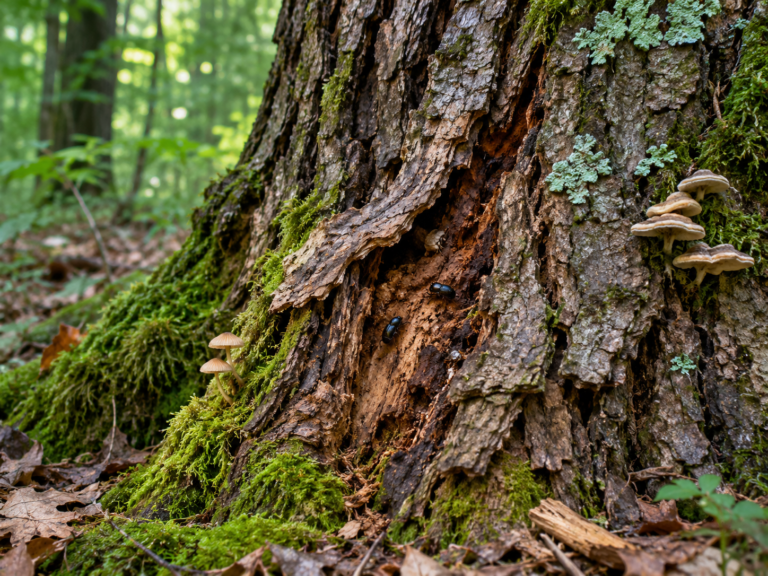
Tree bark is usually described as a protective layer, but it also creates habitat. Its ridges, cracks, loose sections, moisture pockets, and decaying tissues provide places where insects, fungi, lichens, microbes, and other organisms can feed, shelter, reproduce, or escape harsh weather. As a tree ages and eventually dies, these bark habitats continue changing rather than disappearing.
The ecological importance of wood-associated organisms is substantial. U.S. Forest Service researchers estimate that about one-third of all forest insect species worldwide depend directly or indirectly on dying or dead wood. These saproxylic insects include wood feeders, fungus feeders, predators, and organisms that consume decomposing material, making bark and deadwood important components of forest biodiversity.
Bark Structure Creates Small but Important Habitats
Bark differs greatly among tree species. Some trees develop deep furrows and thick ridges, while others retain relatively thin or smooth bark. Cracks, loose pieces, wounds, and spaces between bark and wood create protected microhabitats where insects can hide from predators and weather, overwinter, lay eggs, or search for food.
Bark beetles are one example of organisms closely associated with this environment. U.S. Forest Service guidance notes that more than 6,300 bark beetle species have been described worldwide, with most living in dead or dying plant material rather than attacking healthy trees. Depending on the species, bark beetles may feed in phloem, wood, fungi, seeds, or other plant tissues.
Other insects use bark without harming the tree at all. University of Minnesota Extension explains that barklice are commonly found on tree bark and feed on fungi, lichens, pollen, and decaying plant material. Their presence illustrates how bark supports organisms that are part of normal forest food webs rather than simply hosting pests.
The microclimate matters too. The shaded side of a trunk may remain cooler and moister than a surface exposed to direct sun. Deep bark fissures can also buffer small organisms from wind, temperature extremes, and drying conditions, so even different parts of the same tree may provide different habitats.
Fungi and Insects Work Together in Wood Decomposition
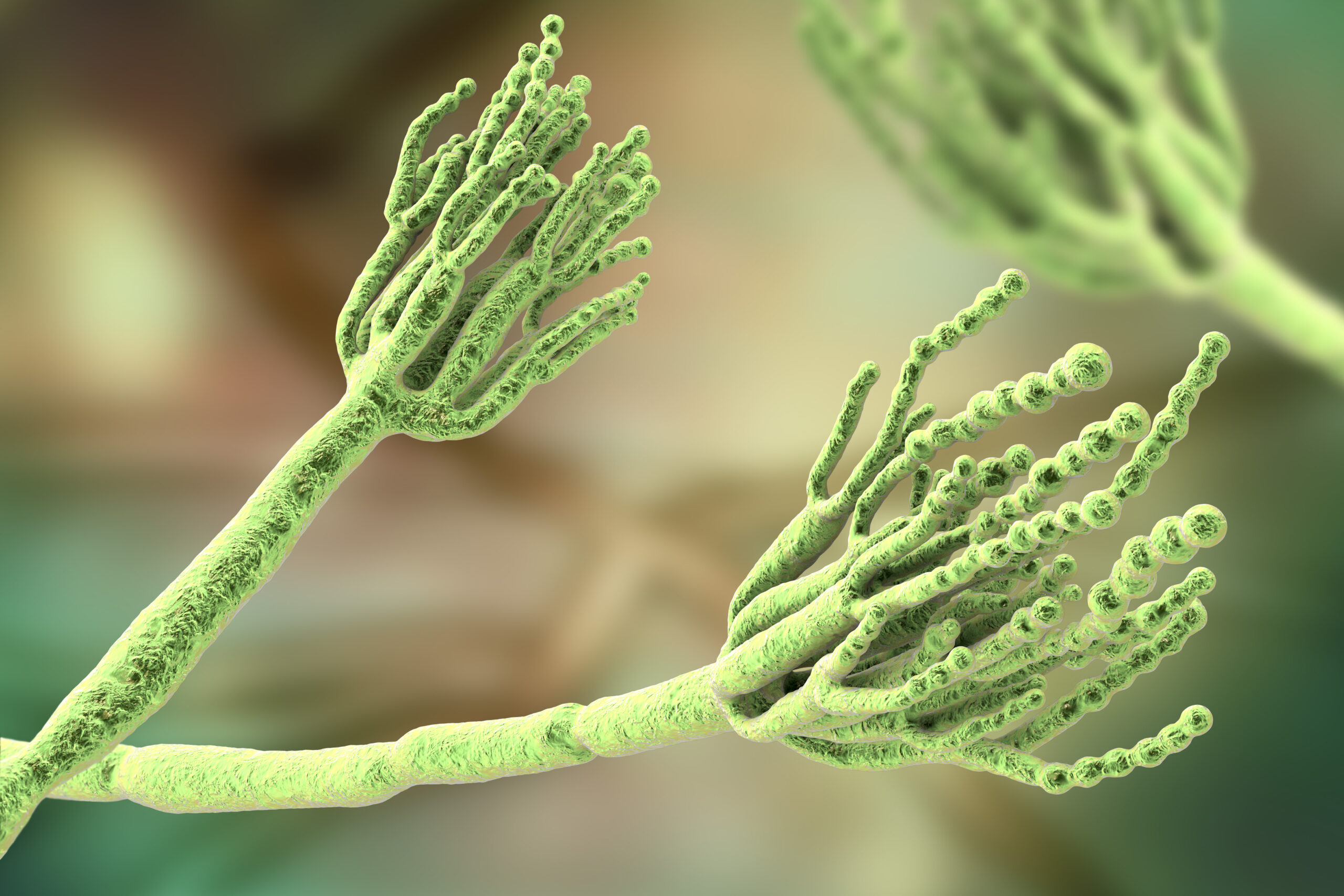
Fungi are major decomposers of wood and bark. They release enzymes that break down complex compounds in dead plant tissue, allowing nutrients and carbon to move through the forest ecosystem. The U.S. Forest Service explains that wood-decaying fungi require organic material, suitable moisture, moderate temperatures, and oxygen, which is why damp bark and decaying wood often support visible fungal growth.
Insects can influence that decomposition directly and indirectly. Some chew galleries into bark and wood, increasing the amount of exposed surface and creating pathways used by fungi and other microorganisms. Others consume fungi directly or carry fungal spores from one tree or piece of wood to another.
A Forest Service-supported study found that bark and insects both affected wood decomposition. Logs with visible long-horned beetle activity had lower lignin content than bark-covered logs without that beetle activity, suggesting that the insects may have promoted decomposition through their interactions with fungi or other lignin-degrading organisms.
Some insect–fungus relationships are even more specialized. Certain ambrosia beetles cultivate fungi inside galleries as a food source, while other bark-associated insects transport fungal spores unintentionally. These relationships can assist decomposition, although some combinations of insects and fungi can also contribute to tree disease.
Dead Bark and Deadwood Support Forest Biodiversity
When a branch falls or a tree dies, its ecological usefulness does not end. Bark begins loosening, fungi colonize the wood, insects enter beneath the bark, and decomposition gradually changes the physical structure. The resulting cracks, tunnels, cavities, and soft wood provide habitat for progressively different communities of organisms.
A classic U.S. Forest Service review describes fallen trees as providing external and internal habitats that can persist and change for decades. Early decay stages are colonized by bark- and wood-boring insects, fungi, and bacteria. As decomposition advances, the wood becomes softer and more structurally complex, creating habitat for mites, centipedes, millipedes, slugs, snails, and other invertebrates.
More recent Forest Service research confirms that this deadwood influences entire forest-floor communities. A 2025 study found that areas containing deadwood developed distinct leaf-litter communities and greater detritivore and predator richness compared with areas without deadwood, particularly after seven years.
These relationships are one reason removing every dead limb, log, and standing dead tree from a forest can reduce habitat. Where safety and management goals allow, retaining some deadwood maintains food, shelter, fungal substrates, and decomposition pathways that living trees alone cannot provide.
Moisture and Climate Shape Bark Communities
Bark habitat changes as temperature and moisture change. Fungi generally need sufficient moisture for active growth, while many insects depend on the protected humidity found under loose bark or within decaying wood. Prolonged dry conditions can make some of those habitats less suitable, while prolonged wetness can favor certain fungi and decomposition processes.
Microclimate can be important even at very small scales. Forest Service research on insect seasonality notes that the two sides of the same tree can experience dramatically different temperature and humidity. These small differences influence where insects shelter, when they become active, and how successfully they survive seasonal extremes.
Climate also influences decomposition at broader scales. A 2025 global review of wood decomposition examined how invertebrate effects vary with climate, bark, and other environmental conditions, emphasizing that invertebrate contributions to deadwood decomposition differ across regions. Shifts in temperature and rainfall may therefore change which insects and fungi dominate bark habitats and how rapidly deadwood breaks down.
Forest management cannot control every insect, fungus, or microclimate, nor should it attempt to. Maintaining mature trees, a diversity of tree species, naturally occurring deadwood, and varied forest structure provides a wider range of bark conditions for different organisms. These small habitats support decomposition, nutrient cycling, food webs, and the larger biodiversity of the forest.
Tree bark is therefore much more than the outer covering of a tree. From tiny crevices on living trunks to loose bark on decaying logs, it creates habitat for insects, fungi, lichens, microbes, and other organisms that help keep forest ecosystems functioning. Protecting structural diversity in both living and dead trees helps preserve these often-overlooked communities and the ecological processes they support.
Join the EAT Community at https://www.eatcommunity.com/ to learn from environmental professionals and explore practical strategies for forest ecology, conservation, and sustainable land management.

The post How Tree Bark Creates Habitat for Insects and Fungi first appeared on WorldWide Aquaculture.
Apa Reaksi Anda?
 Suka
0
 Kurang Suka
0
 Setuju
0
 Tidak Setuju
0
 Bagus
0
 Berguna
0
 Hebat
0