


























How disease is rewriting oyster breeding goals

From MSX in Atlantic Canada to POMS in Australia, rising mortality is changing what the industry needs from its oysters
When disease outbreaks hit oyster-growing regions, the impact can be devastating. In Atlantic Canada, the emergence of MSX (Multinucleate Sphere X), caused by the parasite Haplosporidium nelsoni, led to severe mortality in affected areas in 2024. Australia has faced a similar challenge with POMS (Pacific Oyster Mortality Syndrome), which has also caused significant losses. In regions affected by these diseases, breeding priorities have had to evolve. Programs that once focused primarily on growth and other production traits increasingly need to consider disease survival and resilience alongside performance.
The outbreak shows how quickly a disease threat can reshape breeding priorities — and create the need for new breeding programs. For established breeding programs, priorities that had previously included commercially important traits such as faster growth, shell quality and condition can change rapidly when survival becomes the immediate concern.
That shift is particularly clear in Atlantic Canada. MSX was first detected in Nova Scotia’s Bras d’Or Lakes more than two decades ago, where it devastated the local oyster industry, but the disease remained largely contained there until it was detected in Prince Edward Island in 2024, followed by New Brunswick. Its spread into these major oyster-producing areas changed the stakes and pushed disease resistance to the forefront of breeding efforts.
Elsewhere, breeding programs are trying to get ahead of disease threats before they become a crisis. On the US West Coast, resistance to OSHV-1 (Ostreid herpesvirus 1) remains part of breeding goals even where the virus is not currently causing outbreaks. For some companies, that has meant sending oyster families abroad for controlled exposure to the virus and basing selection on survival data, even though the exposed oysters cannot be brought back into their own waters. The aim is to make breeding decisions now that could leave oyster populations better equipped to cope with future disease threats.

“Selection delivers today’s improvements; diversity is what makes tomorrow’s possible.”
— Carlos Pulgarin, Genetic Services Lead for Latin America
In Australia, the arrival of Pacific Oyster Mortality Syndrome, or POMS in 2010, shows what can happen when a disease threat becomes reality. Survival became the overriding breeding objective, and selection among oyster families has since produced significant gains over successive generations. Other commercial traits still matter, but only in oysters that survive.
Together, these experiences raise a basic question for oyster breeding: what does the industry most need the oyster to do?
The answer can change – sometimes very quickly.
That makes adaptability itself an important characteristic of a breeding program. It’s not just about improving the traits that matter right now, but about keeping enough genetic diversity, data and flexibility so the program can pivot when a new trait suddenly becomes commercially important.
Finding the survivors
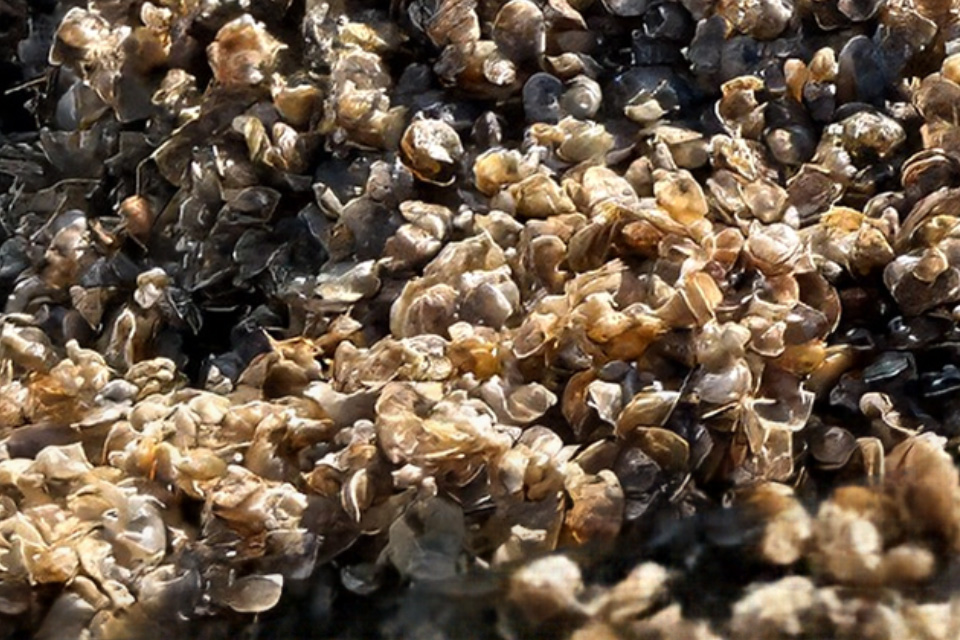
When MSX devastated oysters in Bedeque Bay, Prince Edward Island (PEI), one of the first responses came from the Bideford Shellfish Hatchery: start with the oysters that survived. Broodstock collected from heavily infected areas were used to produce a new generation of seed, following an approach used decades earlier in MSX-affected areas of the US East Coast. The first generation was offered to PEI growers in spring 2025, although it was not expected to be fully resistant and researchers cautioned that it was still too early to know how much MSX resistance the oysters would ultimately show.
The Bideford program has since moved further, using genomic information from oysters that survived and those that died to inform selection for MSX resistance.
For growers facing the disease, breeding for resistance is not simply a research exercise. It is becoming an important part of the industry’s longer-term response to a very immediate problem. Atlantic Aqua Farms, based in PEI, began its breeding program in 2025, producing its first generation of seed for its own farming operations in 2026.
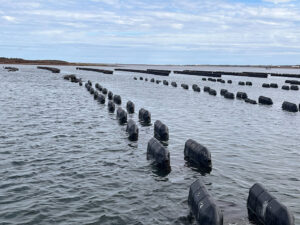
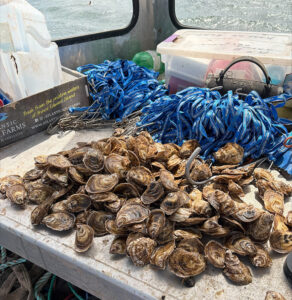
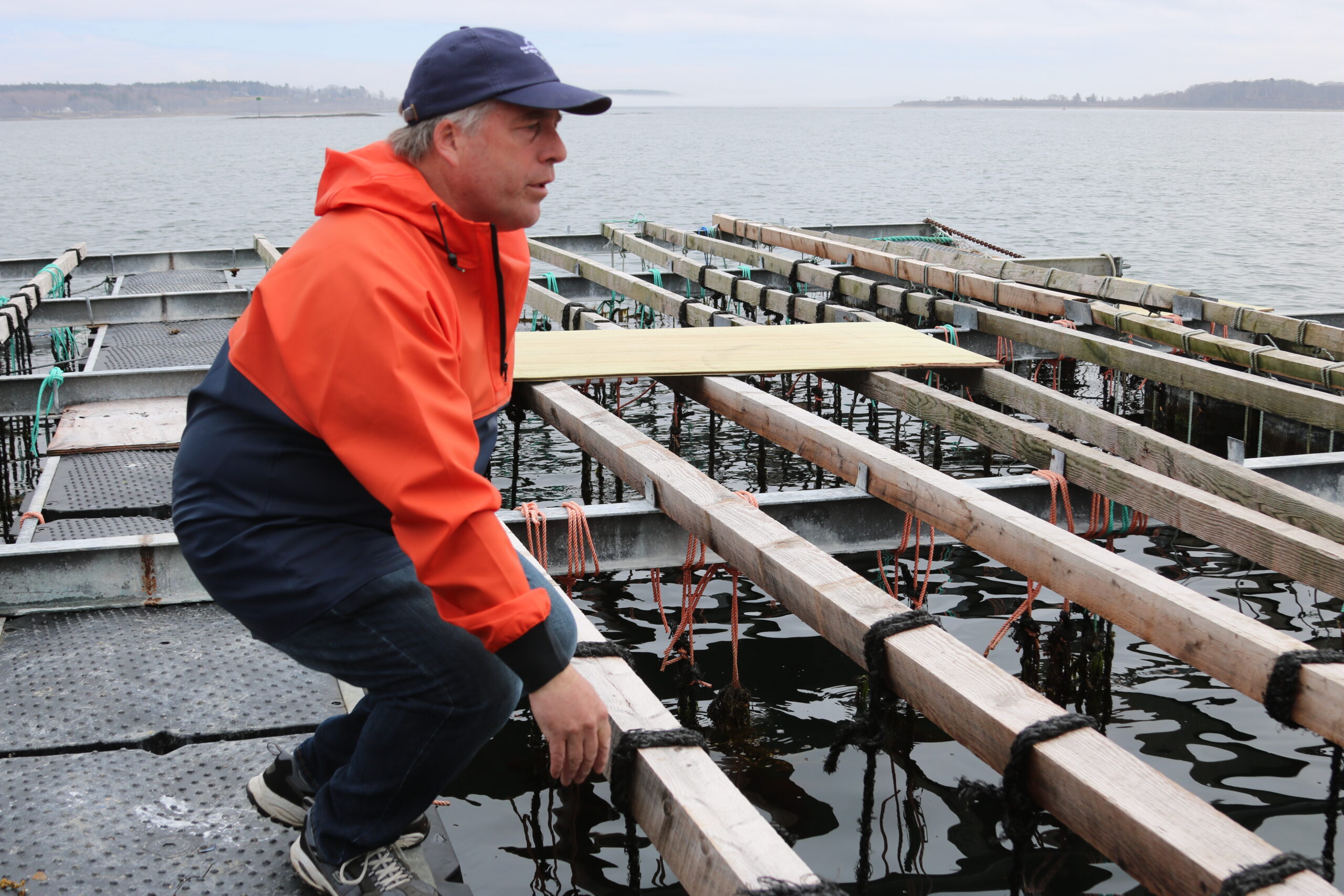
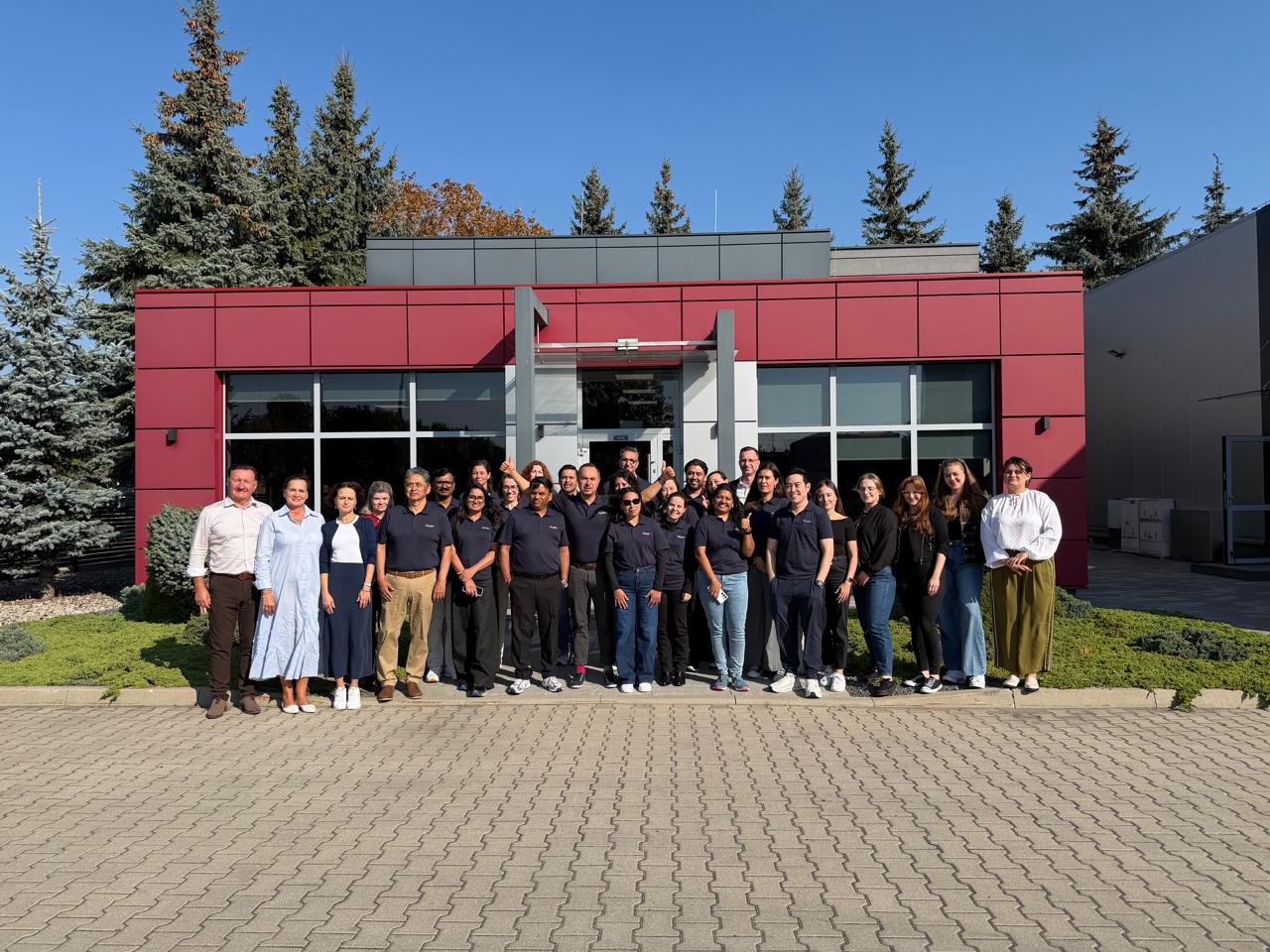
PEI Farming Operations
Photo credits: Atlantic Aqua Farms, Ltd.
“MSX is having a significant impact on oyster farming in PEI, with mortality exceeding 95% on some farms. Developing oysters with greater resistance is an important part of the solution, but it is a long-term process. The recent support from Canada’s Ocean Supercluster has enabled us to establish a PEI-based breeding program using genomic selection, giving us the tools to start building resilience for the future while we continue to address the immediate challenges facing growers,” said Meredith White, director of hatchery operations at Atlantic Aqua Farms.
But surviving an outbreak does not necessarily mean an oyster carries resistance it can pass to the next generation. Some may simply have escaped heavy exposure or benefited from other environmental factors. The real breeding question is whether differences in survival are heritable, meaning they can be strengthened over successive generations.
That is where today’s breeding programs have more information to work with. Traditional family-based trials can show which oyster families consistently perform better under disease pressure. Genomic information can accelerate outcomes, helping breeders identify which individual animals within families are more likely to pass that performance to the next generation.
Recent field trials in Atlantic Canada have already found substantial differences in survival among oysters exposed to MSX. Some individuals have survived nearly two seasons in severely affected areas, while work combining family-based testing and genomic information indicates that MSX resistance is heritable. That genetic variation gives breeders something to select from as survival becomes a new priority. Without enough variation in the breeding population, there is less scope to respond when breeding goals change.
But genomics is not a prerequisite for genetic improvement. Oyster breeding programs have made gains for generations through family-based selection, and adding genotyping brings additional cost. Whether that investment makes sense depends on the trait, the breeding population and the problem being addressed. Genomic information can improve the accuracy of selection across a range of traits, including growth, survival and disease resistance, but the size of that benefit varies among breeding programs. Traits associated with severe disease outbreaks often provide some of the clearest opportunities for return on investment because improvements in resistance can translate directly into improved survival and more oysters reaching harvest.
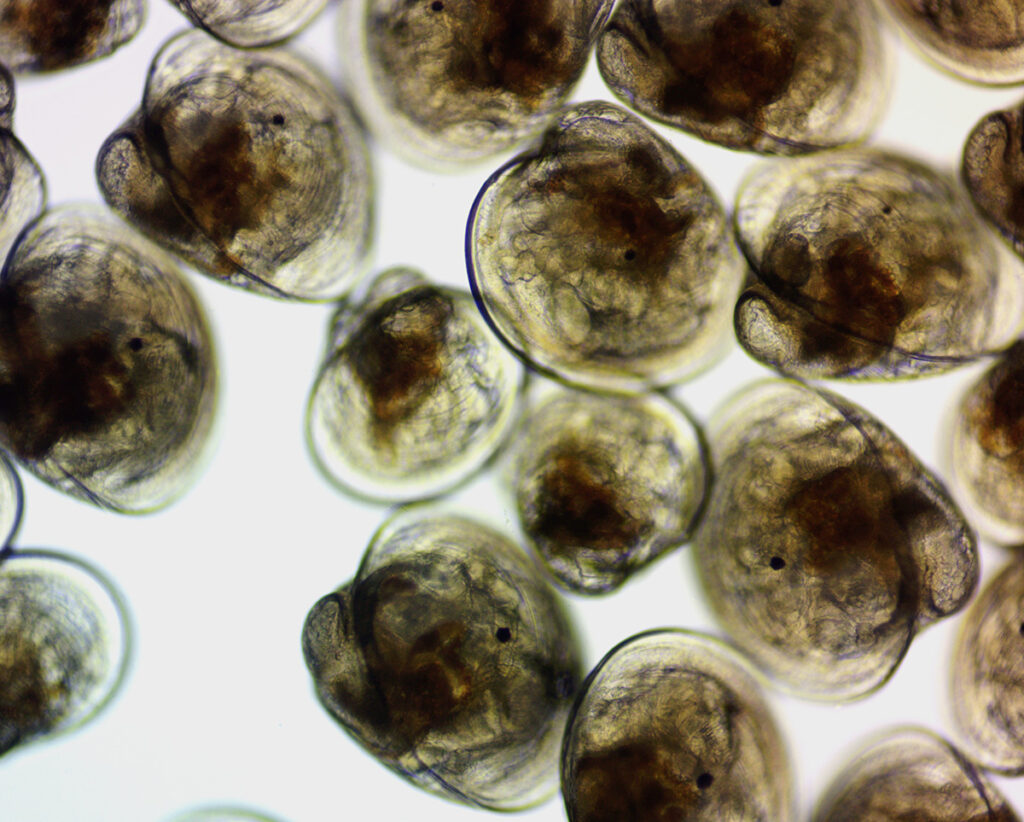
Larvae Photo credit: Mook Sea Farm
In one breeding program in New Brunswick, four generations of selection for growth had already taken place when MSX resistance became a new priority. Early results from the program suggest there is no genetic correlation between growth and resistance, meaning that improving one trait will not change the other. That creates an opportunity to add resistance to the breeding goal without giving up the progress already made on growth. Both ultimately matter to the producer: oysters need to survive, but they also need to reach market size efficiently. The challenge is to identify animals that perform well for both traits and design the breeding program to select them.
Similar approaches have already delivered substantial gains against POMS in Australia, where breeding programs had begun selecting for disease resistance before major outbreaks intensified the need for it. By selecting oysters from families with superior survival, breeders have achieved substantial gains in resistance over successive generations. For the Australian oyster industry, those gains have helped reduce mortality losses and maintain production in affected regions.
Preparing for what comes next
A breeding program’s ability to respond to new challenges also depends on maintaining genetic diversity. Breeding programs need sufficiently large effective population size to manage inbreeding and preserve the variation that may become valuable as production conditions and breeding goals change. A trait that carries relatively little weight today could become critical when a new disease or environmental challenge emerges.
Oyster breeding requires a long-term outlook, while the challenges facing growers can evolve much more quickly. Established programs can draw on years of breeding investment when a new priority emerges, selecting for traits such as MSX resistance while retaining gains already made in traits such as growth.
Climate change adds another layer to that challenge. Warmer waters, marine heatwaves and shifting salinity can place oysters under greater physiological stress and alter disease risks. Breeding goals may therefore need to respond not only to known diseases, but also to changing production environments.
The larger lesson from MSX is that breeding programs cannot wait until a new production constraint emerges to build the capacity to respond to it. Developing resistance takes time and repeated selection across generations, while the genetic diversity, pedigree and genomic data and breeding infrastructure needed to change direction are built over years.
In the long run, a breeding program’s value rests not only on the gains it delivers today but on whether it has the genetic diversity, information and flexibility to adapt as industry priorities change.
“No breeding program can predict which disease or environmental shift will come next, but it can be ready to respond,” said Carlos Pulgarin, genetic services lead for Latin America at the Center for Aquaculture Technologies. “Selection delivers today’s improvements; diversity is what makes tomorrow’s possible.”
The post How disease is rewriting oyster breeding goals appeared first on CAT-Center for Aquaculture Technologies.
Apa Reaksi Anda?
 Suka
0
 Kurang Suka
0
 Setuju
0
 Tidak Setuju
0
 Bagus
0
 Berguna
0
 Hebat
0