
























The water factor: why flow and pressure matter in broiler production
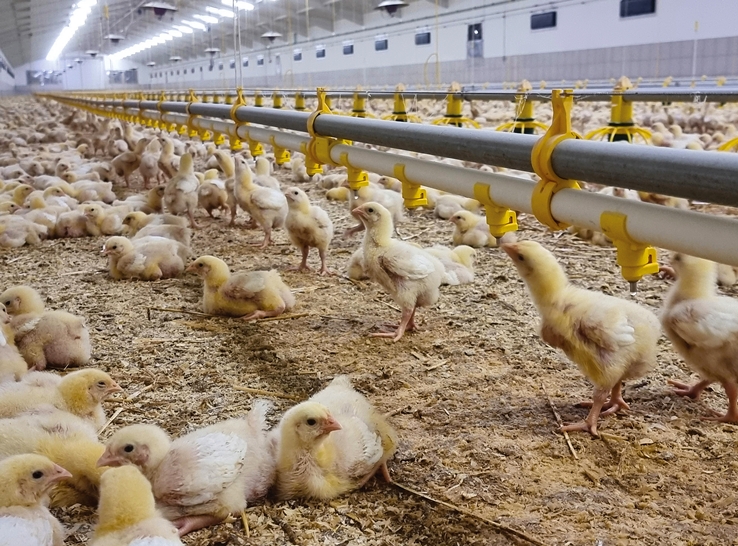
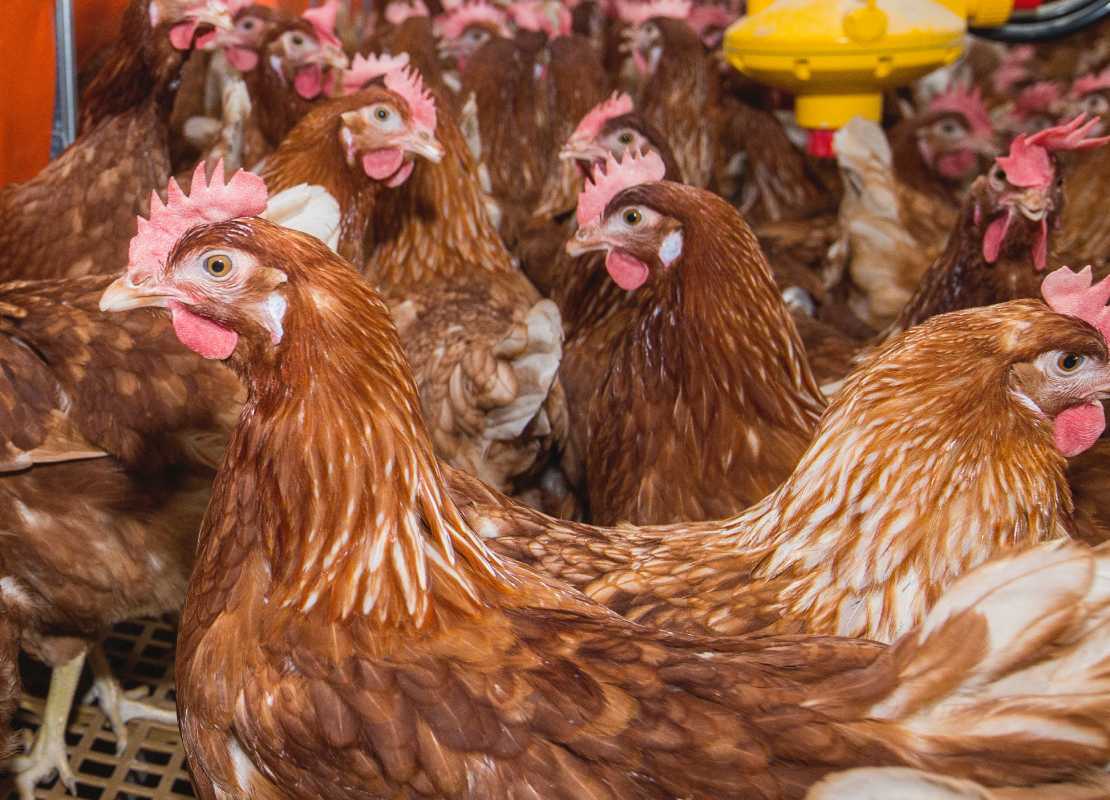
Main photo courtesy of Valco Industries
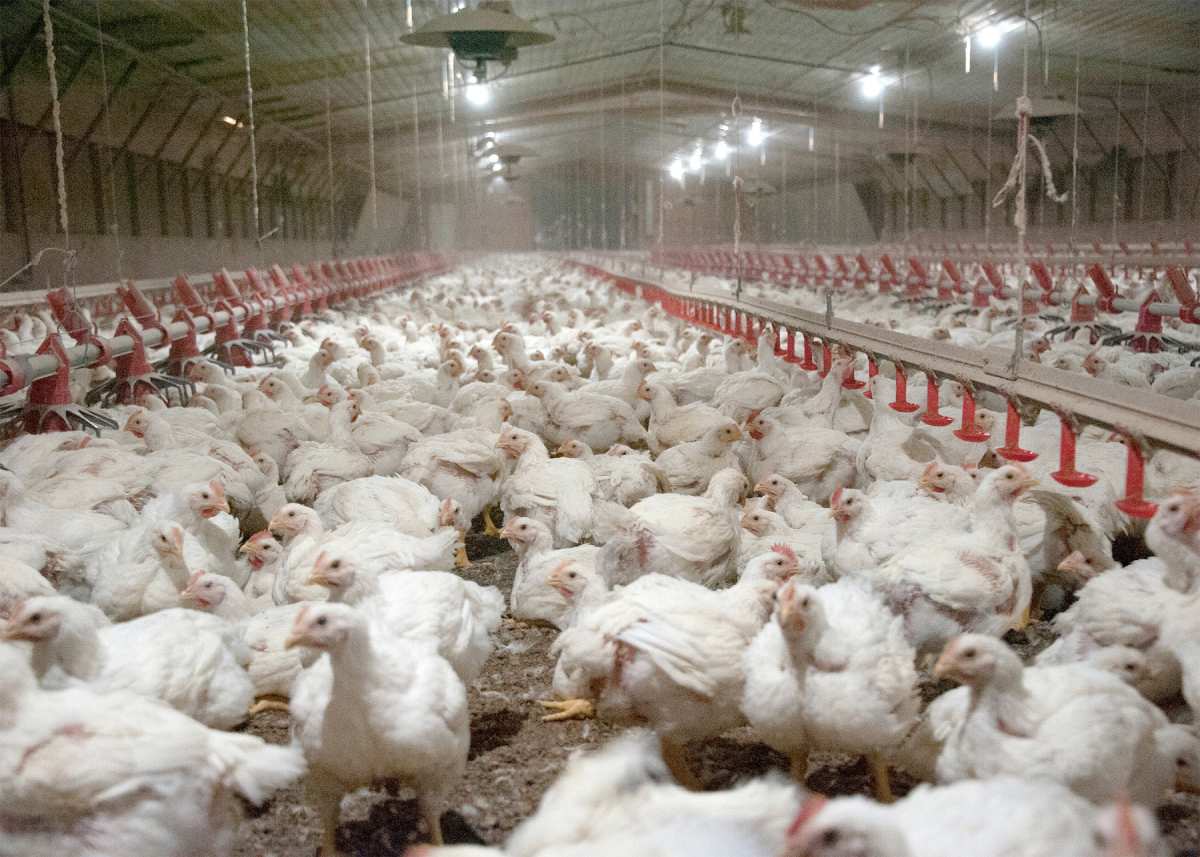
Water is one of the most important resources in broiler production, yet it can be easy to overlook until a problem arises. Birds depend on consistent access to clean, fresh water throughout the flock cycle, and the watering system must deliver the right amount at the right pressure and height.
“Broilers consume approximately 1.75 pounds (0.80 kg) of water for every pound (0.45 kg) of feed,” according to research published in Poultry Science.1 As birds grow, both feed and water consumption increase, making proper watering critical to maintaining performance, litter quality and flock uniformity.
Flow rates match bird demand
Drinker flow rate should correspond to the bird’s ability to consume water. As a general target, the maximum consumption rate of a 9-pound (4.08 kg) bird is approximately 85 ml per minute. A commonly used guideline for determining flow rate is:
(Bird age in weeks × 7) + 20 = flow rate (ml/minute)2
The goal is to match water delivery to the bird’s drinking capacity. Too much water can increase spillage, creating wet litter, higher ammonia levels, footpad problems and breast blisters. Too little water can reduce feed consumption and contribute to dusty conditions and respiratory concerns.
“The flow rate needs to change as the bird grows, which is why monitoring the system throughout the flock cycle is so important,” says Doug Bertke, VAL-CO product engineer.
Pressure matters
Water pressure directly influences drinker flow. Excessive pressure can waste water and cause nipples to leak, while insufficient pressure can restrict consumption and negatively affect bird performance.
“Water pressure is one of the most important variables in a watering system. Too much pressure can create waste and leakage, while too little pressure can restrict water intake. The system needs to maintain consistent pressure as bird demand increases,” says Brian Phillips, director of poultry sales at Farm Systems.
As a general guideline, 15 to 40 psi should be supplied to a standard regulator. High-pressure regulators can help manage systems where incoming pressure is above 40 psi or fluctuates more than 20 psi.
For day-old chicks, approximately 1 to 2 inches of visible standpipe pressure is recommended. Pressure should then be increased gradually as birds grow, while monitoring bird performance and litter conditions.
Getting the line height right
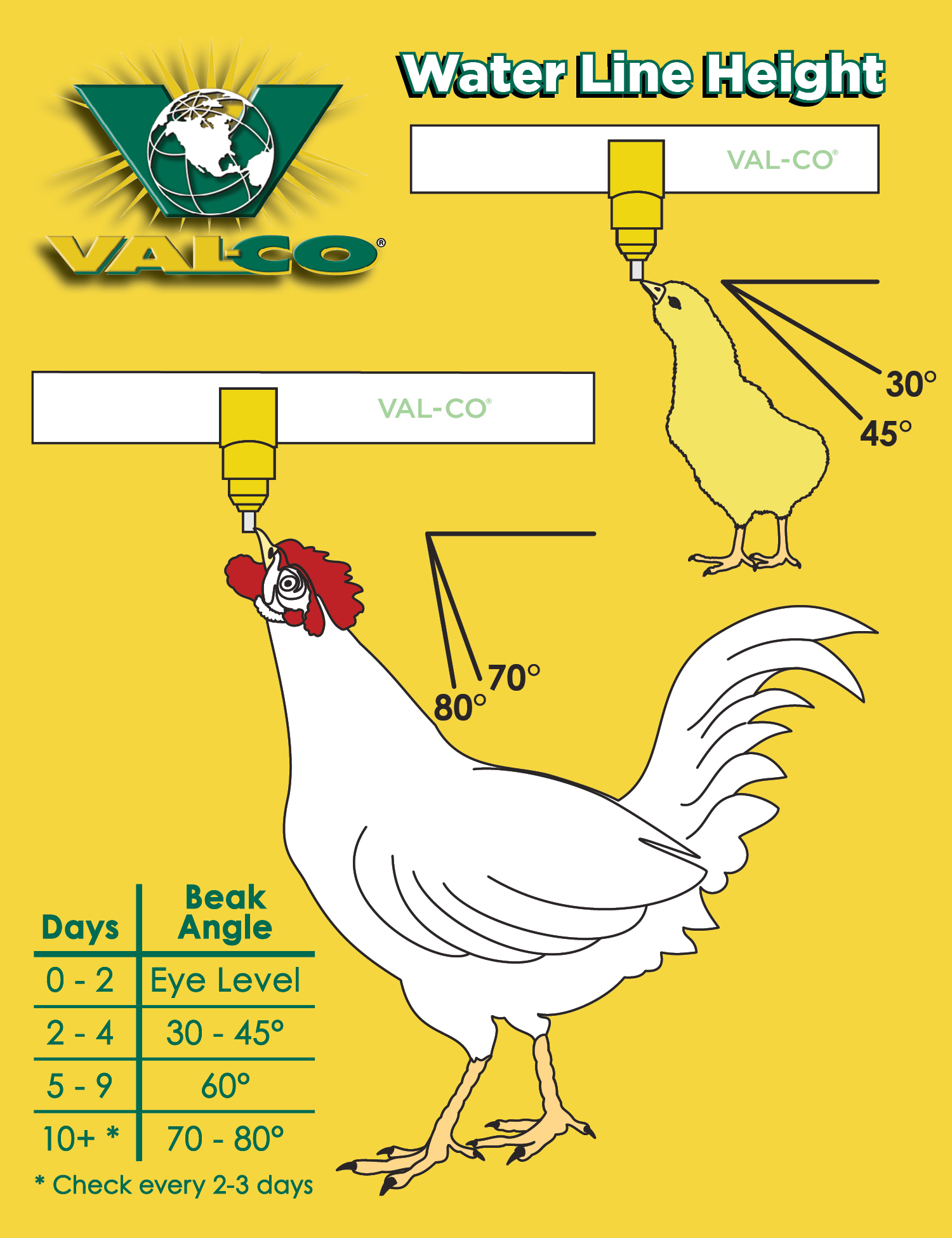
Proper drinker-line height helps birds access water efficiently while reducing waste. When the line is too low, water can spill into the litter. When it is too high, birds may struggle to activate the nipple properly and consume enough water.
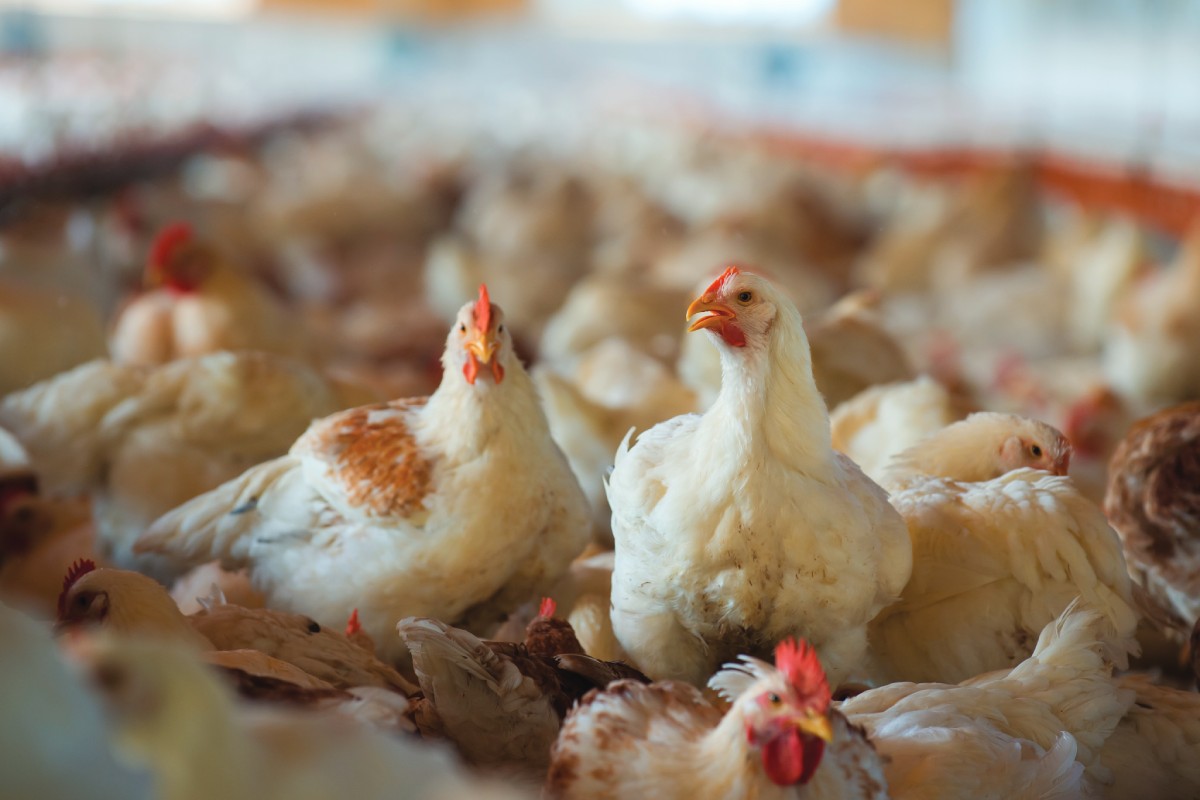
The birds themselves provide a useful indicator. Birds sitting to drink generally indicate a line that is too low, while birds stretching their necks, standing on their toes or hopping to reach the drinker indicate it may be too high.
“The birds will tell you if the drinker line is at the right height. Watching how they approach and activate the nipple is one of the simplest ways to identify whether adjustments are needed,” Bertke says.
Click to enlarge
Keep water clean, cool
Even a properly adjusted watering system cannot perform effectively if the water itself is warm or contaminated. Water temperature becomes particularly important during periods of heat stress. Mature birds prefer water around 50° F (10° C), while consumption can decline when temperatures rise above approximately 78° F (26° C), according to research by the Department of Animal and Food Sciences at the University of Kentucky.3
“Water quality is just as important as water delivery. Producers can have the pressure and line height set correctly, but if the water is warm or the lines are not maintained, consumption can still suffer,” Bertke says.
Regularly flushing water lines also helps keep water fresh and cool while removing buildup that can affect water quality and drinker performance.
Precision engineering at VAL-CO
VAL-CO manufactures precision drinker nipples, including the Roaster, Quencher and Precision Feather Action (PFA), using proprietary materials engineered for poultry applications. The PFA nipple is particularly well suited for new houses — featuring stainless steel — and is a precisely machined design built for durability and consistent performance.
“Our in-house machine shop gives us greater control over the precision and materials used in our drinker nipples. We can develop proprietary materials to tight tolerances, helping ensure consistent and durable performance,” Bertke says.
For producers, reliable water delivery starts with quality equipment. Combined with proper flow, pressure, line height and maintenance, precision-engineered watering systems can help reduce waste and support flock performance.
Discover VAL-CO’s complete line of poultry watering solutions and learn how precision engineering can help improve water management, reduce waste and support flock performance. Visit VAL-CO.com or call 800-998-2526.
References
1. Pesti GM, Amato SV, Minear LR. Water consumption of broiler chickens under commercial conditions. Poult Sci. 1985;64(5):803-808.
2. Lott BD, Dozier WA, Simmons JD, Rouch WB. Water flow rates in commercial broiler houses. Poult Sci. 2003;82(1):102(S56).
3. University of Kentucky, Department of Animal & Food Sciences. “Chapter 12 – Water Temperature.” Chapter 12 – Water Temperature | Animal & Food Sciences
Editor’s note: Content on Modern Poultry’s Industry Insights pages is provided and/or commissioned by our sponsors, who assume full responsibility for its accuracy and compliance.
The post The water factor: why flow and pressure matter in broiler production appeared first on Modern Poultry.
Apa Reaksi Anda?
 Suka
0
Suka
0
 Kurang Suka
0
Kurang Suka
0
 Setuju
0
Setuju
0
 Tidak Setuju
0
Tidak Setuju
0
 Bagus
0
Bagus
0
 Berguna
0
Berguna
0
 Hebat
0
Hebat
0