






















New EU emission rules to cover almost twice as many poultry farms
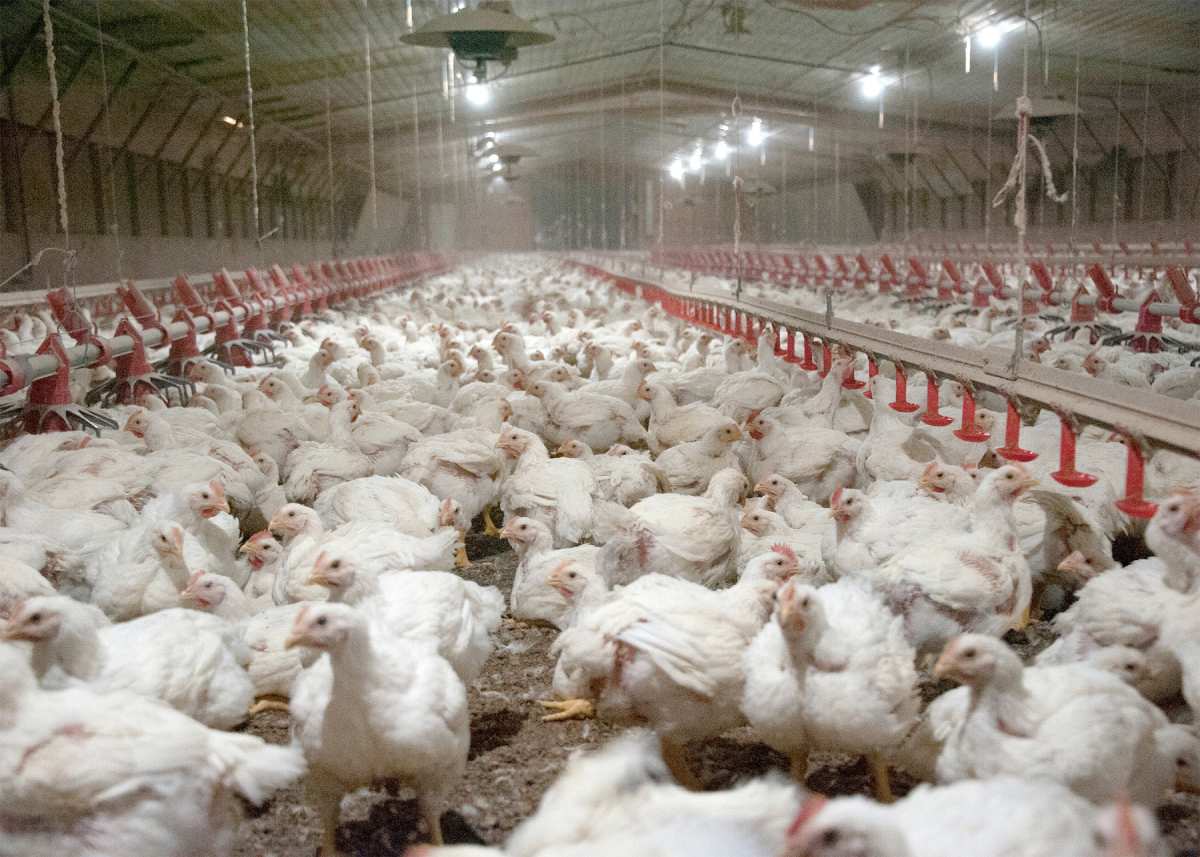
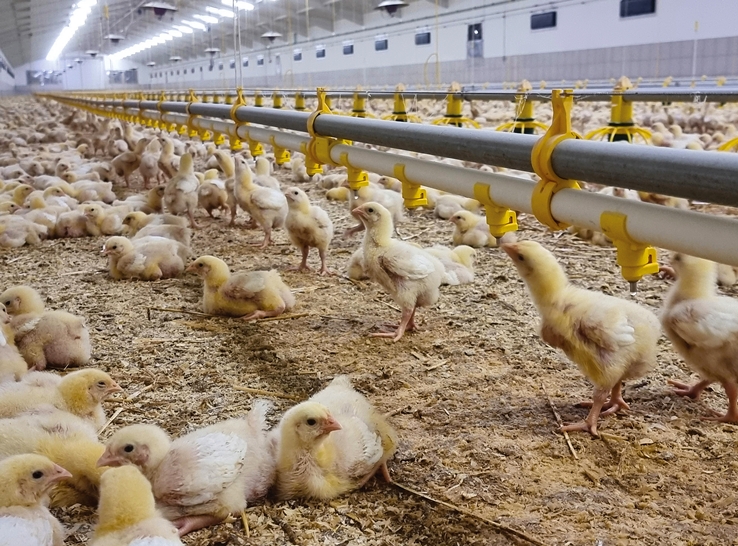
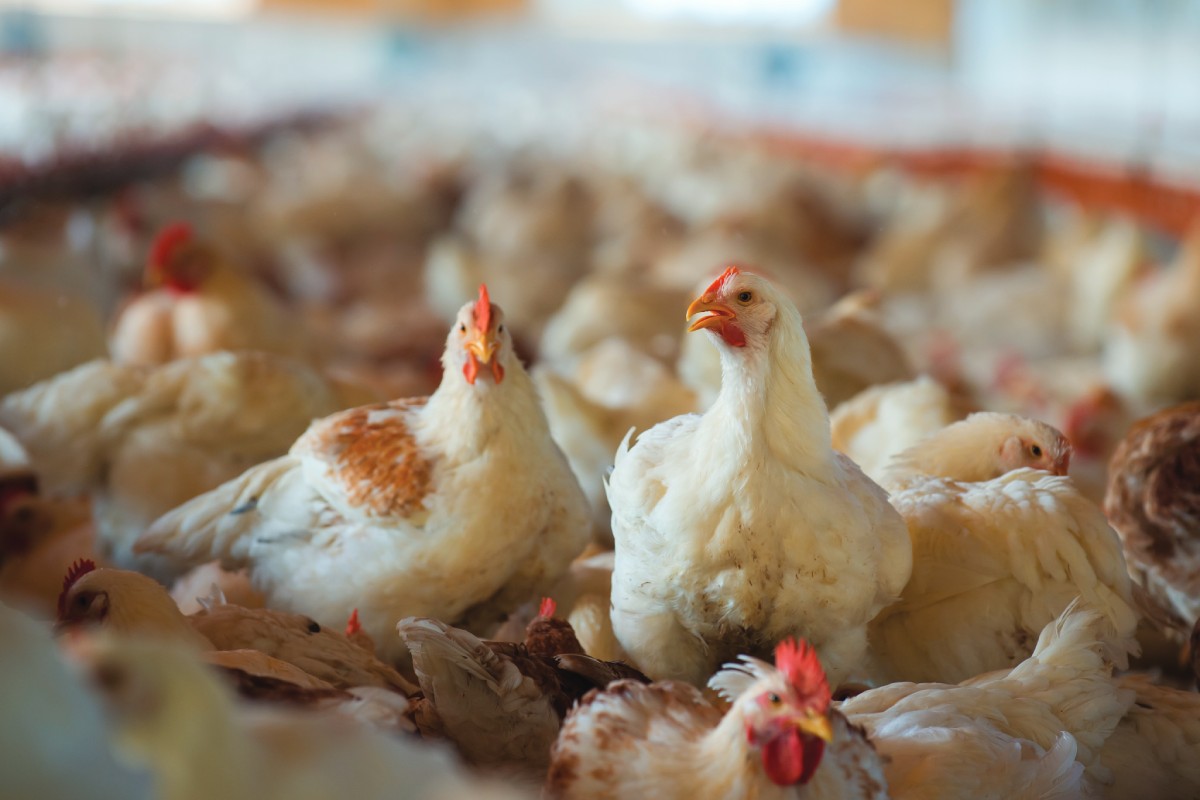
On 8 October 2026 the European Commission adopted the operating rules that set maximum values for ammonia emissions and for nitrogen and phosphorus excretion on large poultry and pig farms. They will apply between 2030 and 2032, depending on farm size. According to Commission estimates, the number of poultry farms within the scope of the revised Industrial Emissions Directive rises from 11,004 under the original Directive to 21,270. For laying hens, the new threshold corresponds to about 21,400 places, compared with 40,000 under the previous rules.
Commission Implementing Decision C(2026) 6899 lays down the uniform conditions for operating rules (UCOL) provided for by the revised Industrial and Livestock Rearing Emissions Directive (IED 2.0). Alongside the maximum values, it sets requirements for feeding, housing, manure management and monitoring. Member States had given the text their political backing in July.
Which poultry farms are covered?
Scope is defined in livestock units (LSU), which convert different animal categories into comparable units. Under Annex Ia to Directive 2010/75/EU, as amended by Directive (EU) 2024/1785, the threshold is 300 LSU for installations rearing only laying hens and 280 LSU for those rearing other poultry categories. The 280 LSU threshold also applies to farms keeping laying hens together with other poultry; in that case, laying hens are counted with a weighting factor of 0.93.
With the conversion factors set in the Directive, 280 LSU corresponds to 40,000 broiler places, about 9,330 turkey places or 28,000 duck places, while 300 LSU corresponds to about 21,400 laying-hen places. Under the previous Directive, the threshold was 40,000 places for all poultry. The change leaves broilers broadly where they were, but brings smaller laying-hen, turkey and duck farms into scope.
The Directive also covers pig-only installations of 350 LSU or more and mixed pig and poultry installations of 380 LSU or more, with exclusions for organic and certain extensive pig farms.
Article 70b allows competent authorities to treat nearby installations as a single unit when they have the same operator or are run by operators with an economic or legal relationship. The provision is intended to prevent installations from being split to stay below the thresholds.
Farms below the thresholds are outside this framework but remain subject to other EU and national rules, such as those implementing the Nitrates Directive.
Application deadlines: 2030, 2031 and 2032
Article 4 of the Implementing Decision introduces the requirements in three stages:
For installations of 600 LSU or more, they apply no later than 8 October 2030.
For installations of at least 400 LSU but below 600 LSU, the deadline is 8 October 2031.
All other installations within the Directive’s scope must comply no later than 8 October 2032.
These are latest dates (“not later than”), so Member States are free to apply the requirements sooner. Until then, the requirements already in force continue to apply.
Maximum values for nutrient excretion and ammonia
The Decision sets maximum values for nitrogen and phosphorus excretion for laying hens, broilers, ducks and turkeys, with the aim of improving nutrient utilisation, and maximum values for ammonia emissions from poultry housing. For ammonia, the values depend on the housing system and on whether the plant is new or existing.
All values are expressed per animal place per year: they refer to the capacity of the house, not to each bird reared in successive cycles.
Maximum values per animal place per year (UCOL Annex, Tables 2.1–2.3)
| Poultry category | Nitrogen excreted (kg N) | Phosphorus excreted (kg P₂O₅) | Ammonia from housing, new plants (kg NH₃) | Ammonia from housing, existing plants (kg NH₃) |
| Laying hens, cage systems | 0.80 | 0.40 | 0.04 | 0.08 |
| Laying hens, non-cage systems | 0.80 | 0.40 | 0.10 | 0.13 ¹ |
| Broilers | 0.55 | 0.20 | 0.05 | 0.07 |
| Ducks | 0.80 | 0.30 | 0.17 | 0.17 |
| Male turkeys | 2.00 | 1.00 | 0.55 | 0.55 ² |
| Mixed male and female turkeys | 1.70 | 0.80 | 0.44 ³ | 0.44 ³ |
| Female turkeys | 1.20 | 0.50 | 0.35 | 0.35 |
The maximum values do not apply to organic production.
¹ Up to 0.25 kg for existing plants with deep litter and a manure pit, where infrequent manure removal is combined with a measure that achieves a high dry matter content of the manure.
² Up to 0.61 kg for existing plants where only nutritional management techniques can be used.
³ May be higher, taking account of the proportion of males and females and their respective fattening periods.
A plant counts as new if its construction is authorised or registered after the application deadline that applies to the farm (Article 3(5) of Directive (EU) 2024/1785), or if it is completely replaced on its existing foundations after that date. All other plants are classed as existing.
Organic poultry production is exempt from the maximum values but, unlike organic pig farming, it is not excluded from the Directive’s scope. Organic poultry farms above the thresholds therefore remain subject to the other operating requirements.
Monitoring requirements
Nitrogen and phosphorus excretion must be assessed once a year for each animal category (UC 14), through a mass balance based on feed intake, dietary crude protein and phosphorus content, and animal performance.
Ammonia emissions must be monitored at least for each animal house, once a year (UC 15), using either a mass balance or emission factors. Neither method requires direct measurement.
Where feed intake, diet composition, performance and manure management are shown to be stable, monitoring can be less frequent, with a new assessment whenever significant changes occur.
Techniques and flexibility
The Decision does not prescribe specific technologies. For feeding, the techniques listed include phase feeding, reduced crude protein diets balanced for digestible amino acids, authorised additives such as phytase, and highly digestible inorganic phosphates.
For housing, the annex lists techniques by species and, for many of them, the minimum ammonia reduction expected against a reference system. For broilers on deep litter, forced drying of the litter with heated indoor air is listed with a reduction of at least 55%, or at least 25% when the indoor air is not heated. For laying hens in cages, the techniques are based on manure belts with frequent removal and air drying; for aviaries, they include drying the litter on the manure belts. Air cleaning systems and gas-permeable membranes are listed for all poultry species.
Other techniques may be used if Member States validate their environmental performance using scientifically established methods. Member States may also replace the absolute ammonia values with minimum reductions relative to a reference system, and may apply the maximum values across all houses on a farm, provided there is no net increase in emissions from housing. The same farm-level approach is allowed for nitrogen and phosphorus across poultry categories.
Livestock installations can be registered rather than permitted, where Member States opt for this simplified procedure.
What producers should check
The first step is to calculate installed capacity in LSU, including neighbouring installations under the same or related operators. Two further points are relevant when planning investments. Houses authorised or registered before the farm’s application deadline will be assessed against the values for existing plants, while those authorised later must meet the stricter values for new plants. And the Commission expects most of the required reductions to come from feeding measures: according to its staff working document, between 10% and 25% of newly covered farms may also need to act on housing.
Sources
European Commission, Directorate-General for Environment, 8 October 2026. New EU emissions framework for poultry and pig rearing.
European Commission, 8 October 2026. Implementing Decision C(2026) 6899.
European Commission, 8 October 2026. Annex to Implementing Decision C(2026) 6899 and Staff Working Document SWD(2026) 298.
European Parliament and Council. Directive (EU) 2024/1785, amending Directive 2010/75/EU.
Apa Reaksi Anda?
 Suka
0
Suka
0
 Kurang Suka
0
Kurang Suka
0
 Setuju
0
Setuju
0
 Tidak Setuju
0
Tidak Setuju
0
 Bagus
0
Bagus
0
 Berguna
0
Berguna
0
 Hebat
0
Hebat
0