
























When Women Win, We All Win: WPF’s Commitment to Women’s Empowerment in Poultry
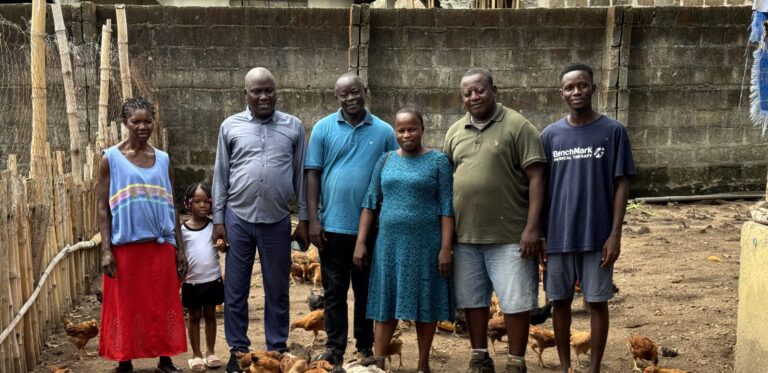
How WPF’s integrated Gender, Nutrition, and Sales & Marketing training is transforming poultry value chains and the lives of rural women.
By: Evelyn Tatenda Kamba, Maureen Stickel, Fara Ratalata, and Cara Raboanarielina
Across rural communities, women are at the heart of household food decisions and community economic life, yet they have long been excluded from the market information, training, and opportunities that could transform their potential. Women manage households and food production with little access to capital or markets. At the same time, young people face limited local livelihoods, driving many to migrate away from their communities.
Through its programs, World Poultry Foundation (WPF) intentionally integrates gender-responsive approaches into market development, technical assistance, training, and monitoring and evaluation. The Poultry Multiplication Initiative (PMI) brings together gender, nutrition, and market systems in a unified framework that places women at the center of poultry value chain development.
This work matters more than ever. 2026 has been declared the International Year of the Woman Farmer (IYWF 2026) by the United Nations General Assembly, with FAO leading global efforts to recognize women’s indispensable contributions to agrifood systems and close persistent gender gaps. WPF’s work across all PMI programs is a direct, on-the-ground expression of what this global commitment looks like in practice.
A Training Built on Integration
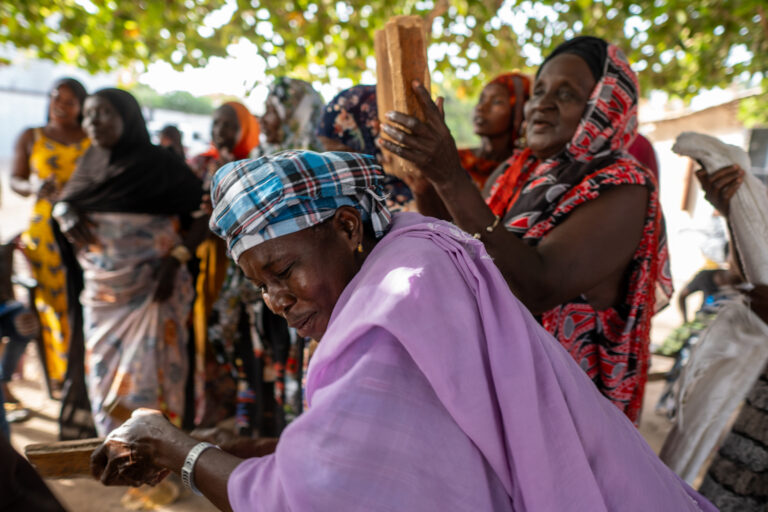
One of the most recent examples of this commitment is the integrated Gender, Nutrition, and Sales & Marketing training for PMI partner Field Service Representatives (FSRs) in Madagascar and Senegal. FSRs are the frontline agents working for private-sector poultry companies directly with farmers. The training content was developed collaboratively: the business and sales modules were created by Roz Haan of The Franchising Company, while the gender and nutrition modules were developed by Vicky Veevers and the team at ManoCap. WPF has since adapted and refined the content further, but the foundation reflects this rich collaboration across experts in each field.
The training was designed around one core conviction: gender, nutrition, and marketing cannot be addressed in isolation. As Evelyn Tatenda Kamba, WPF’s Training Coordinator, explains:
 FSRs as Change Agents
Perhaps the most significant shift the training aimed to create was a reframing of the FSR’s own role. As Fara Ratalata, WPF’s former Business Development Manager, put it: “Field Service Representatives are not only technical advisors, they are change agents.”
The training equipped FSRs with practical strategies to identify and engage motivated women producers, those often already active in savings groups, producer associations, or small agribusinesses. As Maureen Stickel, WPF Vice President of Innovation & Initiatives, explains, targeting these dynamic women creates a triple win:
FSRs as Change Agents
Perhaps the most significant shift the training aimed to create was a reframing of the FSR’s own role. As Fara Ratalata, WPF’s former Business Development Manager, put it: “Field Service Representatives are not only technical advisors, they are change agents.”
The training equipped FSRs with practical strategies to identify and engage motivated women producers, those often already active in savings groups, producer associations, or small agribusinesses. As Maureen Stickel, WPF Vice President of Innovation & Initiatives, explains, targeting these dynamic women creates a triple win:
This specialized training opportunity links technical poultry knowledge with practical, market-oriented approaches, in particular, exploring what the 7Ps of marketing look like when applied to dual-purpose poultry (DPP) value propositions, and how to shape those propositions to fit the profiles, needs, and motivations of women farmers. Seeing Women as Economic Actors, Not Just Beneficiaries Delivering the integrated Gender and Nutrition modules in both Madagascar and Senegal was Cara Raboanarielina, a WPF consultant with deep expertise in local food systems and gender dynamics. Her goal was clear from the start.“When these areas are addressed together, the impact is significantly greater and will unlock opportunities that remain invisible when they are treated as separate components.” — Evelyn (Eve) Tatenda Kamba, Training Coordinator, WPF
“My primary goal was to help FSRs see women not just as beneficiaries, but as key economic actors and clients in dual-purpose poultry systems.” — Cara Raboanarielina, WPF ConsultantUsing participatory methods and visually engaging materials adapted to local realities, this training supports participants to develop empathy and understanding of the constraints women and youth face, from limited market access to restricted control over household finances. A particularly striking moment came when Cara shared nutrition and food security data for the regions where participants work. Many FSRs were shocked: anemia rates in Senegal, and extremely high food insecurity in central Madagascar, were far worse than they had imagined. That data became a powerful motivator for the FSRs. The Power of Dual-Purpose Poultry At the core of PMI’s model is dual-purpose poultry, breeds that produce both eggs and meat, offering households diversified economic and nutritional benefits. DPP are particularly powerful because they align economic incentives with nutrition outcomes. The evidence for why this matters for women is clear. Research shows that more than 70% of chicken owners in rural areas of sub-Saharan Africa are women (Gueye, 2003), and that when women control poultry income, they are more likely to reinvest in food quality, dietary diversity, and children’s nutrition, ultimately strengthening their bargaining power in household decision-making and their wider role in their communities (FAO, 2010; Riise et al., 2007). In the PMI program, we are already seeing this play out. Participants in Madagascar describe how DPP enables women to grow businesses, support schooling costs, access urban markets, and diversify their agri-enterprises with increased income translating directly into better outcomes for their families. The program’s pulse surveys, lightweight monitoring tools designed to track farmer experiences and course-correct in real time, are providing early on-the-ground evidence of these shifts. In Sierra Leone, women’s participation in the Brooder Unit program rose from 24% to 38% in the first year, and women’s adoption of dual-purpose breeds nearly doubled from 34% to 70%. In The Gambia, women’s control over poultry income decisions jumped from 73% to 94% among Brooder Unit farmers in under twelve months.
FSRs as Change Agents
Perhaps the most significant shift the training aimed to create was a reframing of the FSR’s own role. As Fara Ratalata, WPF’s former Business Development Manager, put it: “Field Service Representatives are not only technical advisors, they are change agents.”
The training equipped FSRs with practical strategies to identify and engage motivated women producers, those often already active in savings groups, producer associations, or small agribusinesses. As Maureen Stickel, WPF Vice President of Innovation & Initiatives, explains, targeting these dynamic women creates a triple win:
- Stronger sales and market development for PMI partners
- More resilient livelihoods for women farmers and their families
- Better nutrition outcomes for children and communities
The post When Women Win, We All Win: WPF’s Commitment to Women’s Empowerment in Poultry appeared first on World Poultry Foundation.
Apa Reaksi Anda?
 Suka
0
Suka
0
 Kurang Suka
0
Kurang Suka
0
 Setuju
0
Setuju
0
 Tidak Setuju
0
Tidak Setuju
0
 Bagus
0
Bagus
0
 Berguna
0
Berguna
0
 Hebat
0
Hebat
0

Edusehat
Platform Edukasi Online Untuk Komunitas Kesehatan Agar Mendapatkan Informasi Dan Pengetahuan Terbaru Tentang Kesehatan Dari Nasional Maupun Internasional. ||
An online education platform for the health community to obtain the latest information and knowledge about health from both national and international sources.