




























































Tangier, Morocco Walking Tour in the Footsteps of Artists, Spies and Ibn Battuta
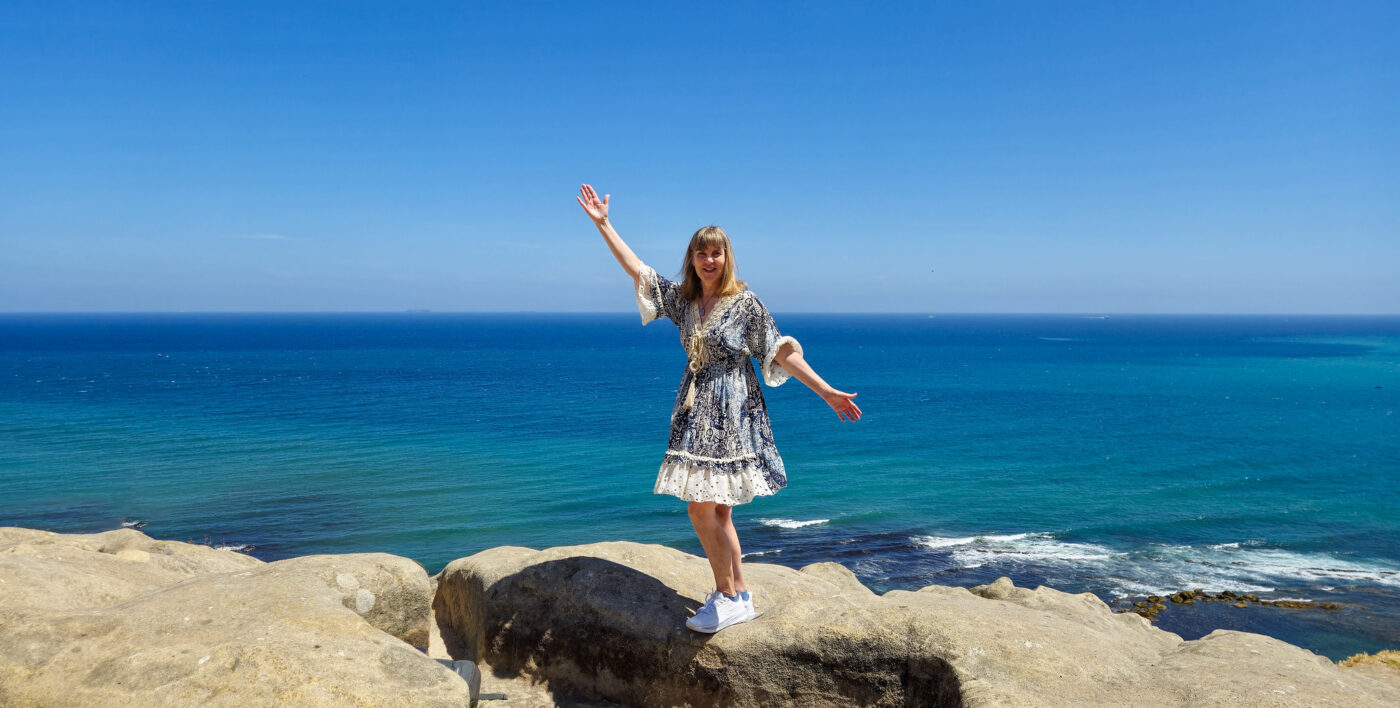


Perched on the stunning, Moroccan coast along Strait of Gibraltar, Tangier has been a gateway between Africa and Europe for centuries. I spent a day in Tangier on a DIY walking tour, following the footsteps of famous artists, writers and spies. Surprisingly, I discovered one of the world’s greatest Explorers, Ibn Battuta. Read on and learn how to enjoy a Tangier, Morocco walking tour and find the soul of its Bohemian culture.
Located where the Mediterranean meets the Atlantic, Tangier is called the “Door of Africa.” As a crossroads of civilizations, Tangier is a melting pot of cultures. The Phoenicians, Romans, Berbers and Arabs left their marks on its rich history. During its International Zone period (1923 – 1956), Tangier attracted artists, spies, diplomats and bohemian expats. This creative history remains today in the cliffside cafes, souks and medina with stunning views along the turquoise coastline.
Fun Fact: Tangier is where the name of tangerine fruits came to be.
Tangier, Morocco Walking Tour
in Footsteps of Artists, Spies and Ibn Battuta

As an Acupuncturist-at-Sea, I enjoyed a day off in Tangier. I had always been intrigued by Tangier, knowing the history of being a magnet for artists. Overall, I walked everywhere with no taxis during my day in the historic center. Excitedly, my first intention was to find the iconic Café Hafa, known for its famous patrons. I never found any city maps and just used my GPS to find everything.
The moment I stepped in Tangier, I understood why the city has attracted famous artist, spies and travelers. My intention was to follow the footsteps of it famous expats and visitors, such as Jean Genet, William Burroughs, Allen Ginsburg, Rolling Stones and The Beatles. However, I surprisingly discovered one of the world’s greatest explorers from the 14th century: Ibn Battuta the “Islamic Marco Polo.” As an avid traveler, I always appreciate learning about iconic explorers.
Starting at Grand Socco to Old Medina
A shuttle bus dropped me off at the Grand Socco (souk or marketplace). This was a nice, historic start to the day. Here is a roundabout area separating the old medina and newer part of town. The Cinema Rif stands out, a movie theatre nicely restored in Art Deco. I head for the entrance of the Old Medina. It’s before 9 am and many shops are still closed, so its relatively quiet.
My plan is to go to Café Hafa, just a 15-minute walk according to my GPS. However, I notice the Phoenician Tombs are next door to the café and decide to go there first. I enjoy observing the awakening of the old medina and curious to return later for what is inside these shops. I found my way quite easily to the dramatic Phoenician Tombs.
Phoenician Tombs

The Phoenician Tombs is a necropolis of 98 tombs carved into a rocky outcrop, overlooking the sea. It’s a place of archeological intrigue, with breathtaking views of the Strait of Gibraltar. The area is a popular place to hang out for both locals and tourists. Here, the clifftop tombs left behind rectangular-shaped holes that remain today. They date back to the Phoenicians in the 8th century BC. You can visit this site for free, wandering at your own pace. Overall, it’s a refreshing opportunity for sea air with views and archeology connecting to Mediterranean history.
Café Hafa
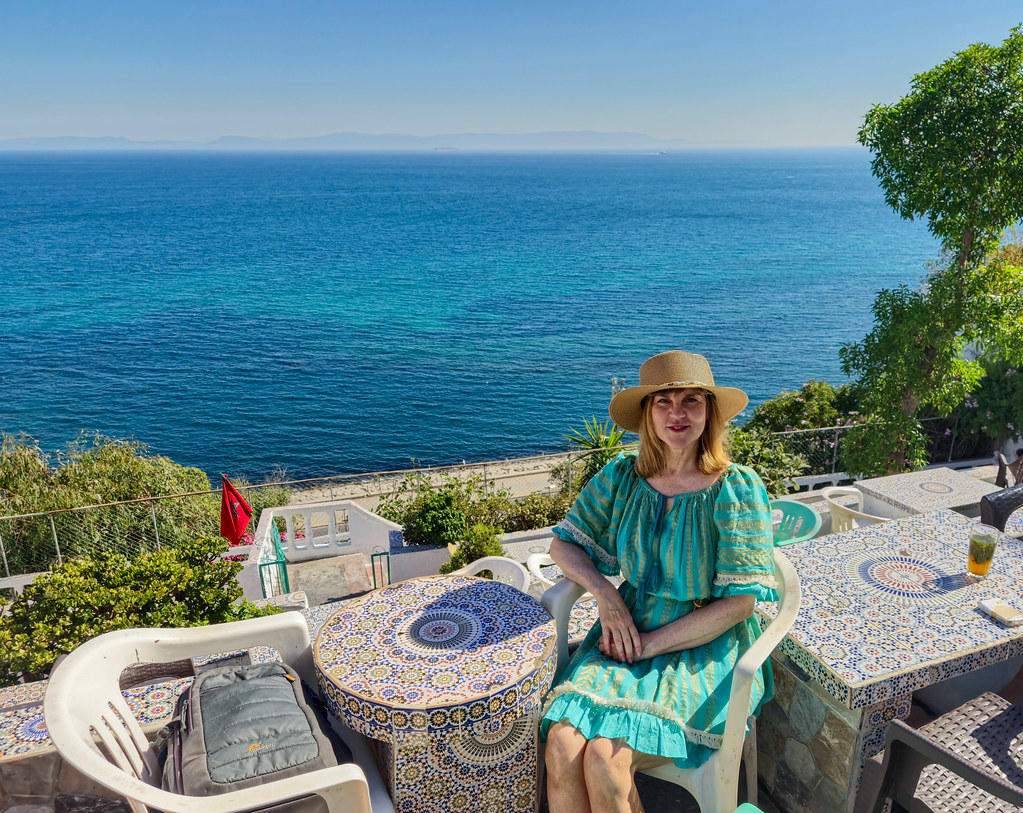

Next to the Phoenician Tombs is the historic Café Hafa. This Tangier landmark opened in 1921 and maintains its original design. It spreads out into terraced seating alongside the cliff, overlooking the Bay of Tangier. The stunning views with sea air is the whole point.
The café has been a hangout for famous artists and writers since the early 20th century. Especially during the years of being an International Zone, Cafe Hafa was a place to muse for Tangier’s famous expats, such as, William S. Burroughs, Paul Bowles, Sean Connery, The Beatles and Rolling Stones.
I took the opportunity to enjoy the famous Moroccan mint tea with an avocado smoothie. The refreshing, green drinks and breathtaking views was an inspiring way to connect with history and scenery.
Tangier Kasbah
From the Café Hafa, I backtracked to the Kasbah. The Tangier Kasbah or citadel dates back to the 10th century, built on the highest point of the city. It’s separated from medina by ramparts. I entered the Bab El Assa Gate into the ancient palace district.
In the Kasbah are many cafes, shops, beautiful mansions and museums. I went to the Ibn Battuta Museum, Kasbah Museum of Mediterranean Cultures and Le Salon Bleu Restaurant. I observed the Kasbah Mosque from outside that is only open for Muslims. The Kasbah viewpoint with a promenade stretches along the cliffside, overlooking the coast. There are vendors and small cafes with cushions outside to take in the views.
Ibn Battuta Museum

In the heart of the Kasbah is the Ibn Battuta Museum, housed in a traditional Moroccan riad. After seeing his name for Tangier’s Ibn Battuta Airport, I learned that he was a famous explorer. Being an avid traveler, I jumped on the chance to learn about him at the museum.
Ibn Battuta was a Muslim explorer born in Tangier in 1304. He travelled more than any other explorer in pre-modern history. In 30 years, he travelled about 120,000 km. His destinations included Mecca, Iran, Iraq, Somalia, Arabia, Swahili coast, Anatolia, Central and southeast Asia, Spain, North Africa and Timbuktu. He shared his journeys in his book, A Gift to Those Who Contemplate the Wonders of Cities and the Marvels of Travelling, aka as The Rihla.
The museum is housed in a traditional Moroccan riad. A statue of Battuta stands at the entrance. The exhibits tell the story of his life and maps out his travels and life accomplishments. It makes you think about the reality of travelling more than 700 years ago with no cars or airplanes. Evidently, Battuta feared and disliked travelling on ships. After his 30 years of travelling, he returned to Tangier to become a judge and died at 73 years old.
Kasbah Museum of Mediterranean Cultures

This museum is housed in the Kasbah Palace, aka Dar al-Makhzen. Built in the early 18th century, the palace became repurposed into a museum in 1922. It stands on the highest point in the Kasbah, overlooking the medina and Strait of Gibraltar. Don’t miss the view like I did. The décor includes two courtyards with marble fountains, arabesques and wooden ceilings.
The museum houses a vast collection of archeological and ethnographic artifacts. Highlights are Moroccan ceramics, arts and manuscripts from Fes. Also, it includes Roman mosaics from the Volubilis archeological site.
Le Salon Bleu Restaurant

Eating at La Salon Bleu was one of the highlights of my day. Inside, I climbed the spiral staircase, observing the servers preparing the Moroccan dishes. I continued on to the rooftop terrace where seating offers views of the city and Strait of Gibraltar. The breathtaking views were some of the best I experienced in Tangier with a 360-degree panorama.

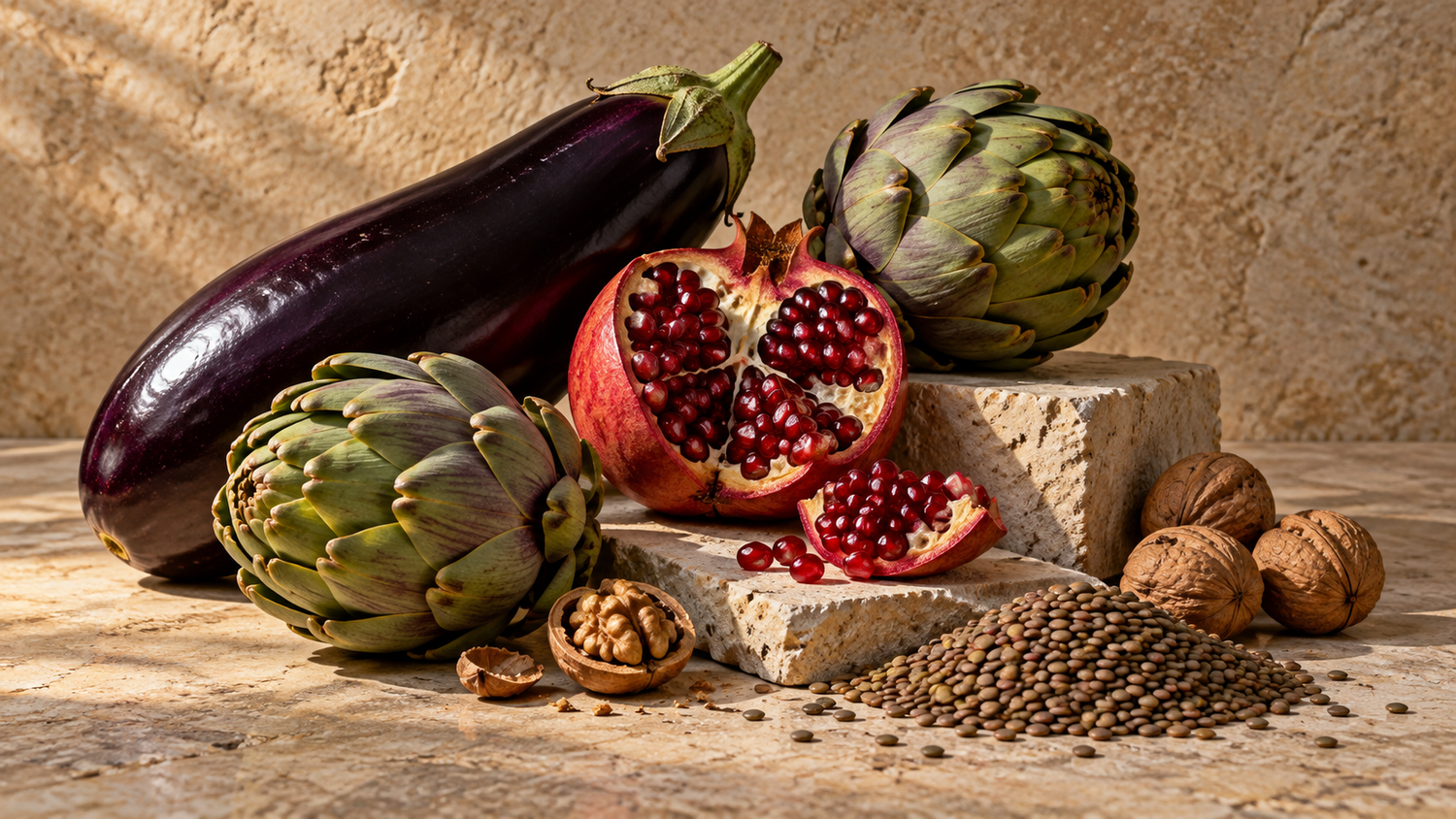
My food was delicious and fresh, served Kemia-style in 6 small dishes. I loved every bite of my couscous, sweet tomatoes in olive oil, eggplant, cheese, lentils and Moroccan bread with tangerine juice. Just writing this, my mouth is watering, wishing for more.
Tangier Medina

From the Grand Socco, there’s an entrance into the medina. The medina is a historic, walled off area bustling with souks, markets, cafes and restaurants. Its cross-cultural influences include Moroccan, Spanish and Portuguese. Inside the medina is the Petit Socco. This small square has a big history, especially during the diplomat era with 4 banks. Today, it remains a hub with the Grand Café Central and Hotel Fuentes.

Like most northern African medinas, it is labyrinthine with narrow alleyways and passages. The layout is along the hill with the Kasbah at the top. Souk items to bargain for include rugs/textiles, spices, argan oil, ceramics, lanterns and metalwork.

My quest at the Medina was to find some good quality argan oil. This oil comes from the argan tree nut, native to Morocca. Its healing oil properties are good for hair, skin and nails. After trying a couple souks for herbs and spices, the Maison Oud 2 got my attention most. I loved their authenticity and the time they took to educate me on the herbs. Surrounded by colorful spices, healing oils, soaps, perfumes and eclectic remedies, I was in heaven.
I switched course from buying argan oil to black seed oil. I have always wanted to try black seed oil. Uniquely it can be eaten or used on skin. Like argan oil, the black seed oil is therapeutic for skin, hair and nails. The bonus was I got to watch them express the oil from the black seeds for my own personal bottle. So grateful I discovered their place.
Gran Café de Paris

Similar to the Cafe Hafa, the Gran Café de Paris is another famous venue for its patrons, like the writers, Paul Bowles, Tennessee Williams and William Burroughs. Located at Place de France, it’s opposite the French Embassy. It’s also a setting for the movie The Bourne Ultimatum with Matt Damon. This is another great place to savor some mint tea with its creative history. A bonus is you feel frozen in time with the 50’s décor remaining.
Why You Need More than One Day
Sorry to say that my Tangier journey ended here. I absolutely loved my day in Tangier and wished for another day to do the following things:
Tangier American Legation Museum, in the medina, housed the U.S. diplomatic mission to Morocco. In 1821, Morocco became the first nation to recognize the U.S. as an independent nation from Great Britain. The Sultan gifted this building as a diplomatic post, remaining here for 140 years.
Cape Spartel is where the Atlantic Ocean meets the Mediterranean Sea about 14 km west of Tangier.
Caves of Hercules is located at the Cape Spartel. It’s a famous archeological and mythological cave complex.
Enjoy Tangier!

This city is a special place with such a colorful past. It says something that so many famously creative and intelligent people flocked to live or visit here. The intriguing location where the Mediterranean meets the Atlantic Ocean with breathtaking views is enough to inspire anyone. Tangier has it all: natural beauty and fascinating culture with friendly locals. I can’t wait to return to finish my explorations here. If your travels bring you to Tangier, feel free to leave tips or suggestions below.
Read Next!
Incredible Casablanca, Morocco Day Tour and Top Attractions
The Iconic Rock of Gibraltar Highlights Tour
The post Tangier, Morocco Walking Tour in the Footsteps of Artists, Spies and Ibn Battuta appeared first on True Wind Healing Travel.
What's Your Reaction?
 Like
0
Like
0
 Dislike
0
Dislike
0
 Agree
0
Agree
0
 Disagree
0
Disagree
0
 Excellent
0
Excellent
0
 Useful
0
Useful
0
 Great
0
Great
0