































































The 20 Best Exercises to Do at the Office & Your Desk


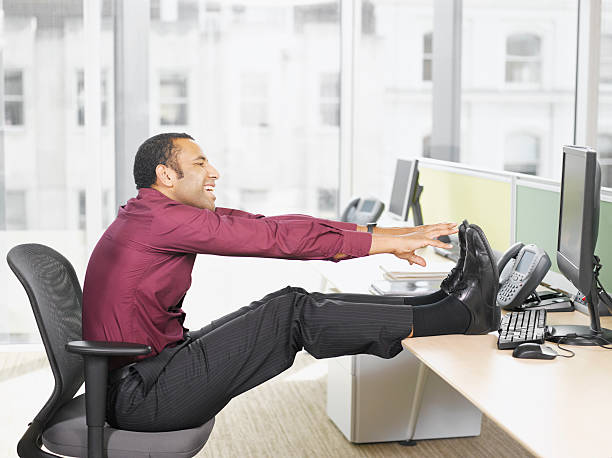
It's 3pm. Your hips feel welded to the chair, your neck has been frozen at 15 degrees forward since the morning standup, and the coffee from lunch is doing nothing for you. The body wasn't built to spend eight hours folded into the same shape, and the slow drain of focus you're feeling right now is the proof.
This guide is for that exact moment. You get 20 of the best exercises for desk workers, split into two clear groups. Part 1 is 10 moves you can do right at your desk in work clothes, most of them silent enough that nobody around you will notice. Part 2 is 10 quick office workouts for the days you can grab a meeting room, a hallway, or a closed door and a TRX Suspension Trainer™ for 10 minutes.
Why Desk Workers Need to Move During the Workday
Desk workers need short, frequent movement breaks because prolonged sitting tightens hip flexors, weakens glutes and core, stiffens the upper back, and slows circulation through the legs. Even brief exercise breaks every 30 to 60 minutes counteract these effects, improve focus, and protect long-term joint health. A few minutes of focused movement during the workday does most of the work for you.
The Mayo Clinic links extended sitting to higher risk of cardiovascular issues, metabolic problems, and early mortality, with the risk climbing the longer the sitting stretches go without interruption. The math works both ways. Short movement breaks during the day chip directly at that risk, even when the rest of your job stays the same.
That's the TRX mission in one sentence. Move better, grow stronger, live longer. The 20 exercises below are the office-friendly version of exactly that.
Take Our Training Quiz Today
How to Use This Guide
The 20 exercises are split into two parts. Part 1 covers 10 at-your-desk moves that need zero equipment, work in office clothes, and most of them work from a seated position. Quiet and effective. Part 2 covers 10 office workouts that need a few square feet of floor space and, for some moves, a TRX Suspension Trainer anchored to a sturdy closed door.
One useful framework if you want a structure is the 5-5-5-30 rule. Every 30 minutes, stand for 5 minutes, do 5 reps of a strength move, and walk 5 paces. Treat it as a simple cue to keep the body moving instead of one more rule to memorize.
A quick disclaimer before you start. Talk to your doctor before starting a new routine if you have an existing injury, a chronic condition, or anything else that affects how your body handles exercise.
Part 1: 10 Exercises to Do at Your Desk
These 10 exercises need no equipment, work in office clothes, and most can be done from your chair. Order matters. The first half is mobility and stretching to undo what sitting does to your body. The second half layers in light isometric and bodyweight strength once you're warmed up.
1. Seated Neck Rolls and Stretches
The upper neck and traps take the worst of monitor work. Hours of staring at a screen pull the head forward and load the same muscles for the entire workday. Gentle range-of-motion work first thing resets that pattern in under a minute.
How to do it.
-
Sit tall in your chair with shoulders relaxed.
-
Drop your right ear toward your right shoulder and hold for 10 to 15 seconds.
-
Repeat on the left side.
-
Drop your chin to your chest and hold for 10 to 15 seconds.
-
Roll your head in slow half-circles from ear to ear. Never roll backward.
Keep your shoulders pulled down through every direction. Don't shrug into the stretch. Breathe steadily, and stop immediately if you feel any sharp pinch.
2. Seated Shoulder Rolls and Shrugs
Shoulders creep toward the ears under monitor-induced tension. You don't notice it happening because it builds slowly, but by mid-afternoon the upper traps are firing nonstop. This move signals the nervous system to let go.
How to do it.
-
Sit tall with shoulders relaxed.
-
Roll your shoulders backward in slow, controlled circles for 10 reps.
-
Reverse direction for 10 reps.
-
Follow with 10 shoulder shrugs. Lift shoulders to your ears, hold for 2 seconds, drop fully.
Think "tall spine" through every rep. Exhale on the release of each shrug. The drop should feel like letting go of a breath you've been holding all morning.
3. Seated Spinal Twist
Rotation is one of the first ranges sitting takes from you. The spine wants to twist, and a seated job means it almost never does. This 30-second move restores thoracic mobility without leaving your chair.
How to do it.
-
Sit tall with both feet flat on the floor.
-
Place your right hand on your left knee and your left hand on the chair back behind you.
-
Exhale and rotate to the left.
-
Hold for 15 to 20 seconds.
-
Return to center and repeat on the right side.
Lead the rotation with your breastbone, not your head. Grow tall before you twist. Keep it gentle. You're restoring mobility, not testing your range.
4. Seated Hip Flexor Stretch (Figure 4)
Tight hip flexors and external rotators are at the root of most low-back pain in desk workers. The figure-4 hits both in under a minute and you can do it without anyone noticing.
How to do it.
-
Sit on the edge of your chair.
-
Cross your right ankle over your left knee in a figure-4 shape.
-
Sit tall through your spine.
-
Hinge forward at the hips until you feel a deep stretch in the right glute and outer hip.
-
Hold for 30 seconds, then switch sides.
Hinge from the hips. Don't round your lower back to fake more range. Keep the planted foot flat on the floor. Breathe into the stretched hip on every exhale.
5. Glute Squeezes (Isometric)
Your glutes go to sleep when you sit. They're held in a stretched, unloaded position for hours, and the longer that goes on, the harder they are to recruit when you finally stand up. Isometric squeezes wake them up without anyone seeing a thing.
How to do it.
-
Sit tall in your chair.
-
Squeeze both glutes as hard as you can for 5 seconds.
-
Release.
-
Repeat for 15 to 20 reps.
-
Build up to 3 sets through the workday.
The squeeze stays in the glutes. Don't let it slide into the lower back or thighs. Exhale on each rep. No visible movement at all, which is the entire point.
6. Seated Leg Extensions
A quad-focused move you can do under the desk without breaking your workflow. Builds endurance in the muscles that take the worst hit from sitting and helps with blood flow in the legs.
How to do it.
-
Sit tall with your back against the chair.
-
Extend your right leg straight out until it's parallel to the floor.
-
Hold for 5 seconds.
-
Lower with control.
-
Alternate legs for 10 to 15 reps per side.
Keep your back against the chair. Drive your toes toward your shin at the top of each rep. No kicking. The whole point is slow, controlled extension.
7. Chair Squats
The single most useful strength exercise a desk worker can do, because it directly trains the exact pattern sitting destroys. It's also the same pattern you'll need to get out of a chair without help 30 years from now. Train it now.
How to do it.
-
Stand in front of your chair with feet hip-width apart.
-
Push your hips back as if you're about to sit down.
-
Lower until your butt taps the seat.
-
Drive through your heels to stand.
-
Repeat for 10 to 15 reps.
Chest up through the whole rep. Knees track over your toes, not collapsing inward. Stand all the way up at the top. Half-squats build half-strength.
8. Desk Push-Ups
Most office work starves the chest and shoulders of any pushing. The desk-edge incline brings the move back without needing the floor or any equipment, and the angle makes it accessible for almost any fitness level.
How to do it.
-
Place your hands on the edge of your desk, slightly wider than your shoulders.
-
Walk your feet back into a straight-line plank.
-
Lower your chest to the desk edge under control.
-
Press back to full extension.
-
Repeat for 8 to 12 reps.
Keep the body in one straight line from heels to head. Let your elbows angle back at about 45 degrees, not flared out to 90. Brace your core the entire time. Quick safety note. Only do these on a desk you are 100% sure won't slide or tip. Test it first.
9. Standing Calf Raises
Easy to do during a standing break and one of the fastest ways to restore blood flow in the lower legs. Sitting pools blood in the calves and feet. This move clears it out.
How to do it.
-
Stand behind your chair with hands lightly resting on the back for balance.
-
Rise onto the balls of your feet.
-
Hold the top for 1 second.
-
Lower under control.
-
Repeat for 15 to 20 reps.
Rise as high as your calves will go at the top. Squeeze the calves hard for that one-second hold. No bouncing. Control matters more than reps.
10. Desk-Edge Tricep Dips
Rounds out the at-desk set with a posterior upper-body move. Takes 30 seconds and a sturdy desk edge.
How to do it.
-
Sit on the edge of a sturdy desk. No rolling chairs.
-
Grip the edge with hands next to your hips.
-
Walk your feet forward and slide your hips off the desk.
-
Lower under control by bending your elbows to 90 degrees.
-
Press back to start.
-
Repeat for 8 to 12 reps.
Elbows track straight back, not flared. Pull your shoulders down and away from your ears. This is the highest-risk move on the at-desk list. Skip it if the desk wobbles at all.
Part 2: 10 Office Workouts to Build Real Strength
These 10 moves need a few square feet of floor space, a closed door for TRX Suspension Trainer work, and ideally a change into a pair of shoes you can actually push off in. Think lunch break, pre-meeting energy hit, or the 15 minutes you'd otherwise spend scrolling. Five of these are traditional bodyweight movements. Five use the Suspension Trainer anchored to an office door.
11. Bodyweight Squats
The foundation. No equipment, infinitely scalable, and the cleanest fix for hours of glute shutdown. Two or three hard sets at lunch will undo a morning of sitting faster than anything else on this list.
How to do it.
-
Stand with feet shoulder-width apart.
-
Push your hips back and lower until your thighs are parallel to the floor.
-
Drive through your heels to stand.
-
Repeat for 12 to 15 reps.
Chest tall through the entire rep. Knees track over your toes. Stand all the way up at the top. Three sets here is a real workout, not a warm-up.
12. Walking Lunges
Single-leg strength and balance, which is what real-world movement actually demands. Climbing stairs, getting in and out of cars, carrying groceries up to a second-floor apartment, walking your kid to school. The lunge trains all of it. An empty hallway or meeting room is all you need.
How to do it.
-
Stand tall with feet hip-width apart.
-
Step forward with your right leg into a long lunge.
-
Lower until the rear knee almost touches the floor.
-
Drive through your front heel to bring the back leg through into the next lunge.
-
Alternate sides for 10 to 12 reps per leg.
The front knee stays over the ankle, not pushed past the toes. Keep your torso upright. Push from the heel of the front foot every step. Quiet feet, controlled landings.
13. TRX Suspension Trainer Row
The TRX Suspension Trainer anchors to any sturdy closed door using the door anchor that ships with the system. That's the entire reason it works in an office. Two pounds and fits in a desk drawer. The row directly counters the forward-head posture you build at a desk by lighting up the mid-back muscles that go dormant during desk work.
How to do it.
-
Anchor the Suspension Trainer above the closed door using the door anchor.
-
Shorten the straps to mid-length and grip the handles.
-
Face the anchor and walk your feet forward until your body is angled.
-
Brace your core and glutes into a stiff plank.
-
Pull your elbows back and squeeze the shoulder blades together until the handles reach your ribs.
-
Lower with control.
-
Repeat for 10 to 12 reps.
Body in one straight line. No hip sag. Pinch the shoulder blades together hard at the top of every rep. Walk your feet closer to the anchor to make it harder, or back to make it easier.
14. TRX Suspension Trainer Chest Press
The natural pair to the TRX Row. Same door anchor, no floor space needed. A balanced upper-body workout in under 10 minutes that hits both the muscles desk work weakens (mid-back) and the muscles it tightens (chest and shoulders).
How to do it.
-
Anchor the Suspension Trainer at head height on the closed door.
-
Shorten the straps to mid-length.
-
Face away from the anchor with handles at chest height.
-
Walk your feet back until your arms are extended and your body is angled forward.
-
Brace your core and lower your chest between the handles by bending your elbows.
-
Press back to full extension.
-
Repeat for 10 to 12 reps.
Body stays in a straight line from heels to head. Elbows bend to about 90 degrees. No hip sag at the bottom. Walk your feet back further to increase the load, closer to vertical to decrease it.
15. TRX Suspension Squat
A lower-body builder that uses the Suspension Trainer for light assistance and instant balance feedback. Helpful for desk workers who haven't squatted to real depth in years, because the straps groove the position and let you focus on hips and ankles instead of fighting for balance.
How to do it.
-
Anchor the Suspension Trainer at chest height.
-
Shorten the straps and grip the handles at chest level with arms straight.
-
Stand with feet shoulder-width and arms extended.
-
Push your hips back and lower into a full squat using light tension on the straps.
-
Drive through your heels to stand.
-
Repeat for 12 to 15 reps.
Keep light tension on the straps. Don't yank yourself up with your arms. Drop the hips deep. Chest tall through every rep.
16. TRX Suspended Lunge
A unilateral lower-body move that exposes the left-right imbalances most desk workers don't know they have. Putting the rear foot in the foot cradle turns a regular lunge into a serious balance and core challenge.
How to do it.
-
Face away from the anchor.
-
Place the top of one foot in the foot cradle of the Suspension Trainer behind you.
-
Hop the front foot forward into a split stance.
-
Lower the back knee toward the floor until the front thigh is parallel.
-
Drive through the front heel to stand.
-
Repeat for 8 to 10 reps per leg.
Front knee tracks over the ankle. Torso stays upright. Control the descent. Shorten your stride to make it easier, or lengthen it to make it harder.
17. TRX Bicep Curl
Closes the TRX block with a targeted arm exercise that also re-engages the rhomboids. A high-feedback move that finishes the office workout with a noticeable pump.
How to do it.
-
Anchor the Suspension Trainer at head height.
-
Shorten the straps and grip the handles with palms up.
-
Face the anchor and walk your feet forward until your arms are extended overhead at an angle.
-
Brace your core.
-
Curl your body up by bending the elbows and bringing your hands to your forehead.
-
Lower with control.
-
Repeat for 10 to 12 reps.
Elbows stay high and pinned in place. Don't let them drop. Wrists neutral. Control the descent.
18. Wall Sit
Zero floor space, just a clean wall. Builds isometric leg strength and mental grit in 30 to 60 seconds. The first 20 seconds are deceiving. The last 20 are where it gets real.
How to do it.
-
Stand with your back against a wall.
-
Walk your feet out and slide down until your thighs are parallel to the floor.
-
Knees stack at 90 degrees over your ankles.
-
Hold for 30 to 60 seconds.
Full back contact with the wall. Knees stacked over ankles, not collapsing inward. Breathe steadily. Don't hold your breath when it starts to burn.
19. Standing Plank-to-Push-Up
A moving plank and push-up hybrid that hits the core, shoulders, and chest in one shot. Great for the meeting-room-floor scenario when you have the space and don't mind getting your hands dirty.
How to do it.
-
Start in a forearm plank on the floor.
-
Brace your core.
-
Press up to a full push-up plank one hand at a time.
-
Lower back to the forearm plank one forearm at a time.
-
Alternate which arm leads.
-
Repeat for 8 to 10 reps total.
Hips stay level. No rocking side to side. Core locked the entire time. Breathe steadily between transitions.
20. Jumping Jacks (or Step-Out Jacks)
End the office workout with a cardio finisher to spike the heart rate and flush blood through the legs. If jumping feels too disruptive for the floor below you, the step-out version works almost as well silently.
How to do it.
-
Stand tall with feet together and arms at your sides.
-
Jump your feet out as your arms swing overhead.
-
Jump your feet back to center.
-
Repeat for 30 to 60 seconds.
For the step-out version, alternate stepping one foot out at a time without jumping. Land soft with bent knees on every rep. Full overhead reach on the arm swing. Steady breathing.

How to Build These Into Your Workday
Two templates that cover almost every desk worker.
Template 1, the Desk Reset. Every 60 minutes, pick 2 or 3 exercises from Part 1 and run through 1 set. Three rounds across the day costs you about 90 seconds per round and resets the body completely.
Template 2, the Lunch Workout. Pick any 5 exercises from Part 2 and run 3 rounds. 30 seconds of work, 15 seconds of rest, classic HIIT pacing. You're done in 12 minutes and the afternoon hits different.
The CDC's physical activity guidelines call for at least 150 minutes of moderate activity per week for adults, plus muscle-strengthening work two or more days a week. Two lunch workouts and a few daily Part 1 sessions covers that without ever leaving the office. Move better, grow stronger, live longer. That's the entire thesis.
A small piece of TRX history that fits the office angle. Randy Hetrick built the first Suspension Trainer from a jiu-jitsu belt and parachute webbing on deployment because he had nowhere to train and no time to waste. That's the same principle that makes it work for the desk worker who has a closed door, a 10-minute window, and nothing else.
Frequently Asked Questions
What is the 3-3-3 rule for working?
The 3-3-3 rule is a workday productivity framework. Three hours of focused deep work, three shorter important tasks, and three maintenance tasks per day. It pairs well with movement breaks because the gaps between focus blocks are the natural windows to drop in 2 or 3 exercises from Part 1.
How do you exercise while working a desk job?
Stack short, frequent at-desk movements during the workday with one longer strength session at lunch or before or after work. The 5-5-5-30 rule is a useful structure if you want one. Every 30 minutes, stand for 5 minutes, do 5 reps of a strength move, and walk 5 paces.
What is the 5 5 5 30 rule?
The 5-5-5-30 rule says that every 30 minutes of sitting, you should stand for 5 minutes, do 5 reps of a simple strength move, and walk 5 paces. It's a structure for breaking up long sitting bouts, not a strict prescription. Adapt it to your day.
What is the best exercise for office workers?
No single exercise tops the list, but if you had to pick one, prioritize hip-opening work (the figure-4 stretch), glute activation (chair squats), and a daily horizontal pull. The TRX Row counters desk posture more directly than almost any other single move, which makes it the closest answer to "the one exercise."
Start Moving Through Your Workday
Start tomorrow with three exercises from Part 1 during your first hour at the desk and build from there. When you want a real office workout block, the TRX Suspension Trainer anchors to any sturdy door, weighs about two pounds, fits in a desk drawer, and turns any 10-minute window into a full-body session built on the same suspension training trusted by Navy SEALs, pro athletes, and over 300,000 certified trainers worldwide. Pair it with the TRX Training Club™ App for guided lunch-break workouts and you have an office gym you can actually pack.
What's Your Reaction?
 Like
0
Like
0
 Dislike
0
Dislike
0
 Agree
0
Agree
0
 Disagree
0
Disagree
0
 Excellent
0
Excellent
0
 Useful
0
Useful
0
 Great
0
Great
0