





























































The TPO Transition: What Nail Salons Need to Audit Now


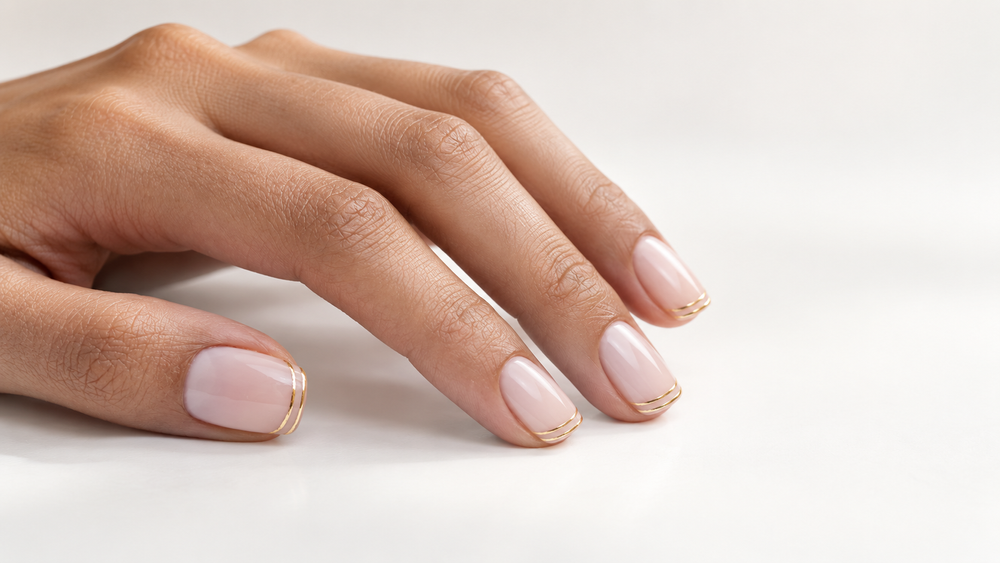
One ingredient, two regulatory timetables and shelves full of near-identical bottles. The new TPO rules call for a forensic look at stock, suppliers and lamps, not a panicked exit from gel. On a salon shelf, the change is almost invisible. The same orderly rows of builder gels, bases, top coats and colour remain in place, their labels as polished as ever. Yet a single line in an ingredient list now determines whether a product may enter the Great Britain market, how long existing stock may be supplied and what a salon should replace next. The three letters causing the stir are TPO. Online, the story has already been compressed into the sort of headline that travels quickly and explains very little: gel has been banned; every bottle must be binned; TPO and HEMA are the same problem but none of those statements are accurate.
Gel services remain lawful but salons need to identify every affected formula, separate TPO from the allergy questions surrounding HEMA, establish which version of a product they own, confirm how its replacement cures and decide whether the service still earns its space on the menu.
First, the chemistry
TPO, listed in cosmetic ingredients as Trimethylbenzoyl Diphenylphosphine Oxide, is a photoinitiator. When a compatible gel is exposed to the correct UV energy, TPO helps begin polymerisation, the reaction that turns the liquid coating into a hardened material. Its legal status changed after it was classified as toxic to reproduction, Category 1B. That classification brought TPO within the prohibition applied to certain substances in cosmetic products.
This does not amount to a retrospective finding that a client’s previous manicures caused fertility harm. Nor does it mean that gel, as a treatment category, has been outlawed. A hazardous property describes what a substance is capable of causing under specified conditions. Risk also takes account of the route, level and duration of exposure. Cosmetics law has nevertheless changed, and professional use must now be managed against the rules that apply in each part of the UK.
It’s also importnat to know that this is not as simple as a “UK wide ban”. Great Britain and Northern Ireland are working to different timetables.
Northern Ireland, 1 September 2025 - TPO-containing cosmetic products may no longer be sold, supplied or used professionally on clients, including stock bought before that date.
Great Britain, 15 August 2026 - Manufacturers and importers may no longer place a TPO-containing cosmetic product on the GB market for the first time.
Great Britain, until the end of 14 February 2027 - Products already placed on the GB market before 15 August 2026 may continue to move through the supply chain and be sold.
Great Britain, from 15 February 2027 - TPO-containing cosmetic products may no longer be sold or otherwise supplied, and professionals may not buy further stock.
Current guidance from the Cosmetic, Toiletry and Perfumery Association and the National Hair & Beauty Federation, supported by Trading Standards, says that a professional may continue using TPO-containing stock purchased before 15 February 2027, provided it remains otherwise fit for use however the Northern Ireland rule does not offer that option. A GB salon choosing to retain older stock should keep its invoices, batch records and purchase dates. It should also check the product’s expiry date or period-after-opening instruction and obtain written confirmation of insurance cover. Lawful ownership does not cancel shelf life, manufacturer directions or policy conditions. After the supply deadline, the product cannot be sold, given away or passed to another technician, even without charge.
TPO-free is not the same as HEMA-free
TPO and HEMA are often paired in product searches, but they do different jobs and sit under different rules. TPO is a photoinitiator. HEMA, or 2-Hydroxyethyl Methacrylate, is a methacrylate monomer used in some nail coatings. HEMA and Di-HEMA Trimethylhexyl Dicarbamate have not been banned from professional nail products. Their use is restricted to professionals, and products containing them must display the warnings “For professional use only” and “Can cause an allergic reaction”. A TPO-free gel can therefore contain HEMA. A HEMA-free gel can contain TPO, depending on its formula and where it is being supplied. And HEMA-free never means allergy-free. Other acrylates and methacrylates can cause sensitisation, particularly when uncured material reaches the skin or a coating is not properly cured.
For a client who has reacted before, changing to a HEMA-free system is not a diagnosis, a treatment or a guarantee of tolerance. Stop the service and advise the client to seek appropriate medical assessment. Applying uncured product to the skin as an informal salon patch test only creates another exposure and should not be done.
Read the bottle, then question the supplier
Reformulation makes the stockroom deceptively difficult to read. An established shade may exist in an older TPO-containing version and a newer TPO-free version, with little more than a batch code or revised ingredient list to tell them apart. A website may show the latest formula while the bottle in the drawer belongs to an earlier production run.
Begin with everything that is cured under a lamp, not only colour. Bases, builders, hard gels, top coats, light-cured adhesives and nail-art products all belong in the audit. Record the brand, range, exact product name, shade or code, batch number, supplier and purchase date. Add the ingredient list, expiry or period after opening, stated lamp and cure time, and a decision for the product: retain, use during transition, replace, discontinue or hold while unverified.
Search the ingredient list for the exact INCI name Trimethylbenzoyl Diphenylphosphine Oxide. Do not decide by bottle colour, range name or a broad claim that a collection is “now TPO-free”. Similar-looking chemical names are not proof of TPO, just as the phrase “new formula” proves nothing about HEMA.
Unreadable, incomplete or conflicting information should put a bottle into quarantine until it can be identified. Photograph the front and back labels, the ingredient list and the batch code, then ask the manufacturer or authorised supplier to answer in writing:
Does this exact product and batch contain Trimethylbenzoyl Diphenylphosphine Oxide?
If it does, was it placed on the GB market before 15 August 2026?
How can older and reformulated versions be distinguished?
Is the replacement free from TPO only, or also from HEMA and Di-HEMA?
Which exact lamp model, cure time and application thickness have been validated for the new formula?
May the old and new versions be layered together or used during an infill?
Have the preparation, removal, storage or training instructions changed?
File the replies with purchase records, safety information, training notes and insurance correspondence. If a supplier cannot confirm what is in a professional product or explain how its formula should be cured, the salon has not been given enough information to use it with confidence.
A new formula is also a lamp question
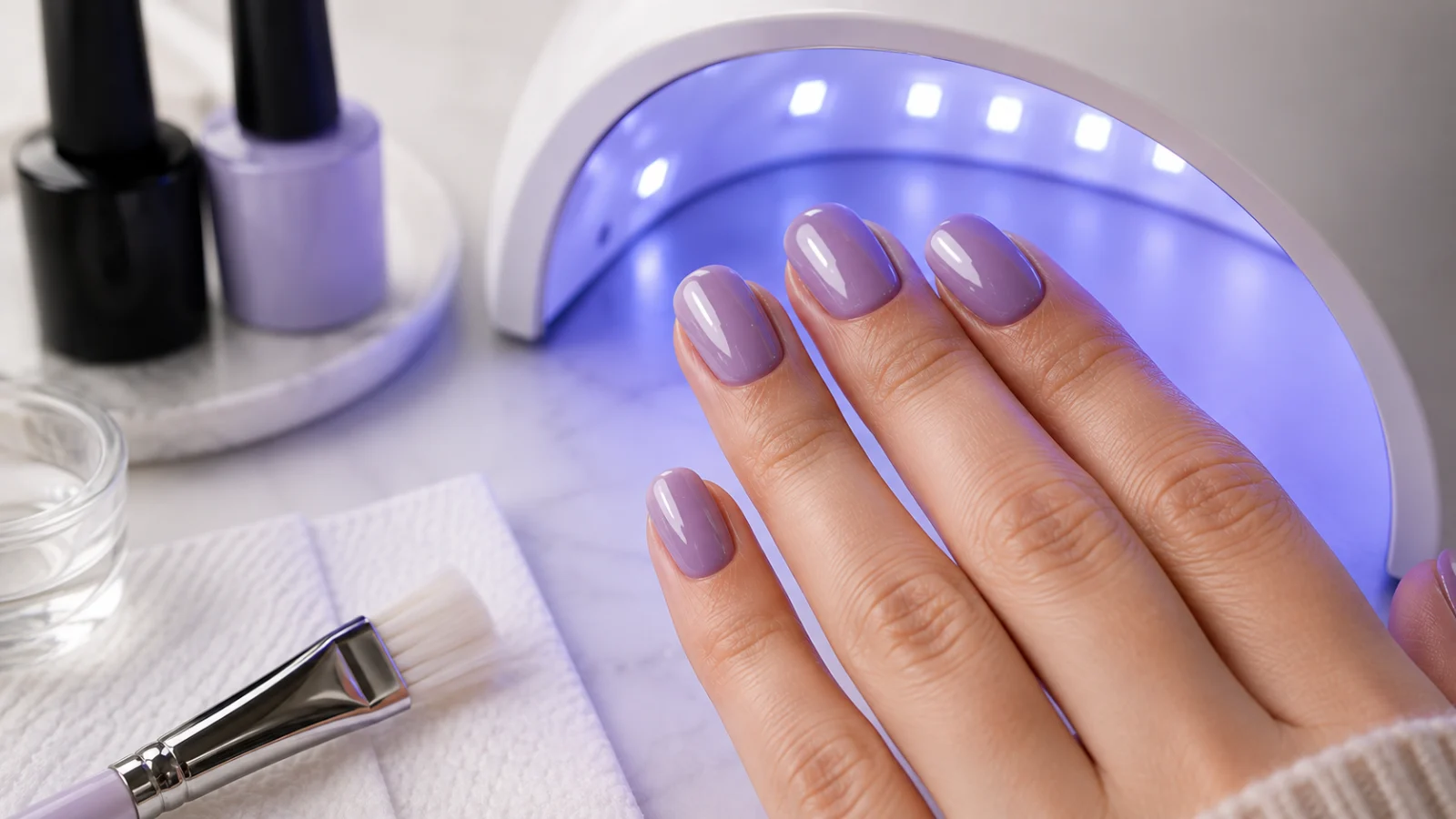
The lamp is not a universal finishing device. It is part of the product system. Different photoinitiators respond to particular ranges of UV light. Successful curing also depends on the lamp’s output, exposure time, layer thickness, product pigmentation and the position of the client’s hand. Reformulating a gel may alter one or more of those requirements. Lamp wattage describes electrical power consumption, not the precise wavelengths and UV dose reaching the coating. Nor is a glossy, hard surface proof that the material beneath has polymerised sufficiently. An undercured gel may look finished while leaving a greater amount of unreacted material within the coating, with consequences for wear and exposure.
Ask for compatibility by named lamp model, not simply “UV” or “LED”. Follow the stated thickness and cure time for every layer. Leaving a mismatched product under the lamp for longer is not a sound correction if the formula does not receive the energy it requires.
The same caution applies to mix-and-match services. A base from one brand, colour from another and top coat from a third may produce a beautiful finish, but appearance does not establish chemical compatibility. Before combining brands, lamps or old and reformulated products during an infill, obtain explicit confirmation from the relevant manufacturers.
Once a replacement system has been chosen, revise the written service protocol before it reaches a paying client. The document should name the lamp, cure time, layer guidance, hand position, removal method and any lamp maintenance or replacement schedule. Every technician needs the same instructions, including freelance staff renting space within the salon.
Free-from language needs discipline
Removing TPO does not make contact with uncured nail product acceptable. The familiar rules remain the useful ones: keep product on the nail plate, use thin controlled layers, remove accidental skin contact immediately according to training, change contaminated gloves and clean tools and surfaces correctly. Manage filing dust, maintain the lamp and cure each layer exactly as directed. Marketing copy deserves the same precision as the service itself. “TPO-free” is a factual statement only when it has been verified for the exact formula being used. It should not quietly become “non-toxic”, “chemical-free”, “risk-free” or “hypoallergenic”. Those are different claims and require their own evidence. No professional coating is literally free from chemicals, and removing one ingredient does not remove the possibility of allergy.
The salon also needs a consistent response when a client asks what is being used. A technician should be able to name the system, explain which claims have been checked and locate the relevant product record. Guesswork at the nail desk is a sign that the audit has not reached the people delivering the treatment.
Does the gel menu still pay its way?
A full migration can mean new bases, builders, colours, top coats, lamps, education and trial time. For a busy nail business, that investment may be obvious. For a salon booking only a handful of gel services each month, the arithmetic can tell a less glamorous story.
Look at the previous 12 months. How much revenue and gross profit did gel services produce? Which shades were repeatedly booked, and which have spent most of their life untouched? How many units can realistically be used before expiry? Add the cost of compatible lamps, staff training, slower appointments during the changeover and stock that cannot sensibly be replaced.
There is no virtue in rebuilding a 200-colour display if 20 shades do most of the work. A salon may choose a complete new system, a closely edited core palette, a smaller gel category or a return to conventional polish and natural-nail treatments. The money already tied up in slow-moving stock is gone. It should not make the next purchase decision.
Trial a replacement as a complete service. Assess control during application, cure requirements, wear, removal time and the condition of the natural nail afterwards. Begin with the products and shades clients book most, then set a date for each remaining item to be replaced or retired.
Speak to clients without turning chemistry into theatre
Some clients will arrive having read that gel nails are banned; others will have seen TPO presented as proof that every previous manicure was unsafe. A calm explanation should correct both ideas without minimising the change. Gel manicures have not been banned. A new Great Britain rule affects one photoinitiator called TPO. We are checking every light-cured product by formula and batch, and we follow the lamp and curing instructions tested for each system. TPO and HEMA are different ingredients, and a free-from claim does not mean allergy-free.
If the salon is lawfully continuing with pre-deadline TPO stock in Great Britain, be prepared to say so plainly when asked. Explain the records being kept, the product’s usable life and the replacement timetable. There is no need to describe the previous formula as dangerous, but there is equally no value in hiding behind vague phrases such as “fully compliant” when a client is asking a specific ingredient question.
The audit to sign off
The file is complete only when the salon can identify the TPO status of every light-cured product in use; trace any retained TPO stock to its batch, supplier and purchase date; record HEMA and Di-HEMA separately; show written lamp and curing instructions; produce updated service protocols and staff training records; confirm its insurer’s position; and give a dated decision for every item that will be retained, replaced or discontinued. The GB sell-through period ends on 14 February 2027, but that date should be the end of the purchasing transition, not the beginning of the salon’s work. Reformulated systems need time to be verified, costed and tested. The best-kept stockroom now is not the one with the grandest colour wall. It is the one in which every bottle can answer for itself.
Sign up with your email address to receive news and updates.
Subscribe
We respect your privacy. Thank you!
What's Your Reaction?
 Like
0
Like
0
 Dislike
0
Dislike
0
 Agree
0
Agree
0
 Disagree
0
Disagree
0
 Excellent
0
Excellent
0
 Useful
0
Useful
0
 Great
0
Great
0