






















































Why the Best Blow Dry in the Salon Rarely Owes Much to the Dryer
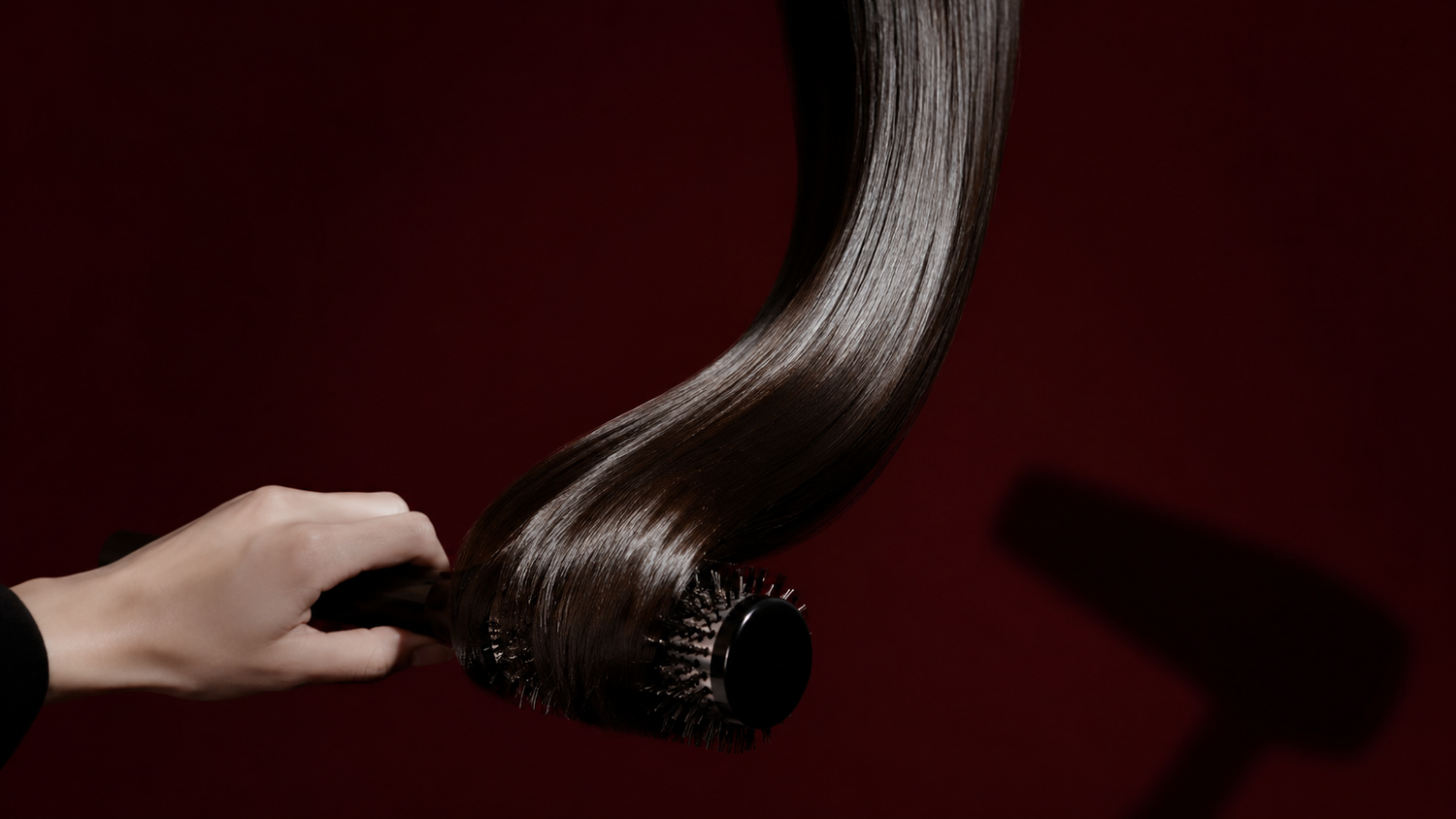


A new dryer will make a stylist faster. It will not make them better. That distinction gets lost in most of the marketing around premium tools, and it costs salons money in the wrong direction. Premium brands have spent a long time selling speed, which is fair enough, because speed is worth selling. A well-engineered dryer with strong, even airflow does shorten the time a stylist spends on each head, and it does lower the cumulative heat a client's hair takes across a full column. Both of those matter, commercially and for condition. Somewhere along the line, though, the pitch slid from "this will help you work faster" to "this will make your blow dry better," and those are not the same promise. A blow dry that holds is built from sectioning, tension, cuticle control and the cool shot, and none of that lives in the handle of a dryer.
Oray Oz, founder of OREL Hair and Beauty, puts the split in plain numbers. "Technique is everything. I would say it is about 80 percent skill and 20 percent tools," he says. "When I built OREL, the first thing I focused on was not which dryers we would use but how every member of the team understood hair. A great hairdresser can produce a beautiful blow dry with a basic dryer and a good brush. What you cannot replicate with equipment is years of understanding how hair moves, how it responds to heat, where it wants to sit naturally and how to work with that rather than against it. Tools make the process more comfortable and efficient. The hands and the knowledge behind them are what deliver the result."
Hold onto that 80/20 figure, because it changes how you read the spending decision behind every kit upgrade. A salon that ploughs its development budget into hardware and lets technique fend for itself has put its money into the smaller of the two variables. The bigger one clocks in and out of the building every day, in the form of the people standing behind the chairs.
Preparation is the part nobody photographs
A blow dry that has dropped by lunchtime usually failed long before the dryer came on. Oz traces the foundation back to the basin and the section comb rather than the finish.
"Clean, well-prepared hair is the foundation and that starts before the dryer is even switched on," he says. "At OREL every client goes through the same preparation protocol regardless of who is taking the appointment. That consistency is what makes the standard reliable rather than dependent on who you see on the day."
A preparation protocol every team member follows is not really about the prep at all. It is about taking out the variable of who happens to be working that shift. For any salon trying to build its name on consistency, that kind of standardisation is what turns a roster of individual talents into something a client can recognise as a brand. People do not book a salon and hope they get the right stylist on the day but because they expect the same result whoever they get.
Past the prep, Oz lays out what holds the shape together. "Precise sectioning, the right tension on the brush, and following the direction of the cuticle with the airflow. If you close the cuticle correctly as you dry, the shine and smoothness take care of themselves. And always finish each section completely before moving on. Rushing between sections is where results fall apart."
Closing the cuticle as you dry is what produces a glossy finish, and most clients have no idea it is happening. Shine is less a product you add at the end than a by-product of which way you point the air. Send the nozzle down the shaft, with the cuticle rather than against it, and the surface lies flat and bounces light back. Go the other way and there is no serum on the trolley that will rescue the dullness. It costs nothing, it takes no extra time, and it is the difference magic recipe behind hair that still looks good in the daylight the client walks out into.
The four ways a blow dry dies early
Ask any stylist why a client came back unhappy and "it dropped" will be near the top of the list. Oz can name the technique failures behind that complaint with the precision of someone who has spent a lot of time correcting them on a training floor.
"The biggest one I see is chasing the heat," he says. "Moving the dryer too fast and too randomly means you are never fully drying each section before releasing it, and the result will drop within hours."
Chasing the heat is so tempting because it feels like progress; the dryer is moving, the stylist is moving, the air is warm, everything looks busy. Hair released while it is still holding moisture reverts as that moisture works its way back through, though, and the client leaves with a finish whose half-life is measured in hours.
The second mistake is a volume problem dressed up as a finishing problem. "Over-brushing roots without enough lift, so the volume collapses the moment the hair cools," Oz says. Root lift is set by how you dry the hair at the base, using tension and direction. Brushing flat roots more aggressively afterwards does not lift them but instead produces flat roots that have been brushed a lot.
The third is the step that marks out a professional finish from a home one, and Oz has no patience for cutting it. "A lot of stylists skip the cool shot entirely, which is what actually locks the shape in place. At OREL that final step is non-negotiable. It is what separates a blow dry that lasts one day from one that lasts three."
The cool shot earns its place because of the physics. Hair is at its most malleable when it is warm and sets as it cools, so the shape you drop a hot section into is only provisional until the temperature comes down. Skip the cool shot and the cuticle and the bonds underneath set wherever they happen to land, instead of where you put them. It adds a few seconds. The payoff in how long the result holds is out of all proportion to that, which is precisely why it gets dropped on a busy day and precisely why it should survive one.
Brush, section and tension, the things hardware cannot buy
Asked how much brush control, sectioning and tension matter, Oz more or less dissolves the question. "These three things are the entire technique," he says. "Sectioning keeps you organised and ensures every part of the hair receives the same level of attention. Tension gives you smoothness and stretch. Too little and the hair frizzes, too much and you sacrifice the body. Brush control determines the direction of movement, the curve at the ends and the lift at the roots."
Tension tends to be the most underrated of the three, partly because it lives in such a narrow band. The gap between too little and too much is small, and finding it is a feel you build over thousands of sections rather than anything you can read off a manual. Too loose and the cuticle stands up and frizzes. Too tight and you pull the body straight out of the hair and leave it flat. A stylist who can sense the right tension through the brush, and adjust it as the texture and density change across one head, is making a judgement no piece of equipment can hand them. "This is something I train personally at OREL because it is the detail that separates a good blow dry from an exceptional one. You can have the most expensive tools available and without these fundamentals, the result will always be average” shares Oz.
Worth sitting with the fact that this is the commercial case against tool-led thinking, made by someone whose business sells premium results, not by someone with an axe to grind. The most expensive kit in the country will turn out average work in hands that have not mastered tension and brush control. The fundamentals set the ceiling. All the tools do is decide how comfortably and how fast you get up to it.
Where the money is well spent
For all that, none of this is an argument against good equipment, and Oz is careful not to let it slide into one. The case for premium tools is real - it is just a narrower case than the advertising tends to make.
"Premium tools genuinely improve professional speed and reduce unnecessary heat stress on the hair over time," he says. "At OREL we work with high-quality equipment because our clients expect consistency at every visit and the right tools support that. A well-balanced dryer with even, powerful airflow means I am working more efficiently and the hair is healthier for it over the long term." Speed is column capacity, and a stylist who takes minutes off each blow dry without losing quality has turned more chairs by Saturday night. Reduced heat stress is condition that stays in the hair, which means clients whose hair holds up between visits and work that goes on looking good after the day it was done. A balanced, powerful dryer is worth its price for the throughput and the hair health. It is not worth its price because of any magic it supposedly adds to the finish on its own, but the caveat is that the tool is not all. "I have seen stylists with exceptional equipment produce mediocre results and I have seen talented hairdressers with modest tools produce work that is genuinely beautiful. The tool does not know what it is doing. The hands do” explains Oz.
Slowing down to get faster
The advice Oz gives stylists who want to get better cuts against the grain of how a busy salon actually feels. Under pressure, the instinct is to speed up. He tells them to do the opposite.
"Slow down and be intentional about every single section," he says. "The stylists I have seen improve the fastest are the ones who stop rushing and start actually reading the hair: whether a section is fully dry, whether the tension is right, whether the cuticle is lying flat."
There is a paradox in there that is exactly what makes the advice hard to take. Slowing down is how a stylist ends up faster. Speed that comes from rushing creates work that has to be redone or clients who come back unhappy, and both of those eat far more time than the rushing ever saved. Speed that comes from technique turning instinctive costs nothing and stays. A stylist who drills the basics at a deliberate pace builds the muscle memory that later lets them move quickly without thinking, and by then the speed is a side effect of the skill rather than a stand-in for it.
Oz treats ongoing learning as a baseline rather than a perk. "At OREL we invest in ongoing education for the whole team because technique evolves and complacency is the enemy of quality. Watch other great hairdressers work whenever you can. And practise the fundamentals obsessively."
His closing thought puts the tools conversation back in its place. "The core principles of a great blow dry have not changed. They simply become faster and more instinctive the more you do them with full attention."
It is about the most honest position on premium tools that anyone in this market tends to reach. The kit has got better and it is worth owning. It will make a skilled stylist quicker and it will keep clients' hair in better shape. What it has never managed, and never will, is to shorten the road to the skill in the first place. That road still runs through sectioning, tension, cuticle direction and the cool shot, practised slowly until they stop needing thought. Roughly a fifth of the answer is sitting in the box on delivery day. The rest of it walks in on two feet every morning, and that is where the money is best spent.
Sign up with your email address to receive news and updates.
Subscribe
We respect your privacy. Thank you!
What's Your Reaction?
 Like
0
Like
0
 Dislike
0
Dislike
0
 Agree
0
Agree
0
 Disagree
0
Disagree
0
 Excellent
0
Excellent
0
 Useful
0
Useful
0
 Great
0
Great
0